
The Art of Inaction: Strategic Positioning Beats Market Timing

Words: 1,350 Time: 9 Minutes
- The Advantage of Error: Why admitting mistakes makes you a better allocator.
- The "No Called Strikes" Rule: Overcoming the professional compulsion to "do something."
- Positioning vs. Intelligence: Why cash is a strategic weapon, not a drag.
In the world of professional investing, there is an immense pressure to be "active." Clients, headlines, and even our own internal biases demand that we always have an opinion and always have a trade. Yet, the most successful track records in history—specifically that of Warren Buffett—are built on the opposite: long periods of sitting still, interrupted by moments of aggressive action.
The Humility Advantage
One of the most striking features of elite capital allocators is their willingness to admit to "capital allocation gone wrong." Most corporate boards treat words like "mistake" or "wrong" as forbidden vocabulary. However, acknowledging a misjudgment in a company"s competitive moat or its future economics is a vital forcing mechanism. It allows you to exit a losing position and preserve capital for the "perfect pitch."
"I"m smarter now than I was a couple years ago, but I"m also poorer because I acquired the knowledge in the manner I did." — Warren Buffett on Paramount
The Pitch Right Over the Plate
In baseball, if you don"t swing at a strike, you"re eventually out. In investing, there are no "called strikes." You can watch thousands of companies offered at thousands of different prices every day, and if you don"t understand the business or the valuation, you don"t have to swing.
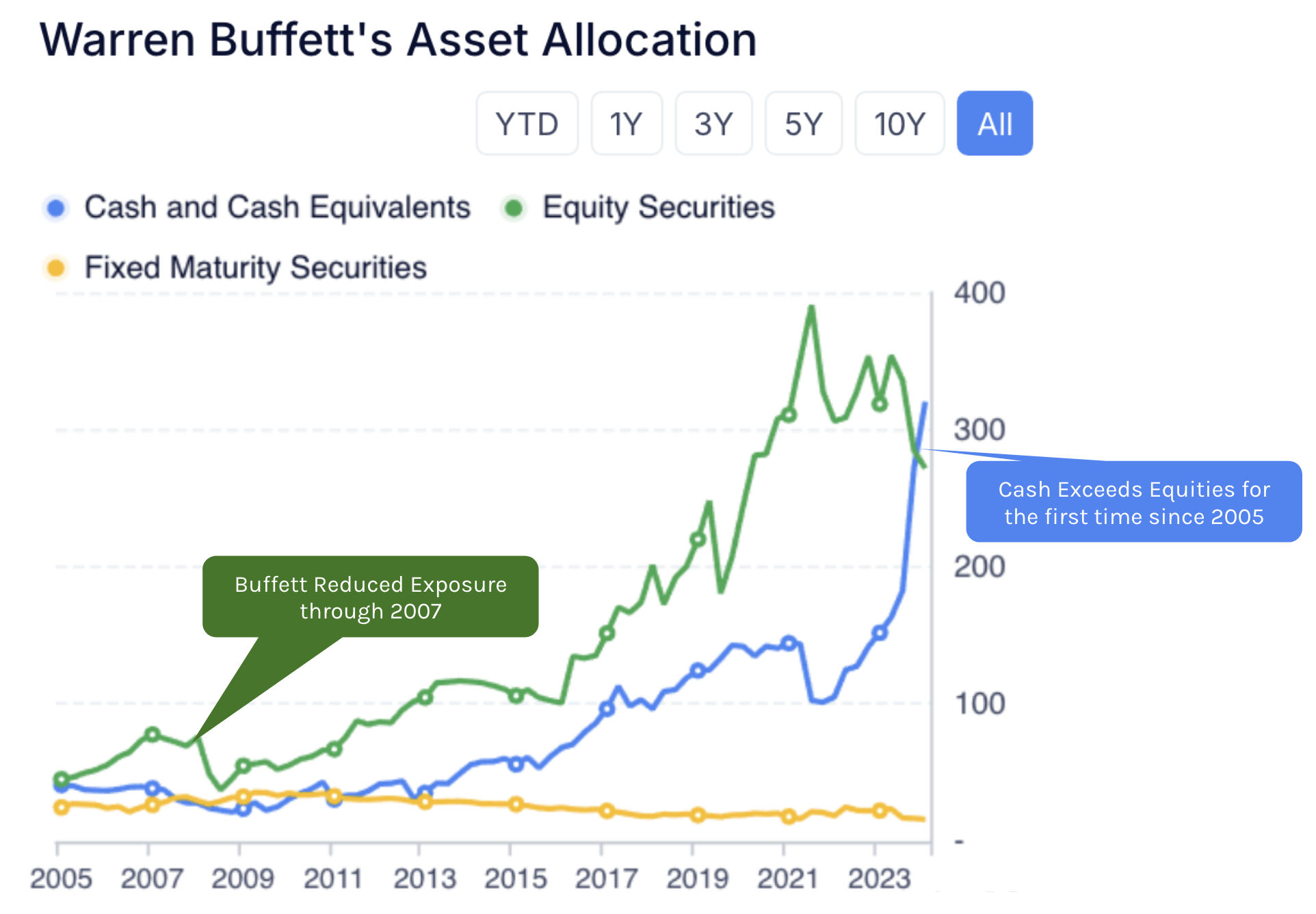
The problem is that boredom is the enemy of the average investor. When a market is "fully valued"—trading at multiples well above 10-year averages—the pitcher is throwing balls well outside the strike zone. At these times, the most productive action is often strategic inaction. Keeping a significant cash position (30%+) isn"t a lack of ideas; it is a deliberate choice to out-position the market for when the "perfect storm" eventually arrives.
The Quality Filter: Defining the Strike Zone
To know when to swing, you need a rigid checklist. I use two primary frameworks to define a "high-quality" pitch:
- The 15/15 Rule: Does the company generate a Return on Equity (ROE) and Return on Invested Capital (ROIC) of 15% or more? This filters for businesses that can self-fund their growth.
- The 55/30/25 Model: I look for 55% Gross Margins, 30% SG&A, and 25% EBITDA. This confirms the presence of a durable moat and efficient operations.
The Risk of Overpaying
Even a company that passes the 15/15 quality test can be a dangerous investment if you overpay. Valuation metrics like EV/EBIT and P/FCF are non-negotiable. I avoid Price-to-Earnings (P/E) ratios because earnings are too easily manipulated by accounting choices. Free Cash Flow is the true measure of a company"s health.
When the market trades at 22x forward earnings while its long-term average is closer to 18x, the margin of safety is non-existent. Overpaying for assets is the fastest way to break the first rule of investing: Don"t lose money.
Case Studies: Buying the "Out of Favor"
The best opportunities "often look like nothing compelling" to the general public because they are currently out of favor. Whether it"s a defensive staple facing temporary regulatory noise or a high-ROIC semiconductor firm facing a cyclical demand dip, these are the moments where the price finally matches the value.
- Defensive Play: Buying a strong brand at 8x Free Cash Flow when the market is fearful.
- Quality Compounders: Adding to positions with 80%+ ROIC averages when short-term geopolitical risks cause a temporary sell-off.
Putting it All Together
You don"t need to be smarter than the rest of the market to outperform; you simply need to out-position them. Anyone looks like a genius when they are in a good position with plenty of "dry powder" during a correction. Conversely, even the smartest person looks like an idiot when they are fully invested at the top of a cycle.
Patience works. Focus on the quality metrics that matter, ignore the "happy talk" of managers who claim perfection, and wait for the pitch that sits squarely in your circle of competence. If you want to refine your own "strike zone," start with my guide on The Math of Moats: ROIC and Capital Allocation.