Category Employment

So Maybe Valuations Matter?

When I made the difficult decision to reduce my exposure to large-cap tech earlier this year - I wasn't sure how things would pan out. In the short-term - I looked foolish. These stocks surged higher without me. However, since then, large-cap tech is trading lower than when I sold it (on average). But is this a dip you should buy? I don't think so - not just yet. The broader index is only 6% off its all-time high. That's nothing in the larger scheme of things. I'm choosing to remain a little more patient - where I think the index could correct somewhere in the realm to 10-12%.
Powell’s Ready to Cut… And Not Just Once

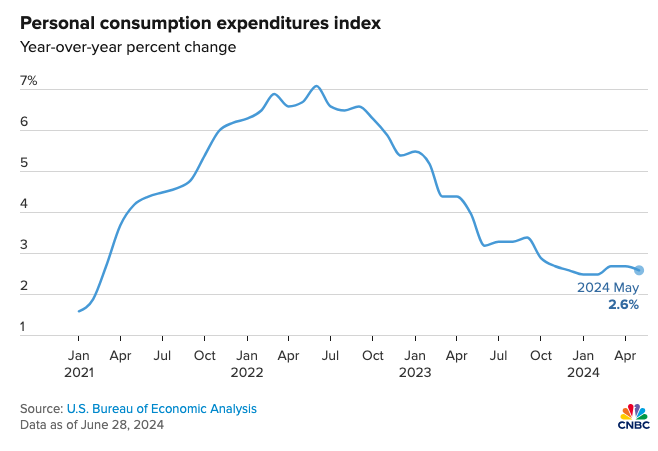
Today Fed Chair Powell delivered precisely what the market wanted to hear... help is on the way. As a perpetual (closet) dove - Powell did his best to stay balanced however the cat is now out of the bag. Rate cuts are coming. And there will be more than one. Consistent with other meetings - Powell said rate cuts are an option if economic data continues on its current path. In other words, it was the (same) scripted "data dependent" Fed.
However, there were some important nuances.

Wall Street Cheer a “Strong Jobs” Report…  Should They?

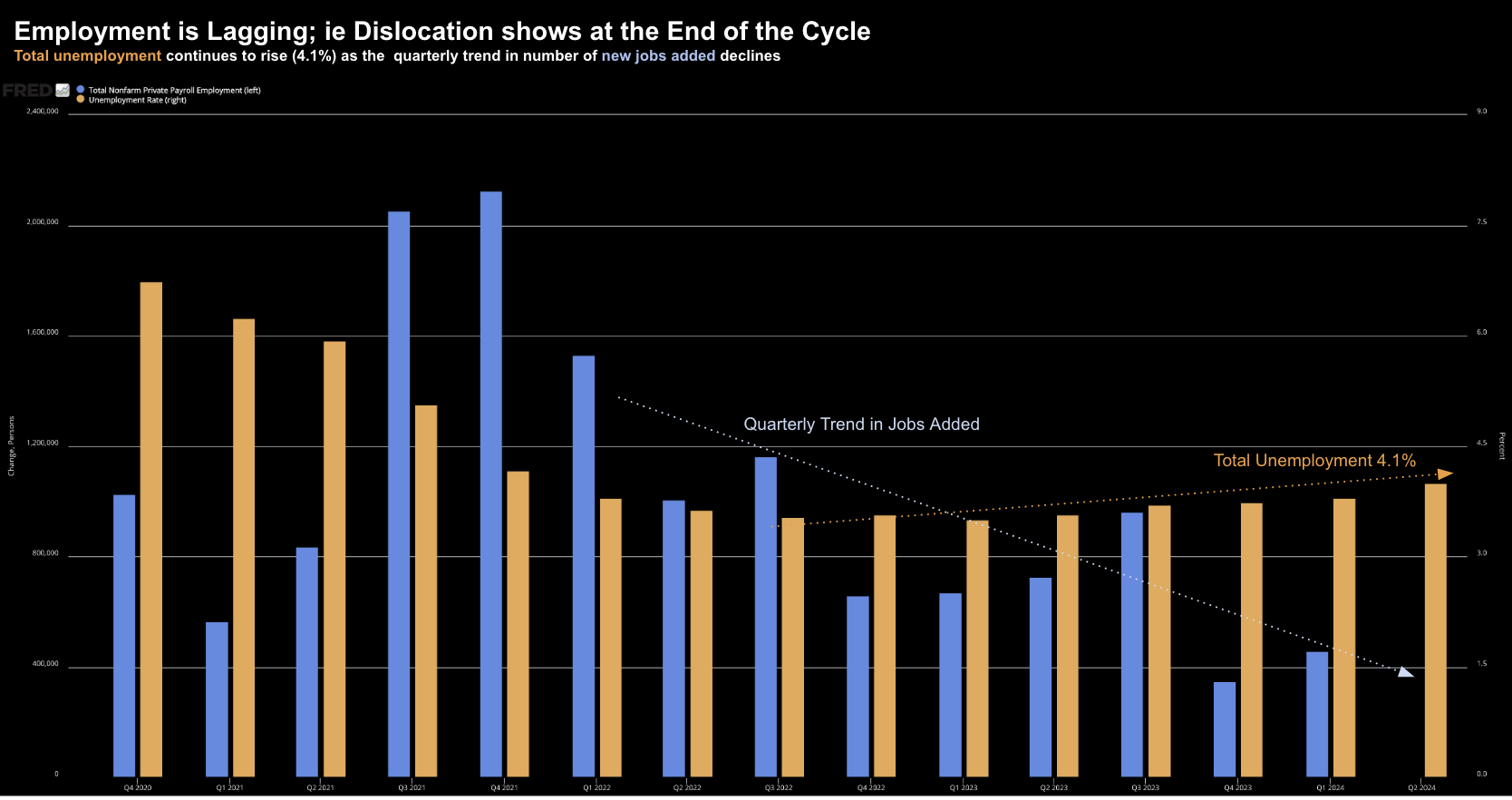
Wall St. cheered a perceived 'strong' monthly June jobs report. The economy added 206K jobs last month - however the unemployment rate moved to 4.1% - its highest level in 2 years. Here's the thing: there was a lot of weakness in the labor market - with most of the jobs coming from government. In addition, April's job gains were revised lower by 111K. And May was revised lower by almost 60K. I think there is material underlying weakness (reflected in slower Real GDP and PCE) and perhaps enough for the Fed to start cutting rates in September or November.

Rate Cut Hopes for 2024 Start to Fade 

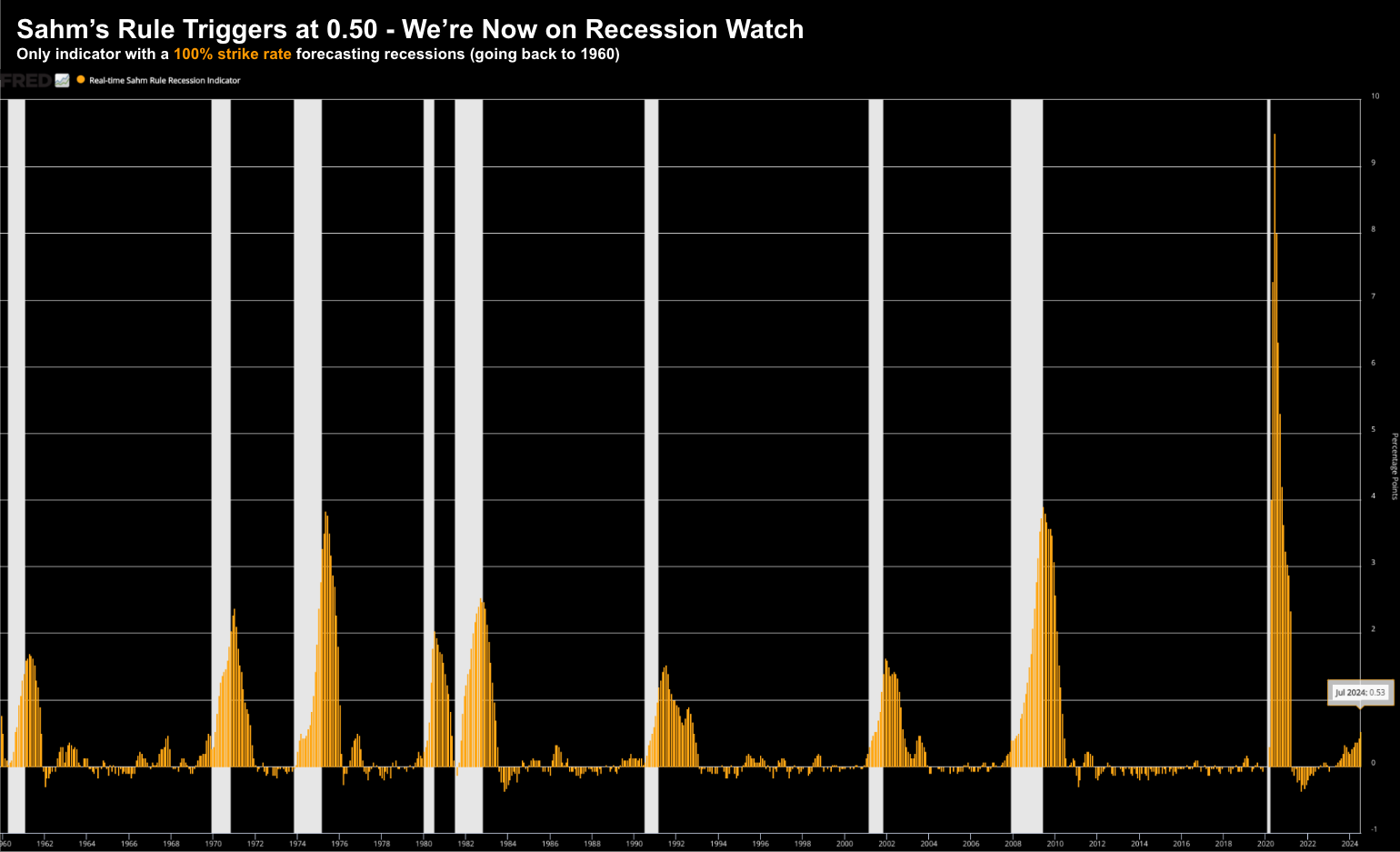
Just as market participants were starting to get hopeful rate cuts could be coming - that door was slammed shut. Yields surged opposite a stronger-than-expected monthly payrolls number. Heading into the print - the market was looking for softness in the labor market - with maybe 190K jobs added. Recent data had suggested jobs were slowing - paving the way for the Fed to cut rates as early as July (with a 70% chance assigned to September). As it turns out, monthly job gains were said to be 272,000. That said, there are some ambiguities with the report - with the unemployment rate jumping to 4.0%. Is Sahm's Rule about to trigger in the coming months?

Immigration’s Impact on Jobs

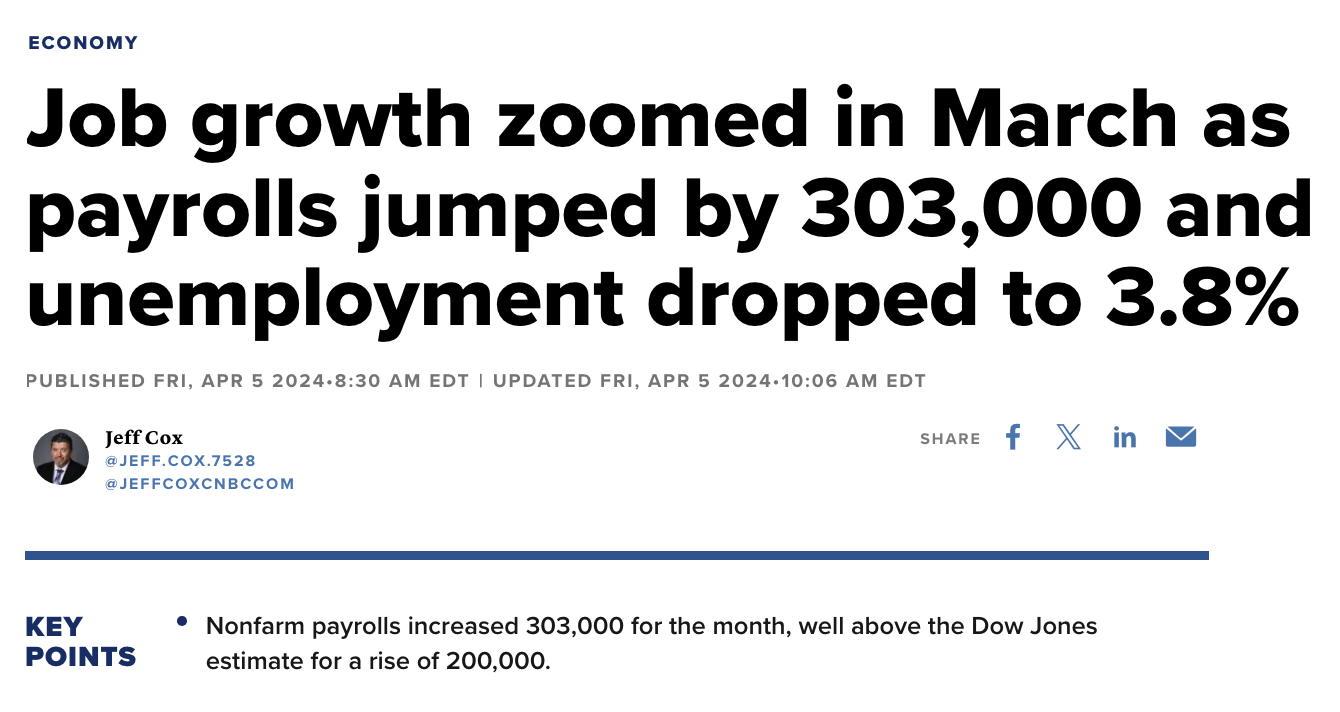
The headline will read 303K new jobs were added to the economy for the month of May. And on the surface, it gives the appearance of a very strong number. However, how many of these were full-time jobs? And where were the jobs being added? When we look into the details of the jobs report - it paints a very different picture. My take: the headline number is not as strong as some assume.

Don’t Fight the Fed…

"Don't fight the Fed" is a popular Wall St. adage for investors. The phrase was coined by well known investor Marty Zweig in 1970. At the time, Zweig explained the Federal Reserve policy enjoys a strong correlation in determining the stock market’s direction. Fast forward ~50 years and his theory has proven mostly correct.

Yields Rally on “Strong” Jobs Data

According to the BLS - we saw the strongest employment growth in 12 months alongside the fastest wage growth in 22 months (0.6% MoM). However, we also saw the lowest amount of weekly hours worked since 2010. Given the better than expect jobs gains and acceleration in wages (which remains well above the Fed's objective) - it seems less likely the Fed can justify rate cuts in March. Probabilities for a cut in 2 months stand at 38%. This was above 70% just a month ago.

Jobs Data: Choose Your Narrative

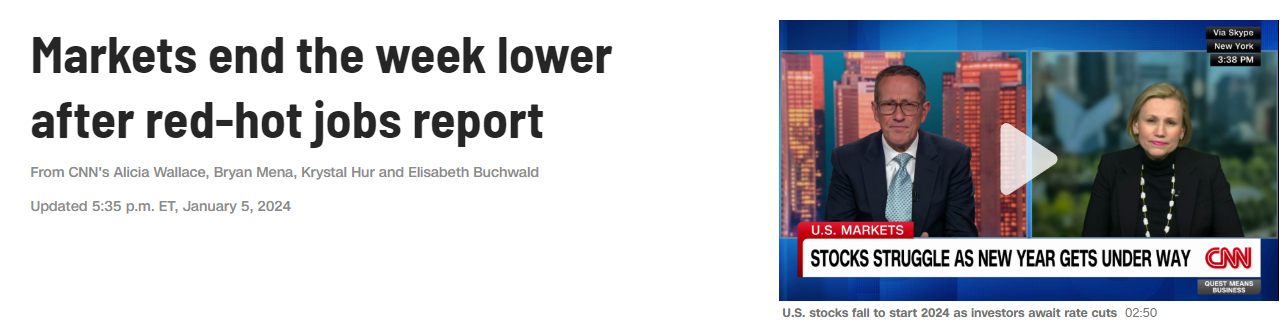
Today we learned that December added 216K jobs. CNN reported it as a "red hot" print. Was it? From mine, the headline number offers us very little. For example, what I want to know is the following (a) where are the jobs are being added (e.g. public vs private sector and what sectors); (b) what are people being paid per hour (is it rising or falling?); (c) are people working longer hours (as part time work doesn't pay a mortgage); and finally (d) what's the prevailing trend (as one month's data doesn't account for much). The headline number doesn't provide this detail - therefore we need to dig a little. My quick take - this report is weaker than what the headline suggests.

Why Would the Fed Cut? Why Would the Fed Cut?

Why Would the Fed Cut?

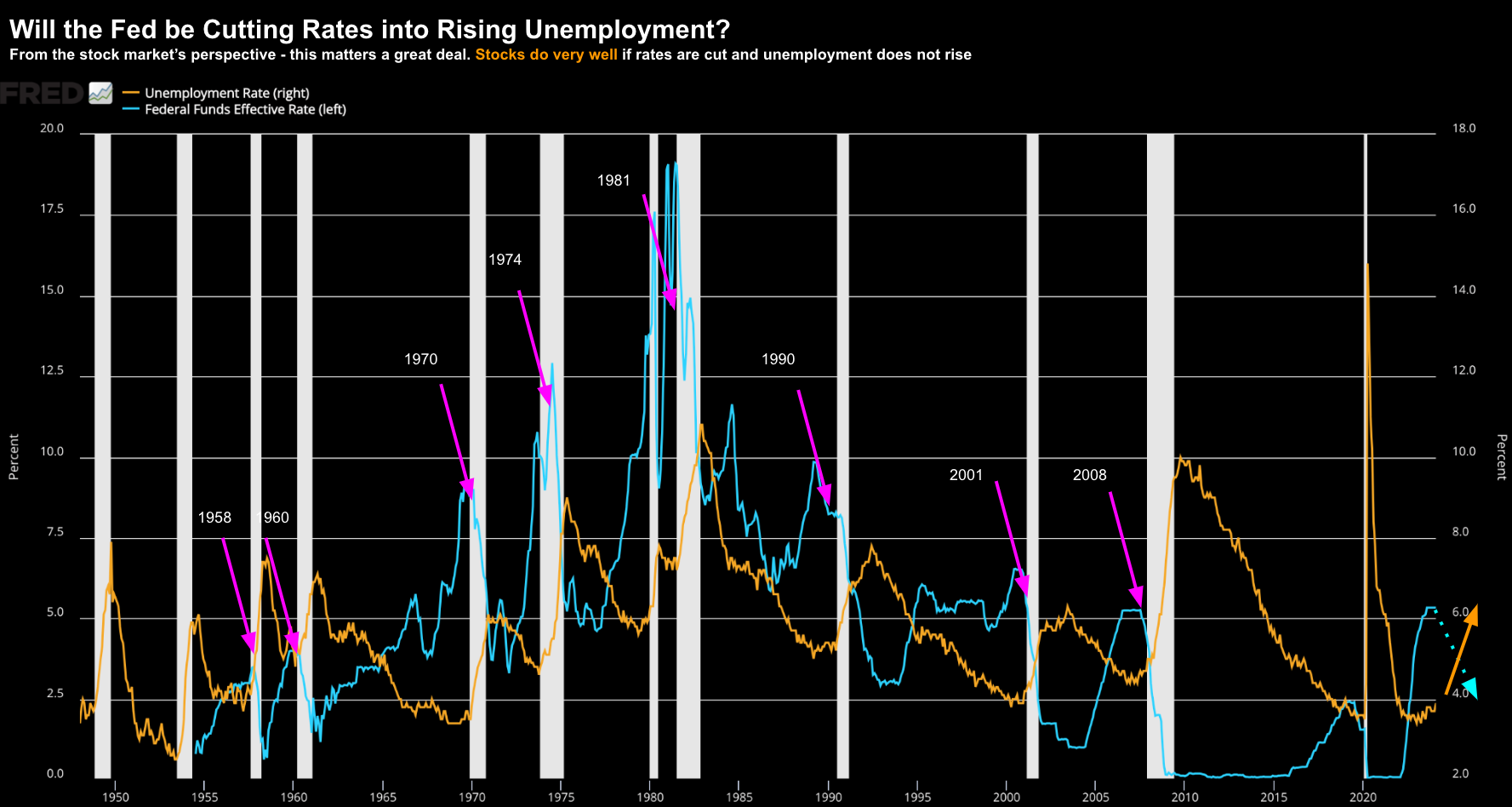
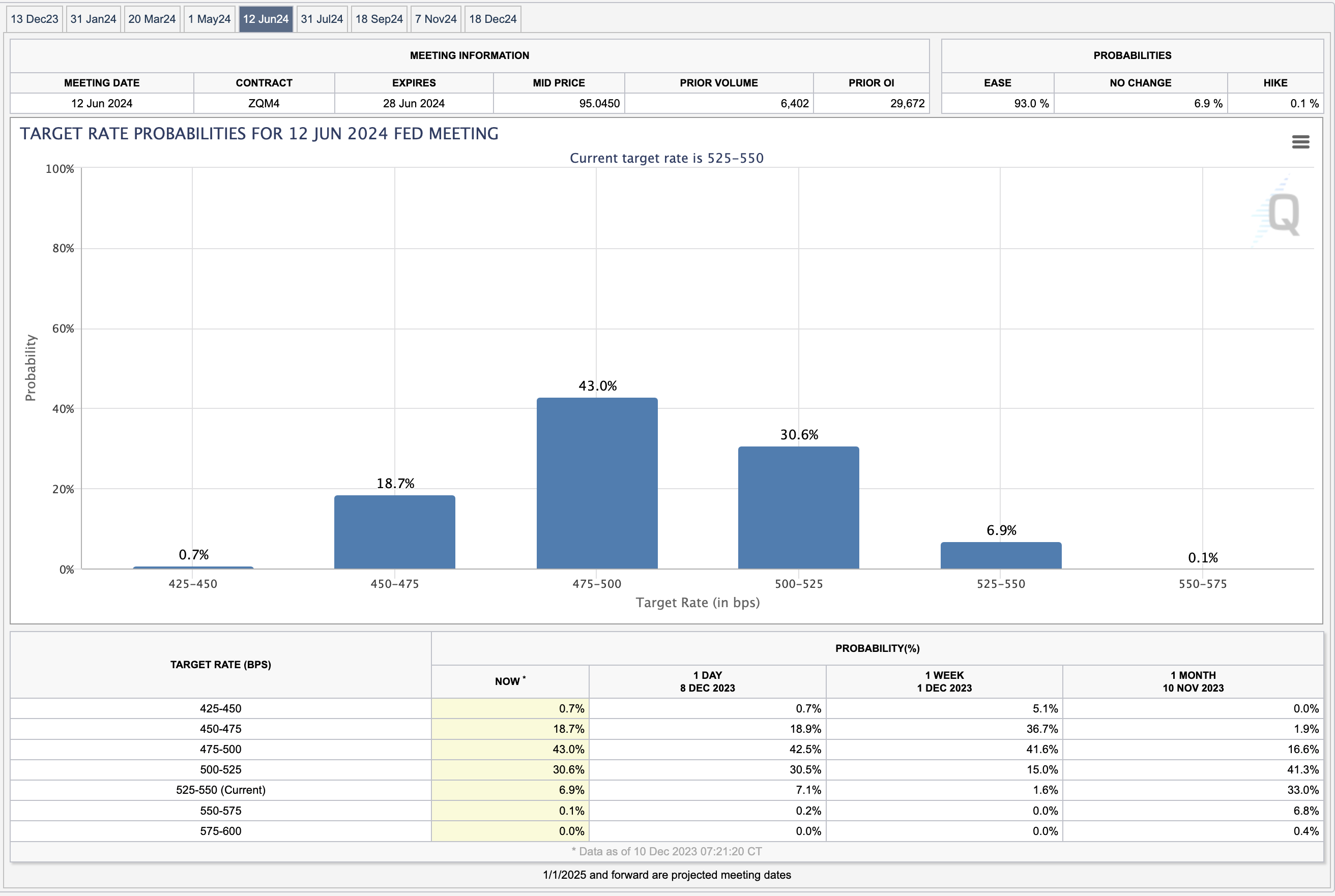
Last week the market received what it interpreted as a 'goldilocks' jobs number. Not too hot. Not too cold. But just right. Non-farm payrolls (NFP) increased by 199,000 in November, according to the BLS. This was around 19,000 higher than market expectations - however not hot enough for the Fed to raise rates this week. As an aside, the Government added 49K jobs as part of the 199K (inline with their monthly average). The unemployment rate, meanwhile, fell to 3.7% from 3.9%, marking the longest stretch of unemployment below 4% since the 1970s. That's essentially a full employment picture. So here's my question - why would the Fed consider cuts at full employment?

Fed Warns, Stocks Shrug

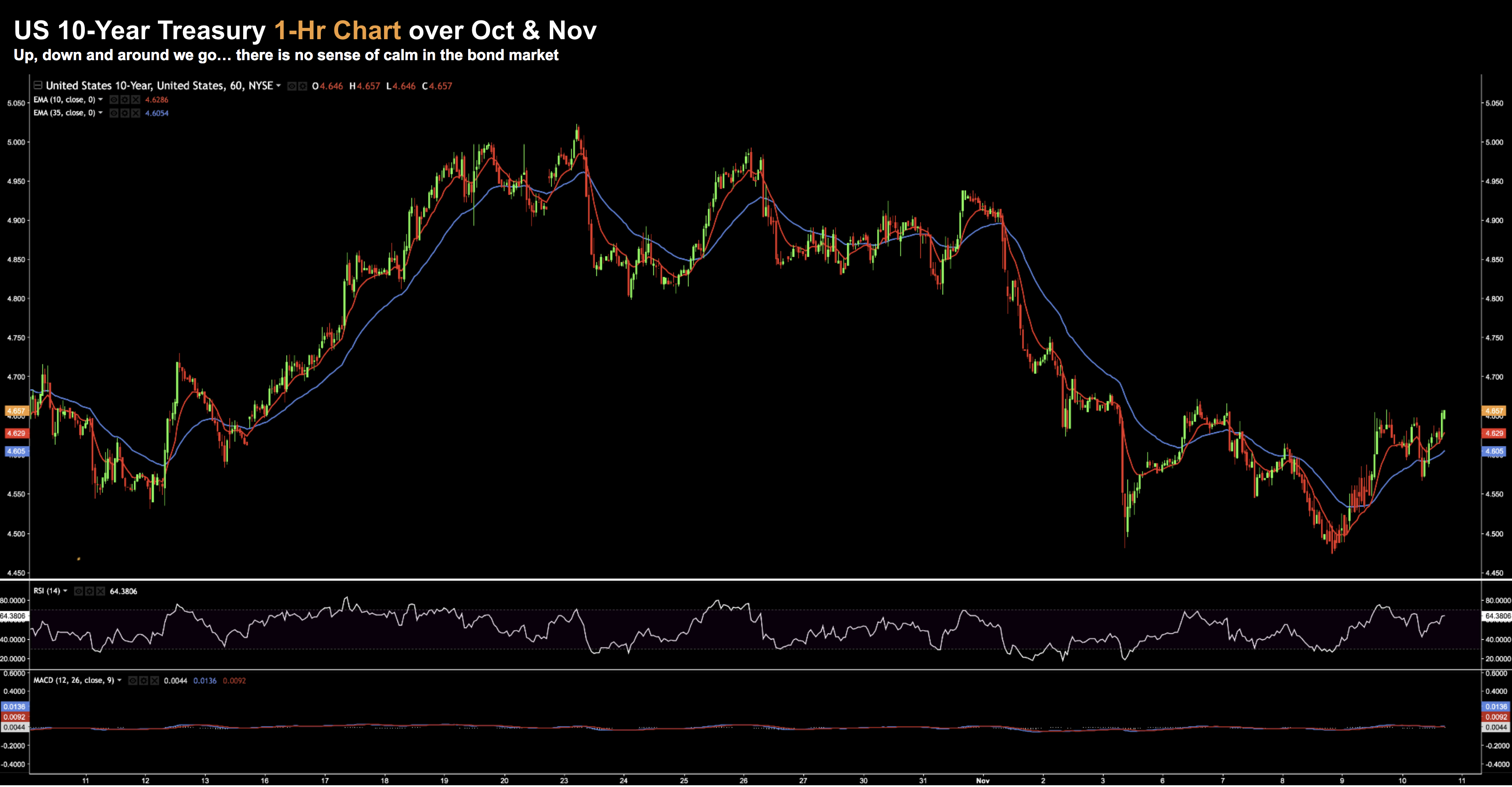
"We still have a long way to go" - that was the not-so subtle warning from Jay Powell this week. After what many felt was a slightly less hawkish Fed Chair last week - sparking an equity rally - Powell attempted to adjust his tone at an IMF event. Was he successful? That's hard to say - as equities seemed to shrug off any warning from the Fed - surging ahead to be up 15% year-to-date. Here's my question: are investors being too sanguine about what's still unknown?