Category Employment

For Now, A Slowing Economy is Good News

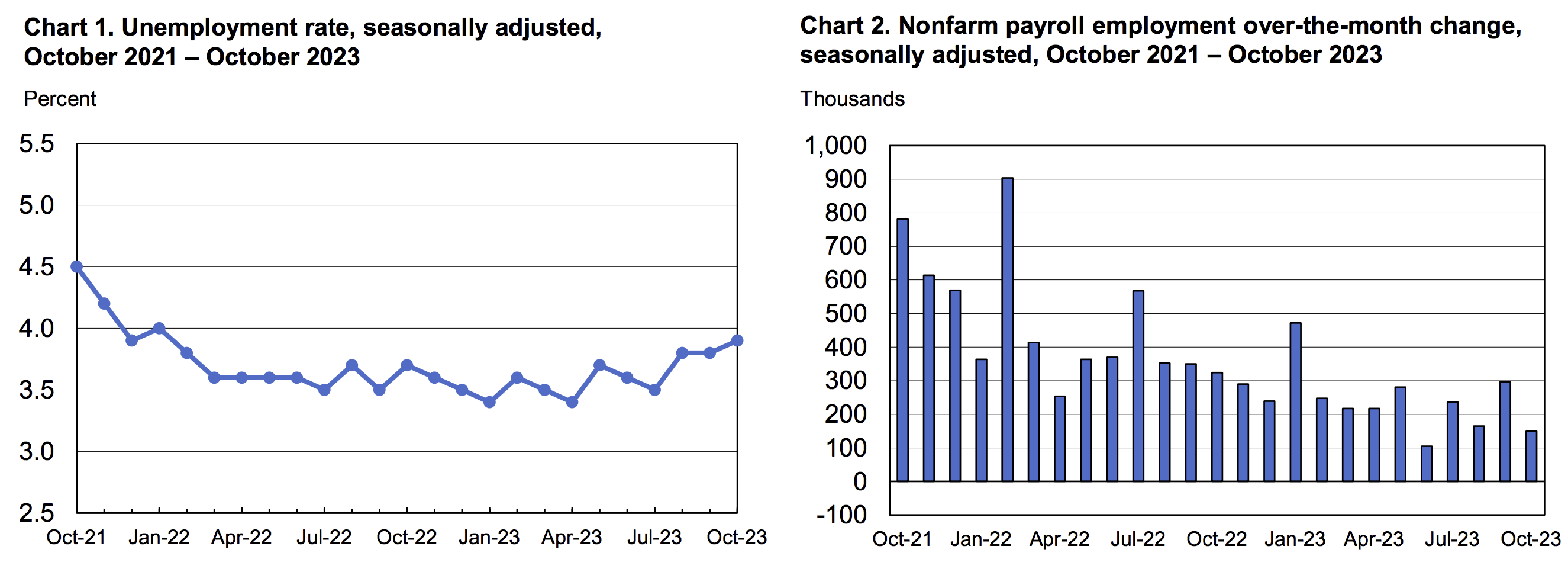
A weaker than expected October payrolls print sent stocks flying and bond yields sharply lower. The S&P 500 finished at 4358 - a whopping 5.9% for the week. It was the market's best week for the year. Renewed bullish enthusiasm was mostly due to investors betting the Fed is done. And that makes sense. For example, if employment, growth and inflation continue to soften - there's every possibility the Fed has hit its terminal rate. However there is a caveat. Not only will the Fed need softer economic data - they are hoping the bond market continues to keep financial conditions tight (i.e. bond yields stay high)
Just How ‘Strong’ was the Sept. Jobs Report?

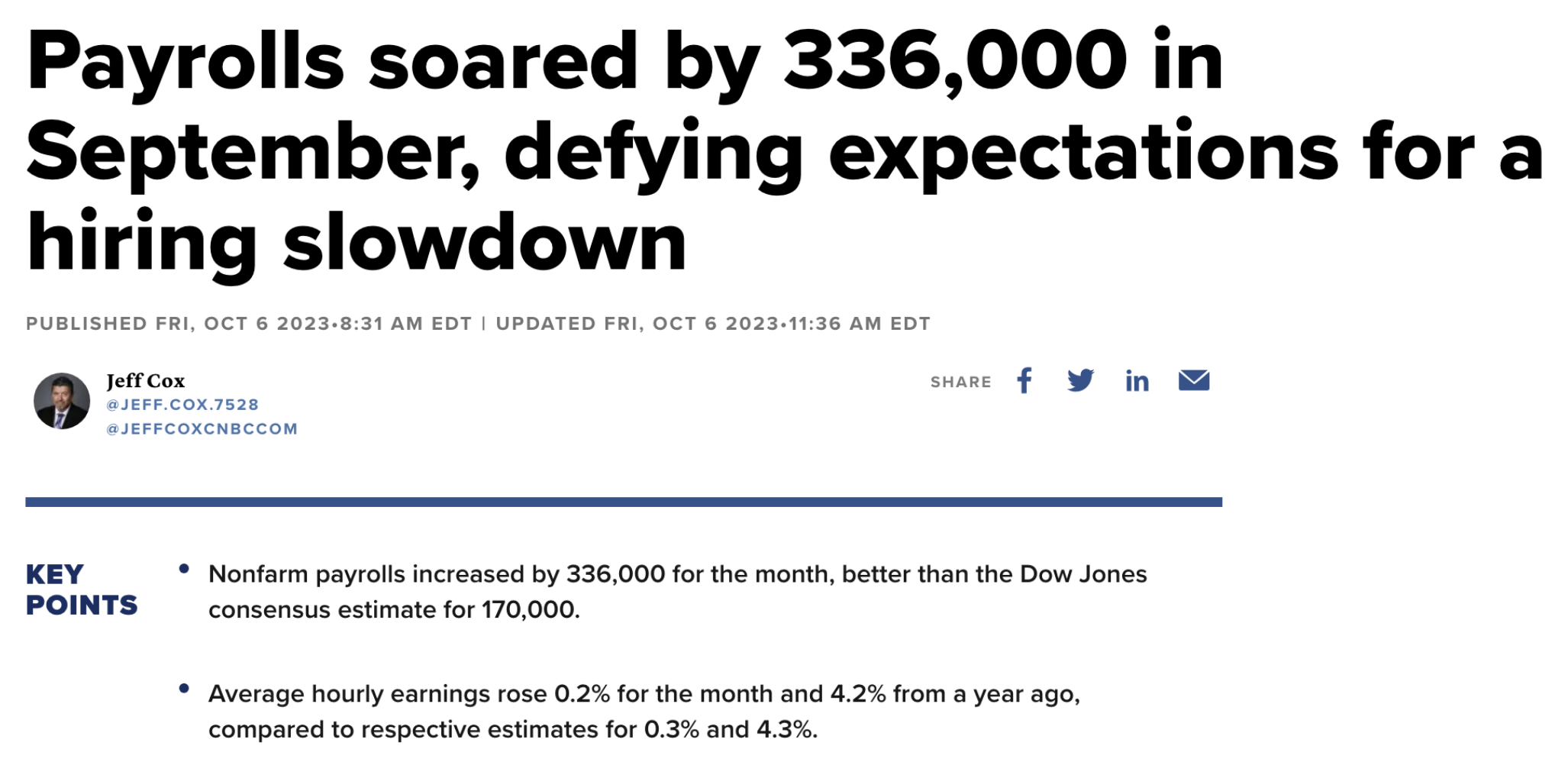
Never take a headline print at face value. There's always more to the story - where it pays to dive into the details. Digging below the surface takes some work - however it's worth doing. Last week was a great example. The BLS told us 336,000 jobs were added vs expectations of 160,000. Sounds strong? But was it? Not really. For example, since June 2023, full-time employment is lower by some 696,000 jobs

Have Jobs Slowed Enough for the Fed to Pause?

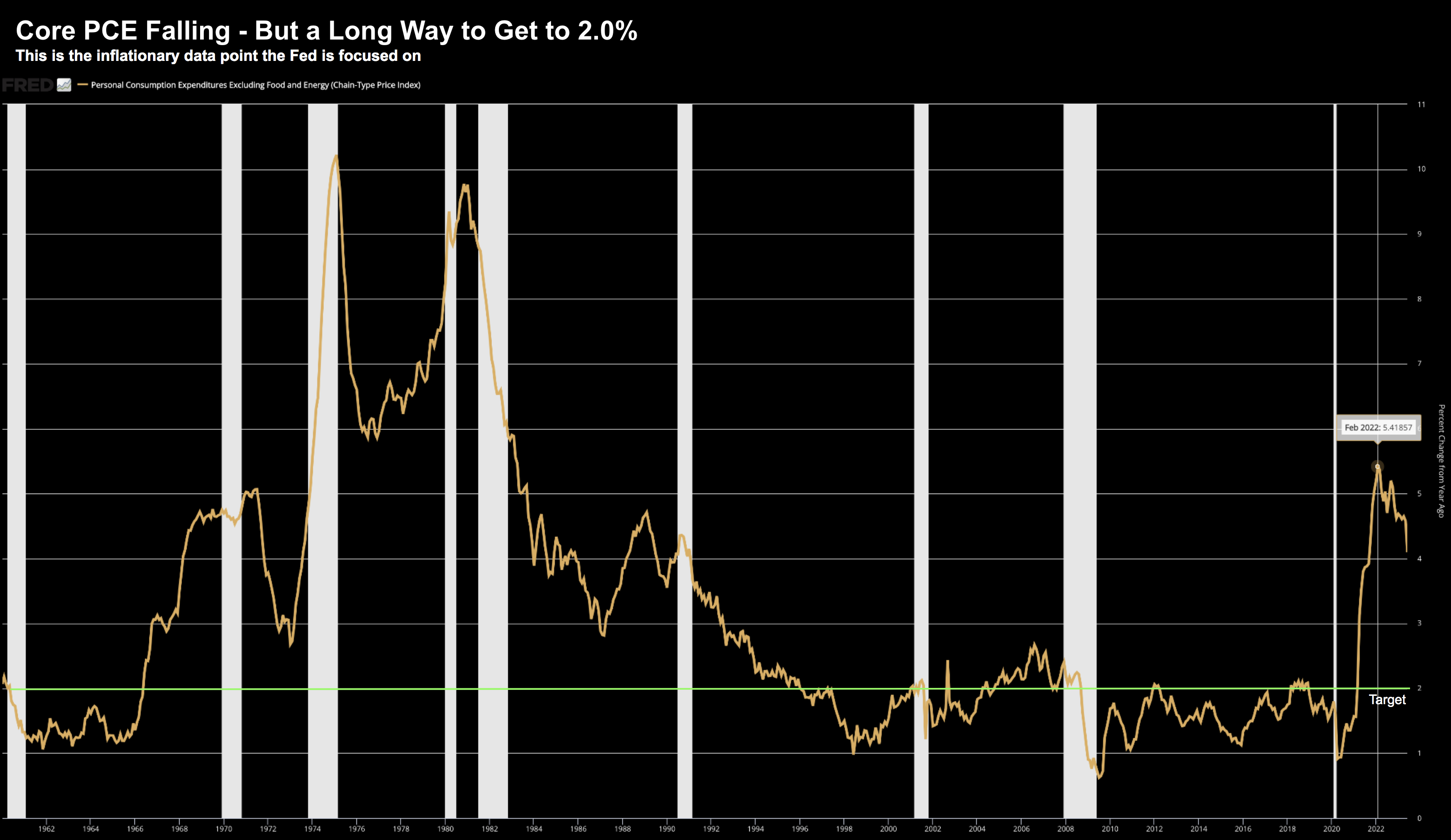
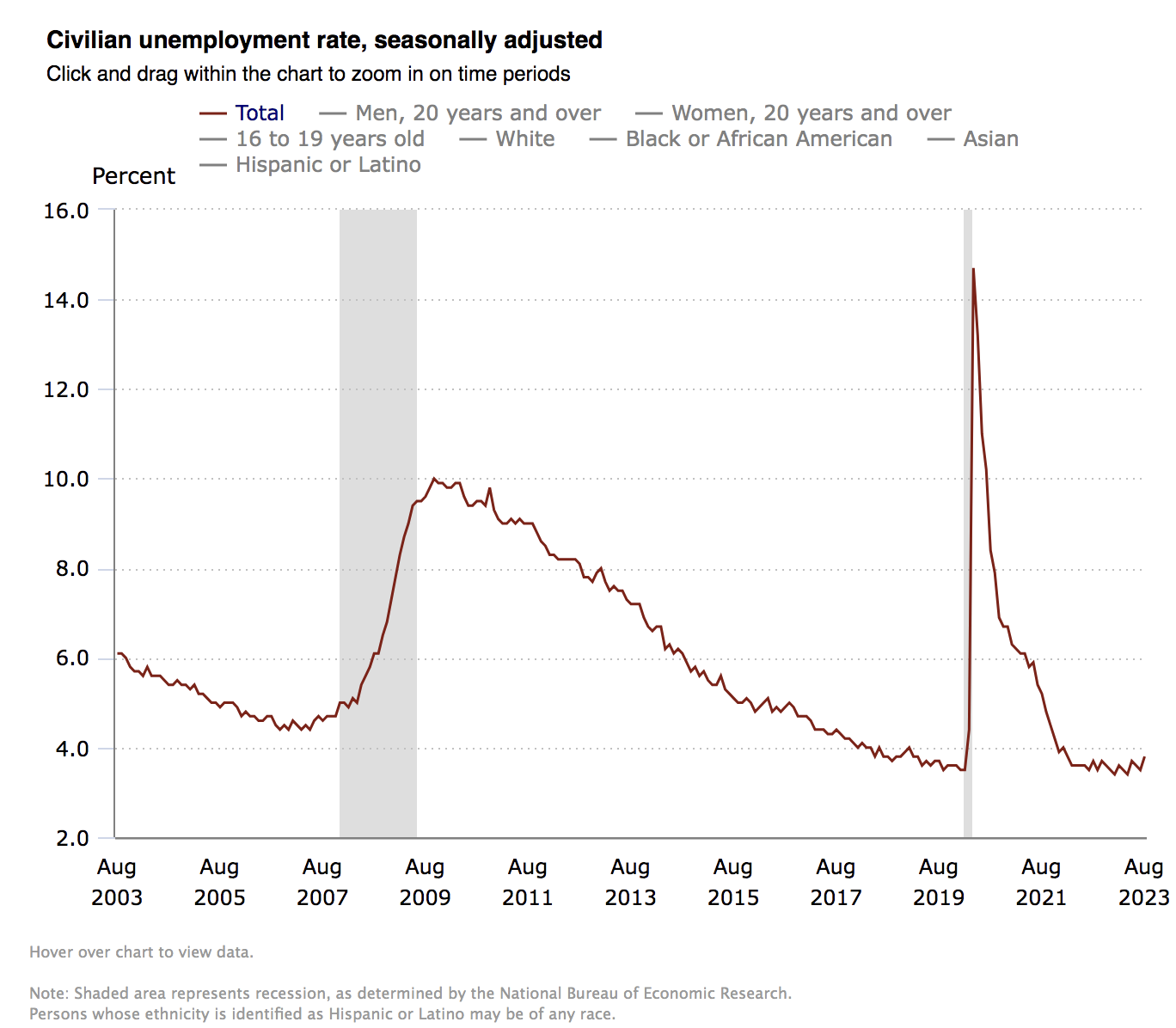
Last week offered plenty of macro data for traders (and the Fed) to consider. Core PCE remains stubbornly higher at 4.2% YoY - moving higher month on month. However, there is signs of a slowing labor force - with job additions missing expectations. The question is whether the jobs market is now slowing enough for the Fed to end rate hikes? For example, total unemployment is very strong at 3.8% and there are almost 9M open jobs. That's not a weak labor market...

One Trend That Isn’t Sustainable

More "bad news is good news" hit the tape today... The monthly ADP private jobs number came in far weaker than expected. I say 'good news' as it potentially means less Fed (or at least that's the assumption). Here's CNBC: "Job creation in the United States slowed more than expected in August, according to ADP, a sign that the surprisingly resilient U.S. economy might be starting to ease under pressure from higher interest rates"

For Now… Bad News is Good News

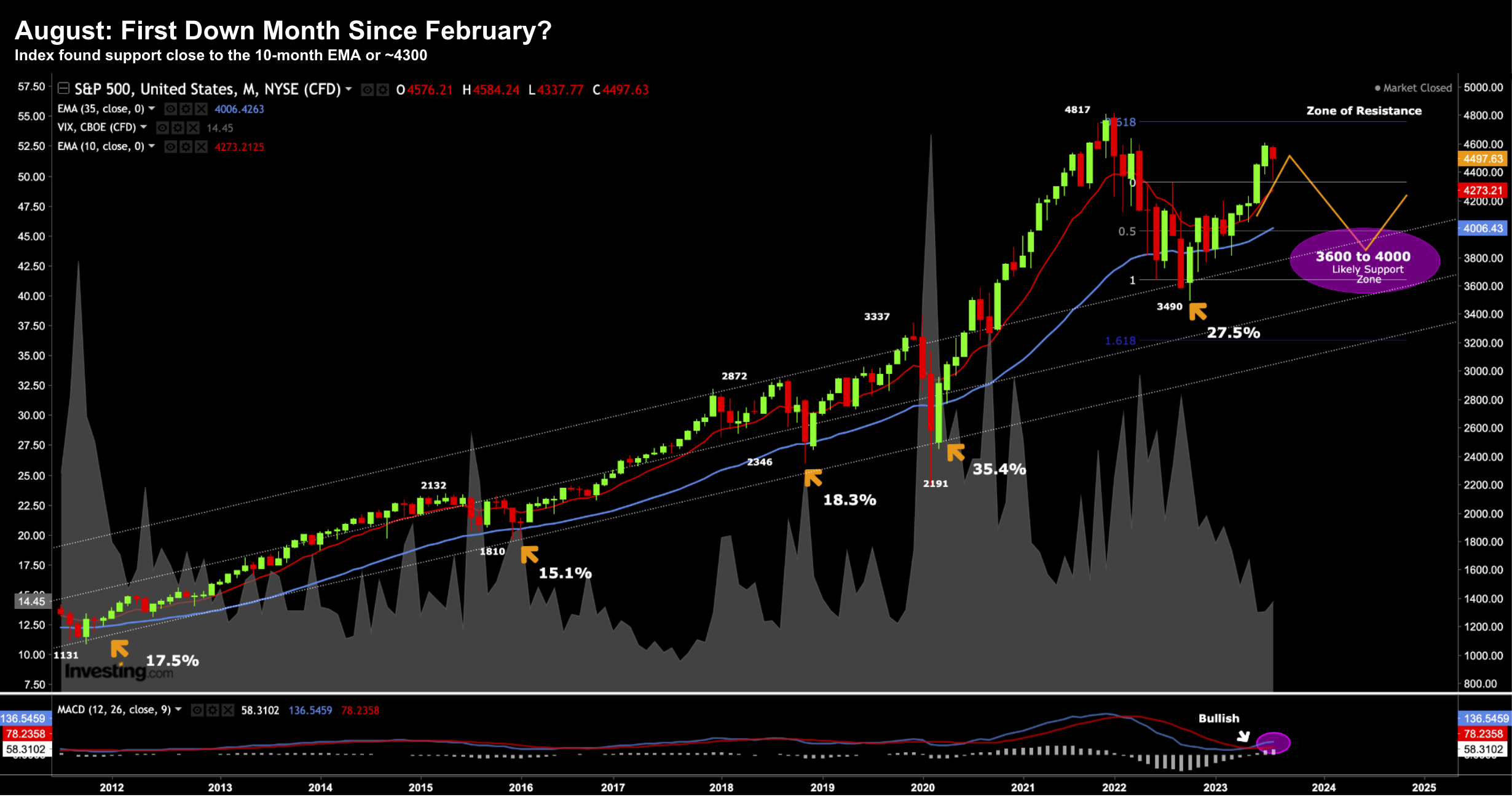
August has proven to be a bumpy month for equities. And if the Trader's Almanac is any guide - it's not surprising. August and September are typically weaker months for stocks. For example, over the past decade, the S&P 500 has managed an average gain of 0.1% for August. Dismal. If you go back two decades, it becomes an average loss of 0.1%. Why? Maybe it's due to most of Wall Street taking summer vacation in The Hamptons - meaning trading volumes are low. Or it could be some traders locking in profits ahead of September - which boasts the worst record of any month in the calendar. For example, the S&P 500 has lost an average of 1% each September over the past 10 years.

Some Things Just Take Time

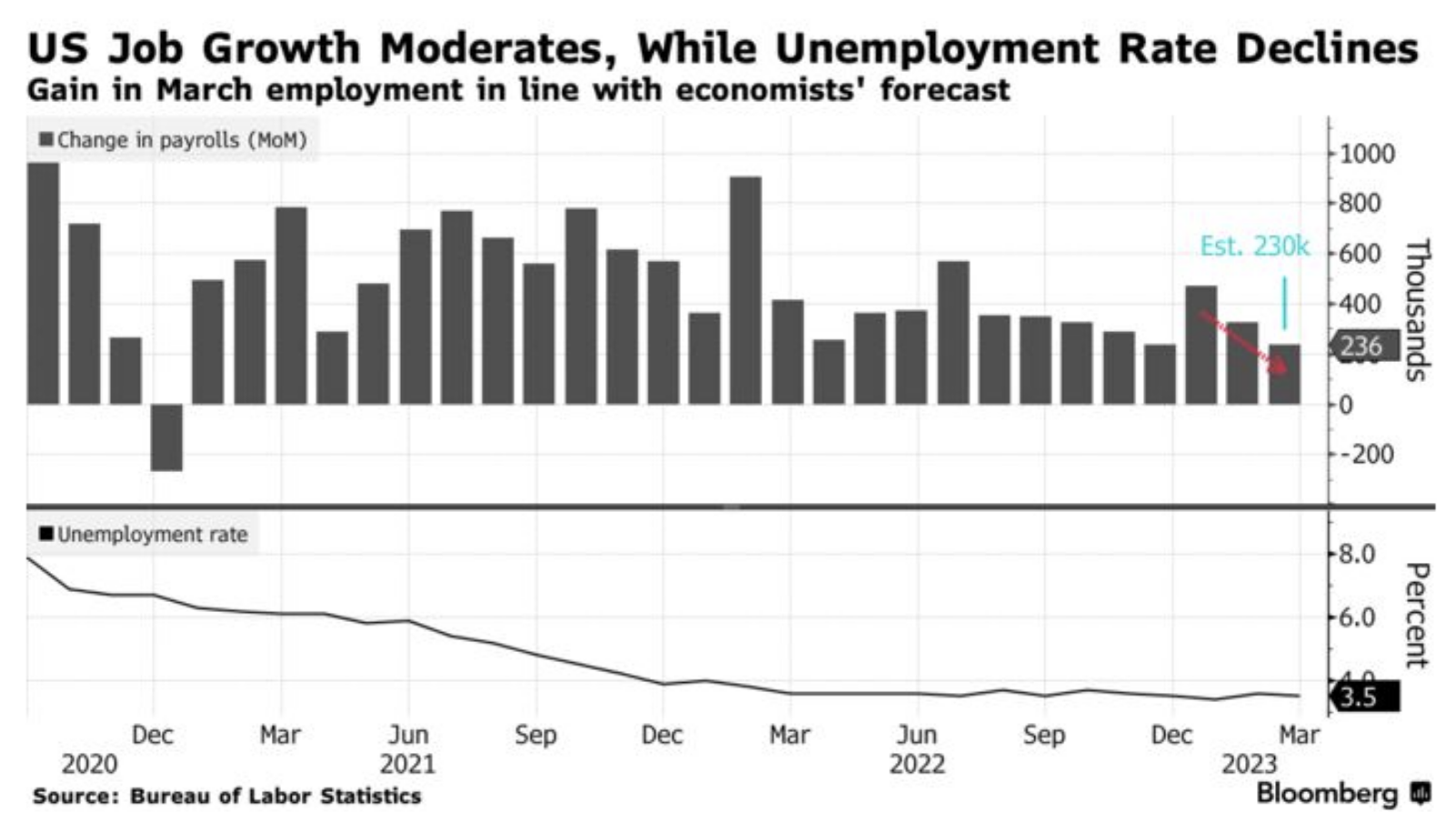
This week we received the latest monthly payrolls data. US employers added 209K jobs - a little lower than expected. However, the job market appears robust. One metric that deserves closer inspection are weekly hours worked. That is trending lower and could be a precursor to what's ahead. From my perspective, what we're seeing is the "Fed lag" effect of higher rates slowly tighten its vice. But these things take time and we may not see the full effects on the labor market for another 6-12 months (at a guess).

Market Cheers ‘Strong’ Jobs Report

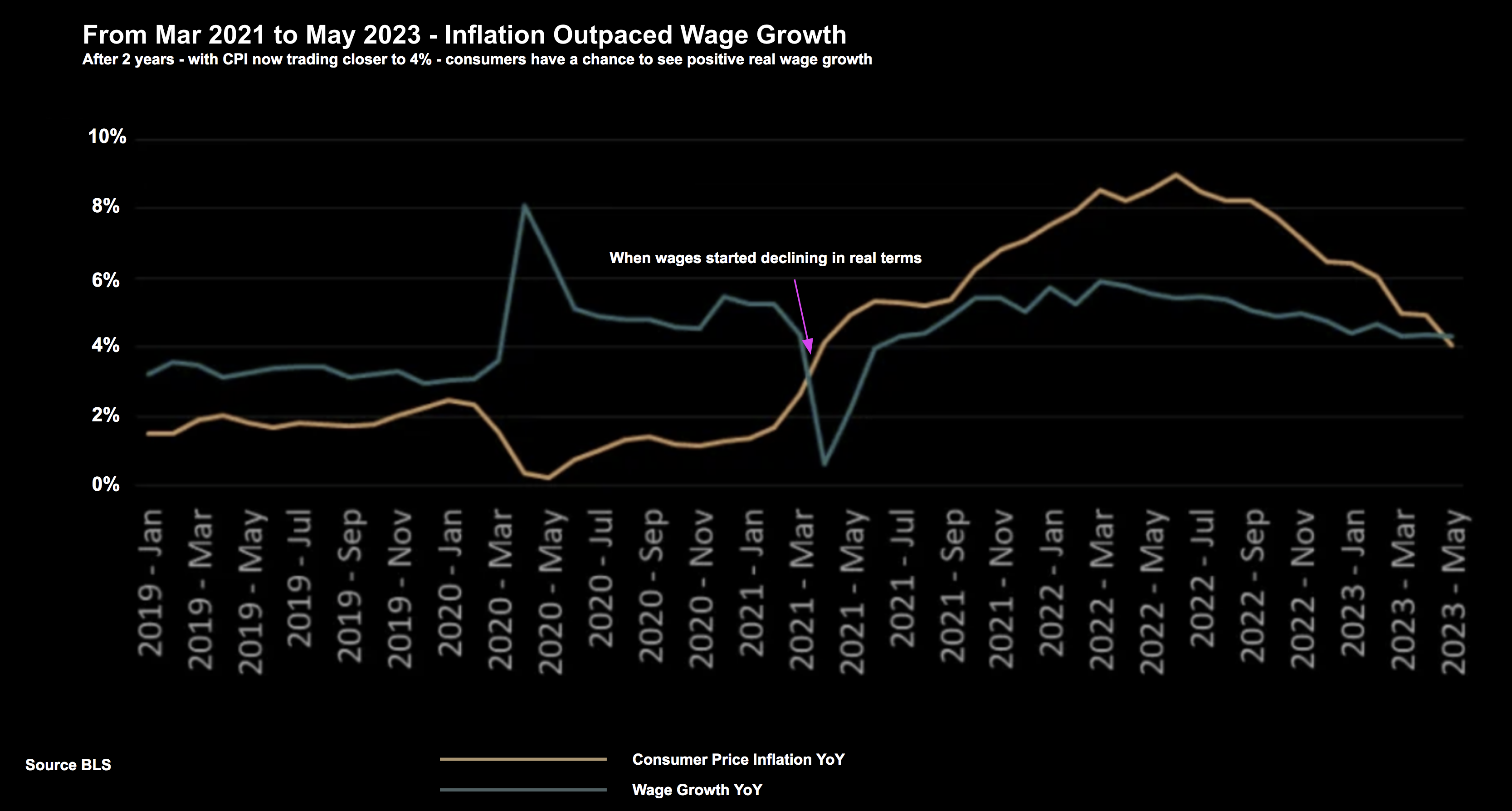
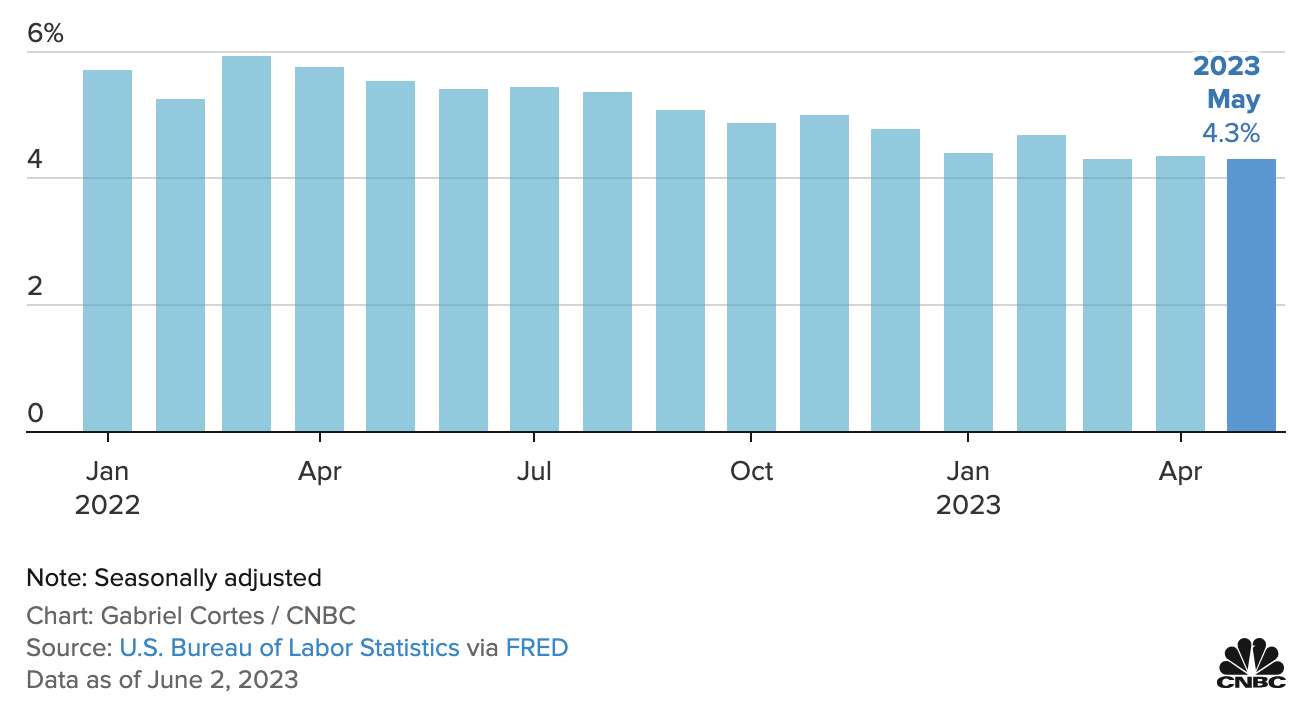
Payrolls rose 339,000 for May. That was well above the 190,000 expected - and what seems like a robust report. Is the economy really that strong? The devil is always in the details. From mine, I think the Fed will likely pause on a rate hike this month despite the so-called 'upside surprise'. For example, there is some 'soft' data in the report - soft enough for the Fed to not pull the trigger. Wage growth slowed and the unemployment rate ticked higher. Good news from the Fed's lens.

Fed Likely to Pause (for now)

With the debt ceiling deal behind us - markets will now focus on the next FOMC meeting. It's widely expected the Fed will pause on any rate hikes in June - especially given some of the underlying weakness in the jobs data. However, the market is not ruling out further increases later this year. I also take a look at AI boom in the market... call it "BoomGPT". Invest with optimism but do it with your eyes open.

What Don’t We Know?

There are some things we know to be (mostly) true. Inflation is coming down. The Fed is closer to the end of its aggressive rate hikes. Growth is slowing. And earnings are likely to decline in Q1 (after a decline in Q4). But what don't we know? What are the potential unknowns that could trip the market up? Three things to consider.