Category Fed Reserve

Immigration’s Impact on Jobs

The headline will read 303K new jobs were added to the economy for the month of May. And on the surface, it gives the appearance of a very strong number. However, how many of these were full-time jobs? And where were the jobs being added? When we look into the details of the jobs report - it paints a very different picture. My take: the headline number is not as strong as some assume.

Powell’s Itchy Trigger Finger

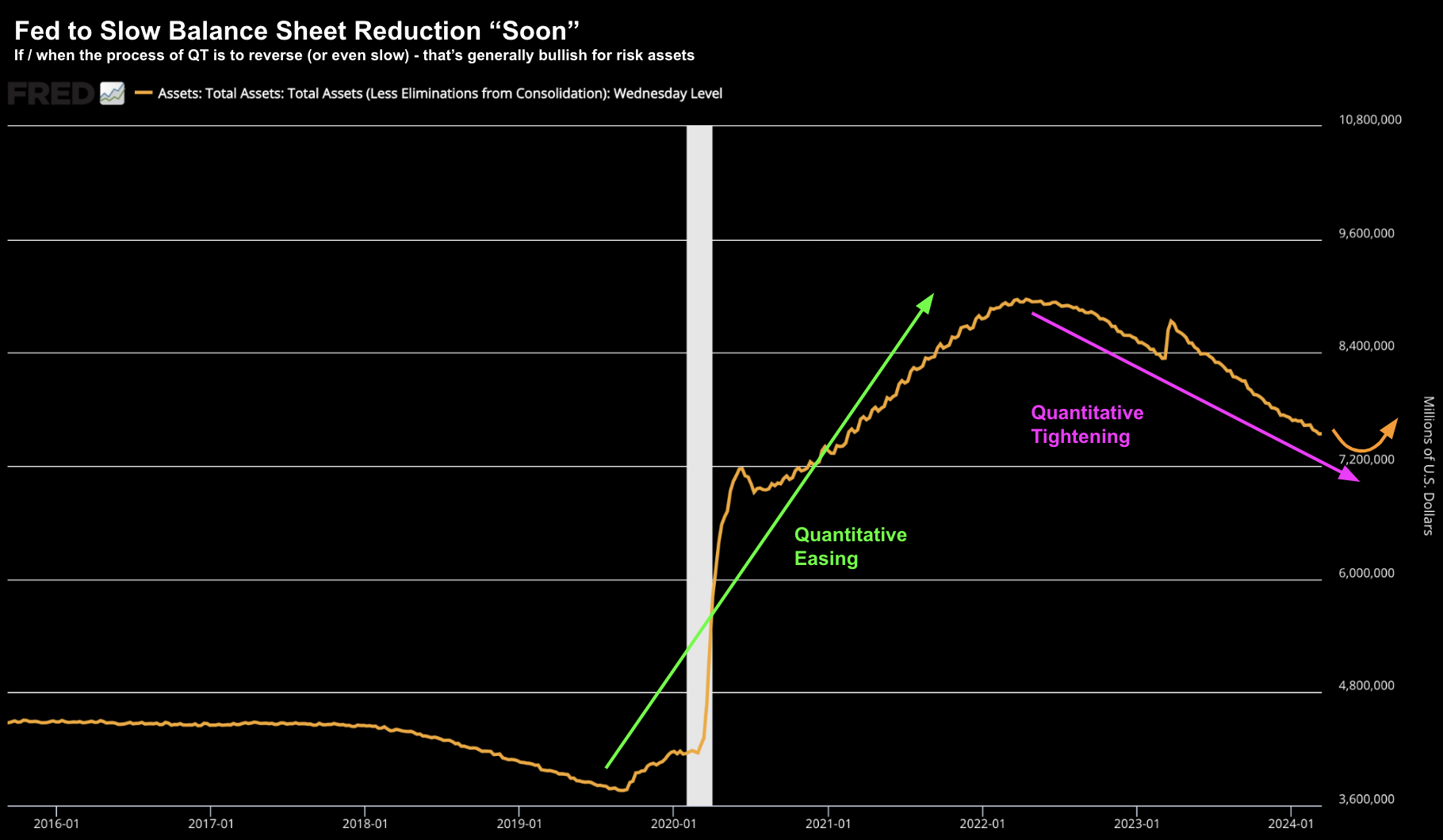
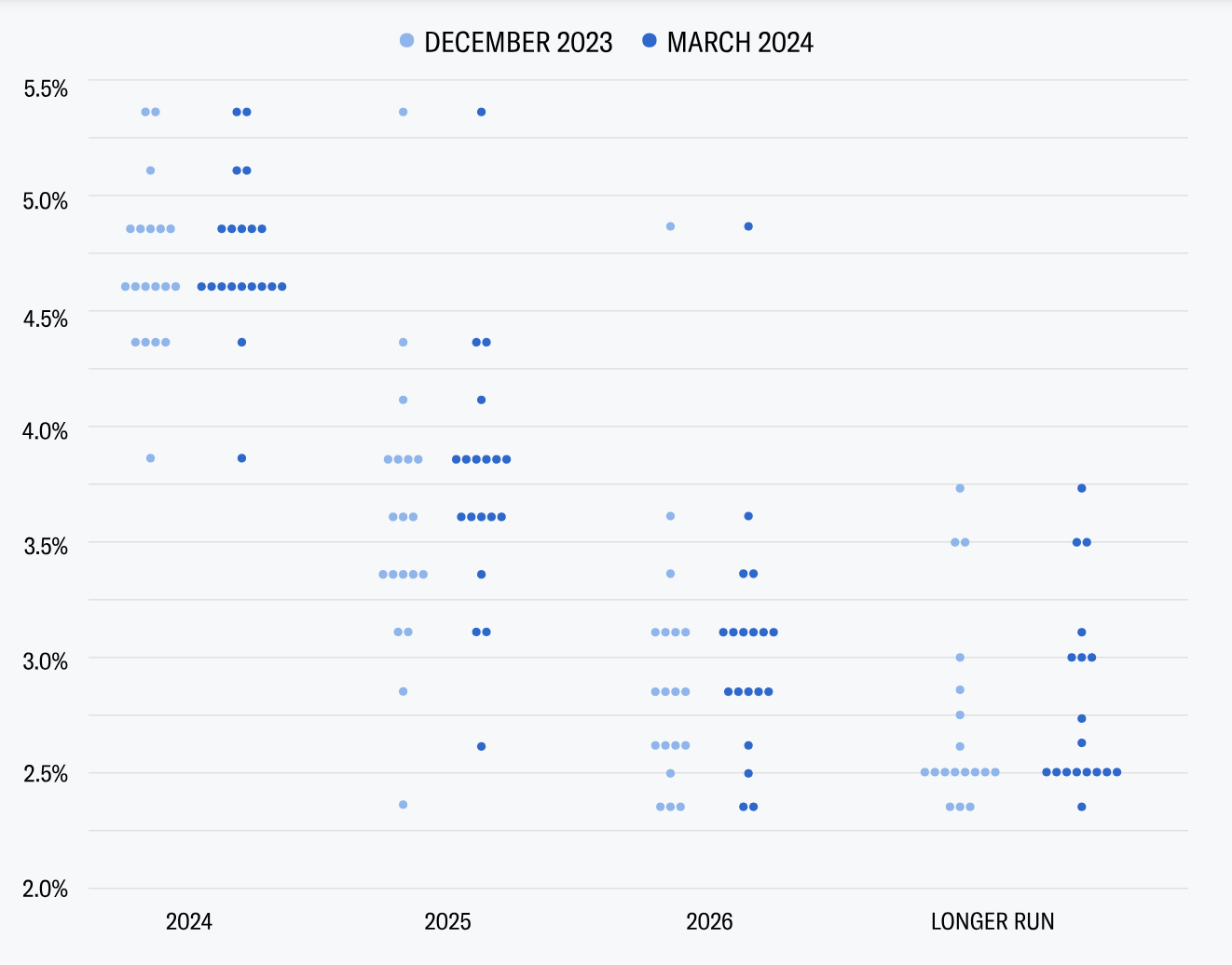
Why does Powell think the Fed needs to cut rates? For me it's curious. Itchy (trigger) finger maybe? What's he so worried about? I was surprised by his (continued) dovish rhetoric and contradiction(s) last meeting. For example, on the one hand, growth is accelerating, inflation is falling and we have a strong labor market. Great! But we still need to cut rates and taper QT (soon!). I must be missing something - it's hard to understand why the Fed is so keen to pull the trigger... what do they see we don't?
Don’t Fight the Fed…

"Don't fight the Fed" is a popular Wall St. adage for investors. The phrase was coined by well known investor Marty Zweig in 1970. At the time, Zweig explained the Federal Reserve policy enjoys a strong correlation in determining the stock market’s direction. Fast forward ~50 years and his theory has proven mostly correct.

The Real Surprise with Powell’s (Dovish) Statement

Investors were on tenterhooks going into today's Fed interest rate decision. Markets were up sharply the past few weeks - expecting Powell to remain dovish. However two consecutive months of hotter-than-expected inflation prints had some thinking twice. Turns out Powell is a dove. However, he delivered more dovish 'fuel' for stocks that what many expected.

Will Powell Heed Volcker’s Wisdom?

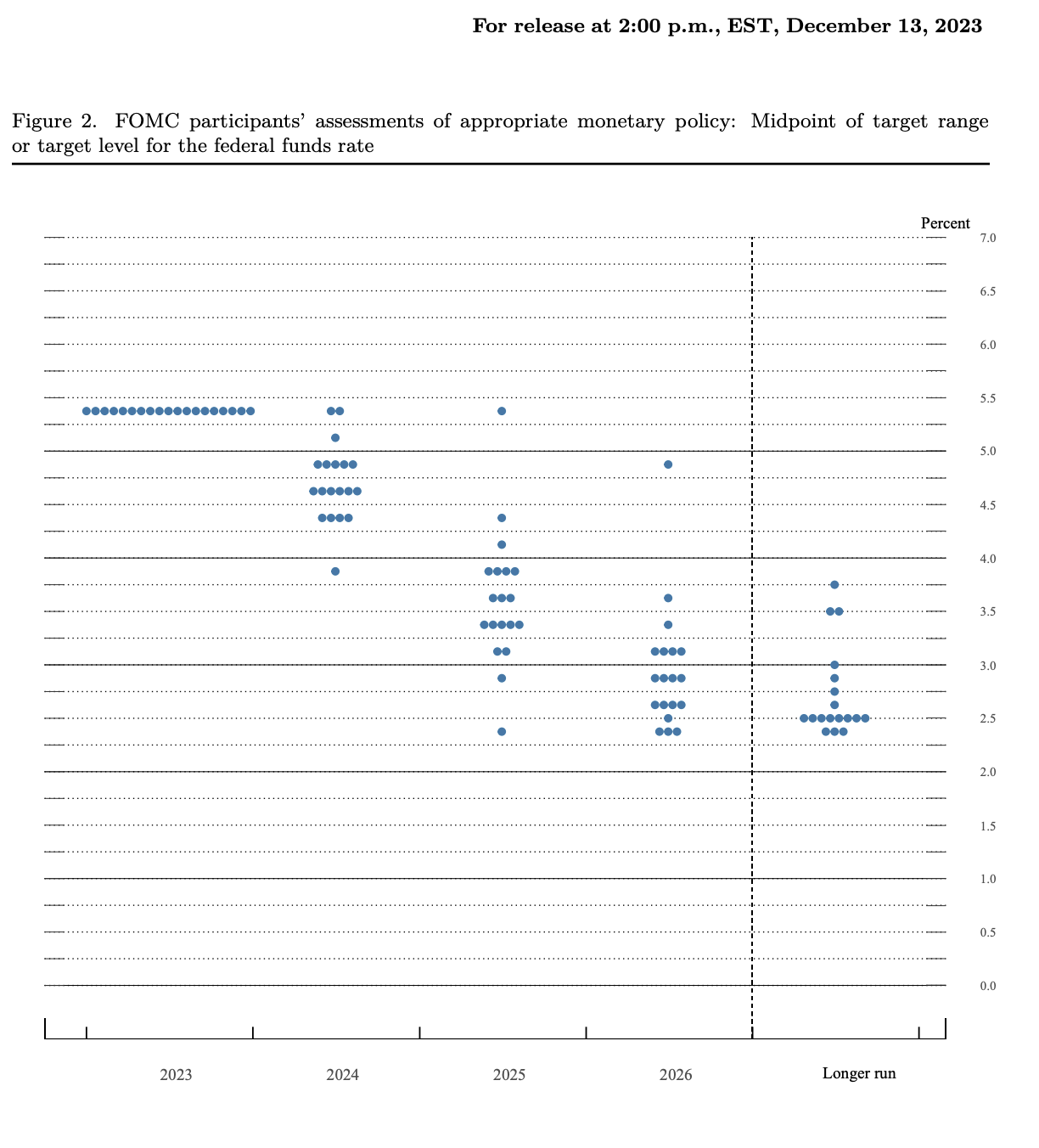
Next week Fed Chair Jay Powell will deliver the FOMC's March statement on monetary policy. Interest rates are not expected to change - however his sentiment might. When we last heard from Powell - he was dovish - igniting a rally in risk assets. However, with inflation heating up and a tight job market - Powell may perform another pivot. Markets expect three rate cuts this year - those expectations might be dialed back to just two.

It’s Not If “Long & Variable Lags” Hit… It’s When

Milton Friedman coined the expression "monetary policy operates with long and variable lags". In the 1970s - he felt it was up to around two years before those effects are felt. Today it's believed to be sooner - given open transparency of Fed speak and data tools available. But is it? It's been two years since the Fed's first hike and we're just starting to see labor markets soften and consumer demand weaken. Have the full effects of tighter policy been absorbed? I don't think so.

Money Supply is Expanding: Fuel for Stocks

When the supply of money expands - it's typically very good for stocks. For example, the S&P 500 index is said to appreciate at an average annualized pace of 14.02% when liquidity expands. However, when it contracts, that gain was only around 7.0%. Today money supply is once again expanding after one of the largest contractions in recent history. This has the potential to be very good for investors. As they say, it's always easier swimming with the tide.

Yields Rally on “Strong” Jobs Data

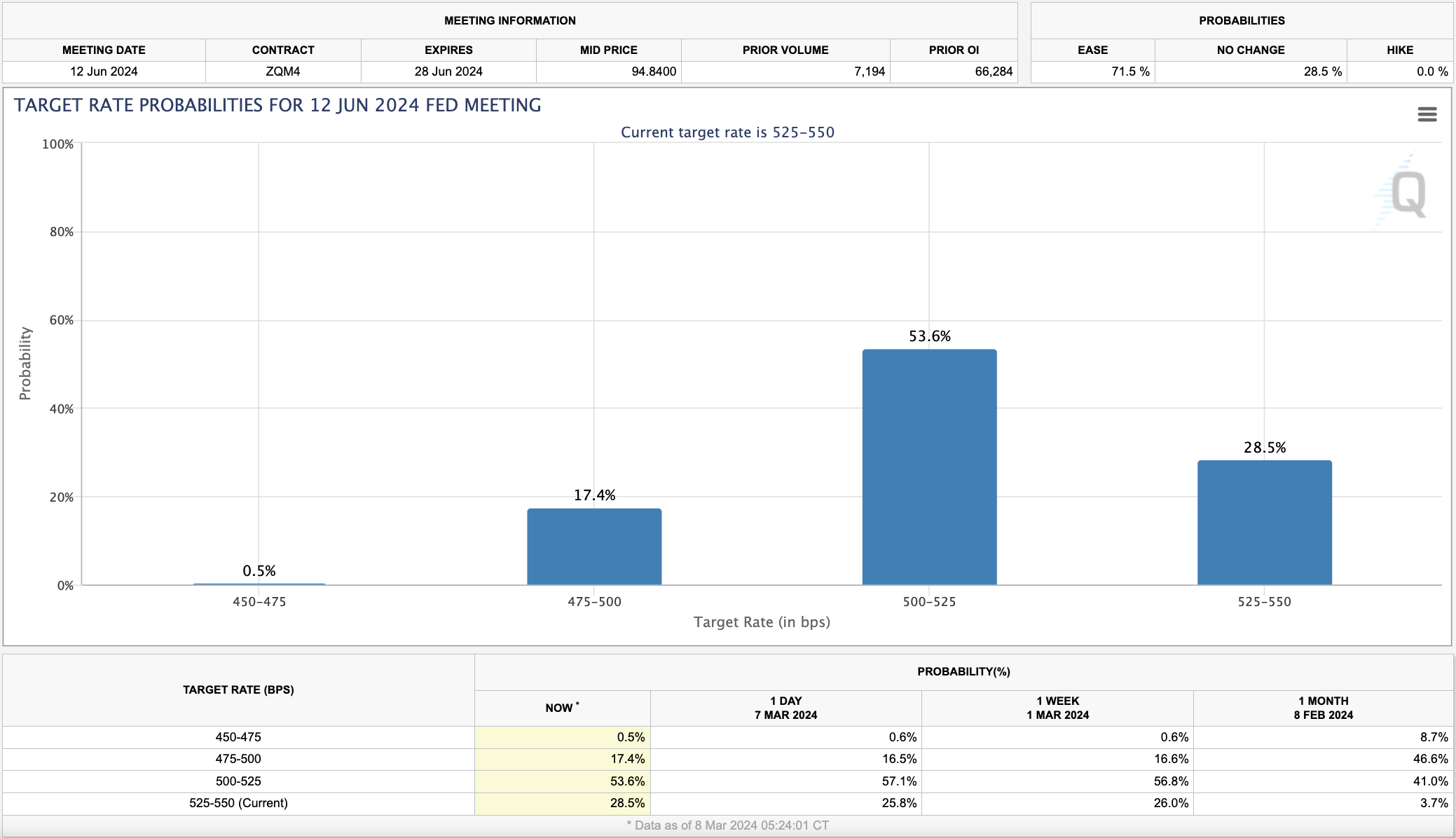
According to the BLS - we saw the strongest employment growth in 12 months alongside the fastest wage growth in 22 months (0.6% MoM). However, we also saw the lowest amount of weekly hours worked since 2010. Given the better than expect jobs gains and acceleration in wages (which remains well above the Fed's objective) - it seems less likely the Fed can justify rate cuts in March. Probabilities for a cut in 2 months stand at 38%. This was above 70% just a month ago.

Powell Won’t be Bullied

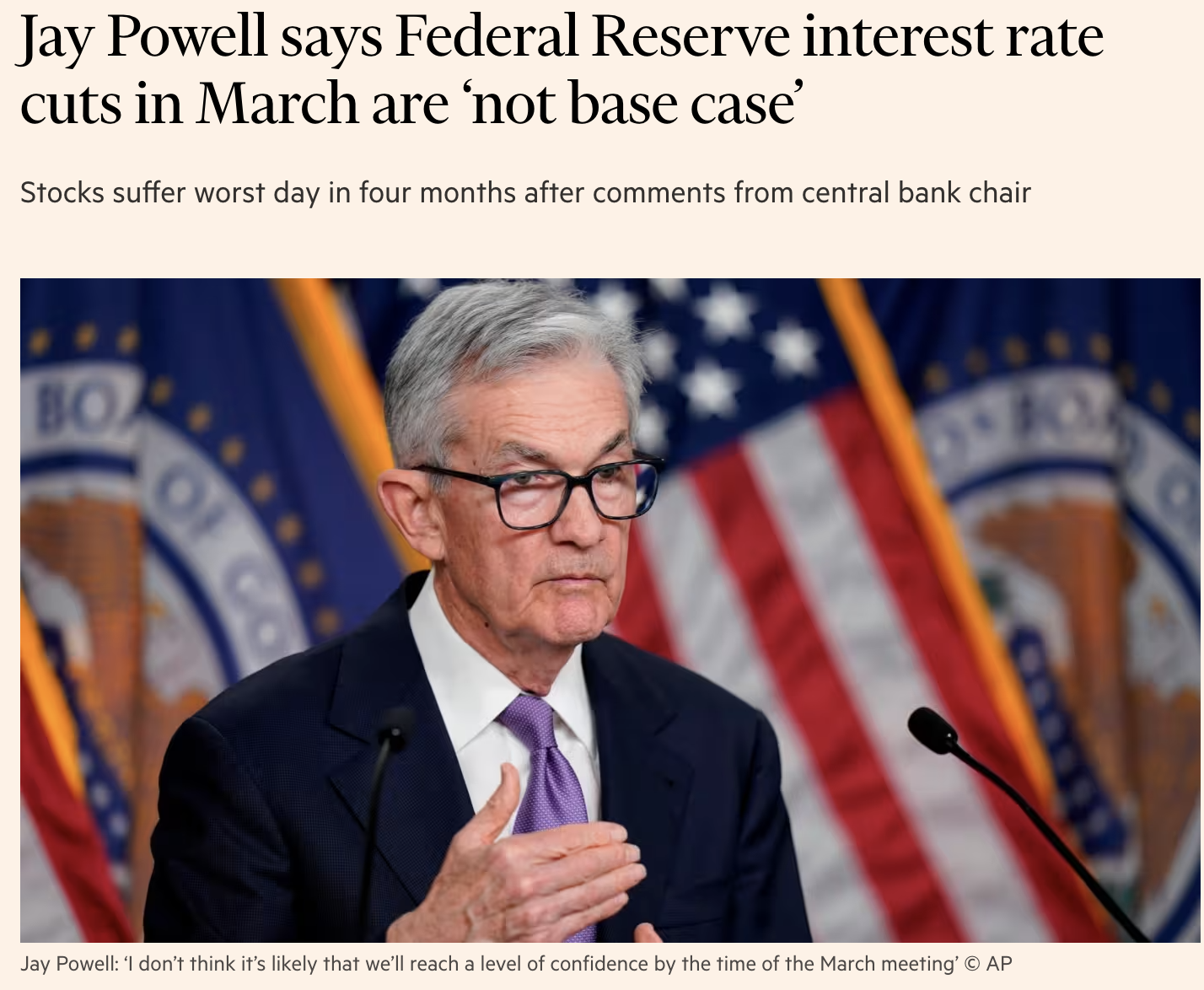
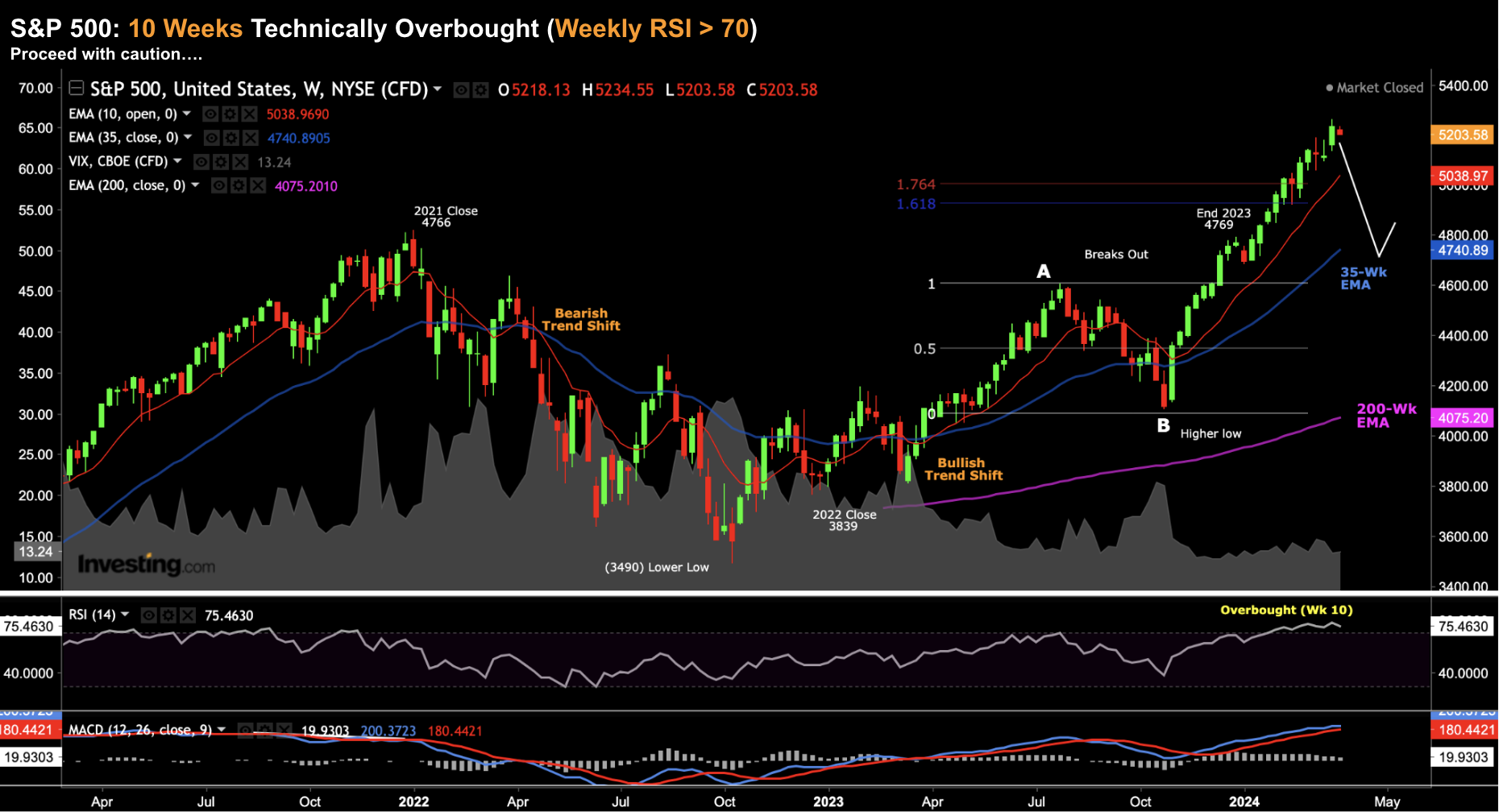
As we started this year - I felt the market was getting ahead of itself. Not only was the tape approaching an overbought zone - it also assumed as many as six rate cuts (possibly seven) before the end of the year. What's more - it also priced in that earnings per share (EPS) would grow 12% year on year. It felt like a contradiction. For e.g., either the economy was reeling and needed (emergency) rate cuts; or the economy is expanding strongly (supporting earnings growth)? Today Fed Chair Jay Powell pushed back on the former. Markets should not expect rate cuts as early as March... stocks didn't like it.

Core PCE Softens – Giving the Fed Scope to Cut

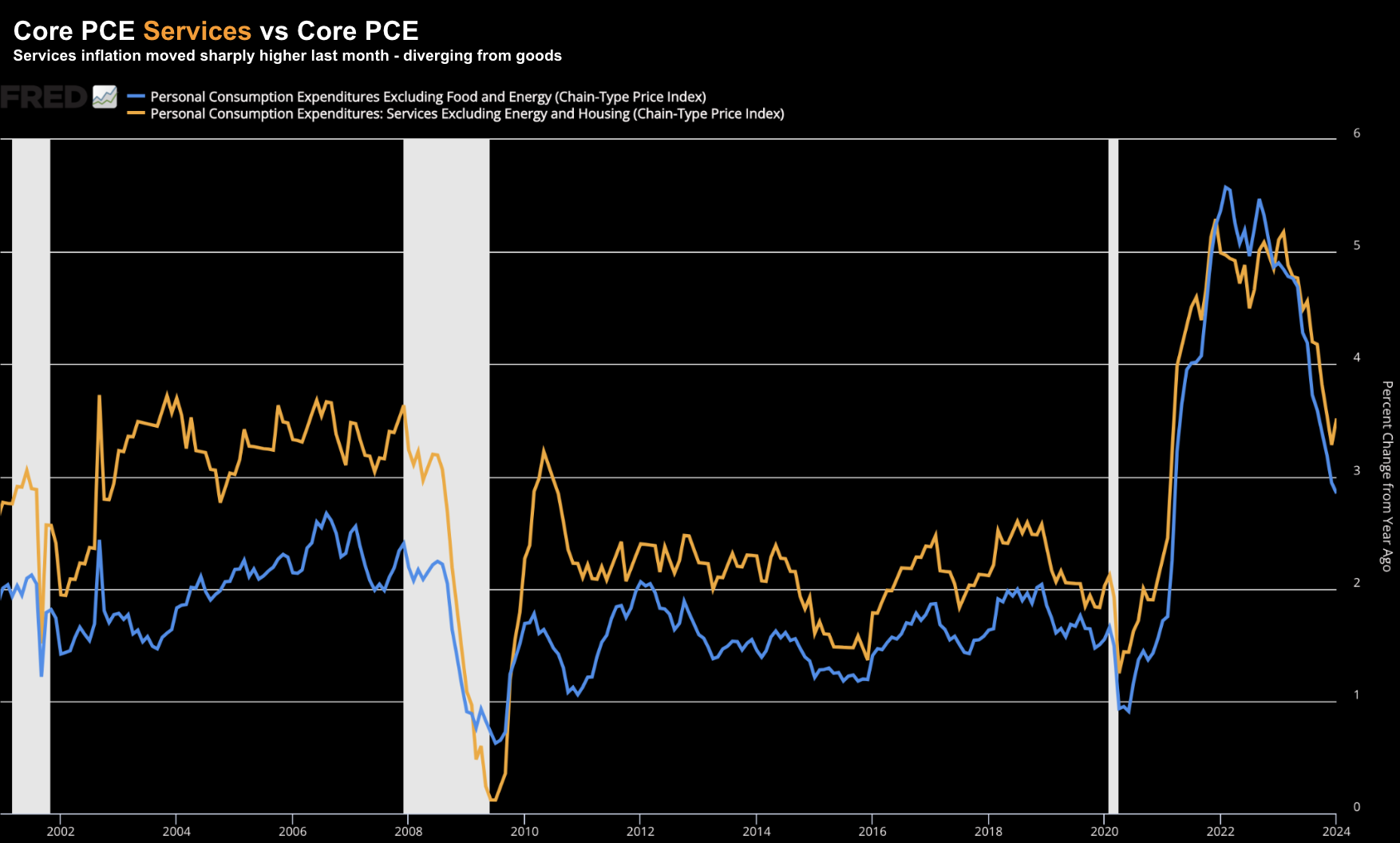
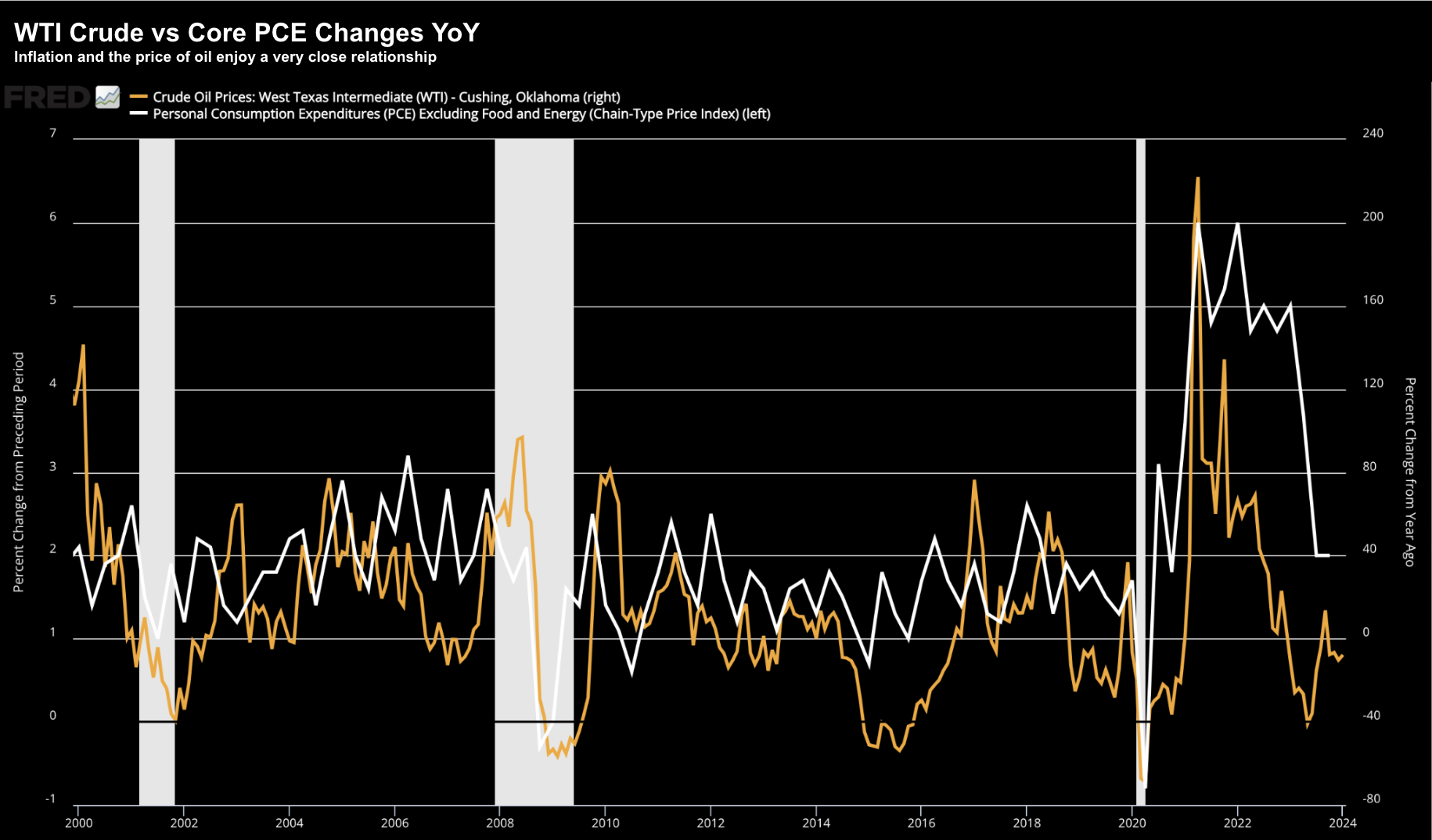
If there's one inflation indicator the Fed tracks more than any other - it's Core PCE (personal consumption expenditures). The PCE price index looks at U.S. inflation by measuring changes in the cost of living for households. It tracks the prices of a basket of goods and services, each with different weightings, to reflect how much a typical household spends every month. Today we learned that Core PCE continues to soften - which is good news. Question is does this give the Fed further scope to cut rates sooner rather than later?