Category Interest Rates / Bonds

Will a US Debt Downgrade be a ‘Bearish’ Catalyst?

Earlier this week, Fitch Ratings downgraded the U.S.' credit rating. Stocks slipped a little on the news and bond yields ticked higher. The US 10-year treasury yield is now north of 4.10%. Fitch cited “expected fiscal deterioration over the next three years” and an erosion of governance. Hard to argue. Fiscal restraint is not one of the government's strengths. But this isn't entirely new news. For example, the credit agency placed the nation’s rating on watch in May following a near-default after members of Congress butted heads over raising the debt ceiling. However, this put the wheels in motion....
Fed: Don’t Expect Rate Cuts

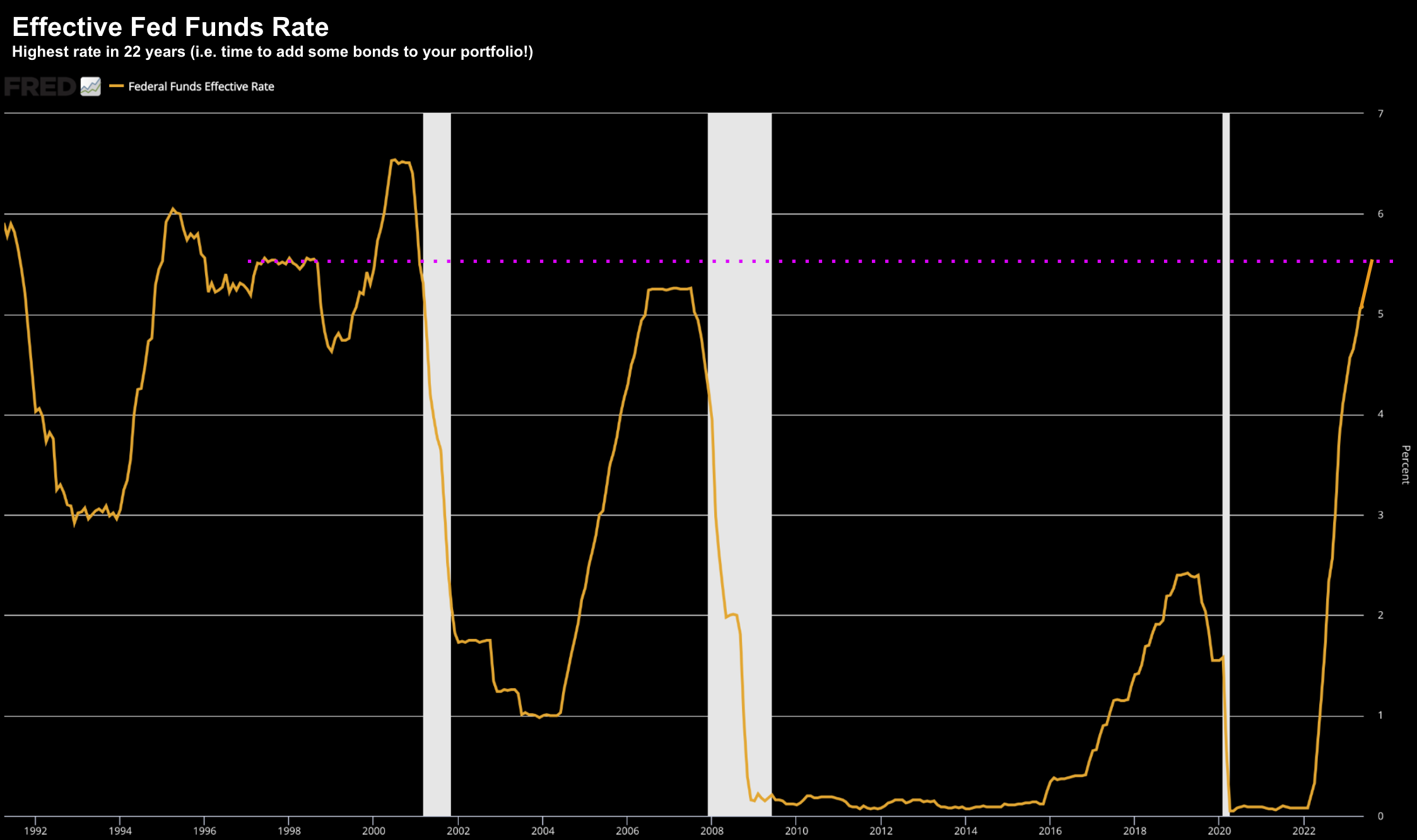
If nothing else, I took one thing away from this week's Fed decision: don't expect rate cuts anytime soon. The market had priced in a 25 bps rate increase - with the Fed flagging it well in advance. And the Fed didn't disappoint. But what they were hoping for was more of "dovish hike" It wasn't coming... Powell is keeping things tight-lip. And he has good reason to... he (like the market) simply doesn't know what lies ahead. And whilst things appear to be trending in the right direction - it's far too premature to call a victory over unwanted inflation

What Banking Crisis?

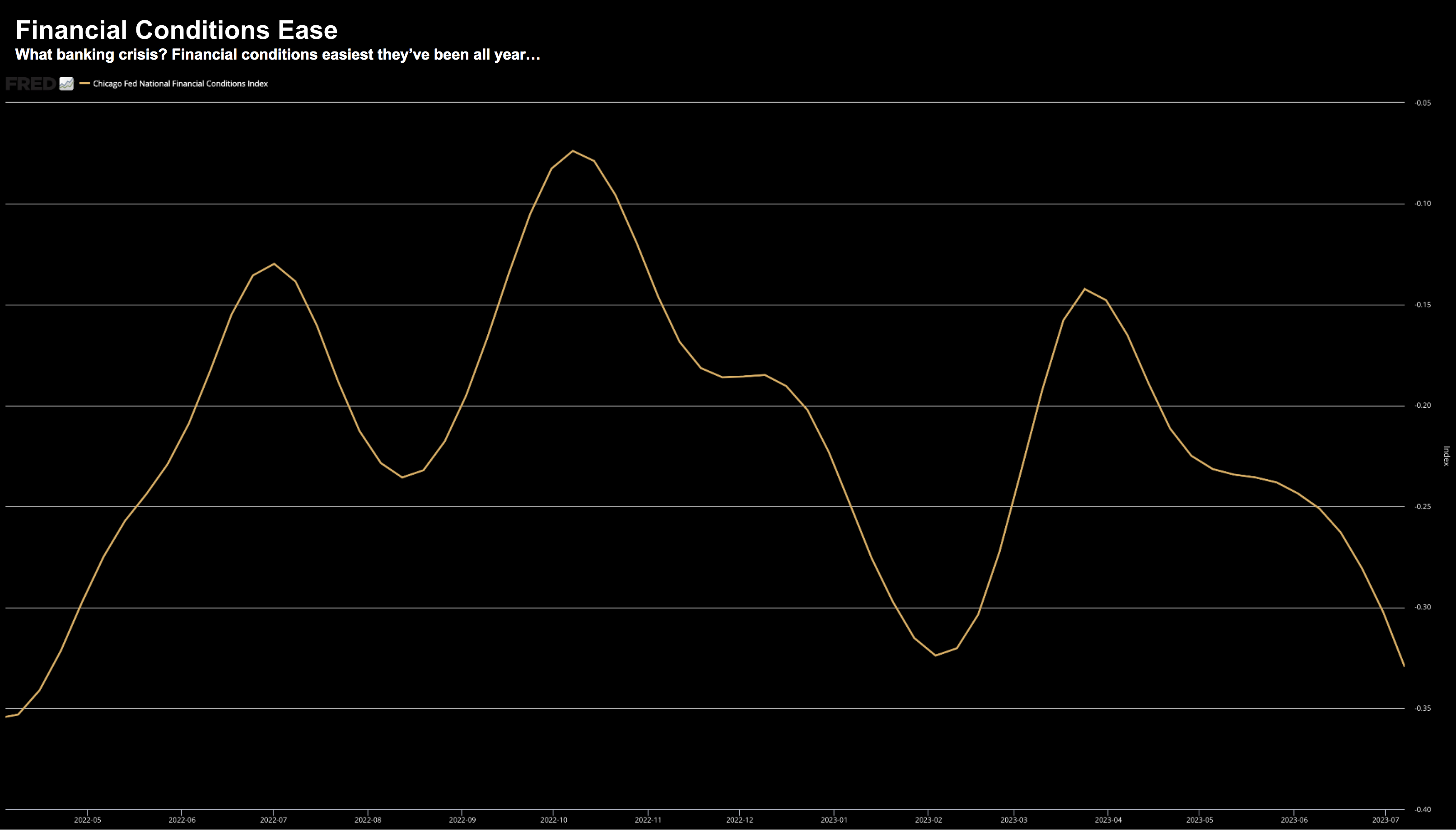
Are things actually looking up? If your measure is the equity market... you would say absolutely. Stocks continue to charge higher on the back of lower inflation and optimism the Fed is closer to the end of its hiking cycle. What's not to like? However, there's something else giving markets a boost. Easy money! Financial conditions are as easy as they've been all year. For example, it was only 4 months ago and we had a mini banking crisis... where funding was a lot tighter. That's now a distant memory.

Fed Can Keep Raising w/Core CPI 4.8% YoY 

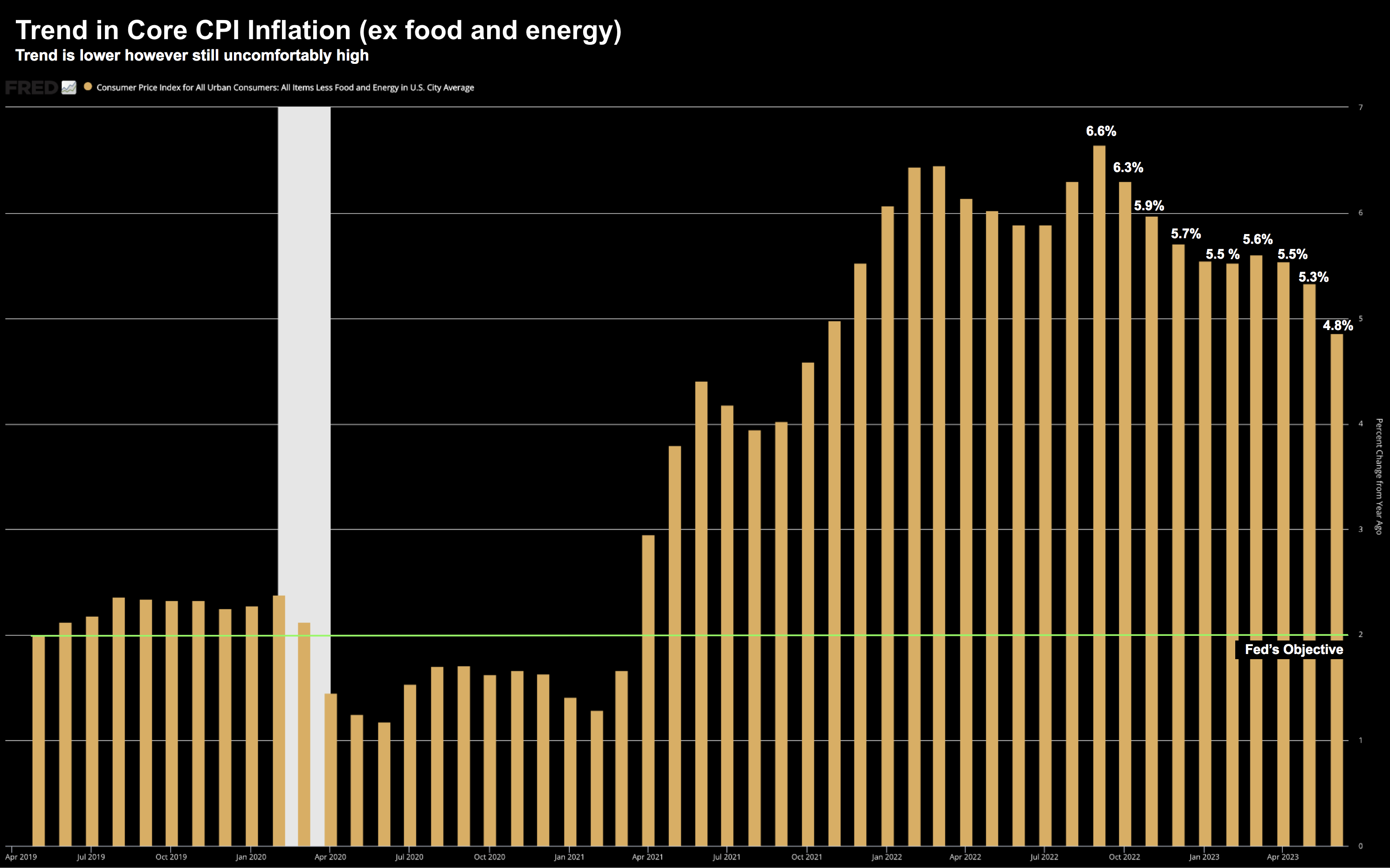
The market celebrated the June monthly CPI data. Headline CPI came in at just 3.0% YoY - and Core CPI fell to 4.8% YoY. Good news. However, with Core CPI still more than 2x the Fed's target - expect them to raise rates again at the end of the month. However, what surprises me is the market believes the war with inflation is basically done. Is it? I think that is presumptuous. The fight with Core inflation will be a long one. If correct, the Fed may not need to keep raising rates aggressively - however are likely hold them there until their objective is met.

Think About Adding Bonds

For me, 2023 has been a year of repositioning and managing risk. I lowered my exposure to large-cap tech (down to ~20% portfolio weight) and increased exposure to banks, energy and some industrials (which all trade at reasonable valuations). Today I will look at two bond ETFs - which I think could warrant exposure in your portfolio. In summary, with the US 10-Year yield back above 4.0% - it pays to add some longer-term duration.

Fed Minutes Suggest More Hikes 

Today the Fed released this statement from their latest minutes "The economy was facing headwinds from tighter credit conditions, including higher interest rates, for households and businesses, which would likely weigh on economic activity, hiring, and inflation, although the extent of these effect remained uncertain". But here's the thing: the market could be underestimating how long the lag effect is. Typically it's between 12 and 24 months. However, with an extra $2+ Trillion in (perhaps wasteful) government handouts, that has softened the blow dealt from higher rates. But make no mistake - the lag effects from 500 bps of tightening will come - it's just longer than expected.

‘Higher for Longer’ after May Core PCE

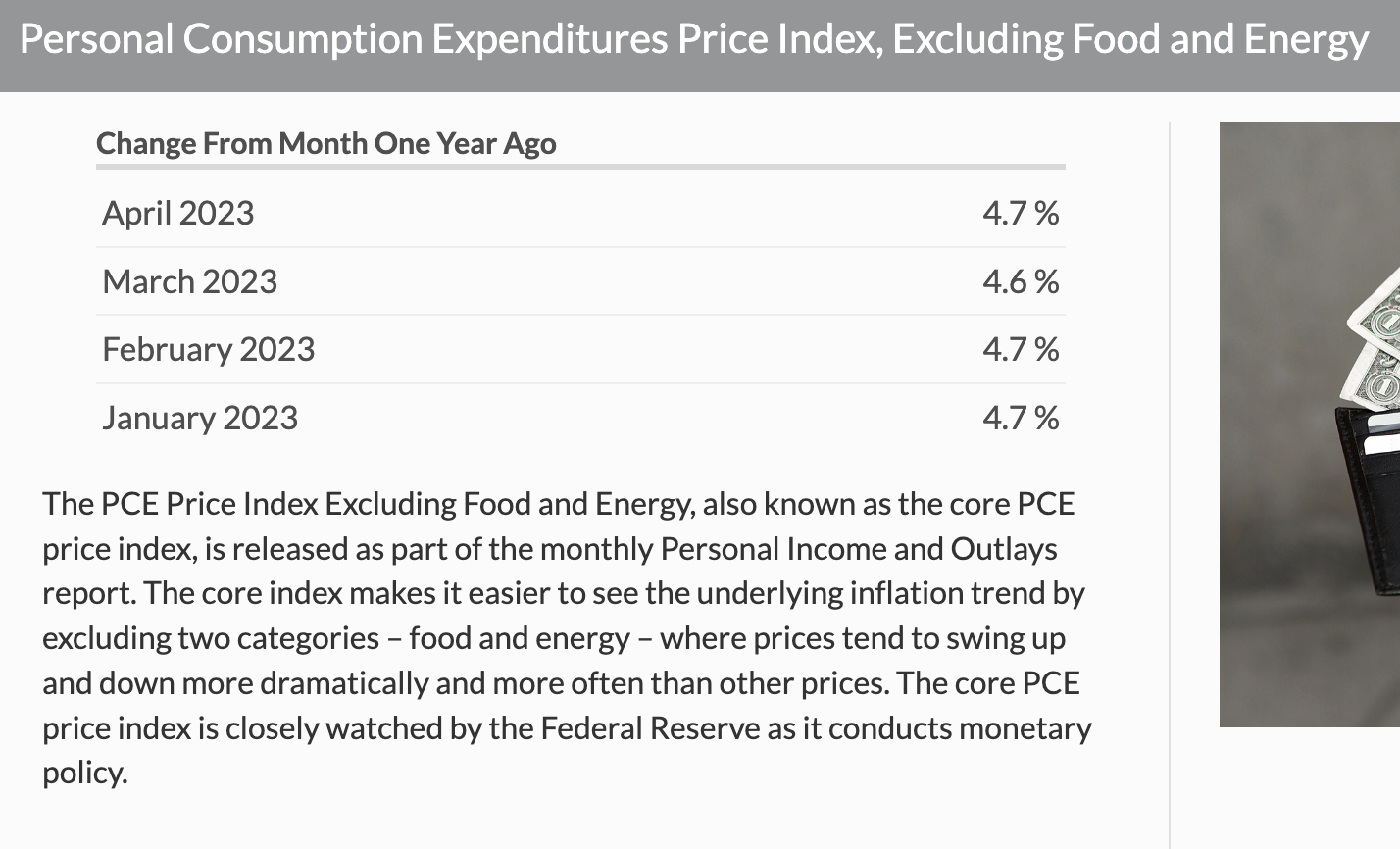
May's print for Core PCE came in 4.6% YoY - still well above the Fed's objective of 2.0%. However, mainstream were quick to label the report as 'lackluster'. Why? Here's the thing - Core PCE has hardly changed the past few months. It dipped in May to 4.62%, from April (4.68%), but was above March (4.61%), and was exactly where it had been in December (4.62%). Put another way - we have made no ground since December - and yet it was now somehow 'lackluster'. But it gets better: core services inflation (without energy services) rose by 5.4% in May YoY. It was fractionally lower than April (5.5%) - but equal to what we see in both March and December (5.4%). Similar to Core PCE - it too is stuck in a tight range for 5 consecutive months. What does all this mean? Simple: rates will be higher for longer and markets don't get it.

Stocks Are Not Cheap

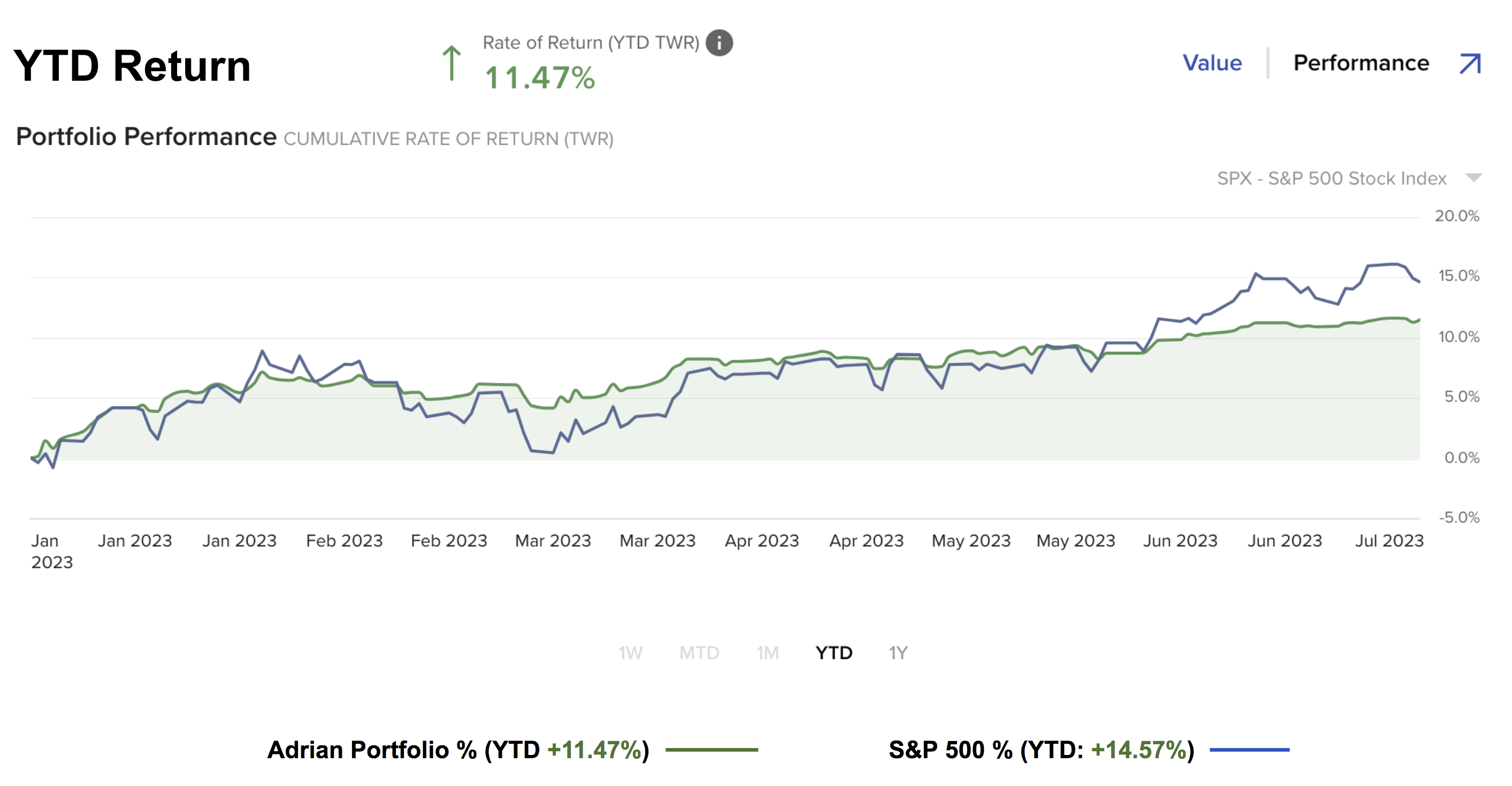
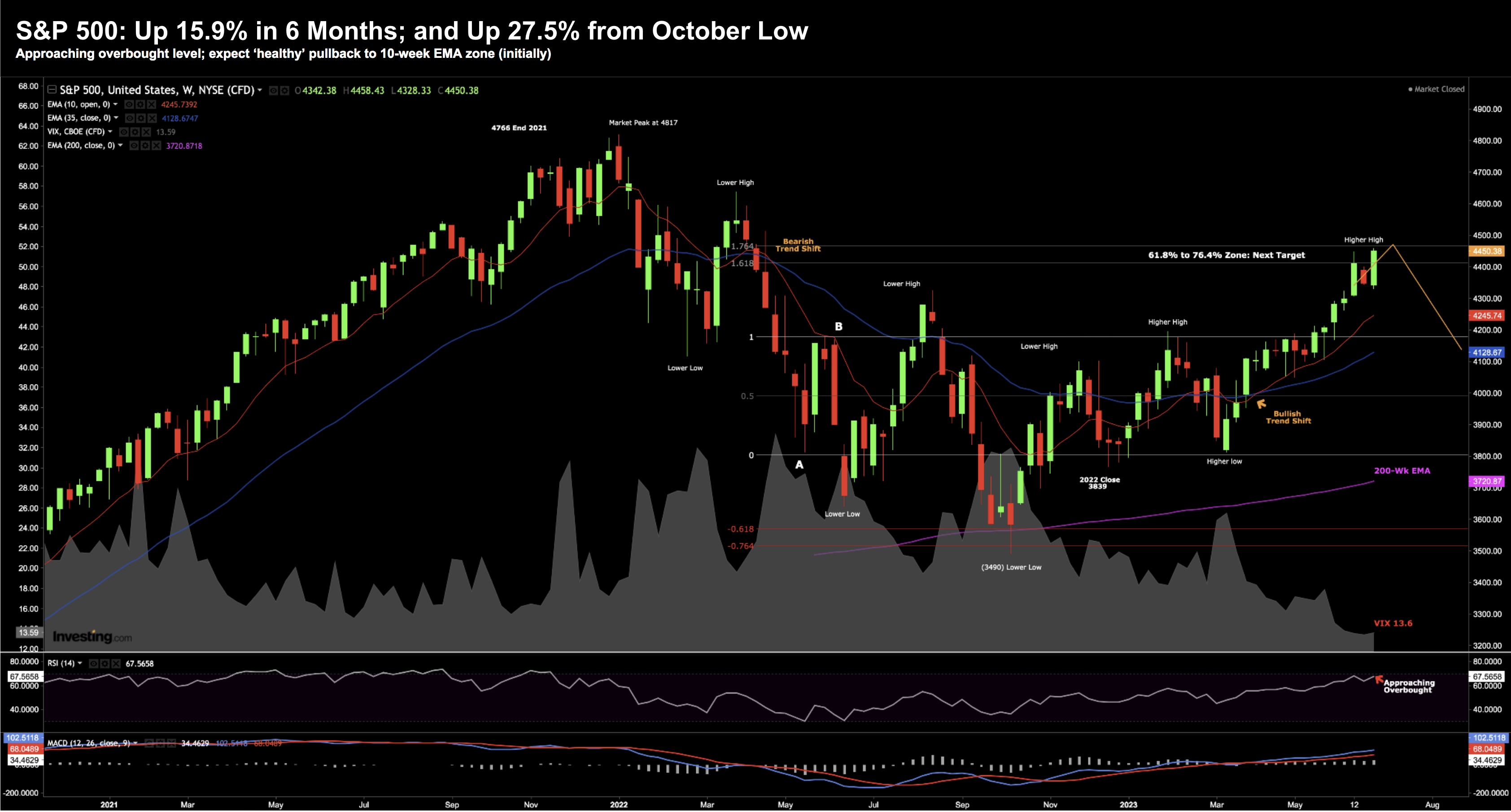
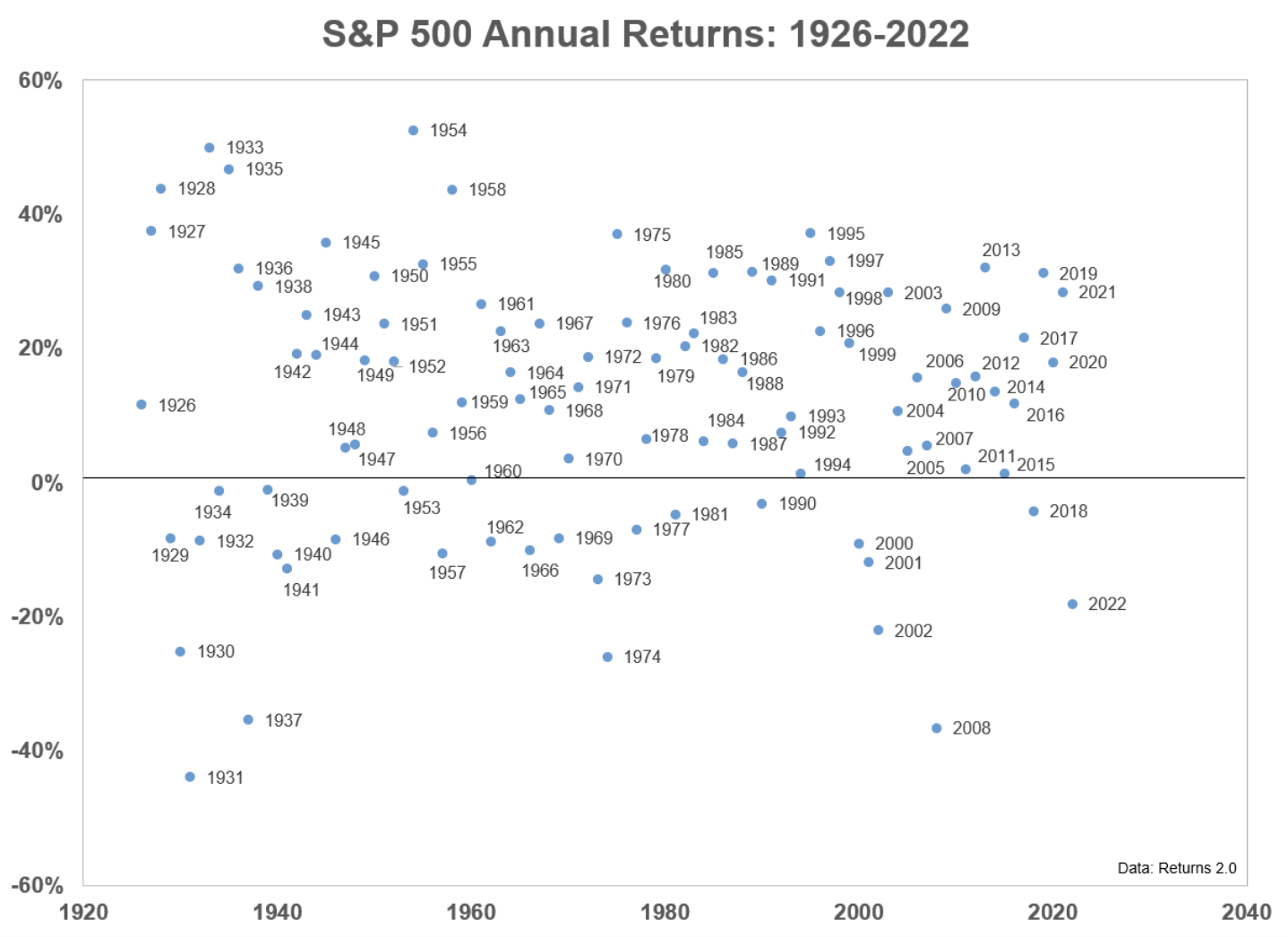
The S&P 500 has had a fantastic first 6 months of the year - up almost 15%. That's a welcomed relief from the miserable 2022. But are stocks now too expensive? What's the premium investors are being asked to pay? There are a couple of ways we can assess this. For example, we can compare the earnings yield against the risk free rate of return (currently around 5.5% and going up). And whilst it's always good to maintain some (long) exposure to the market - we need think carefully about how much (and where)

Do Ya Feel Lucky… Punk?

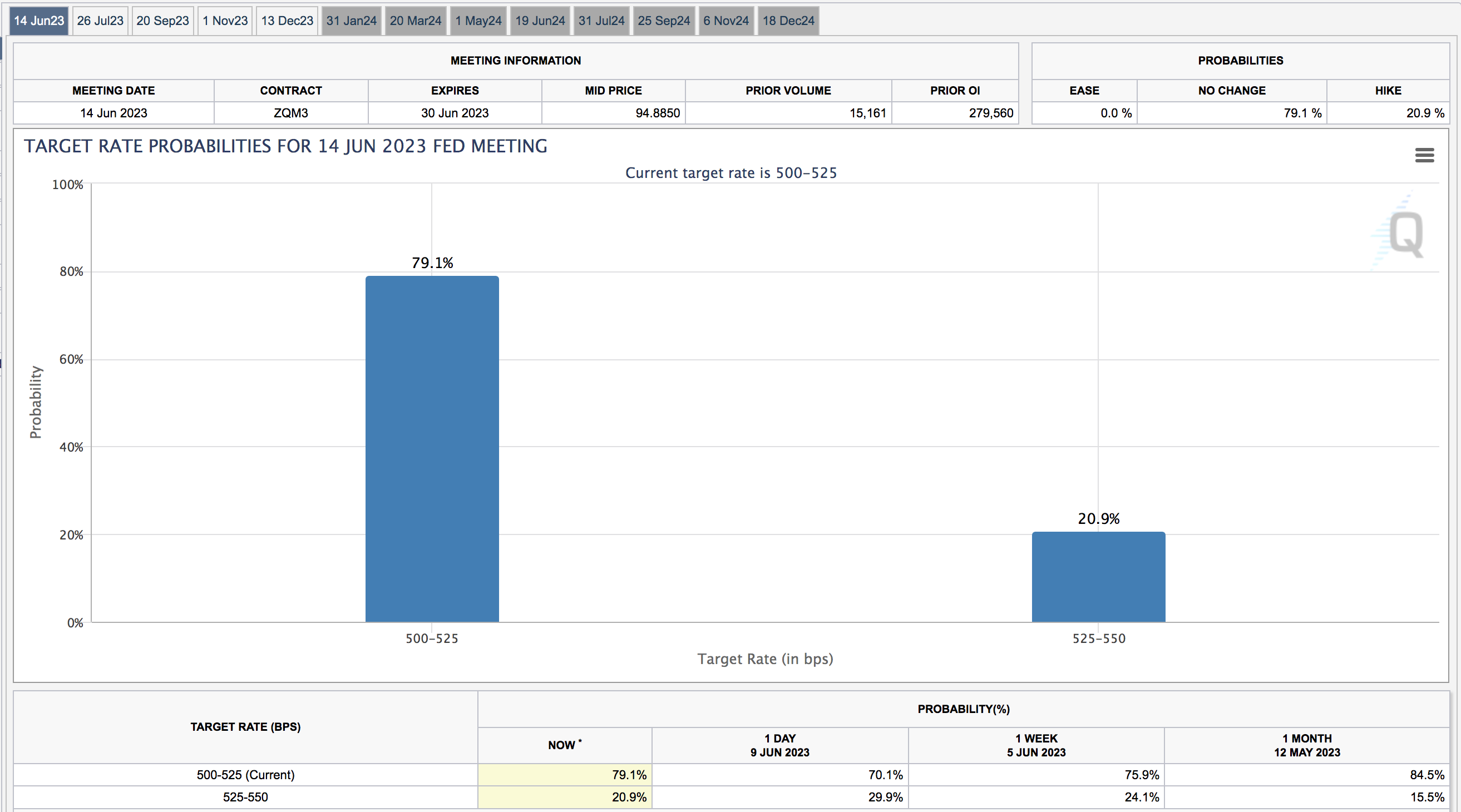
"You've got to ask yourself one question: 'Do I feel lucky?' Well, do ya, punk?" - Dirty Harry. In Callahan's case, there might have been just one... maybe two... left in the chamber. Were you willing to take that chance? Sure, Powell delivered what the market expected. However, he reminded us there's still more 'lead in the Magnum 44'. The other day I shared how the market has already priced in a 60% probability for a hike in July. That probability remains unchanged after Powell gave his address. However, beyond July, the market is not expecting any. Remember - only a few weeks ago - the market felt that rate cuts were still possible this year. So... do you feel lucky?

Skip, Pause, Hike or Pivot

It's Fed week. What will the world's most watched central bank do? A surprise hike like Canada and Australia? Unlikely. Maybe time to hit the pause button and take a look around? That's what markets are pricing in. Or will this be a 'hawkish skip' implying their work is not yet done? From mine, if we see Core CPI anything above 5.0% this week - the Fed will tell us their work is not done. Here's the thing: markets are trading back at levels before the Fed commenced their 500 bps of rate hikes. What's more, we find Core PCE still above 5.0%; unemployment well below 4.0%; and wage inflation above 4.0%? What is to stop the Fed from finishing the job? Whilst they are likely to pause - there are more hikes ahead