Category Interest Rates / Bonds

Fed’s Balancing Act for 2025

2025 will not be without its challenges for both investors and central baks. For example, if we consider: monetary and fiscal policy risks; likely introduction of tariffs and price increases; geopolitical risks as global central banks navigate U.S. policy; a stronger US dollar with a rising 10-year treasury yield; ongoing debt and deficits concerns; the risk of stubborn inflation (notably services); and a weakening employment picture - this presents a complex web of related variables or risks. How are markets pricing this in? For now they remain complacent - trading at record highs - at near 22x forward earnings.
End of 20-Year Cheap Money Era

Equities were seemingly caught off balance with the Fed's 'surprise hawkish shift'. From mine - there was very little surprising about it - you only needed to look at the data. However, what I was more interested in was how Powell would explain why they were cutting rates. As it turns out he struggled - leading to a small sell off in stocks. The irony was Powell did a better job of explaining why rates should not be lowered (which is obviously at odds with their decision to cut).

Inflation x Rates = Uncertainty

The stock market could not be more optimistic. And perhaps not since the dot.com bubble of 1999 - have investors been so sure of the future. Excited by a business friendly government coming to power; lower inflation; consumers continuing to spend - what's not to like? I can think of one thing.... valuations. If buying stocks today - you're paying through the nose. And for me - that increases your risk.

The Bond Vigilantes Strike Back

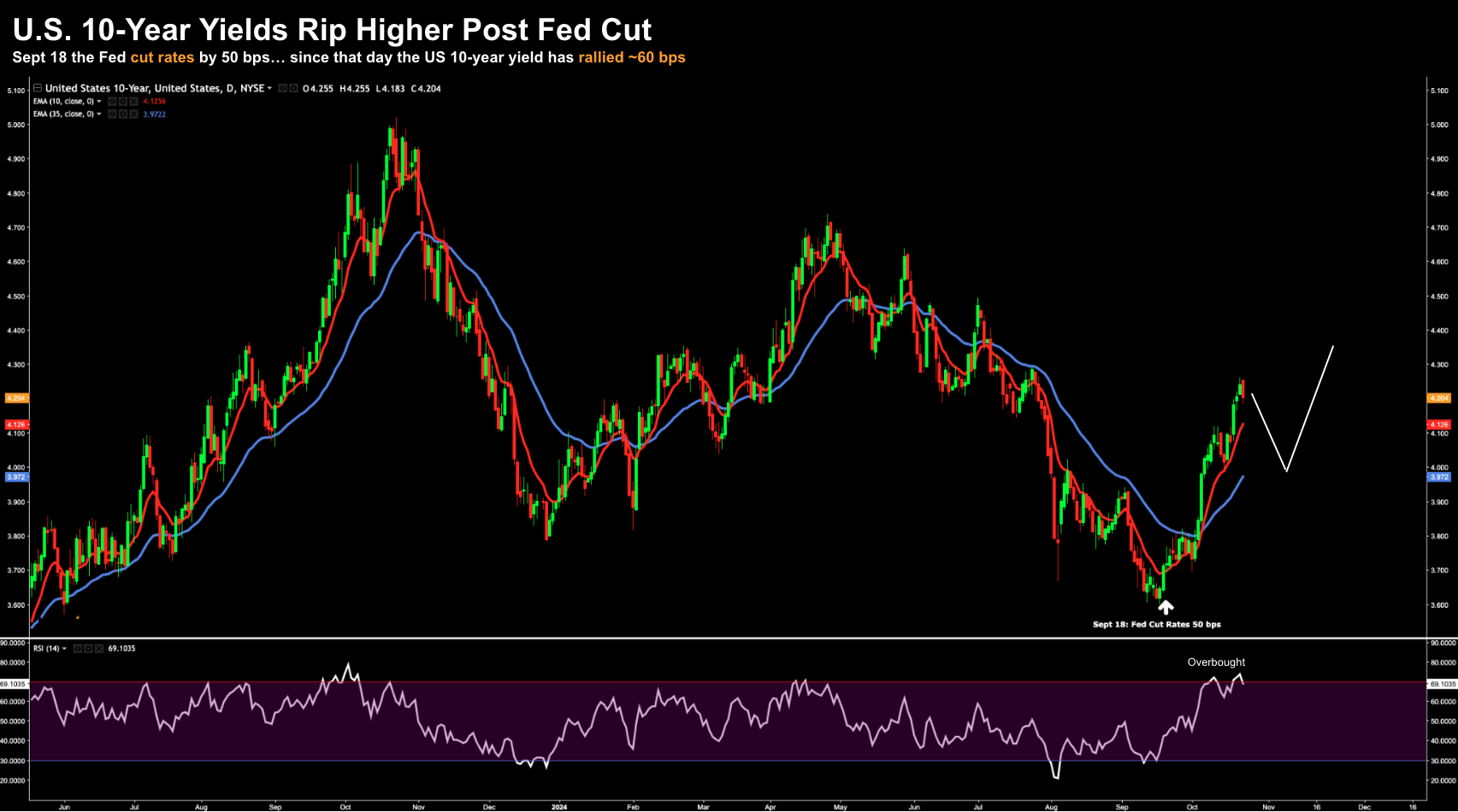
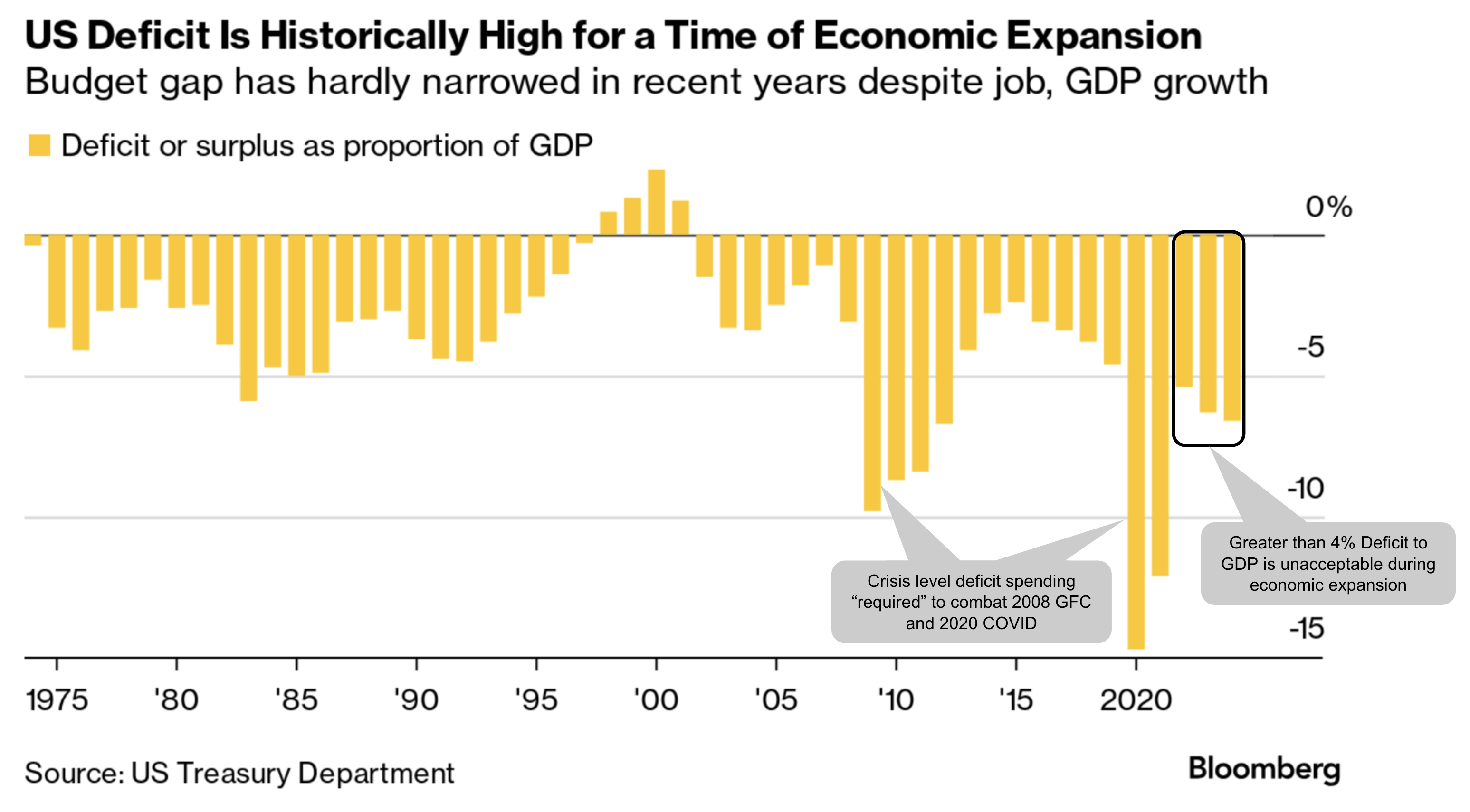
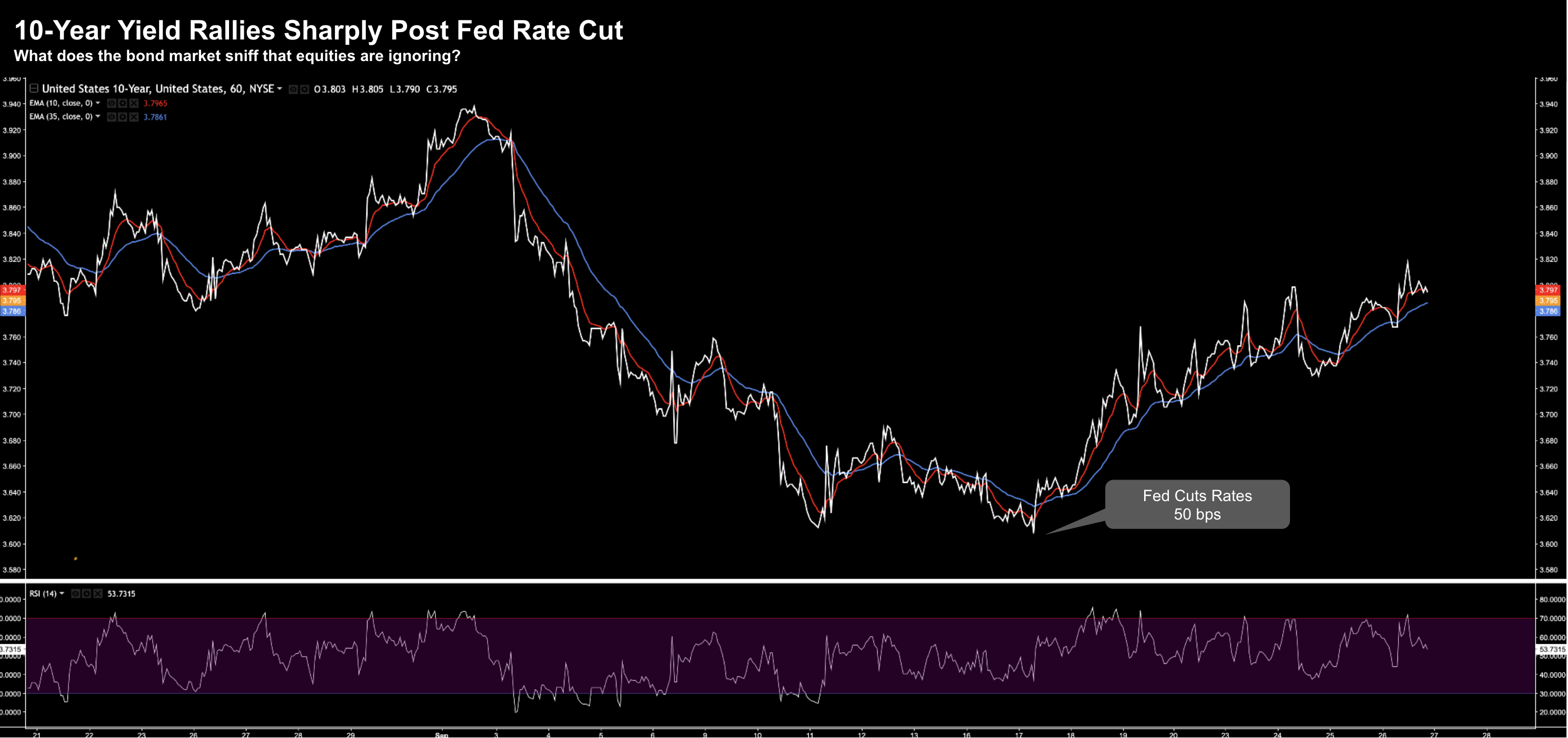
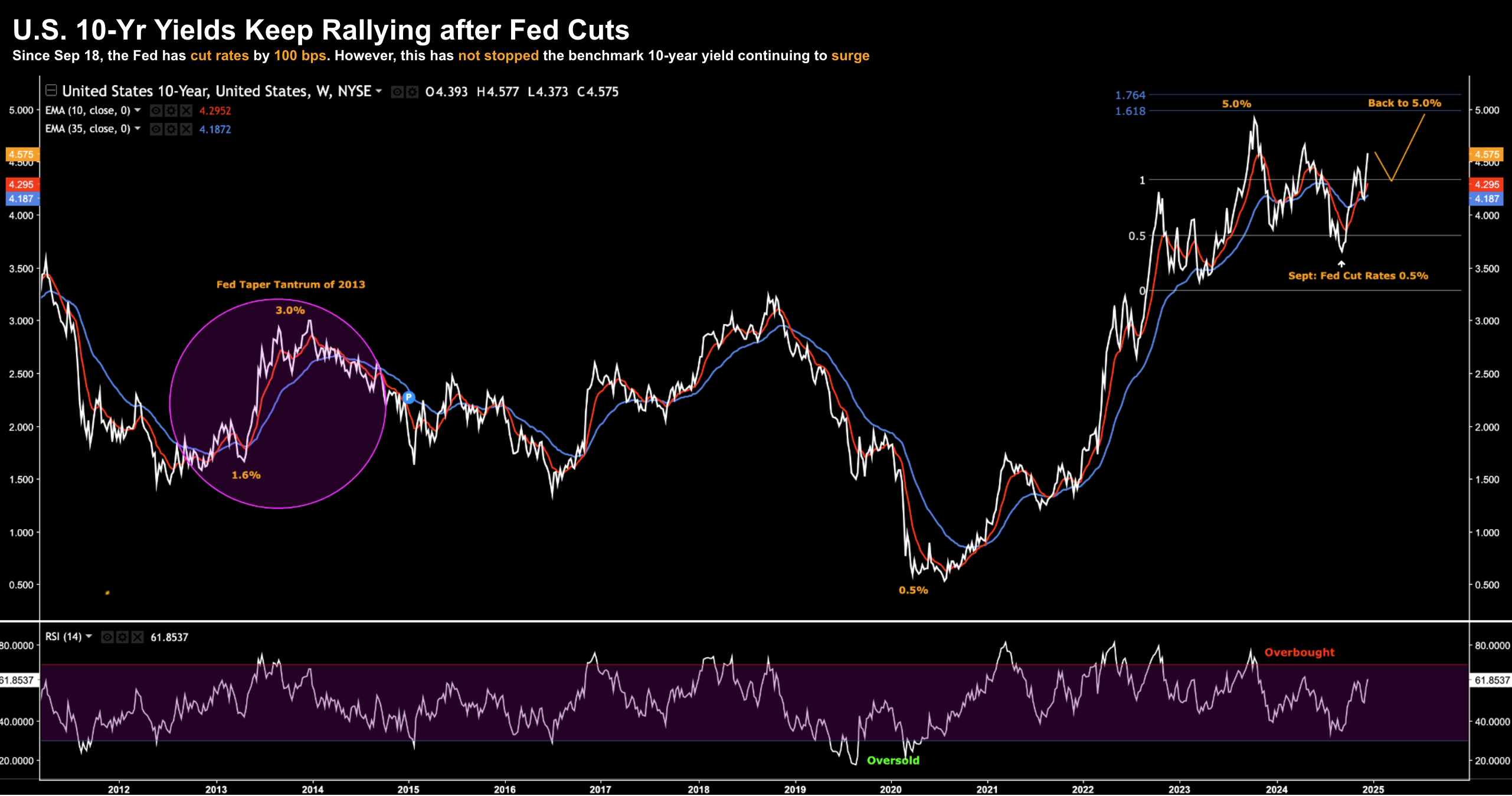
Several weeks ago I suggested investors consider reducing their exposure to 10-year treasuries. At the time, the world's most important debt security was yielding around 3.80%. They would continue to fall to a near-term low of 3.60%. In this case, the timing was good as these yields have rallied some 60 bps in turn crushing bond prices. For example, EDV and TLT have dropped more than 10%. So why are 10-year yields rising in the face of Fed cuts? There's a good reason: term premium. Bond owners demand a premium if owning the debt of a fiscally irresponsible government. And this has major implications for investors...

The Fiscal Tailwinds Helping Stocks

Will fewer rate cuts dampen the enthusiasm for stocks? It certainly hasn't to this point. And could higher bond yields impact stock valuations? So far the market is not bothered. These (and other) questions need to be weighed carefully with the S&P 500 trading ~21.5x forward earnings. And whilst the multiple is heavily skewed by the 'Mag 7' - 21.5x is far from cheap. What's more, from a historical perspective, paying a multiple above 20x offers investors a very low risk premium (e.g., with the risk free rate above 4.0%). But wait... what's to say stocks cannot rise further? We'll explore why they can...

The Inflation Puzzle: ‘Services’ Remain Sticky

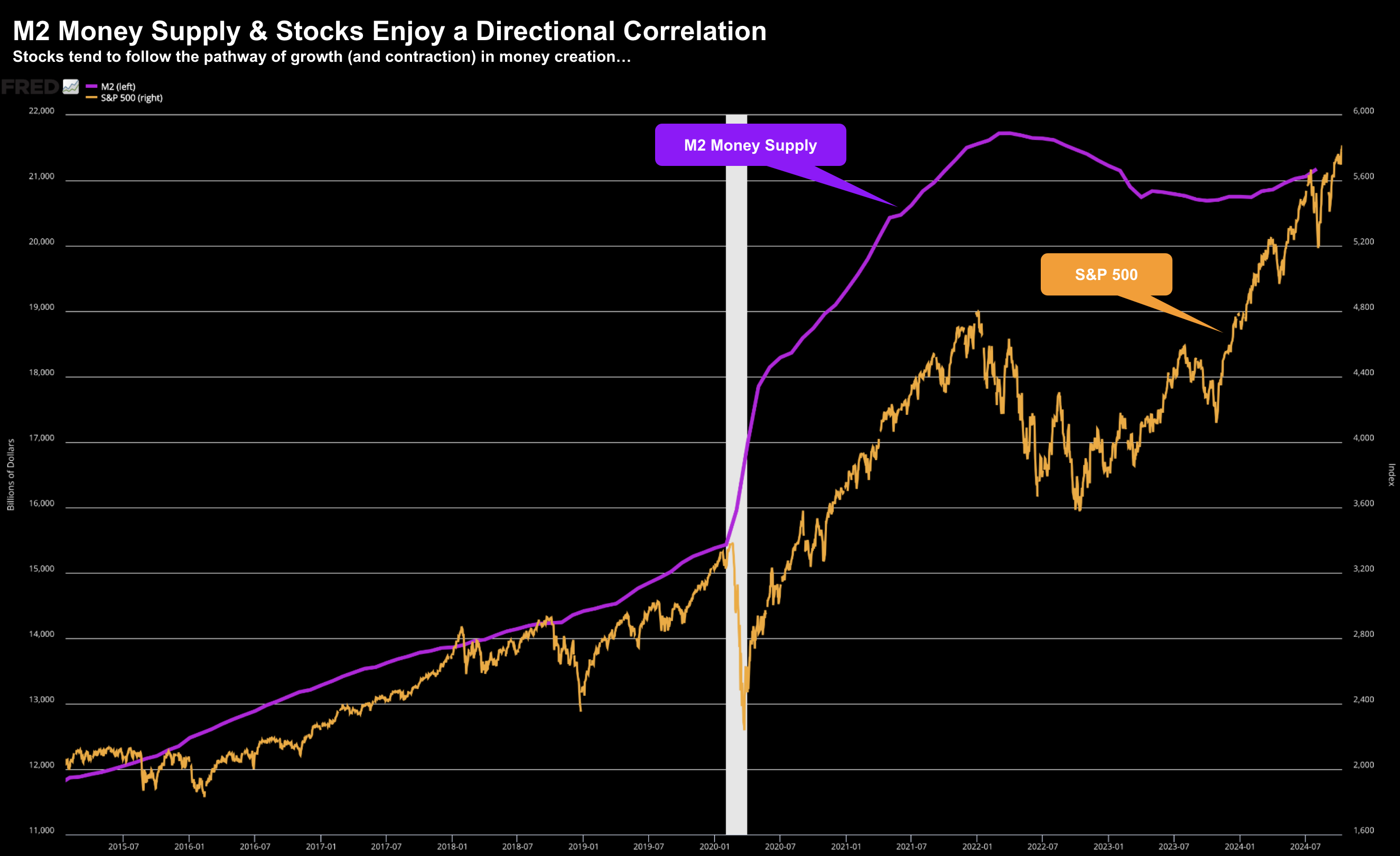
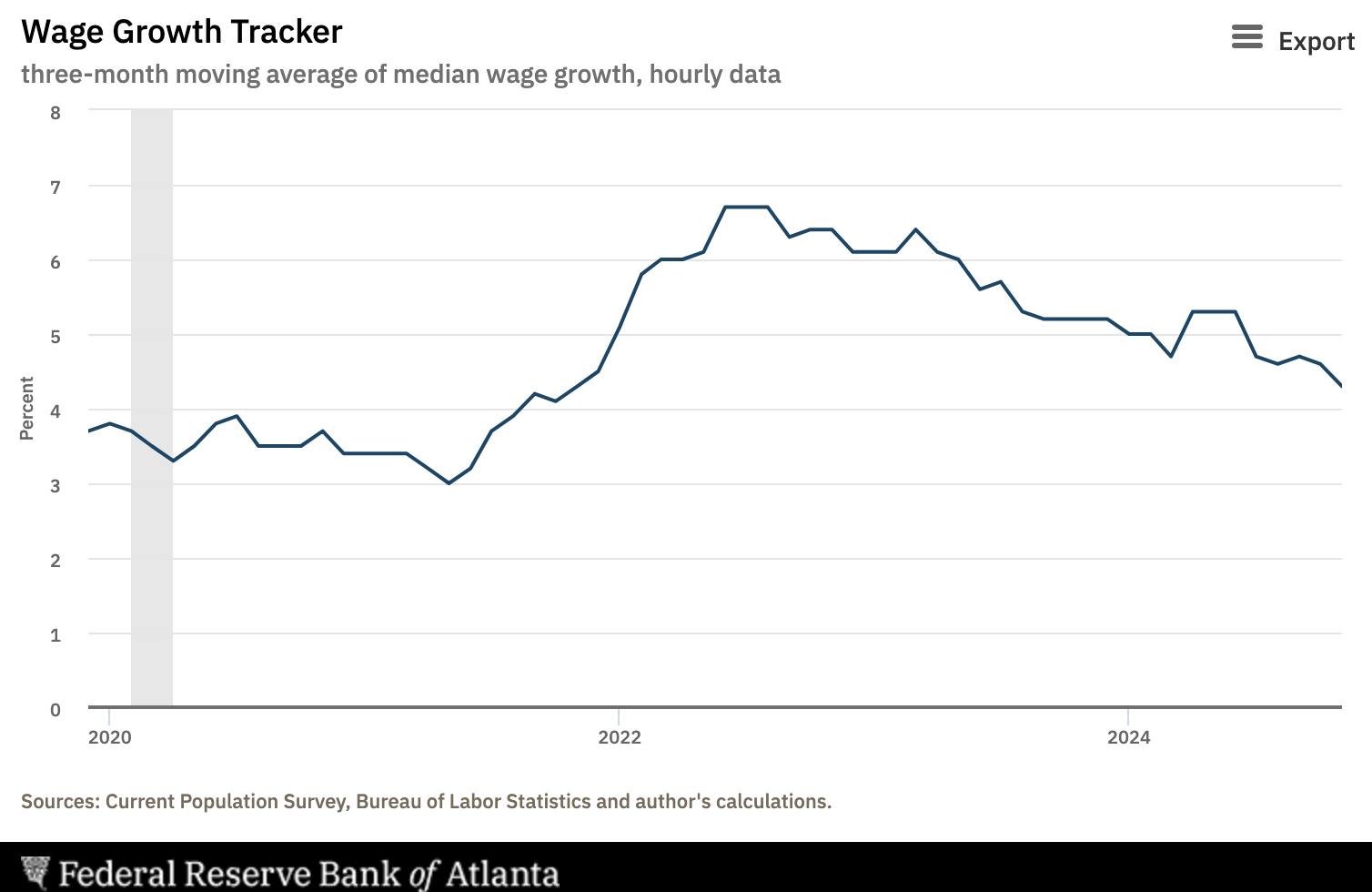
In a perfect world, inflation should be boring. Boring is good. However, when you inject an additional $6+ Trillion into the economy with far fewer goods being produced, inflation becomes a story. Last month's inflation report showed headline (and core) CPI ticked higher. However, what caught my eye was "supercore" inflation - something the Fed says is a good predictor of future prices. Suerpcore is services inflation less shelter. This was up 4.4% YoY - also moving higher. The reason: pressures with wage growth - which remains around 4.7% YoY

Fed’s Task in Changing Times

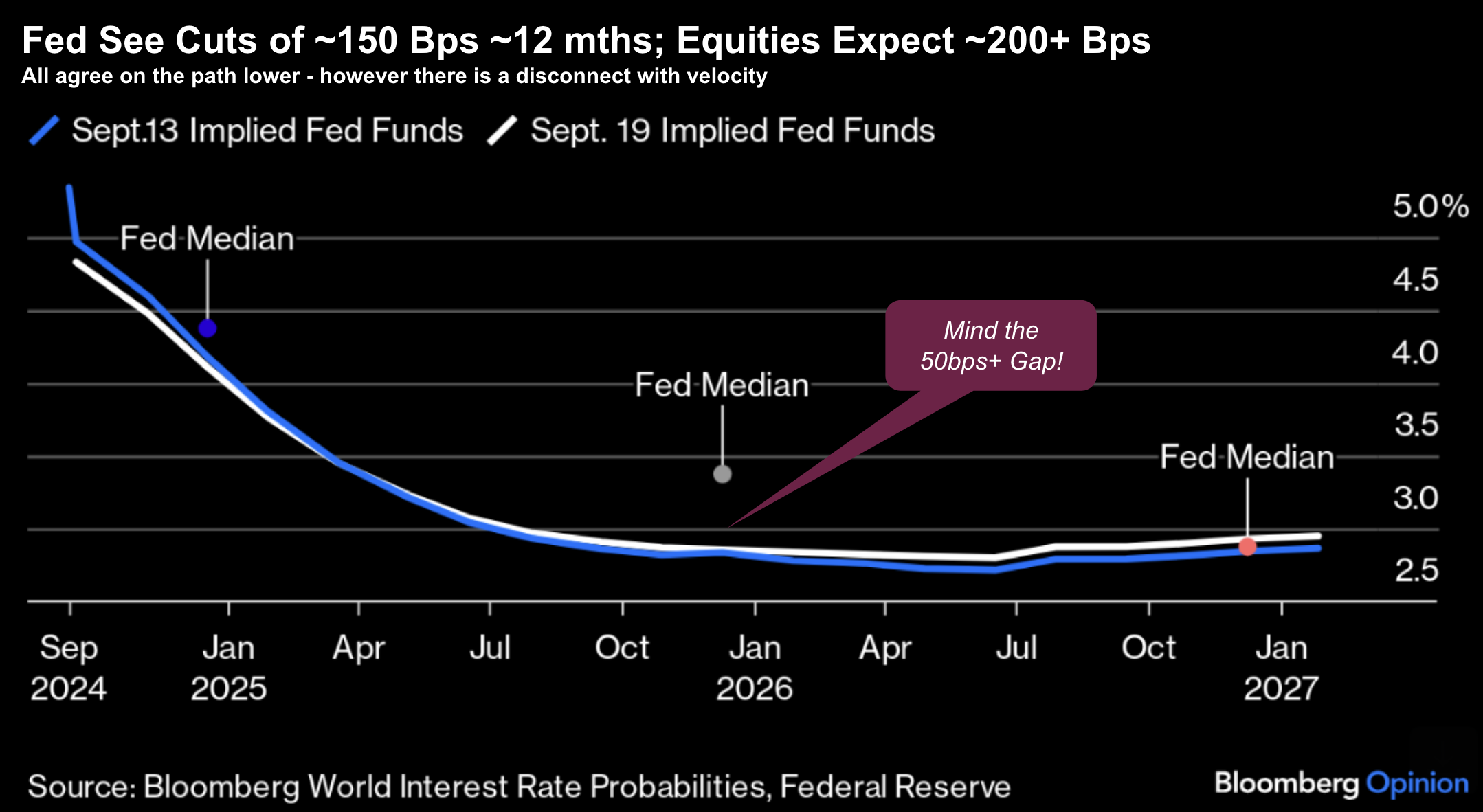
How aggressive can the Fed be in the coming months? The economic data doesn't suggest a material slowdown - surprising to the upside in most cases. Therefore, are markets pricing in too many rate cuts? Maybe... longer-term yields are rallying post rate cuts. What's this mean?

10-Yr Yield Rallies… as ‘Bear Steepener’ Warns

After the Fed initiated its easing cycle with a jumbo cut (50 bps) - the soft landing script kicked into full gear. Markets roared higher as they price in strong economic growth in the months and years ahead. And who knows - maybe that's what we get? But have you noticed what we've seen with bonds post the Fed - especially the long end? Those yields have been rising - not falling. The closely watched benchmark US 10-year yield for example is up 17 basis points (where one basis point equals 0.01%.) That wasn't Powell's plan.

Time to Forget About Recession Risks?

Known to many as the 'bond king' - DoubleLine Capital's founder and CEO - Jeff Gundlach - is well known for his contrarian calls. This week on CNBC he made the comment that he feels that we will look back at Sept 2024 and say "this was the start of the 2024/25 recession". If Gundlach is correct - the recession has already hit the US economy. Therefore, this would imply the jumbo sized cut from the Fed this week is already too late - and will do very little to course correct a rapidly slowing economy (especially given the 9-12 month lag effect of monetary policy).

Did Powell Send a Mixed Message?

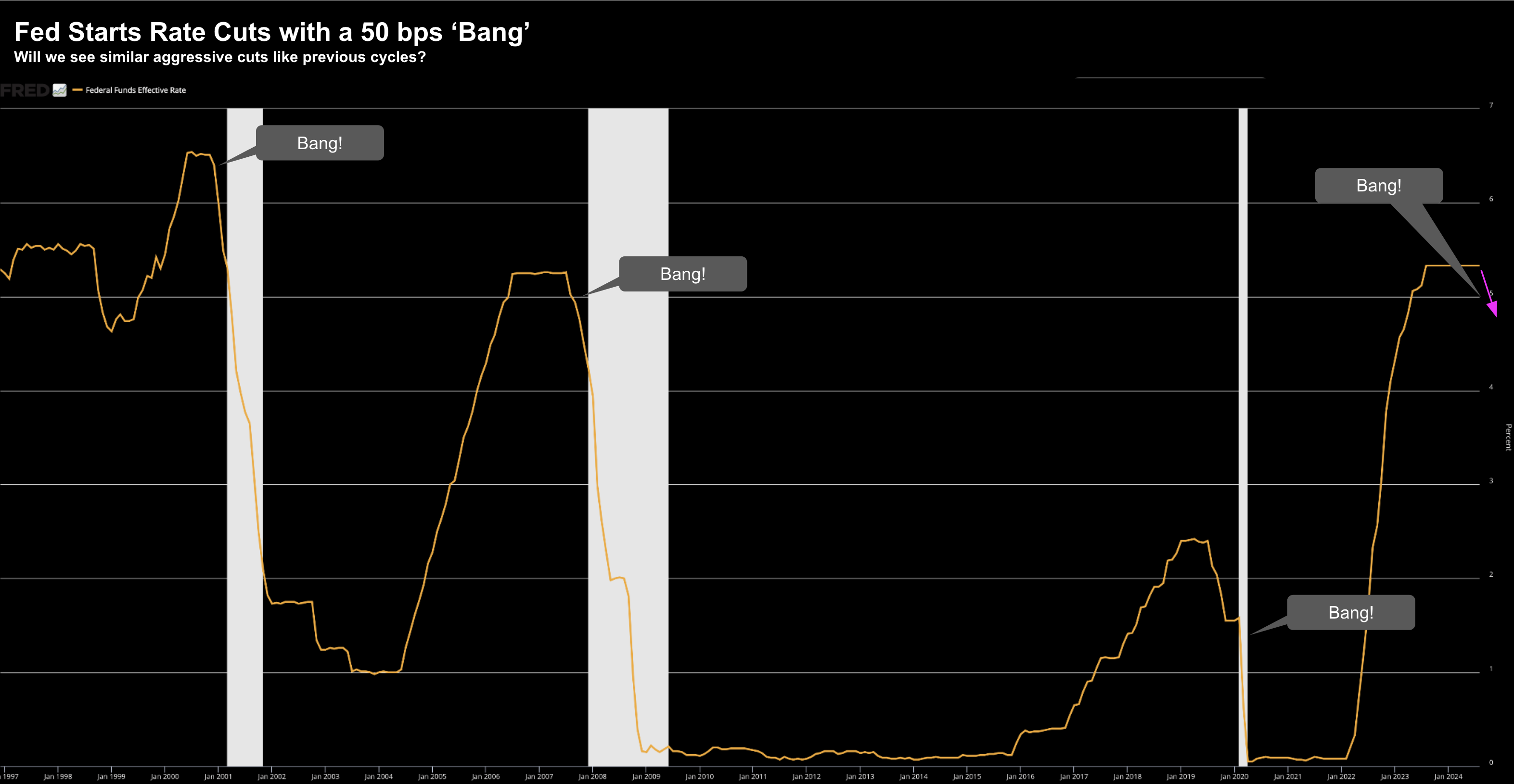
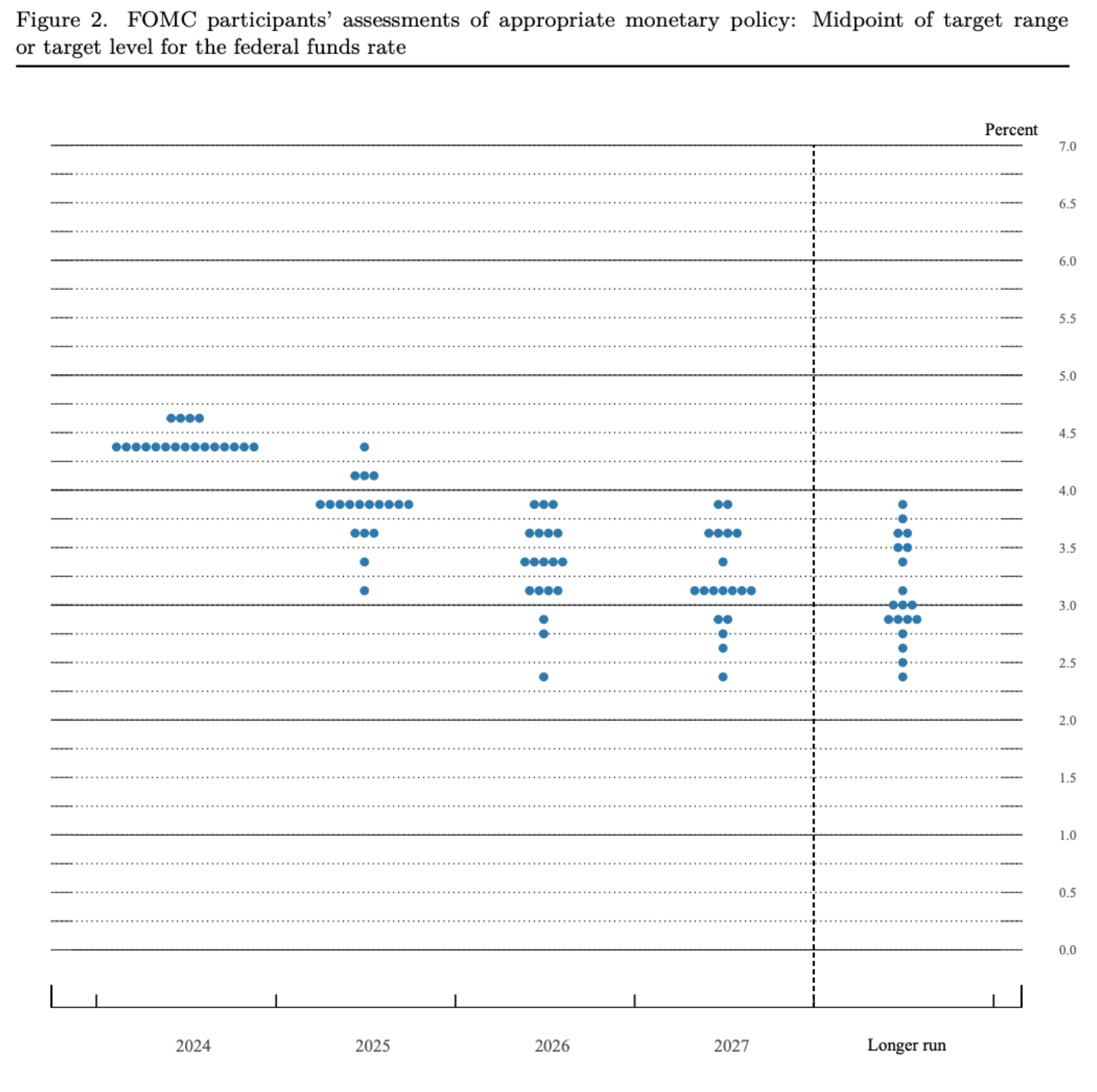
Today the Fed delivered what the market expected - ushering in the start of a new easing cycle with a bang. 50 basis points. It was the kind of bang we saw in 2001, 2007 and 2020. Earlier this week, market's were pricing in the possibility of a 50 bps as high as 70%. They were right. But despite this, the market closed lower. My guess is the market is not aligned with the so-called "dot plot"...