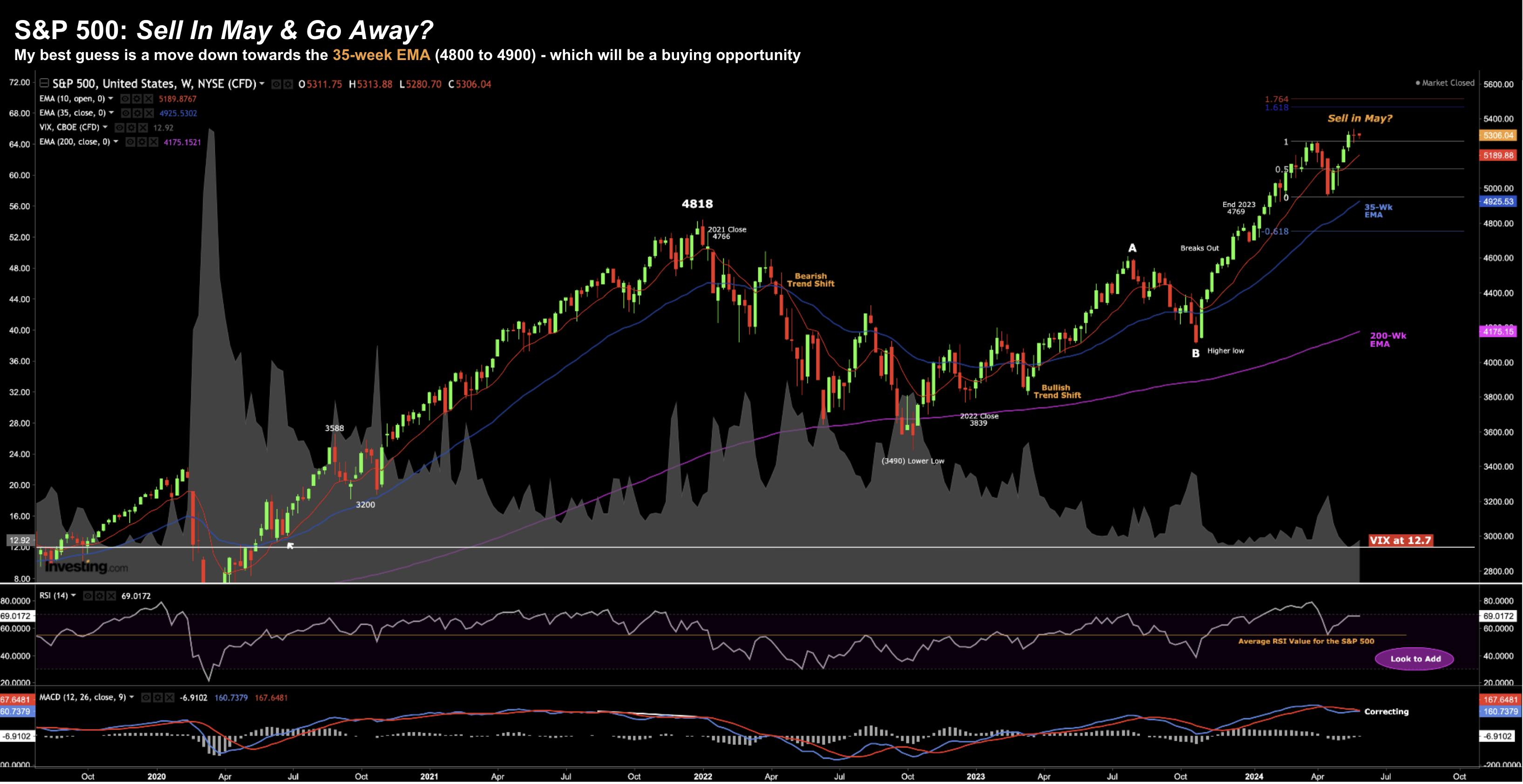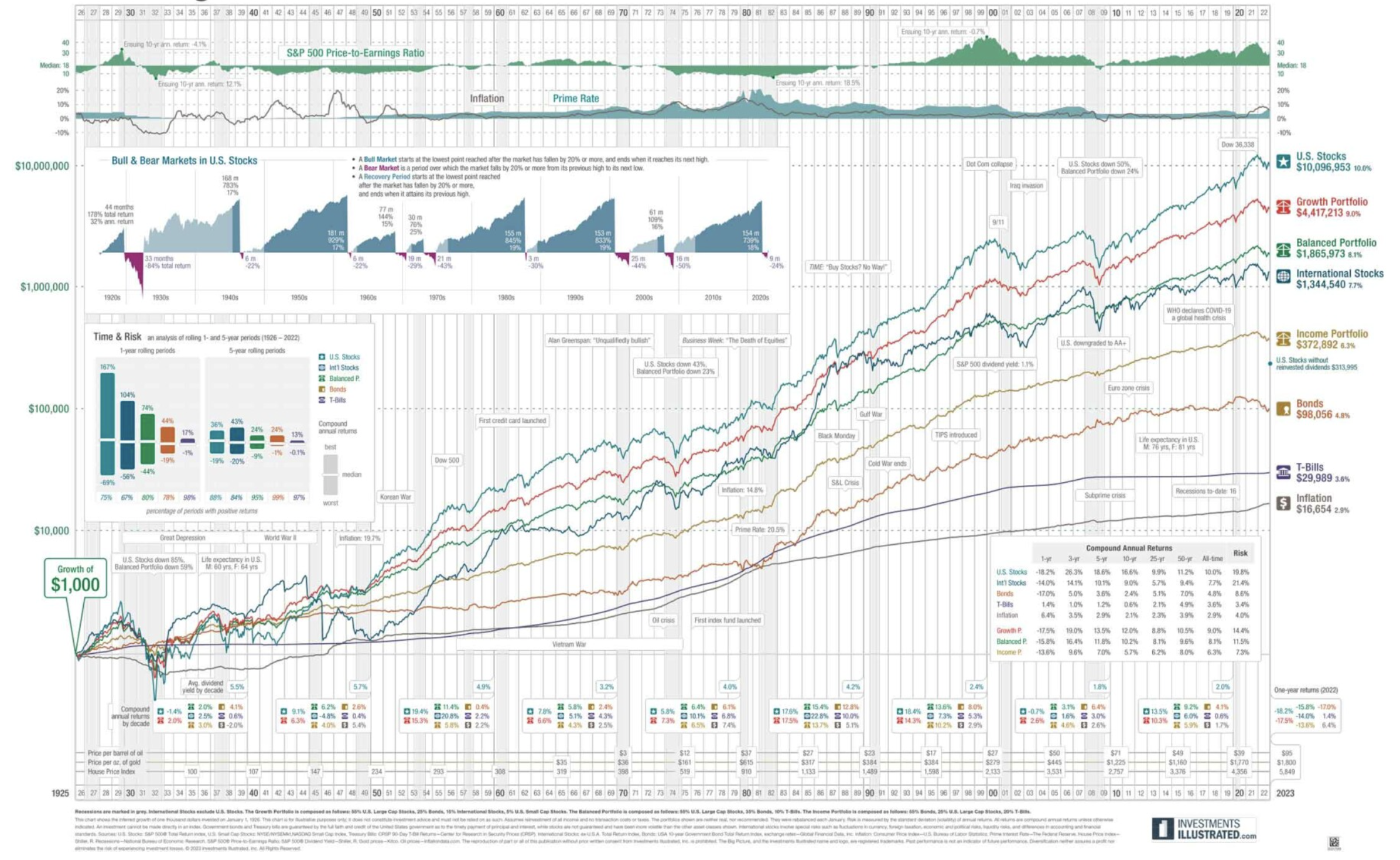
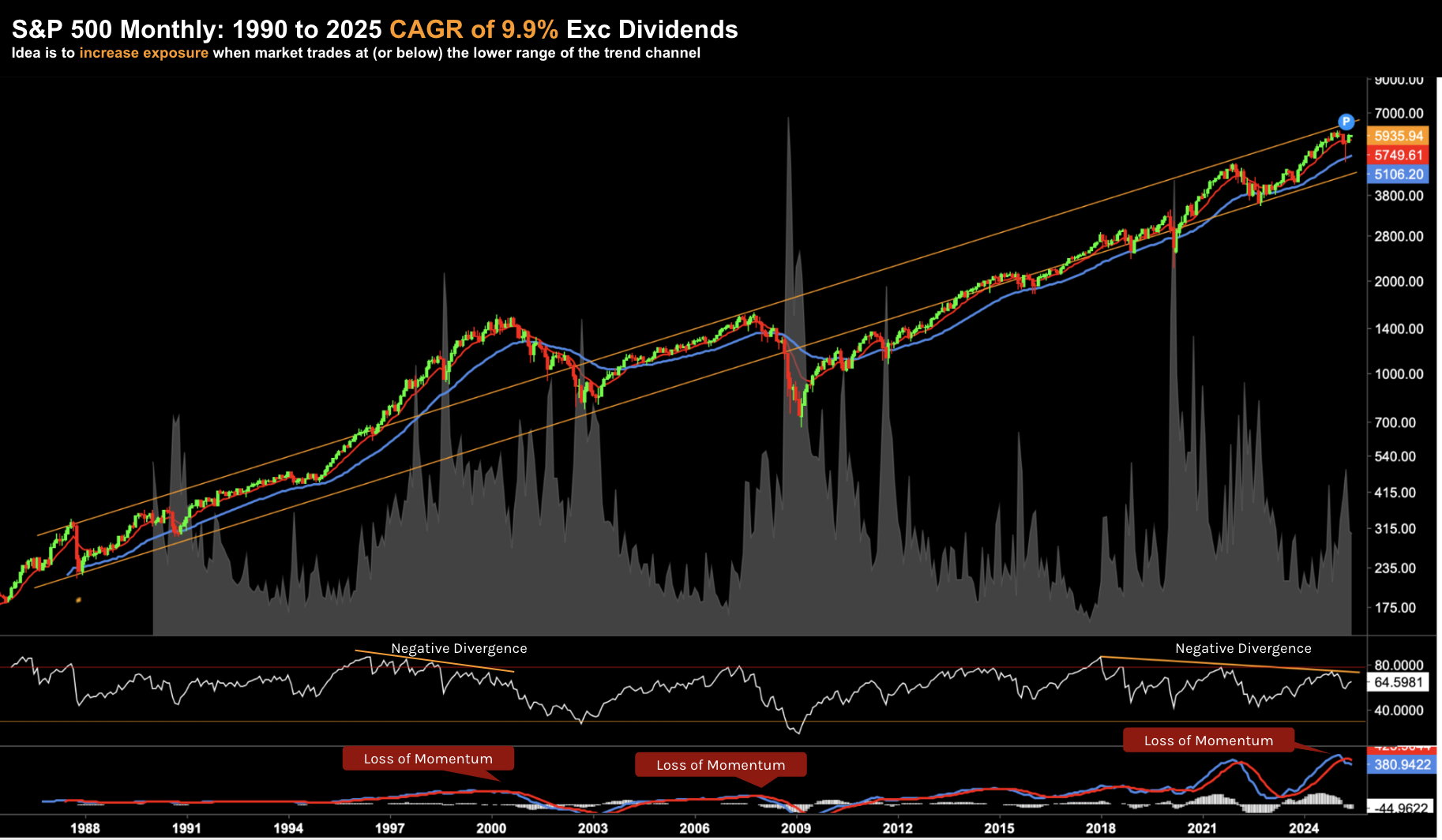
Over the past ~40+ years – the S&P 500 Index has returned an average of ~9.3% annually exc. dividends (i.e., 171.6 Jan 1985 to 5,979.5 Jan 2025). If we limit that to the past decade (from 2015) – that avg annual return increases to 11.4% (excluding dividends). But what matters most is (a) the price you pay; and (b) when you get out. Sitting tight for 10 years does not guarantee a 10% return…
Market History
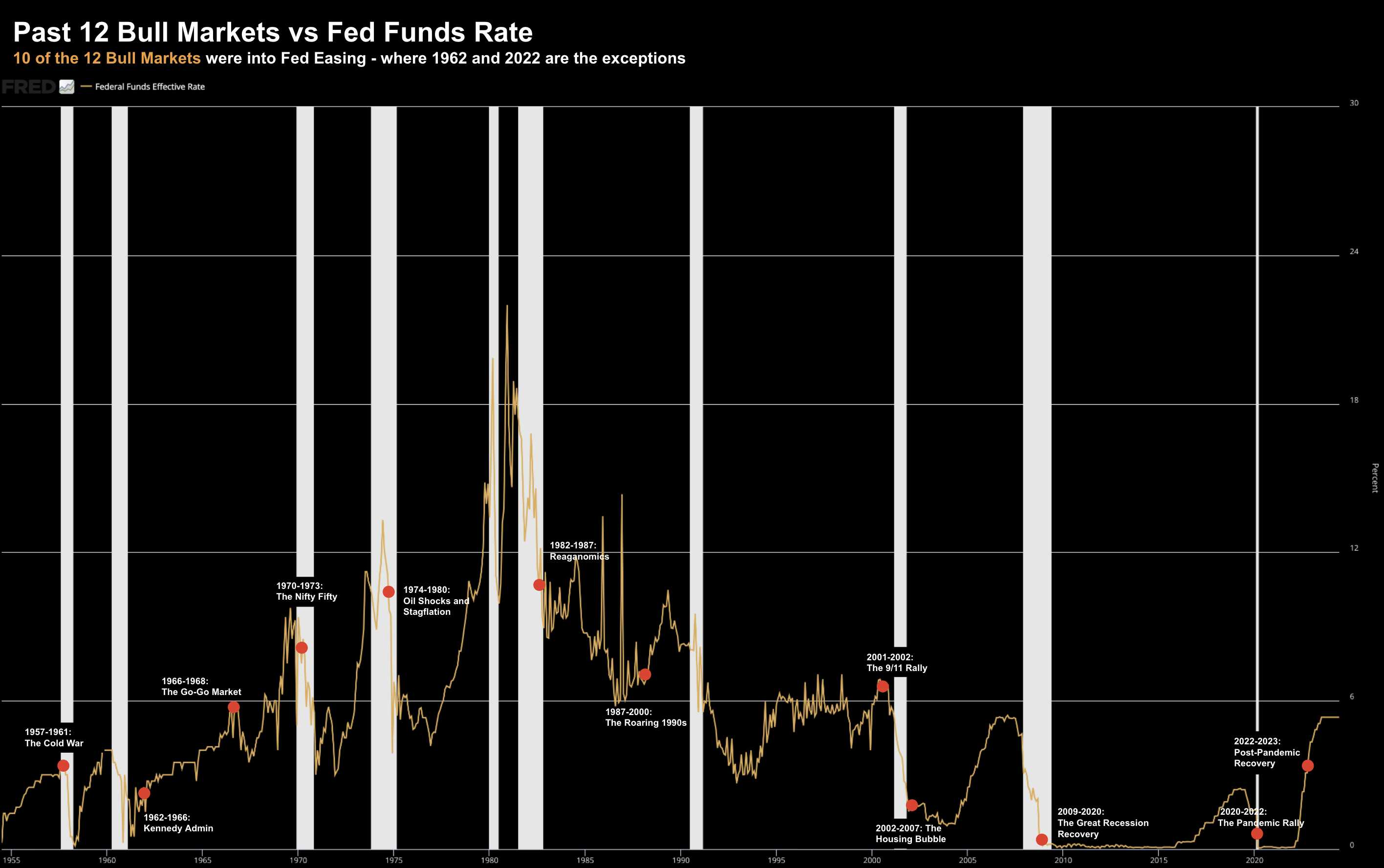
Will Investors be Emboldened by Fed Easing?
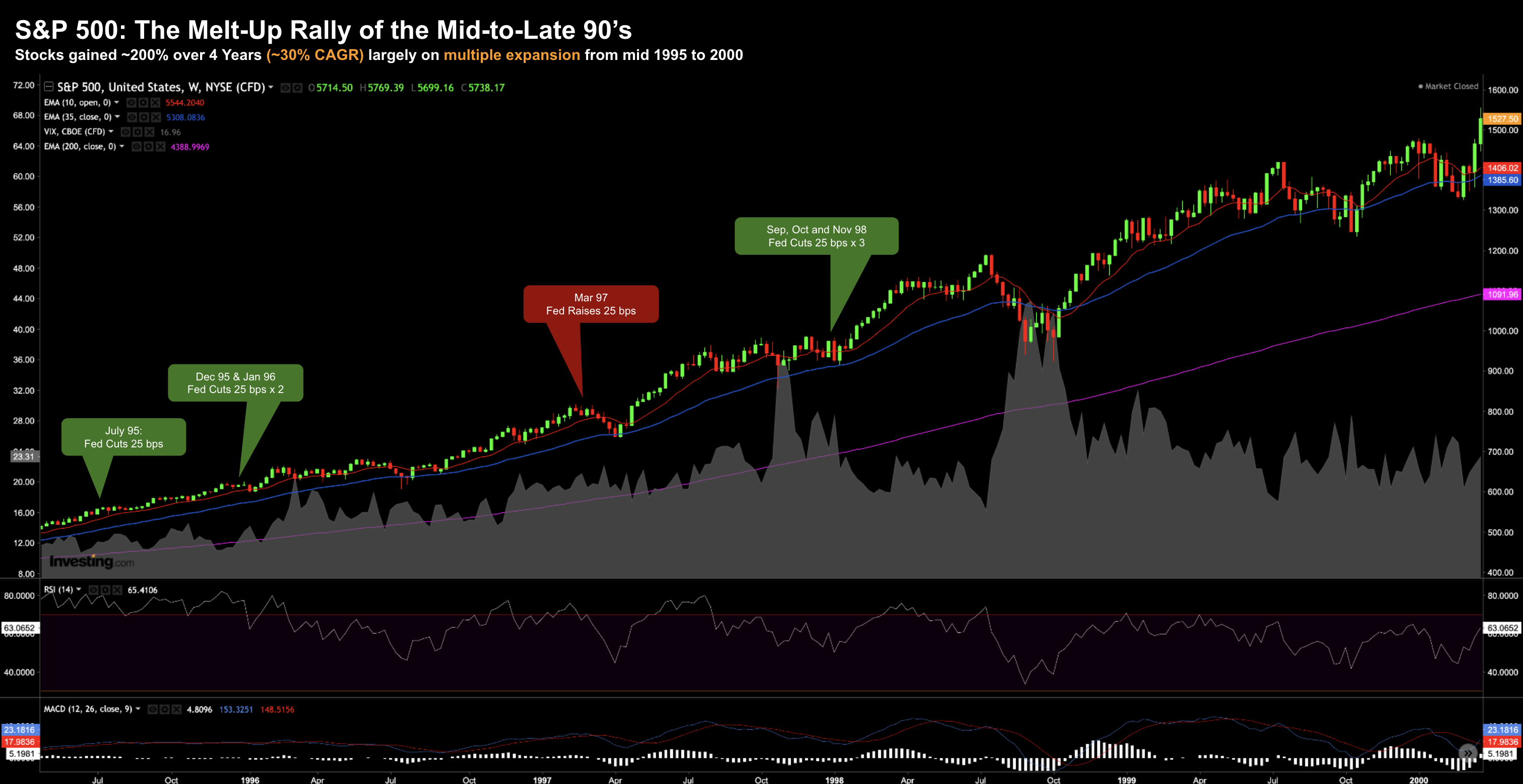
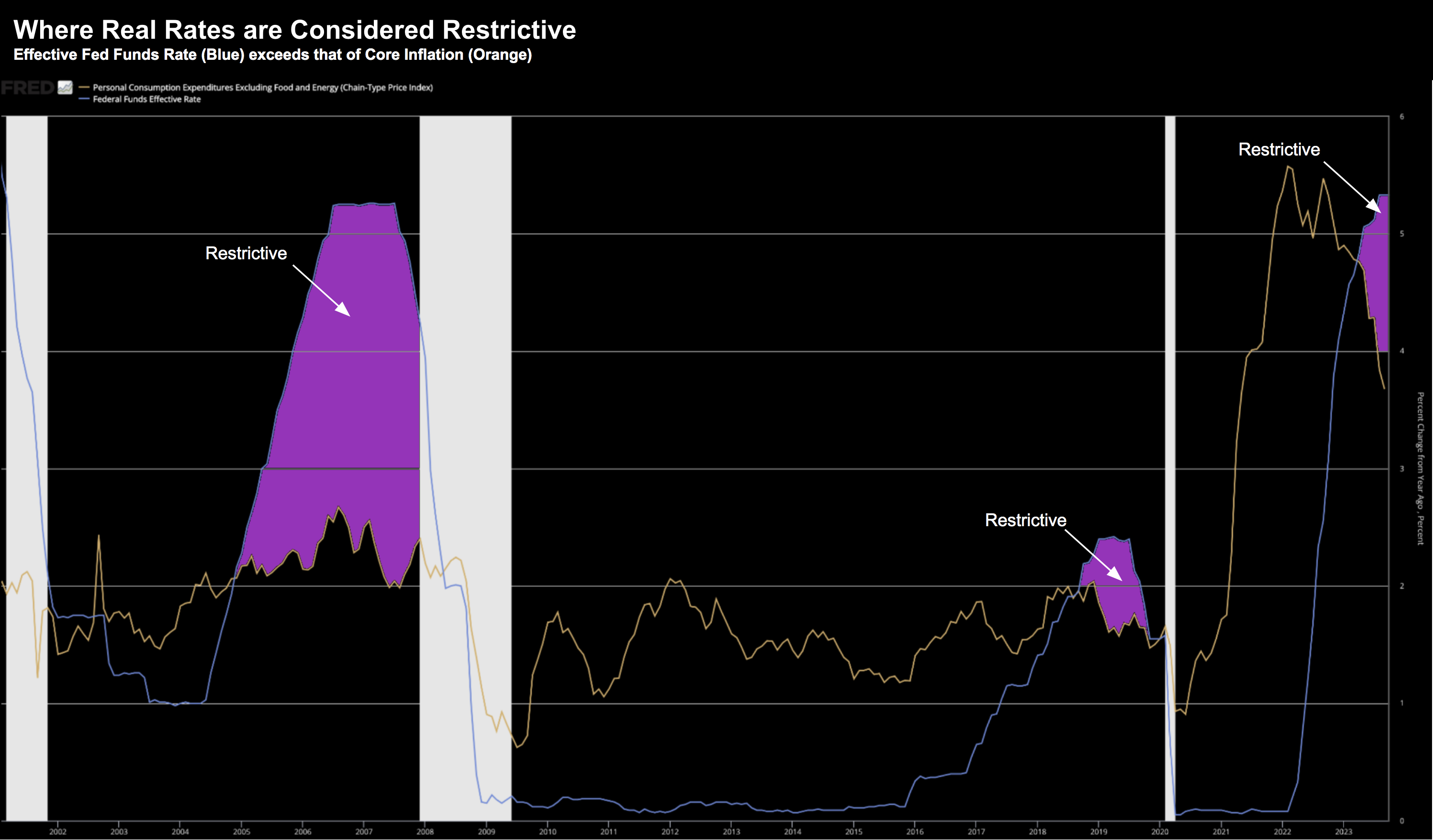
Are stocks headed for a melt-up with the Fed set to ease rates over the next 12+ months? It could seem that way as stocks continue to print new highs as the ‘soft landing’ script firms. And whilst there might be further upside – the environment echoes a lot of what we experienced from the mid 1990’s. For example, at the time we had expanding growth, low inflation with aggressive easing from the Fed. What’s more, investors were very bullish on the promise of the internet – set to deliver powerful productivity gains. Stock multiples continued to expand as the S&P 500 delivered strong double-digit gains not seen in decades. Today conditions feel similar.
It’s Not Only Falling Inflation & Growth Risks Driving Rate Cuts
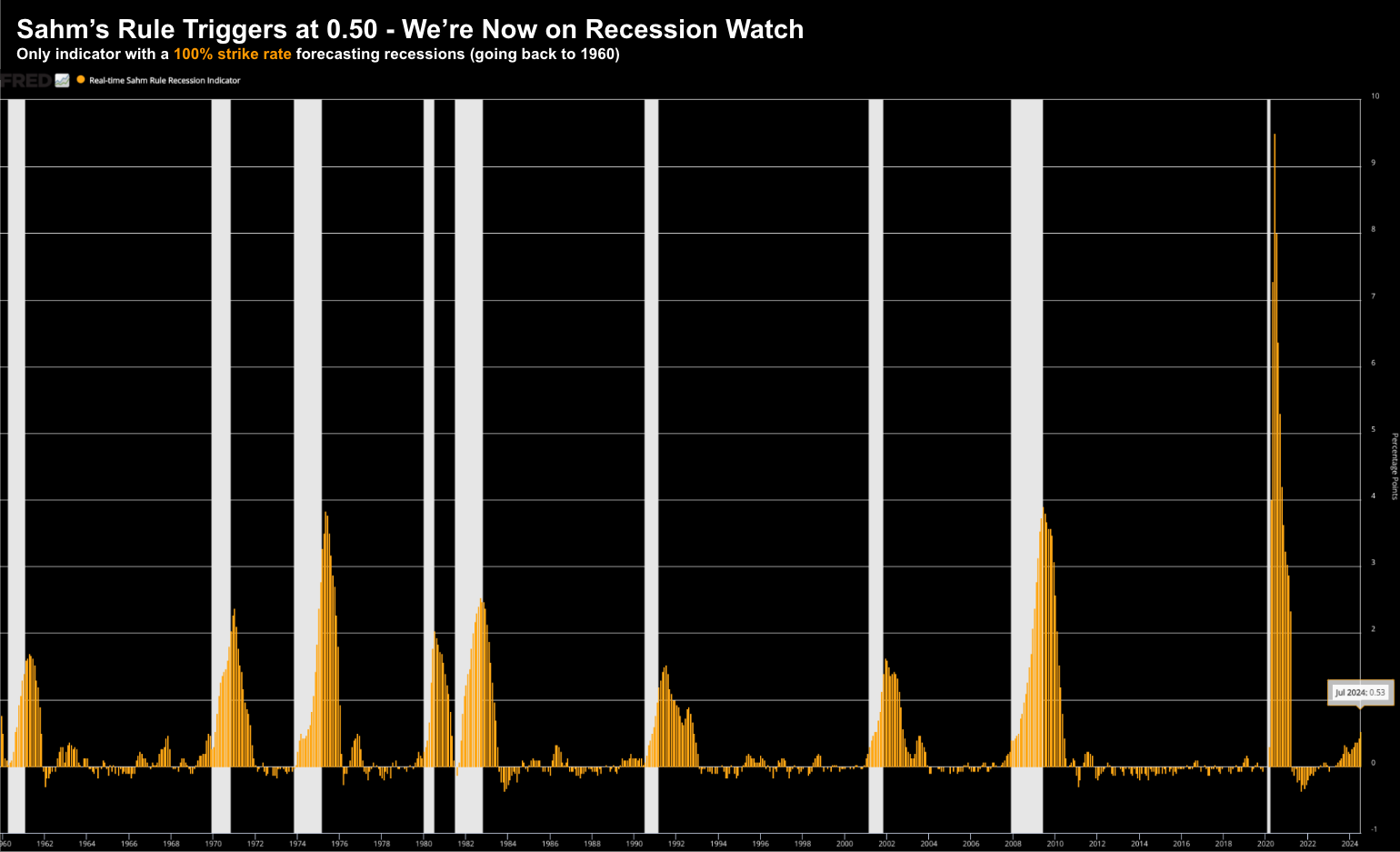
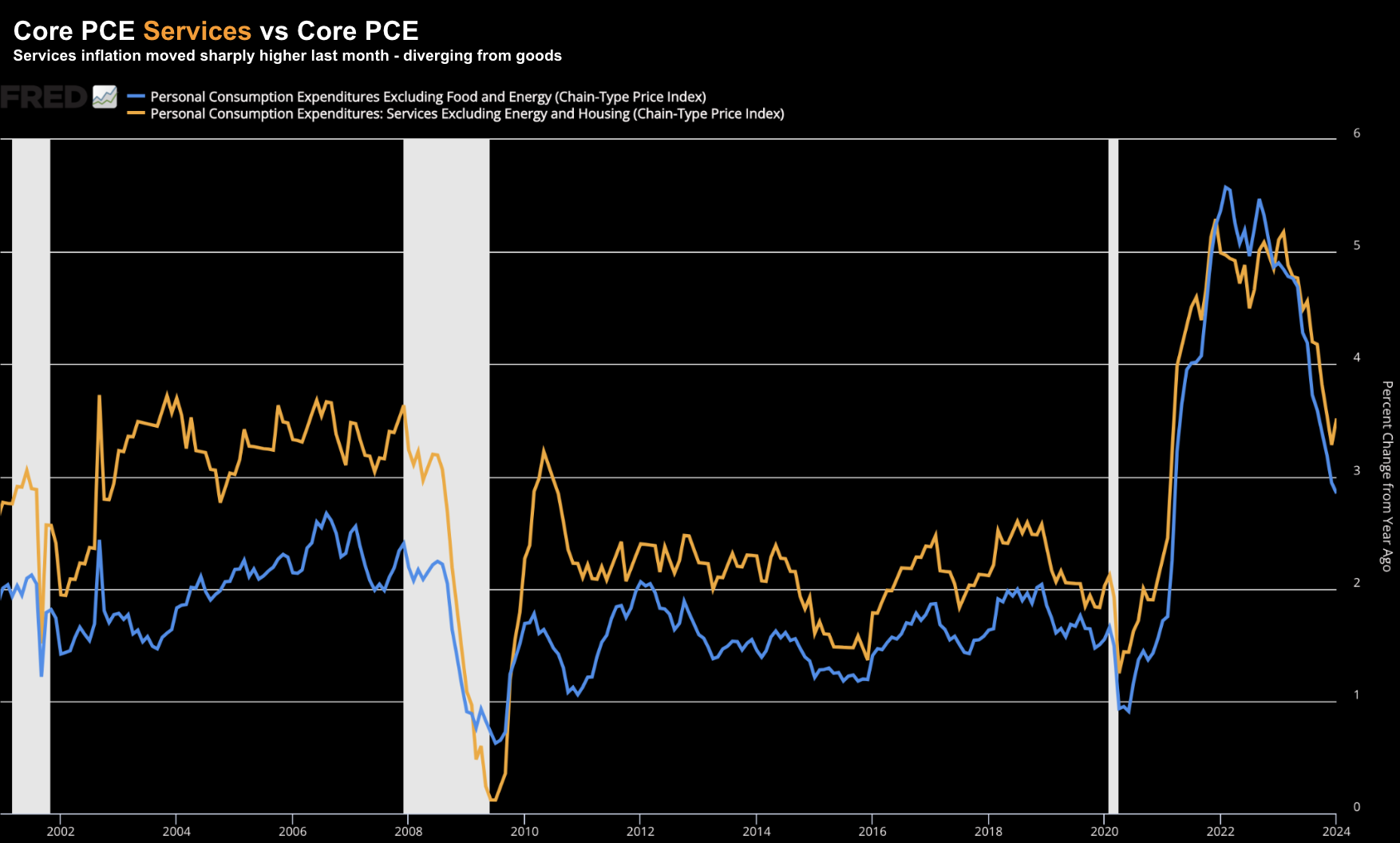
As inflation continues to moderate and the employment picture weakens – markets are trying to gauge just how much the central bank will move. A 25 basis point (bps) cut for September is now a 100% probability according to CME Group’s FedWatch tool. There’s a 63.5% chance of a 25 bps cut; and 36.5% of a 50 bps cut. Markets clearly want 50 bps… but they also know that very rarely is there just “only one rate cut”. This post explores the relationship between debt growth (across all sectors) and the overall trend for interest rates. It’s a relationship which is not often discussed – but would be remiss of investors to ignore.