It’s Not Only Falling Inflation & Growth Risks Driving Rate Cuts

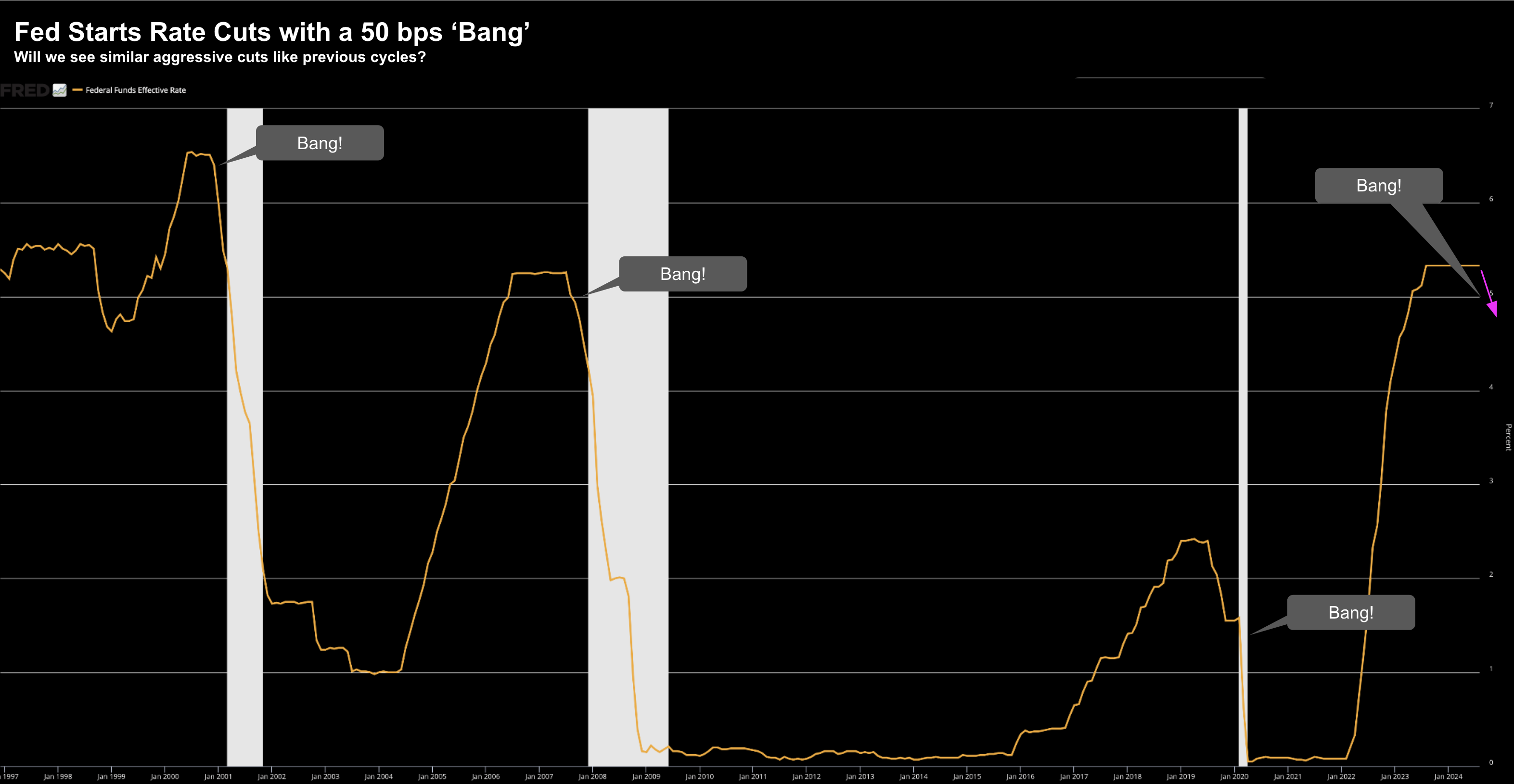
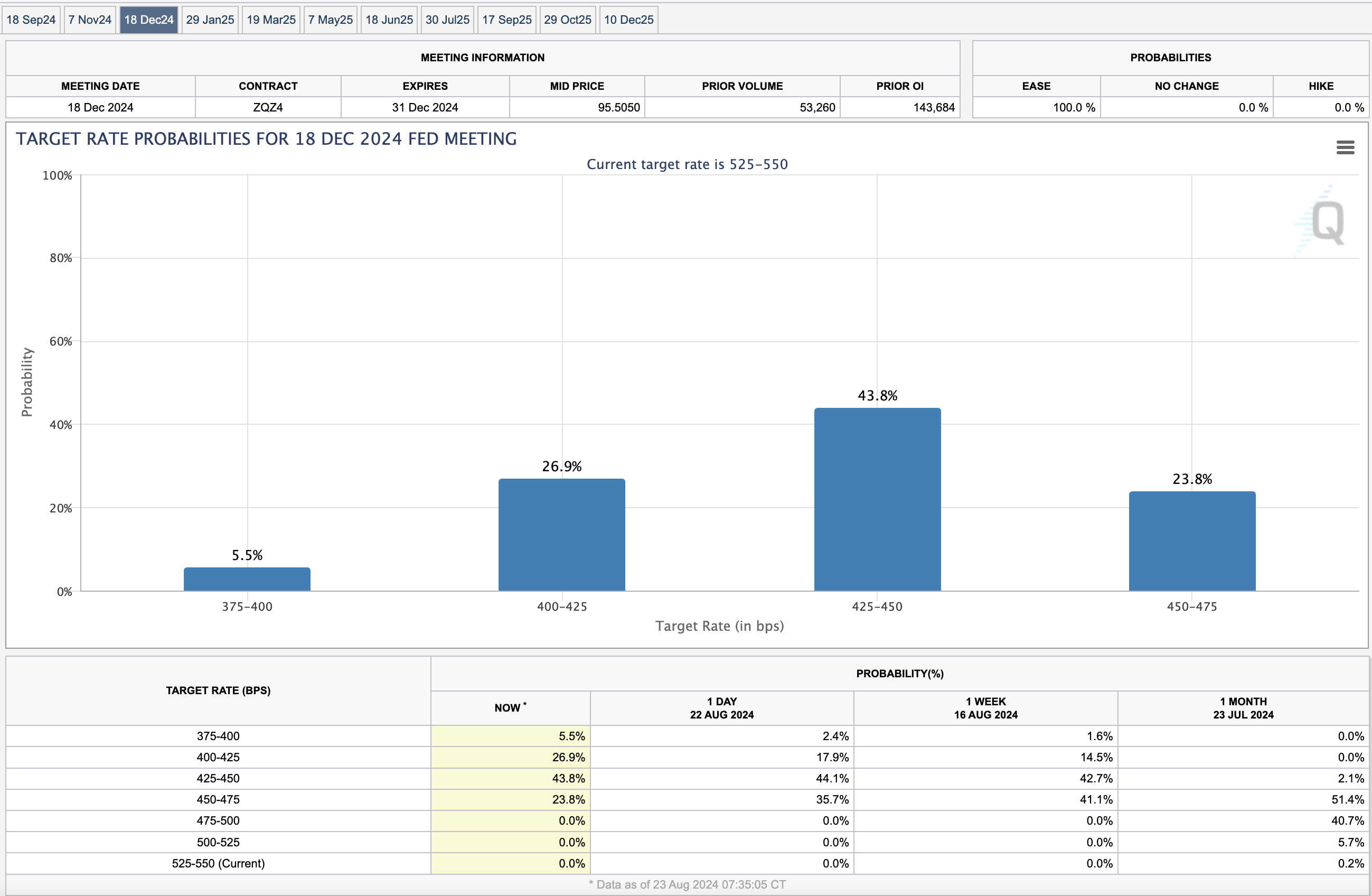
As inflation continues to moderate and the employment picture weakens - markets are trying to gauge just how much the central bank will move. A 25 basis point (bps) cut for September is now a 100% probability according to CME Group’s FedWatch tool. There's a 63.5% chance of a 25 bps cut; and 36.5% of a 50 bps cut. Markets clearly want 50 bps... but they also know that very rarely is there just "only one rate cut". This post explores the relationship between debt growth (across all sectors) and the overall trend for interest rates. It's a relationship which is not often discussed - but would be remiss of investors to ignore.

Market Rallies on ‘Strong’ Retail Sales / Soft Landing

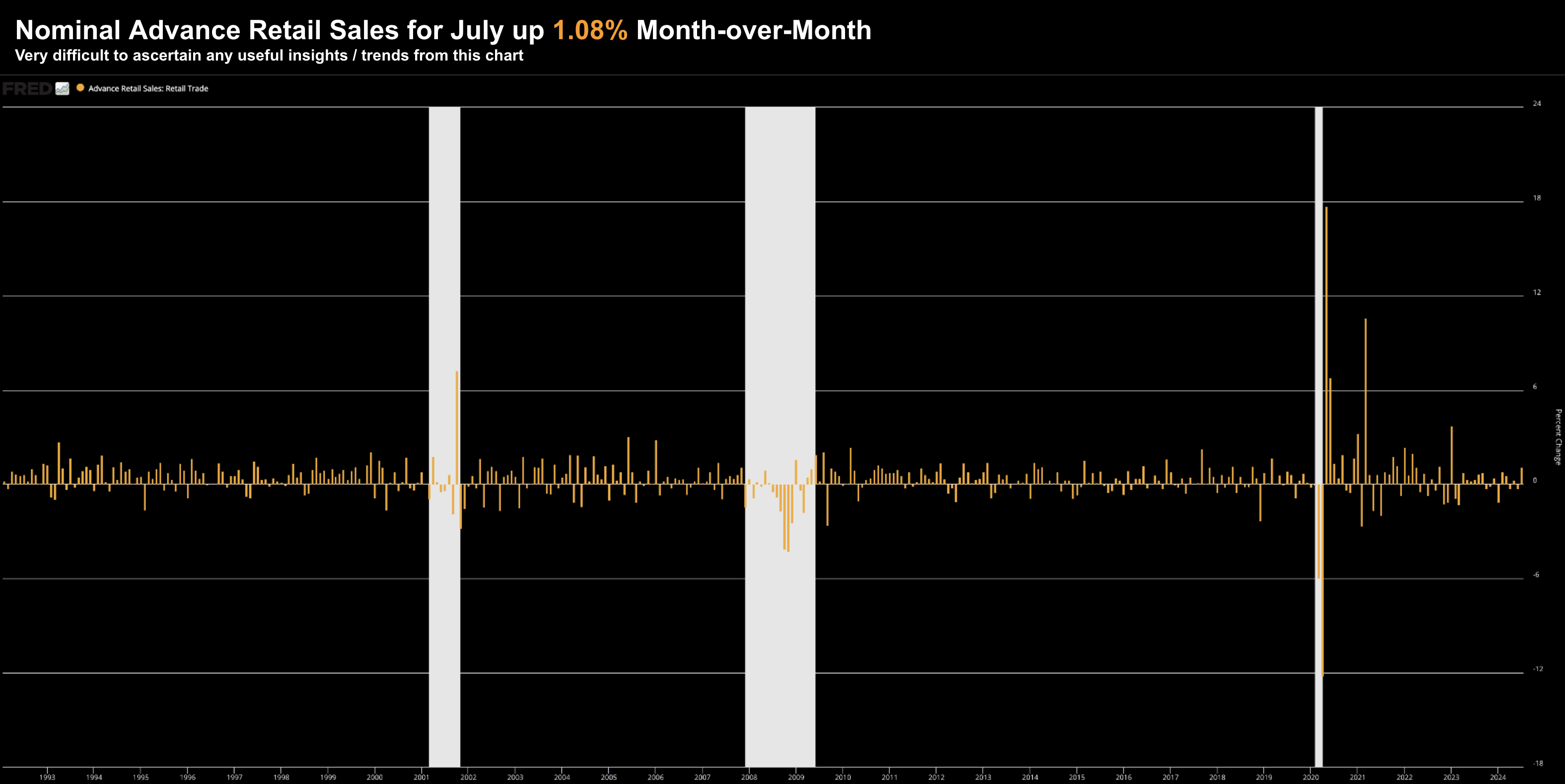
This week we received advanced retail sales for the month of July. From mine, this is one of the more important data points - as it sheds light on what we see with the relative health of the consumer. With spending making up 70% of GDP - any signs of slowing serve as a warning. Advanced retail sales accelerated 1.08% on the month - adjusted for seasonality but not inflation. Economists had been looking for a 0.3% increase MoM. However, June sales were revised to a decline of 0.2% after initially being reported as flat. As regular readers will know, it's virtually impossible to glean anything from a nominal data point when viewed month-over-month. And whilst the media (and stock market) could not get over how 'strong' the data was - I would warn against jumping to conclusions.

Smart Money Sells Big Tech… Invests in NKE & SBUX

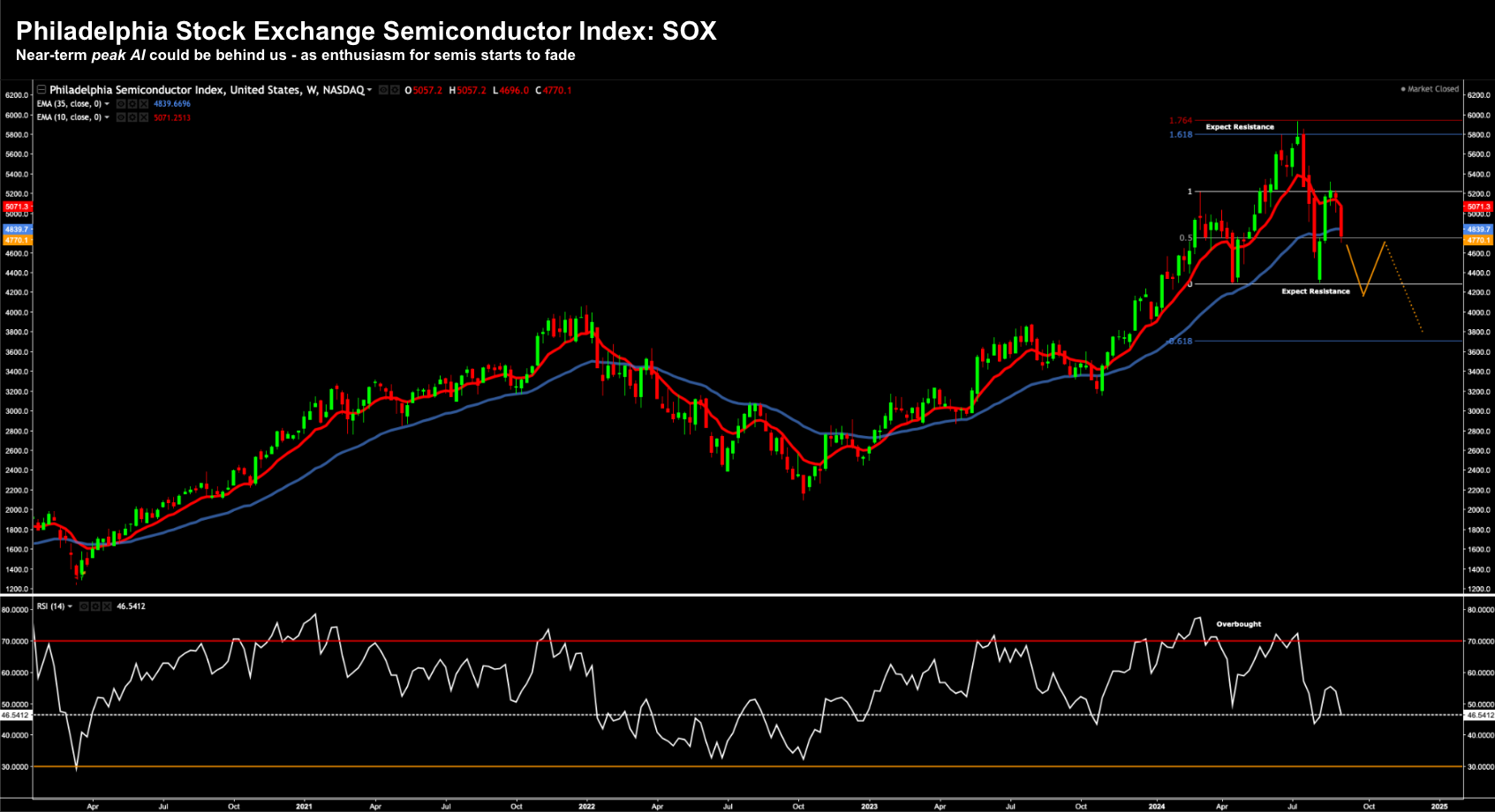
Something I do four times a year is pore through something known as "13Fs". A 13F is a quarterly report that institutional investment managers with over $100 million in assets must file with the US Securities and Exchange Commission. And whilst these filings are submitted around 45 days after the quarter ends (e.g. August 15 deadline for June 30 quarter end) - they offer us insight into how the "smart money" is thinking about certain assets. Some names I follow include (not limited to) Warren Buffett, Bill Ackman, David Tepper, Howard Marks, Stan Druckenmiller and Seth Klarman. Now there was a consistent trend during Q2 - where large cap tech exposure was being reduced.

A Time of Transition

Think of a time when you worked through major transition in your life. For example, maybe it was the end of a relationship; a deep loss; changing your career; starting a family; or relocating for work. Generally during times of meaningful transition there is a period of adjustment and uncertainty. And sometimes, the change will come with volatility. From mine, it's possible the market's wild behavior this week is representative of one in transition. However, it's still early. Volatility in stock markets are typically associated with meaningful turning points... this posts explore more about what's happening below the surface; and why I think the 20-year era of cheap money is drawing to an end.

Fear & Greed

Wall St. is driven by just two emotions: fear and greed. Pending on the degree to which you succumb to these emotions - it will have a profound impact on your bottom line. All too often, most investors will do two things: (i) buy when there is market greed; and (ii) sell when there is fear. It's the opposite of what you should do. However, this is something you need to master if you are to be successful in the game of asset speculation.

Lesson: Don’t Try and Pick ‘Tops or Bottoms’

Everyone makes mistakes. In fact, I love 'collecting' mistakes - whether they are my own or from someone else. It's the only way I learn. This post shares two 'mistakes' from a popular media personality. His name is Jim Cramer who hosts a show called "Mad Money". Earlier this week he said "the bottom is in for CrowdStrike". Big call given recent events. Fast forward a few days and the stock is 16% lower than when Jim called the bottom. So what can we learn from this?

So Maybe Valuations Matter?

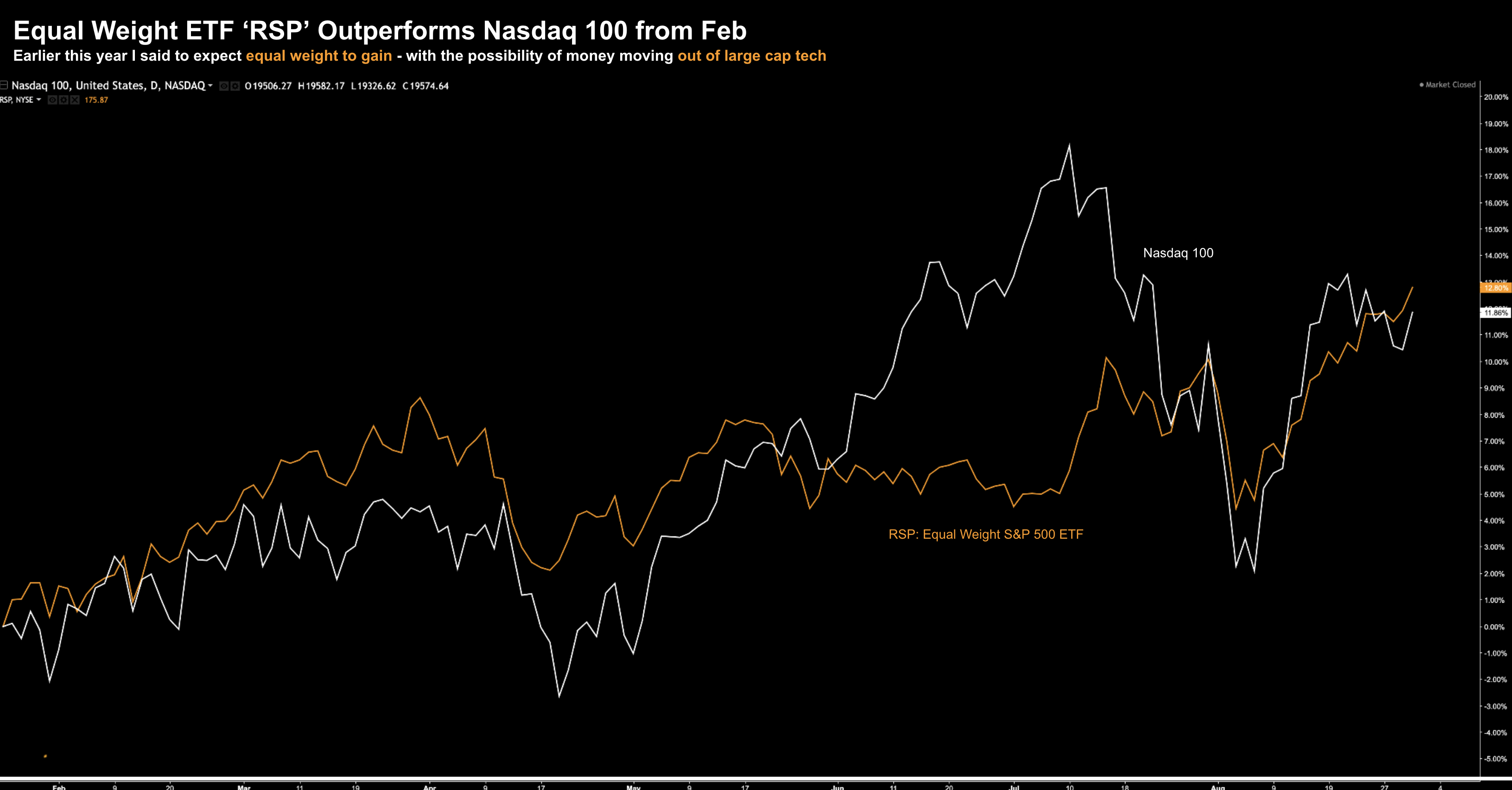
When I made the difficult decision to reduce my exposure to large-cap tech earlier this year - I wasn't sure how things would pan out. In the short-term - I looked foolish. These stocks surged higher without me. However, since then, large-cap tech is trading lower than when I sold it (on average). But is this a dip you should buy? I don't think so - not just yet. The broader index is only 6% off its all-time high. That's nothing in the larger scheme of things. I'm choosing to remain a little more patient - where I think the index could correct somewhere in the realm to 10-12%.

Powell’s Ready to Cut… And Not Just Once

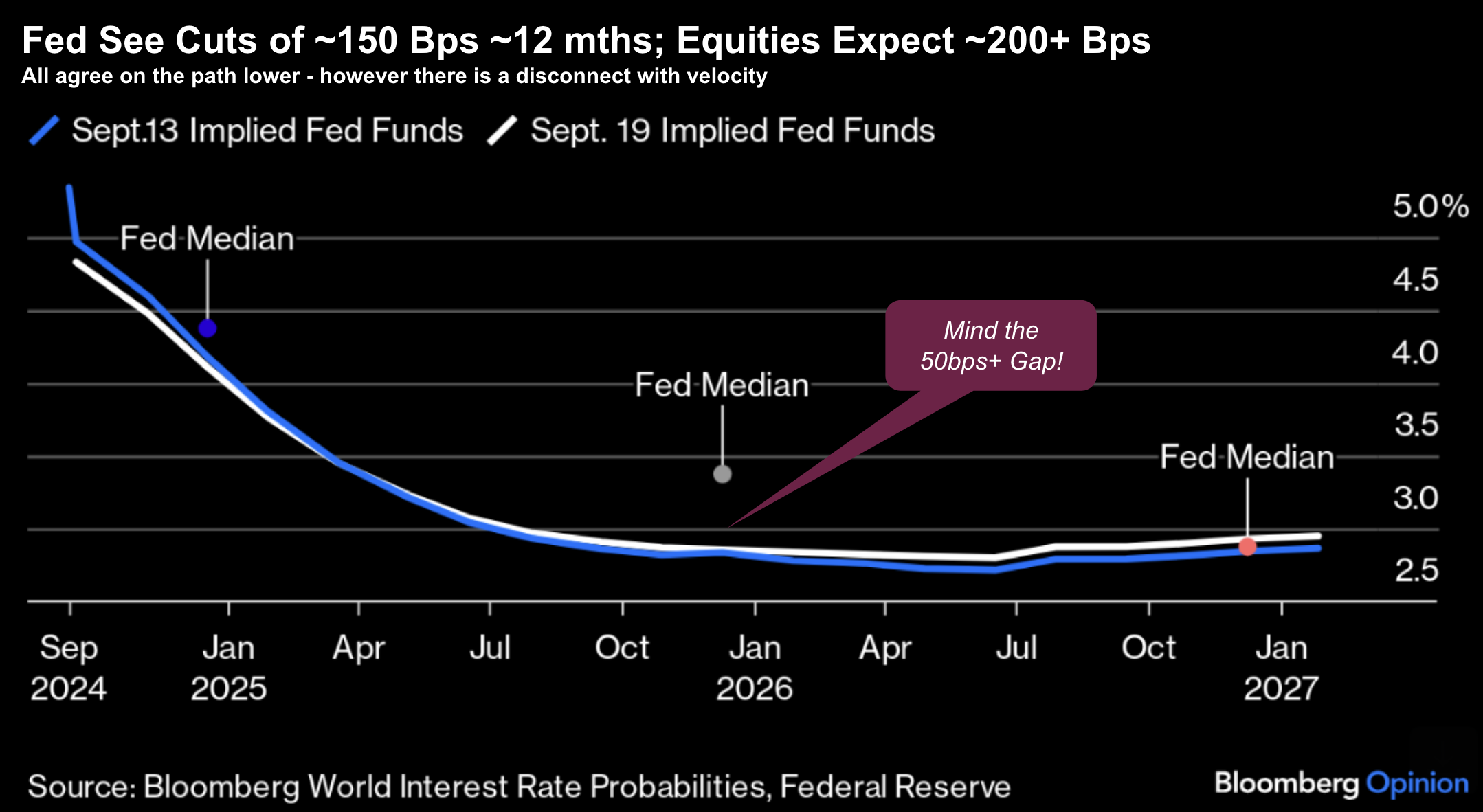
Today Fed Chair Powell delivered precisely what the market wanted to hear... help is on the way. As a perpetual (closet) dove - Powell did his best to stay balanced however the cat is now out of the bag. Rate cuts are coming. And there will be more than one. Consistent with other meetings - Powell said rate cuts are an option if economic data continues on its current path. In other words, it was the (same) scripted "data dependent" Fed.
However, there were some important nuances.

Quarterly Real PCE Up YoY… As Savings Fall

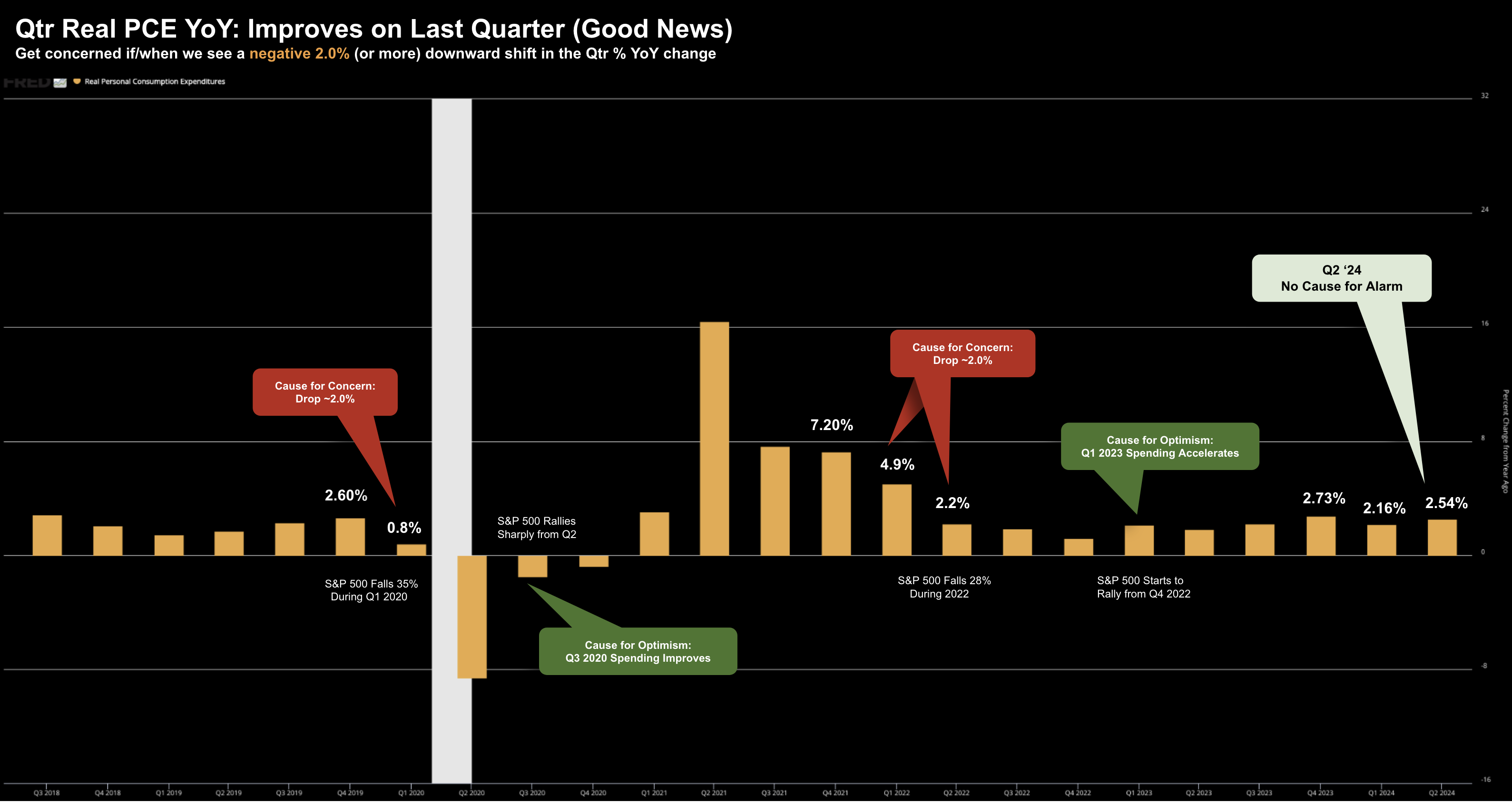
The market received three important data points this week - inflation, wages and consumer spending - and it was mostly good news. First up, inflation continues to moderate. The Fed's preferred inflation index - Core PCE - showed prices increased at a moderate pace for June— confirming excessively high inflation is behind us. However, prices are still ~30% higher than 3-years ago... they're just rising at a slower pace. Whilst inflation is important - I wanted to know if consumers are still spending? The answer is they are - and by whatever means possible. They are drawing down on their savings and ramping the use of credit cards - which has seen card delinquencies hit decade highs. But from equities perspective - higher spending is good news. This feeds the 'soft landing' narrative....

The Three Stages of a Bull Market

Charlie Munger once warned us when wishful thinking takes hold - investors tend to believe that good times will be followed by more good times. This mentality feeds on itself - driving momentum - pushing prices higher. It's what fuels the final stages of a bull market. Attributes such as independent thought, logic, rationale and objectivity give way to herd behavior. That's when your internal alarm bells start ringing... and you start thinking differently from the crowd. Very few people have the ability to do that... but it's what's required.

The Big Tech Unwind

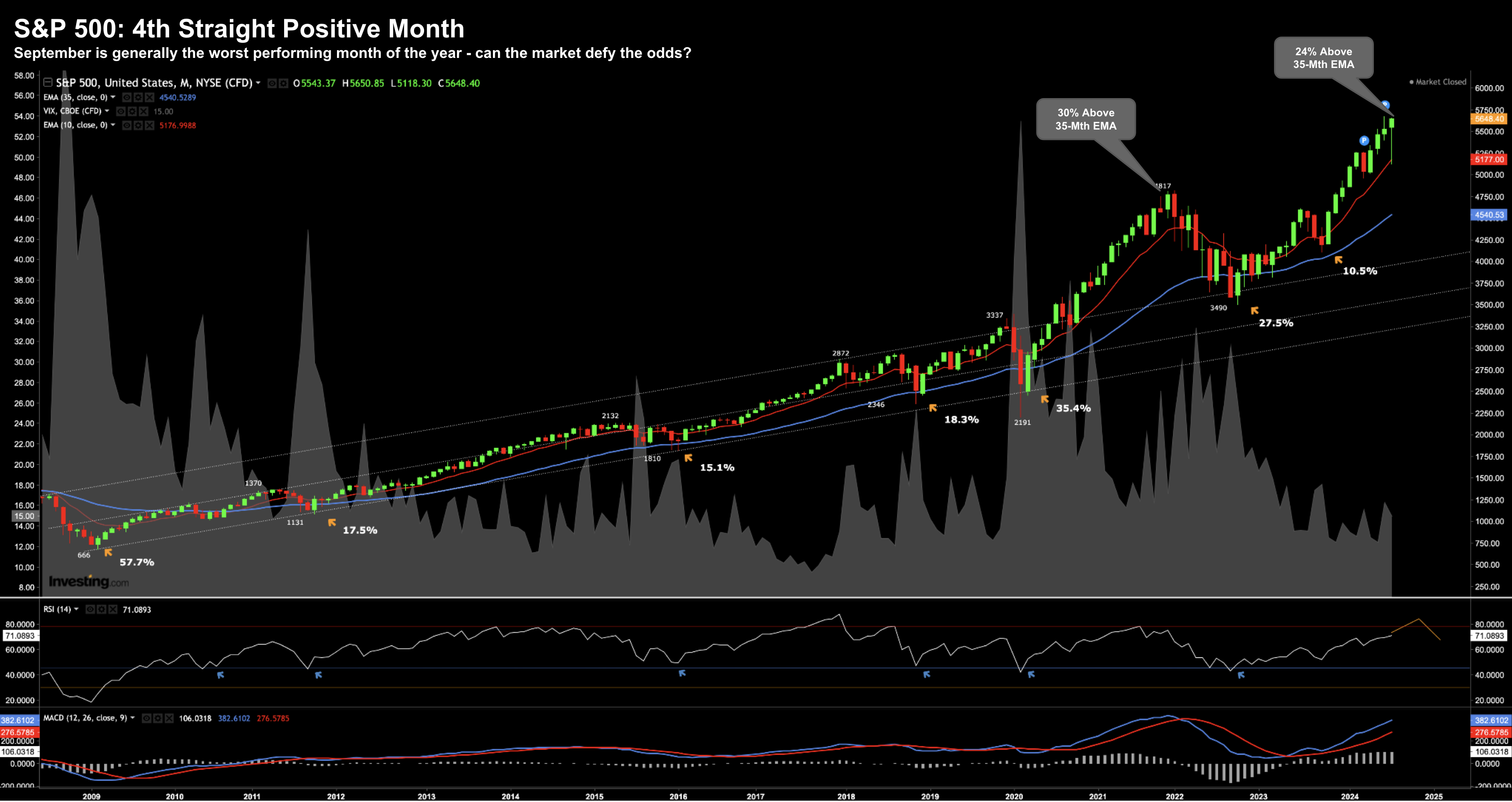
Can the market let the air out of the bubble without consequence? The answer relates to my post on economic cycles. That is, panics and busts only occur after booms and bubbles. But what a minute - are you saying this is a bubble? My answer to that is look at where we are in relation to the long-term mean. That's your litmus test. For example, if we simply take the S&P 500 - it trades at ~22x forward earnings (on the assumption earnings growth this year is 12%). The 10-year average forward PE for the S&P 500 is ~18x (mostly as a function of long-term yields trading near zero). And the 100-year forward PE average is closer to 15.5x. And if we look at tech specifically - valuations are even more extreme.

Market Cycle Analysis: Mean Reversion to Identify Opportunity and Risk Market Cycle Analysis: Mean Reversion to Identify Opportunity and Risk

Market Cycle Analysis: Mean Reversion to Identify Opportunity and Risk

I made a decision to reduce my exposure to large-cap tech a few months ago. The decision wasn't an easy one... these are great stocks. For example, did I sell prematurely? The answer will be more obvious in 6-12 months when the cycle has had sufficient time to play out. For now (as was the case when I sold) - I think the downside risks meaningfully outweighed further upside gains. In this post, I explained how selling is a way of managing your risk. I was ensuring I banked the appreciable gains realized over the past few years. In light of the rotation out large-cap tech we've seen this week - I thought it was opportune to share some thoughts on (a) how I calibrate my portfolio in a changing environment; and (b) when to be aggressive and when to play defense. It all comes back to understand the economic cycle...