adriant

adriant

Have Jobs Slowed Enough for the Fed to Pause?

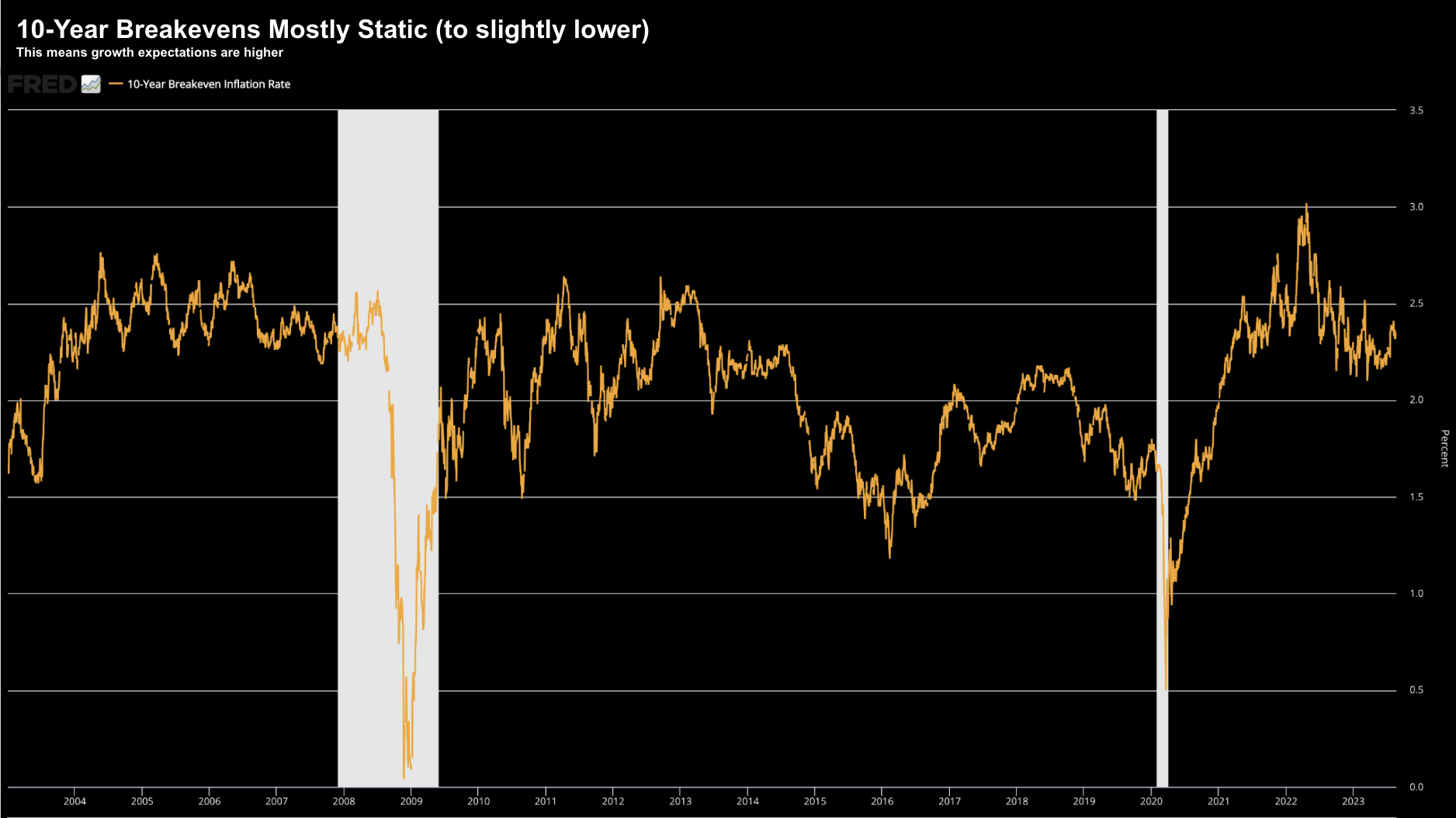
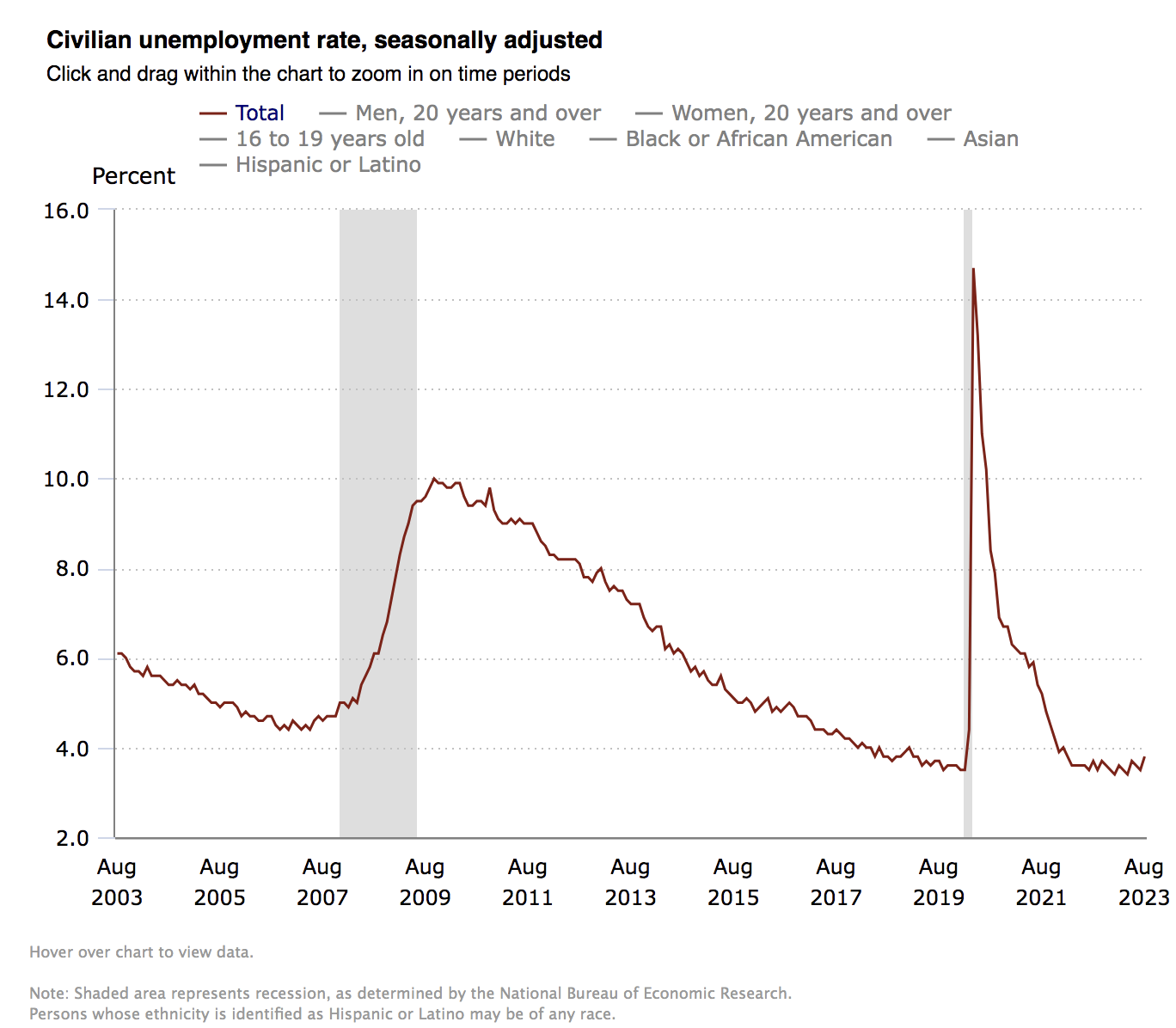
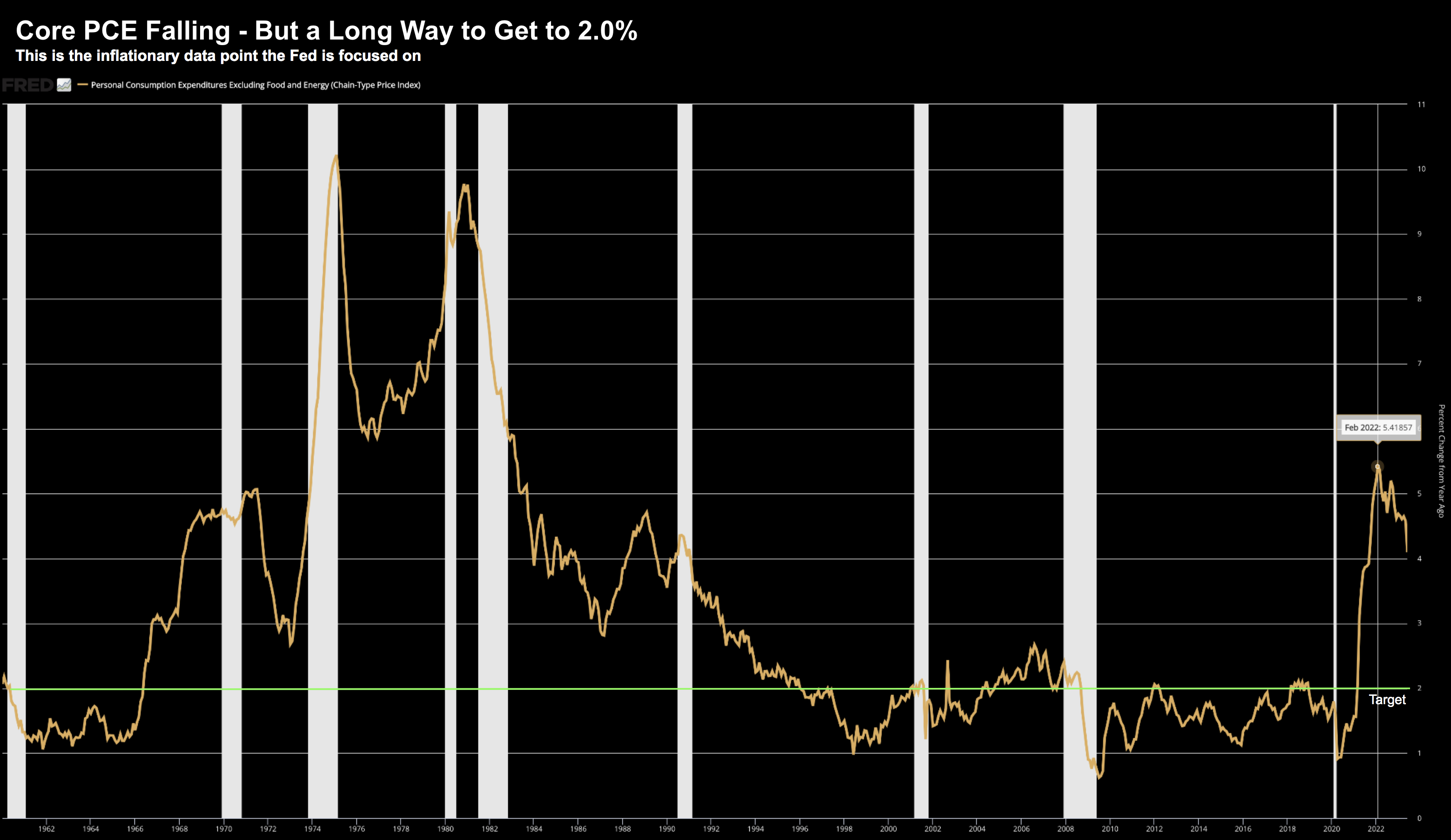
Last week offered plenty of macro data for traders (and the Fed) to consider. Core PCE remains stubbornly higher at 4.2% YoY - moving higher month on month. However, there is signs of a slowing labor force - with job additions missing expectations. The question is whether the jobs market is now slowing enough for the Fed to end rate hikes? For example, total unemployment is very strong at 3.8% and there are almost 9M open jobs. That's not a weak labor market...
One Trend That Isn’t Sustainable

More "bad news is good news" hit the tape today... The monthly ADP private jobs number came in far weaker than expected. I say 'good news' as it potentially means less Fed (or at least that's the assumption). Here's CNBC: "Job creation in the United States slowed more than expected in August, according to ADP, a sign that the surprisingly resilient U.S. economy might be starting to ease under pressure from higher interest rates"

For Now… Bad News is Good News

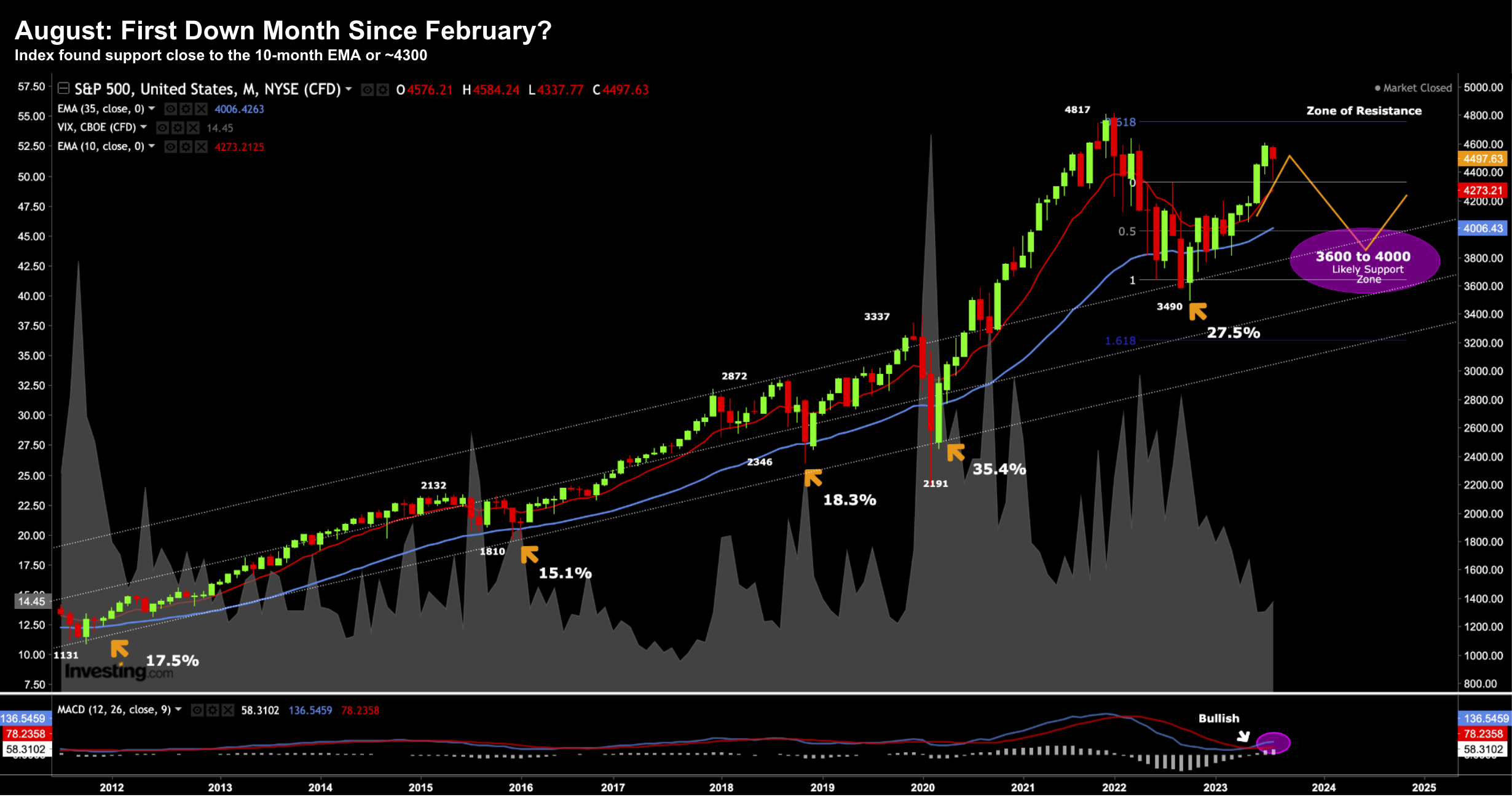
August has proven to be a bumpy month for equities. And if the Trader's Almanac is any guide - it's not surprising. August and September are typically weaker months for stocks. For example, over the past decade, the S&P 500 has managed an average gain of 0.1% for August. Dismal. If you go back two decades, it becomes an average loss of 0.1%. Why? Maybe it's due to most of Wall Street taking summer vacation in The Hamptons - meaning trading volumes are low. Or it could be some traders locking in profits ahead of September - which boasts the worst record of any month in the calendar. For example, the S&P 500 has lost an average of 1% each September over the past 10 years.

“Navigating by the Stars Under Cloudy Skies”

Today Fed Chair Jay Powell offered his latest sentiment on the economy and monetary policy from the Jackson Hole Summit. Whilst he leant hawkish (my expectation) - he also admitted he doesn't know what's ahead. Nothing wrong with that... better decision making starts by first recognizing what we don't (or can't) know. Powell stated "... as is often the case, we are navigating by the stars under cloudy skies". Question is - what does that mean for markets and rates ahead?

Beware the “Bear Steepening” of the Curve

My last post talked about how the market is now taking its cues from bond yields (less so the Fed) Don't get me wrong... what the Fed does (or says) matters. We will hear more from Chair Jay Powell at the end of the week. Expect hawkish tones. To recap on what I shared earlier this week - globally long-term bond yields trade at their highest levels in 15 years. However, what's interesting is the shorter-end (e.g. 2-year and below) is not keeping pace. This has net the effect of "steepening" the all-important 10/2 yield curve. Question is - will that be a problem? History may offer some clues.

Now less about the Fed… It’s about Bond Yields

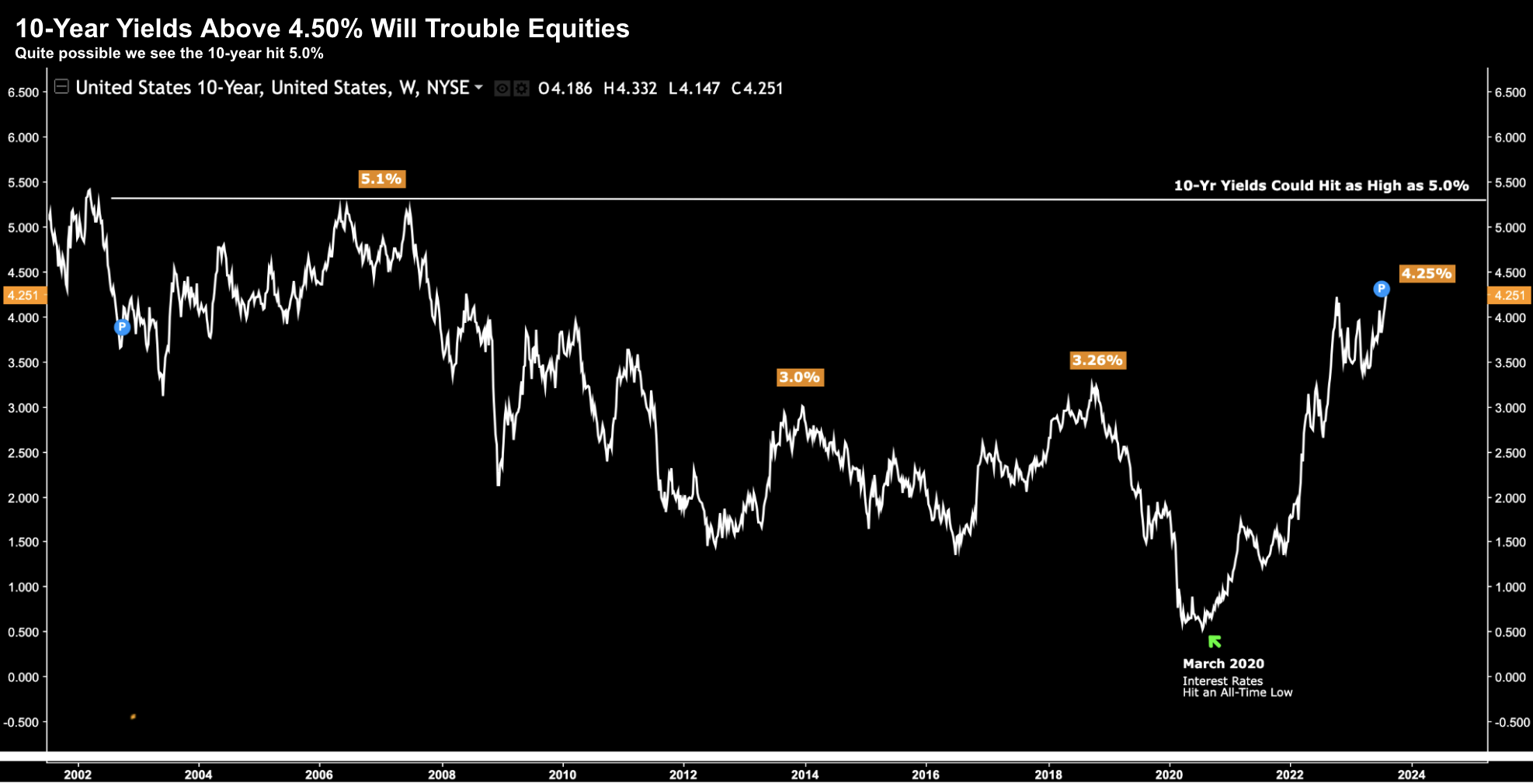
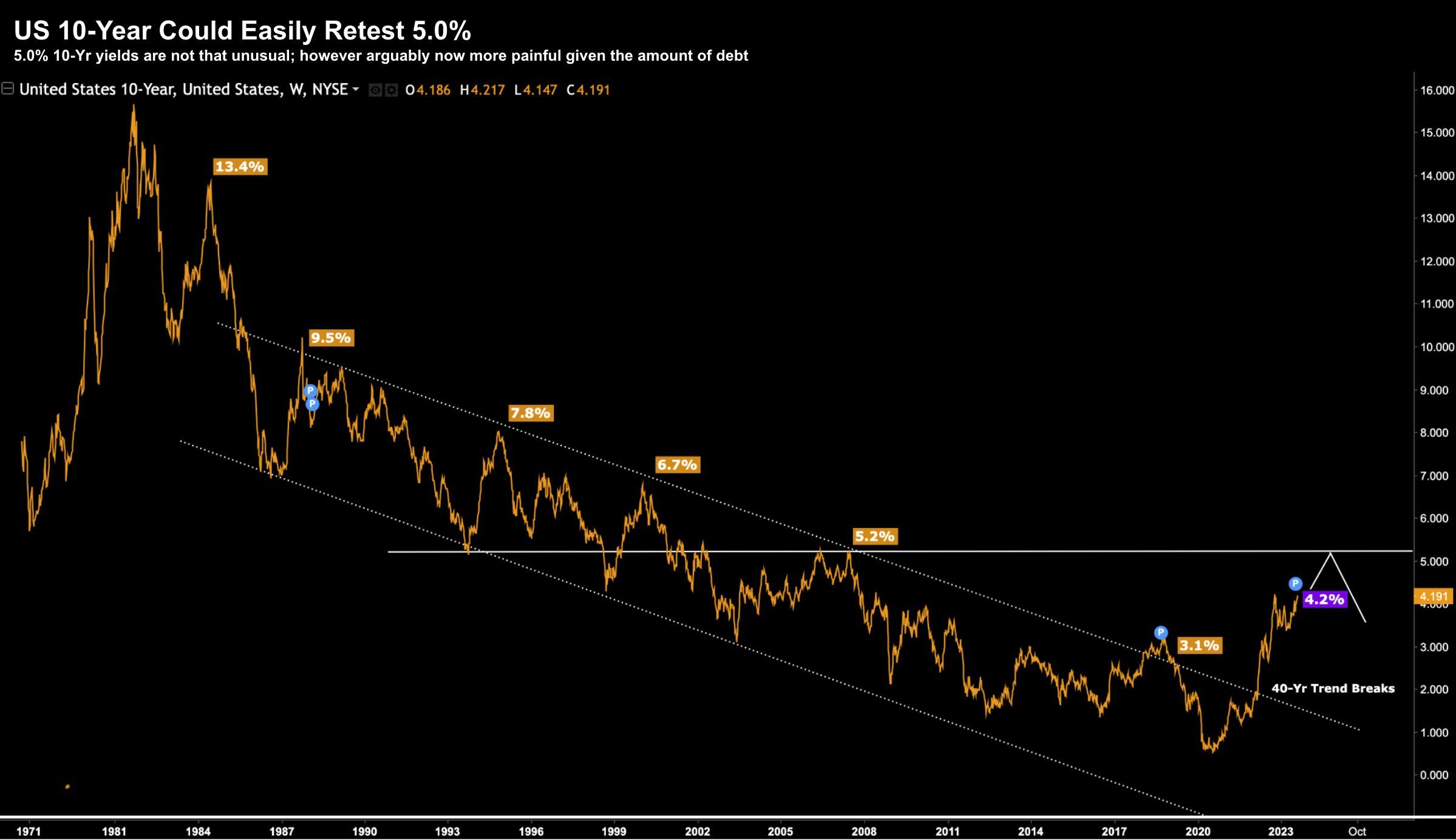
In ~11 years writing this blog - I've never seen a move in bond markets like the past 24 months. 10-year yields traded below 0.5% not that long ago. Money was next to free. Now that instrument will return 4.25% risk free. The 12-month T-Bill is a very attractive 5.34%. But it's not just in the US - it's global. Germany, Australia, Japan and the UK... yields on major fixed-income benchmarks are moving higher. In the UK, the 10-year gilt is yielding its most in 15 years. For me, where the market goes is more about bond yields than what the Fed do next...

“Big Short” Investor Goes Short… But Not on Housing

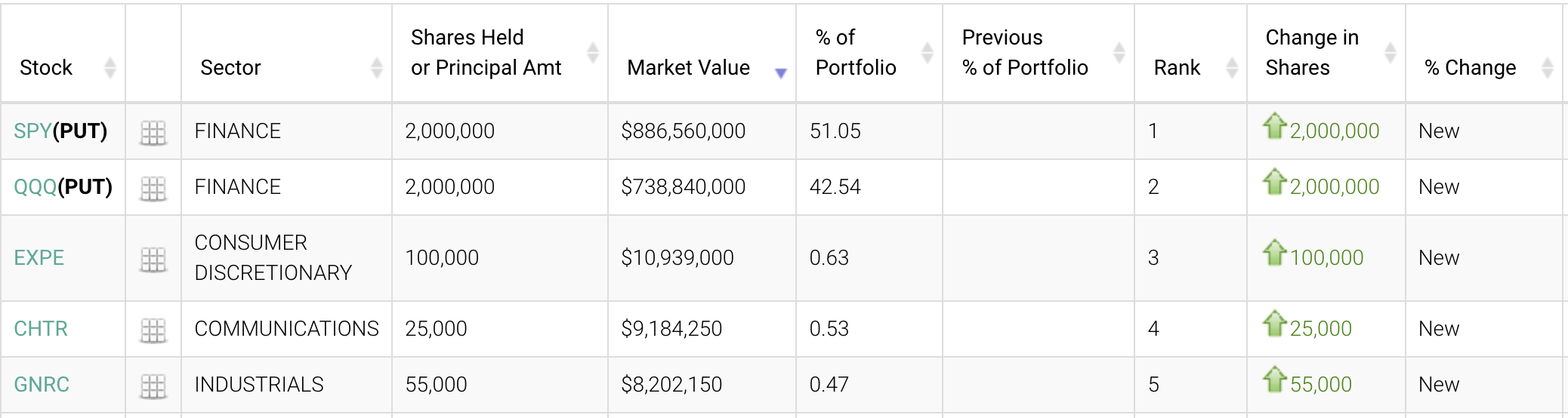
45 days after the end of every quarter - Wall Street's top fund managers are required to report their most recent holdings. These filings are known as 13Fs - and they reveal a lot about where the 'smart' money is going. Whilst there was nothing too out of the ordinary - a particular trade from Big Short investor - Michael Burry - caught my eye. He took a $1.6B short bet against the SPY and QQQ (in aggregate) using Put Options. Let's explore why he could have made that bet.... and he's not alone

The One Chart that Matters Most

If you were asked what is the most important metric in global finance - what would you answer be? The S&P 500? The US Dollar? Gold Something else? My answer is the US 10-year yield. Everything in finance is a function of this asset. For those less familiar with the game of asset speculation - this is a very important concept to understand. What's more, its importance extends well beyond the stock market. To begin, the US 10-year yield is the proxy for financial instruments such as your mortgage, your car loan, student debt, your credit card etc. More than that - how this bond trades also signals investor confidence.

Why Core Inflation Will Remain Sticky

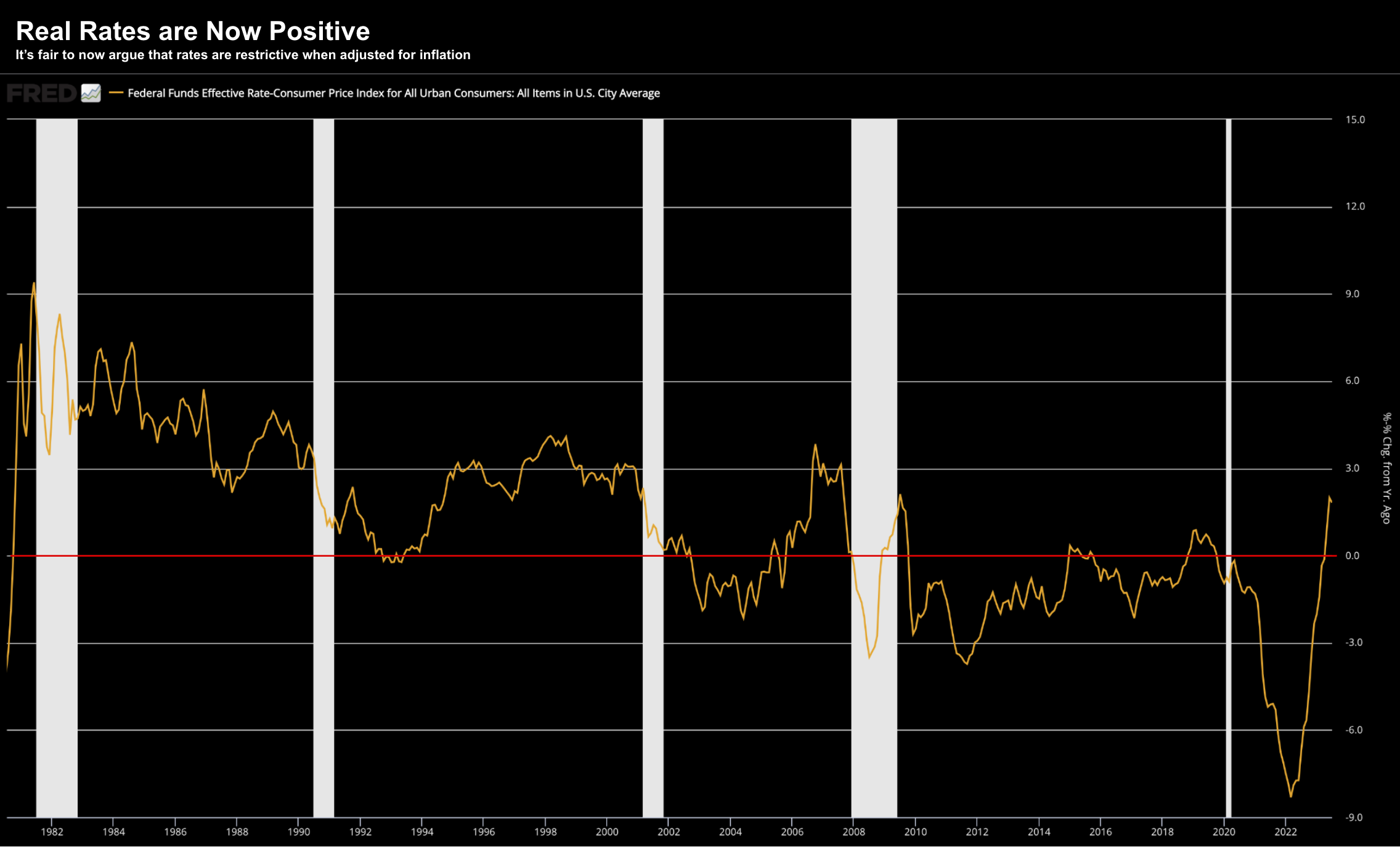
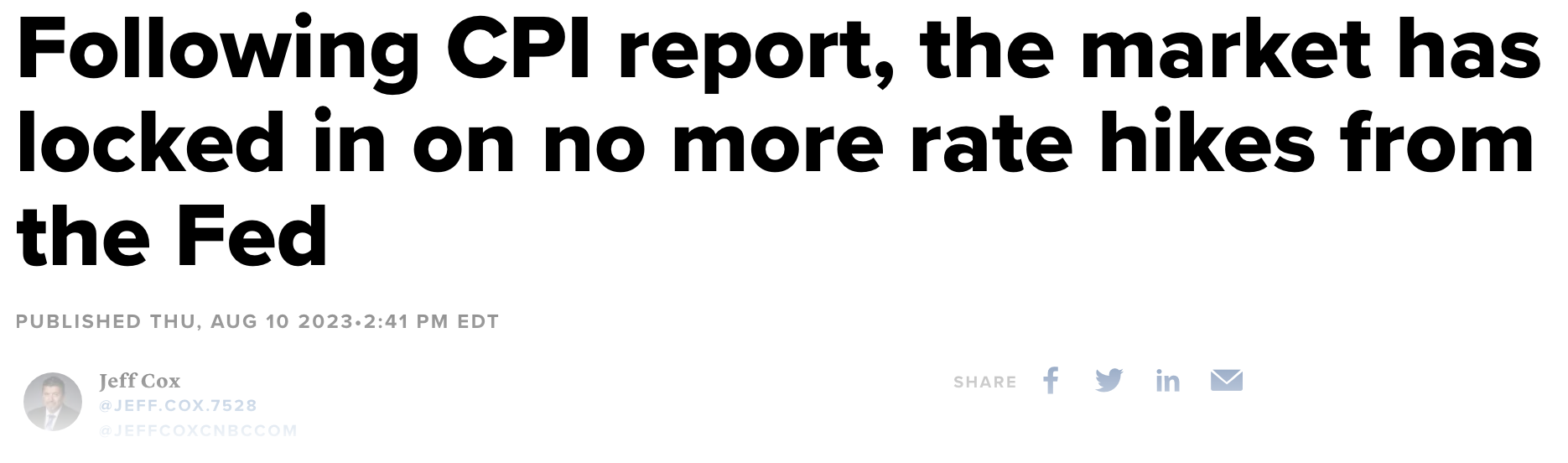
Markets got excited on news of the softer-than-expected CPI headline print today. Headline inflation came in at 3.2% YoY vs expectations of 3.3%. However, what deserves closer scrutiny is not the headline number - it's Core CPI at 4.7% YoY and shelter costs. For e.g., two-thirds of the monthly inflation increase came from shelter - where rents rose 0.4% MoM. This is now the 18th straight month the price of shelter has risen at least 0.4% MoM. But here's the thing - there isn't. much the Fed can do with monetary policy to change this.

Stocks Treading Water for a Good Reason

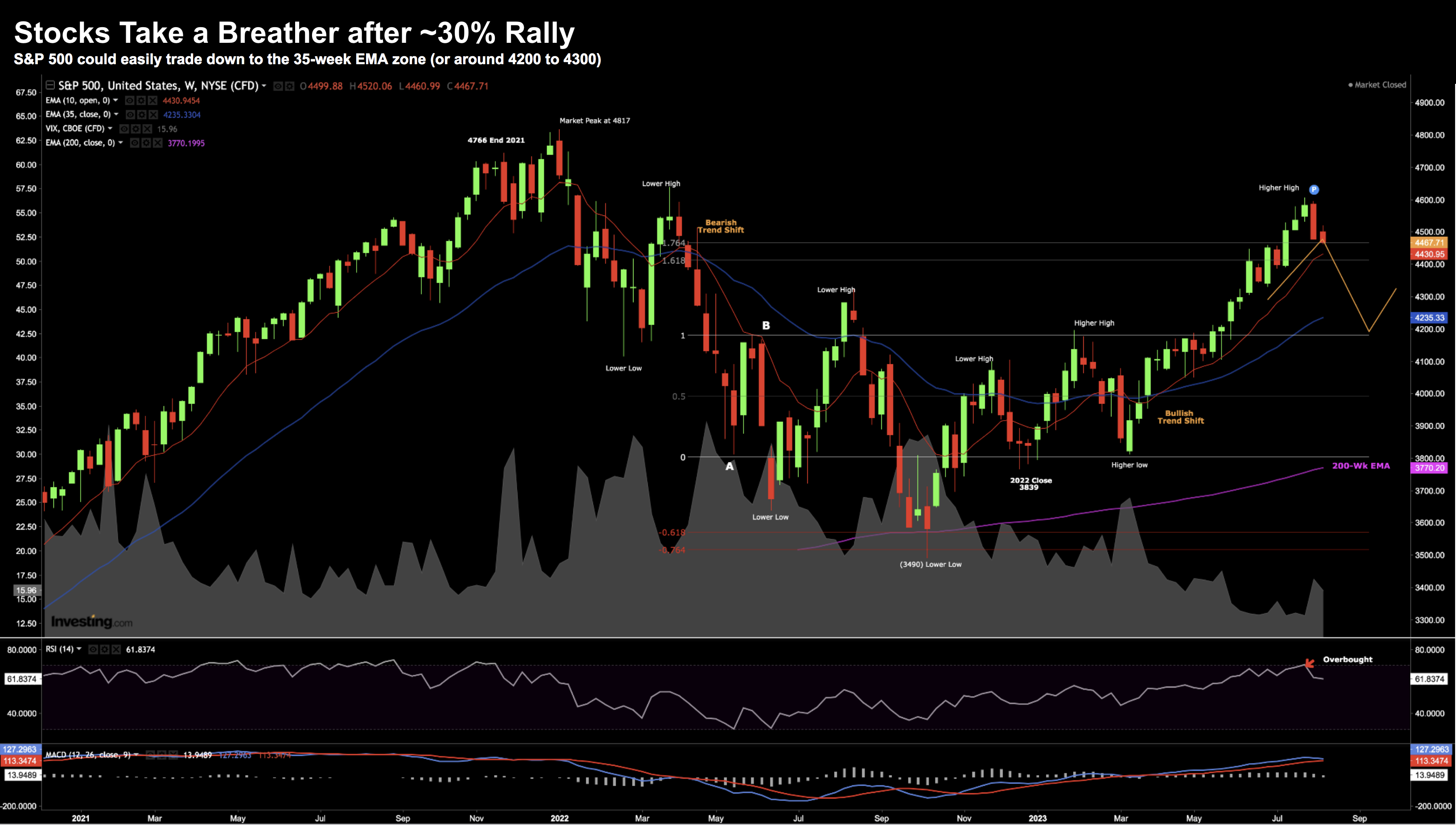
Stocks cannot get out of neutral. If anything, they appear to be going into reverse. Makes sense... they ripped~ 30% higher in 9 short months. But the risks are increasing as prices rise. This post looks at "equity risk premium". In short, investors are not being adequately compensated for the risk being taken in stocks (at current valuations) against the risk free return from Treasuries.