Category S&P500

S&P 500: Late-Cycle Rally or Start of a New Bull Market? S&P 500: Late-Cycle Rally or Start of a New Bull Market?

S&P 500: Late-Cycle Rally or Start of a New Bull Market?

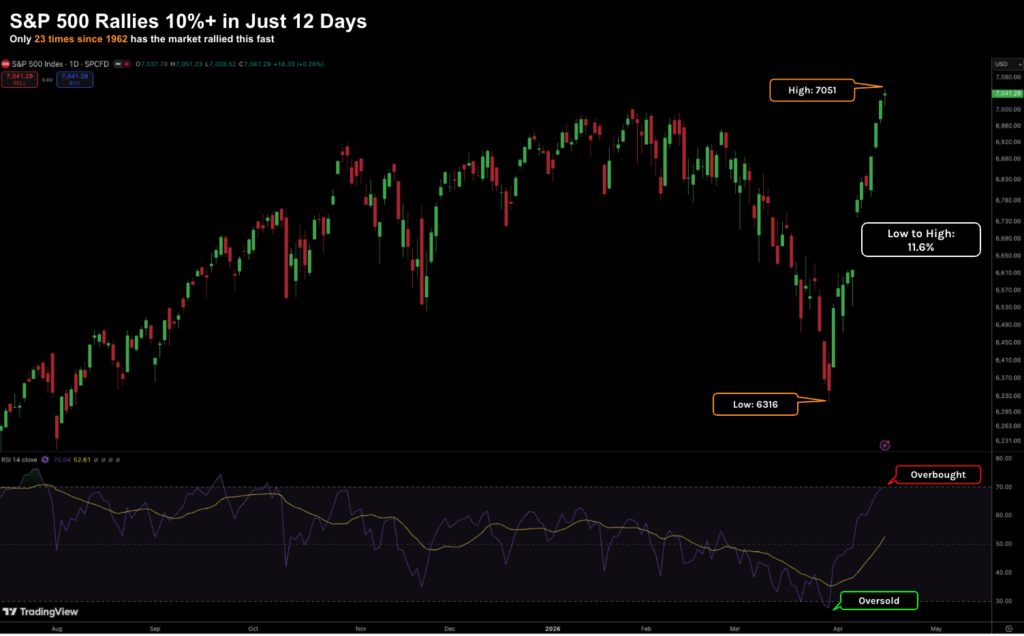
Despite the ongoing war in Iran, equities are behaving as if little has changed. The S&P 500 has gained just over 10% in 12 trading days—a surge that has occurred only 23 times since 1962. Measured from the intra-day low…
How Markets Misprice Uncertainty: Stocks, Gold, and Long-Term Opportunity How Markets Misprice Uncertainty: Stocks, Gold, and Long-Term Opportunity

How Markets Misprice Uncertainty: Stocks, Gold, and Long-Term Opportunity

Periods of heightened uncertainty tend to unsettle markets — and for good reason. When investors struggle to assess how long disruptions will last, or how far second-order effects will reach, asset prices adjust quickly. Energy costs rise, inflation expectations shift,…

The 2026 “Known Unknowns”: Why Demographic Shifts Signal a Growth Problem The 2026 “Known Unknowns”: Why Demographic Shifts Signal a Growth Problem

The 2026 “Known Unknowns”: Why Demographic Shifts Signal a Growth Problem

After three years of spectacular gains, 2026 demands a strategic pivot. I outline five critical themes determining market direction: rising unemployment risks, sticky inflation, a hawkish Fed, AI capex scrutiny, and a steepening yield curve. With valuations stretched, the easy money is gone. Investors should prioritize high-quality assets and cash optionality, preparing for a potential 15–20% correction. The focus now shifts from chasing momentum to preserving capital and awaiting reasonable valuations.

The FOMO Trap: Why a 40x CAPE Ratio Guarantees a Decade of Lost Returns The FOMO Trap: Why a 40x CAPE Ratio Guarantees a Decade of Lost Returns

The FOMO Trap: Why a 40x CAPE Ratio Guarantees a Decade of Lost Returns

It’s very tempting to chase AI and "Mag 7" gains, but your long-term returns are ultimately determined by the price you pay. With the S&P 500 trading near 25x forward earnings and the Shiller CAPE ratio flashing warnings similar to the 2000 dot-com bubble, the market is lofty territory. History is clear: investing at such elevated valuations drastically lowers subsequent 5 and 25-year returns. While FOMO is powerful, be cautious. As a long-term investor, focus on the risk of what you could lose, not just what you might miss

The Freediver Test: How to Spot a False Market Breakout The Freediver Test: How to Spot a False Market Breakout

The Freediver Test: How to Spot a False Market Breakout

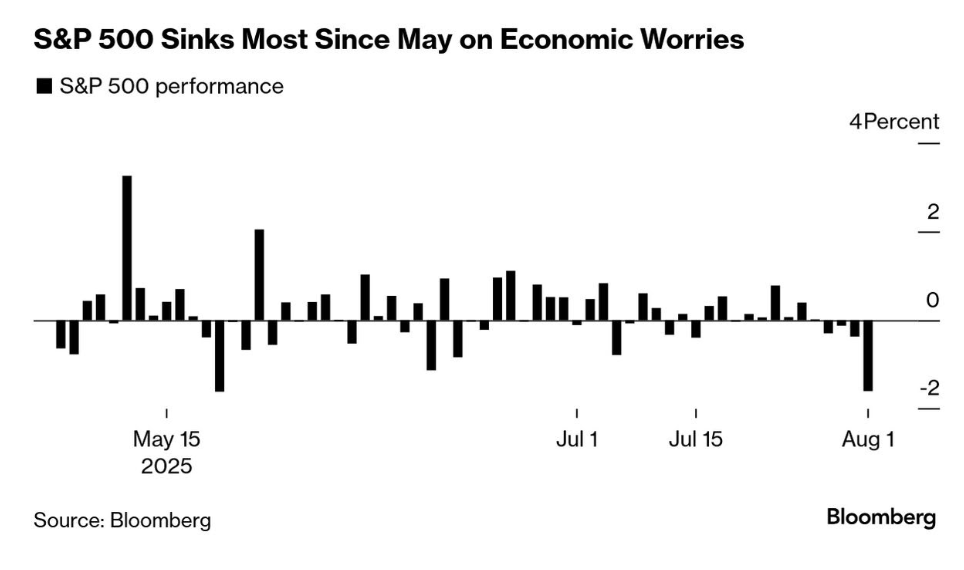
The labor market is clearly slowing. The "stag" in stagflation is here - what's less clear is the "flation" component. With respect to growth - we see slowing in housing, consumer spending and now job creation. The payrolls data was nothing shy of a disaster. And whilst the headlines will report on the dismal 73,000 jobs added (well below the ~140K job additions expected) - the massive 258,000 negative revisions over May and June is cause for concern.

Consumption Tax: Why the Market is Mispricing Trade Deals Consumption Tax: Why the Market is Mispricing Trade Deals

Consumption Tax: Why the Market is Mispricing Trade Deals

The market is cheering the "better than feared" trade deals with the likes of Europe and Japan. Yes, 15% is better than 30%. But 30% would be an embargo - not a tariff. 15% will not be good for global trade. Growth will slow; consumption will fall; resulting in fewer jobs. Trump's terrible tariffs will be at least ~12% more than what we had at the beginning of the year. This consumption tax will need to be paid by someone... just a question of who. The market is not pricing this in....

Pricing Power in an Inflationary Shock: The Helen of Troy vs. Conagra Test Pricing Power in an Inflationary Shock: The Helen of Troy vs. Conagra Test

Pricing Power in an Inflationary Shock: The Helen of Troy vs. Conagra Test

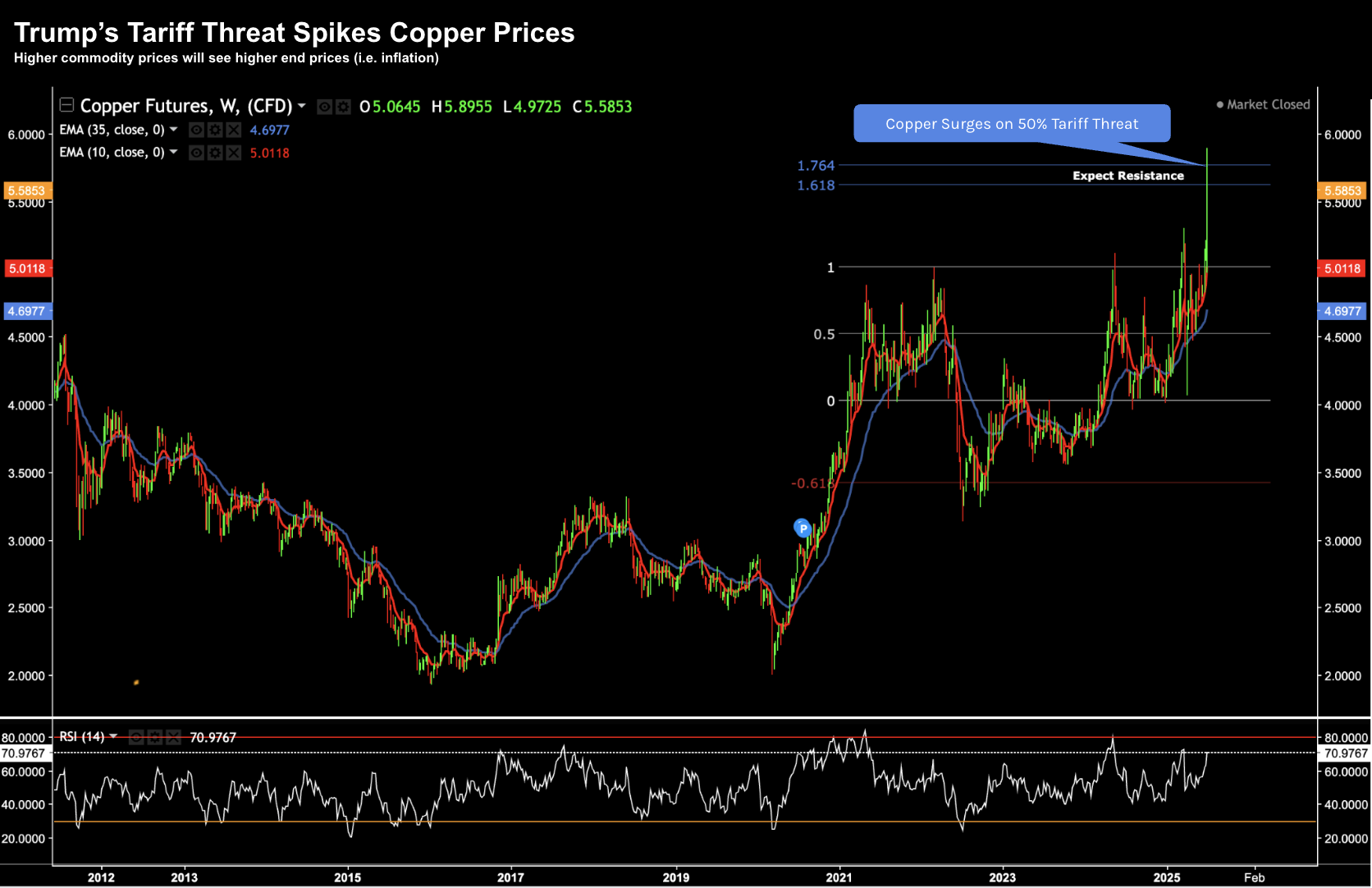
Recent developments in Trump's draconian trade policies — marked by steep tariffs, fluctuating commodity markets and geopolitical maneuvers — present a highly complex and uncertain landscape. Despite dramatic announcements and headline-grabbing tariff threats, markets have remained oddly resilient, while underlying forces quietly shift. For e.g., Trump's imposition of steep tariffs—such as 200% on pharmaceuticals and 50% on copper—has less to do with traditional economic rationale and more with political leverage

The 0.1% Risk Premium: Why the S&P 500 Hits Stall Speed at 6,000 The 0.1% Risk Premium: Why the S&P 500 Hits Stall Speed at 6,000

The 0.1% Risk Premium: Why the S&P 500 Hits Stall Speed at 6,000

Another week comes to close - as we draw near the end of the second quarter. For the past two weeks or so - investors are reluctant to push prices much higher. From mine, the index is not only expensive - trading near a forward price-to-earnings (PE) ratio of 22x - the downside risks don't handily offset the (possible) upside reward. For eg, it would not surprise me to see the S&P 500 trade up to a zone of 6,200 (adding another 5% or so). However, equally I see a possibility for a 10% to 20% move lower given the risks to earnings growth, inflation (from tariffs), employment and geopolitical tensions.

The Patience Paradox: Why ‘Buy and Hold’ Fails at 23x Earnings The Patience Paradox: Why ‘Buy and Hold’ Fails at 23x Earnings

The Patience Paradox: Why ‘Buy and Hold’ Fails at 23x Earnings

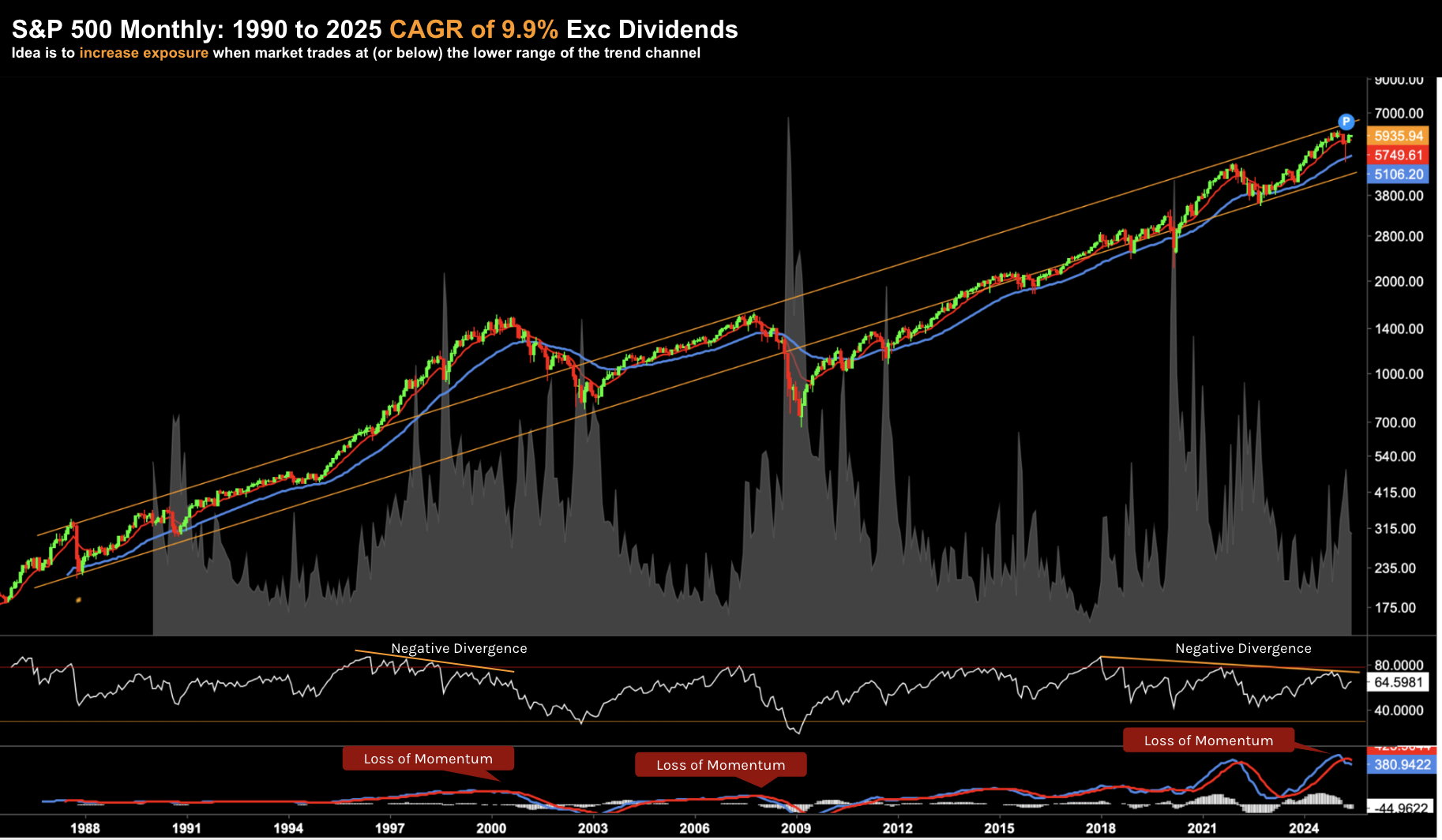
Over the past ~40+ years - the S&P 500 Index has returned an average of ~9.3% annually exc. dividends (i.e., 171.6 Jan 1985 to 5,979.5 Jan 2025). If we limit that to the past decade (from 2015) - that avg annual return increases to 11.4% (excluding dividends). But what matters most is (a) the price you pay; and (b) when you get out. Sitting tight for 10 years does not guarantee a 10% return...

The Bond Vigilante Vote: Why 5% Yields and a $4 Trillion Deficit Could Break the S&P 500 The Bond Vigilante Vote: Why 5% Yields and a $4 Trillion Deficit Could Break the S&P 500

The Bond Vigilante Vote: Why 5% Yields and a  Trillion Deficit Could Break the S&P 500

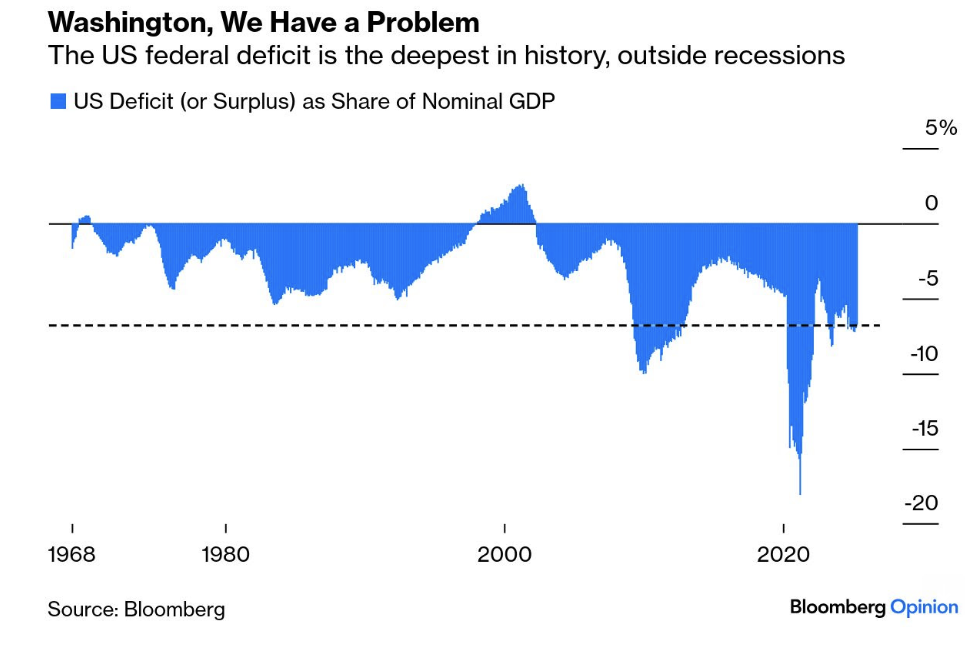
Markets paused to take a breath this week following a six-week ~22% surge. The S&P 500 surrendered a routine ~2.80% - after touching a 12-week high of 5,968. With the market trading at 22x fwd earnings (a premium in any environment) - investors are arguably more mindful of (a) ongoing tariff risks- with new threats from Trump on Europe and Apple; and (b) the thread of rising bond yields - and any potentially widening of the deficit.