
Category Psychology

How Markets Misprice Uncertainty: Stocks, Gold, and Long-Term Opportunity How Markets Misprice Uncertainty: Stocks, Gold, and Long-Term Opportunity

How Markets Misprice Uncertainty: Stocks, Gold, and Long-Term Opportunity

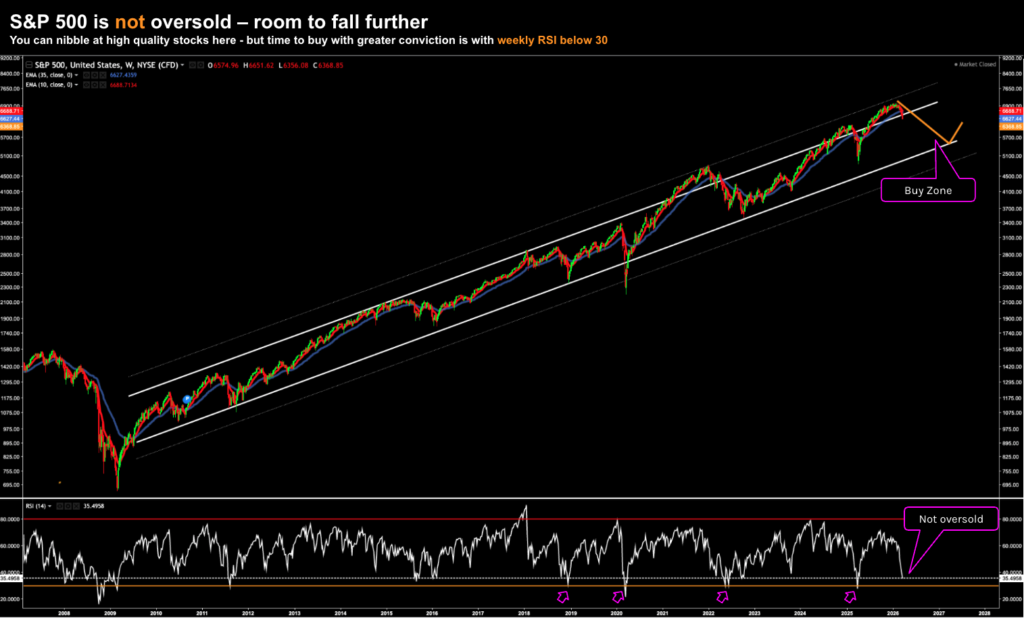
Periods of heightened uncertainty tend to unsettle markets — and for good reason. When investors struggle to assess how long disruptions will last, or how far second-order effects will reach, asset prices adjust quickly. Energy costs rise, inflation expectations shift,…

Why Stock Valuation Multiples Matter More Than Growth Why Stock Valuation Multiples Matter More Than Growth

Why Stock Valuation Multiples Matter More Than Growth

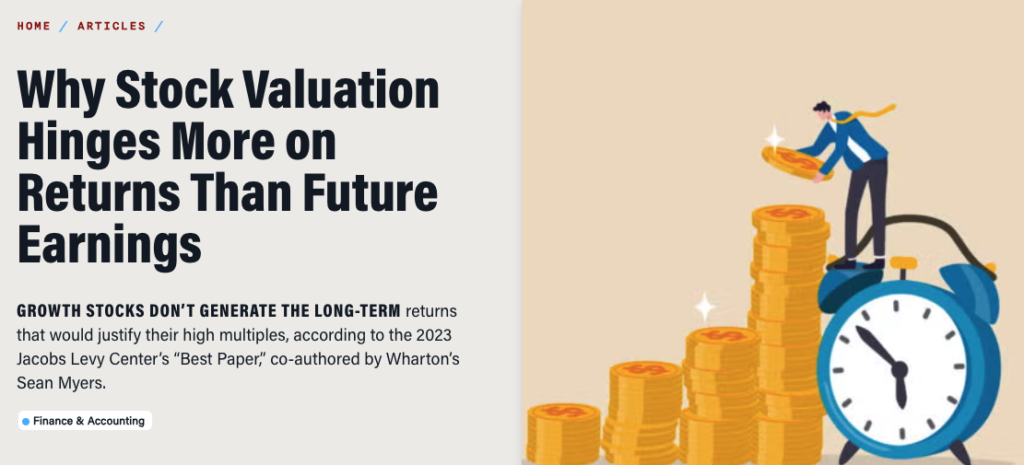
Those who have been reading my blog over the past ~15 years will have heard me say “buying the best company in the world can still be a terrible investment”. This is one of the most uncomfortable truths in investing and…

How Central Banks Shape Markets in Times of Crisis How Central Banks Shape Markets in Times of Crisis

How Central Banks Shape Markets in Times of Crisis

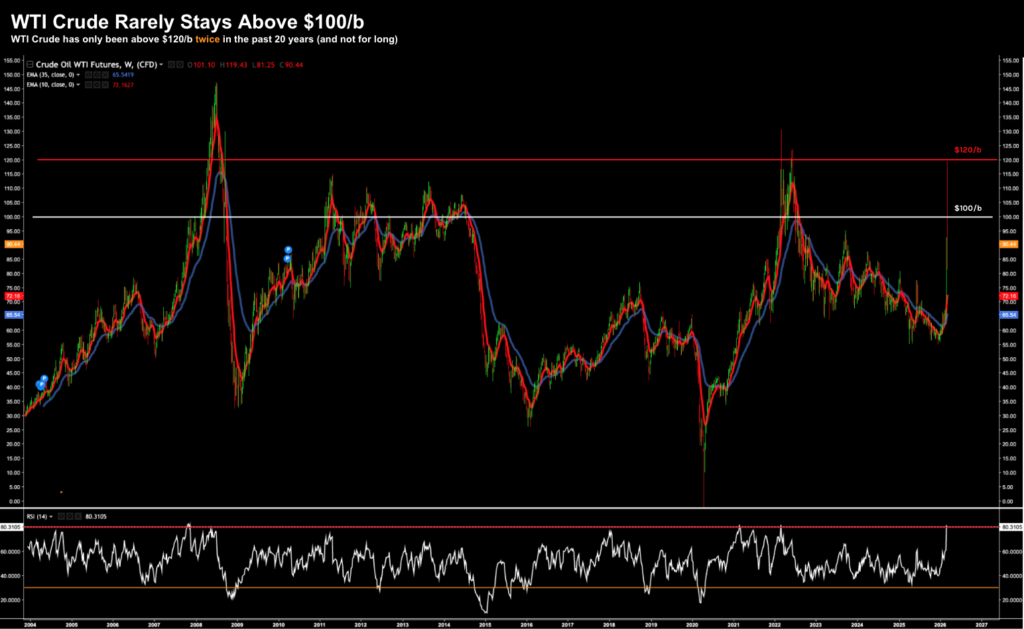
Every crisis feels unprecedented in the moment. A war disrupts oil supply. Prices spike. Markets lurch. Commentators scramble to interpret what it all means. Faced with such uncertainty, attention quickly turns to central banks. Rate decisions, policy statements, and even…

Anatomy of a Supply Shock: Using Data Frameworks to Filter Market Noise Anatomy of a Supply Shock: Using Data Frameworks to Filter Market Noise

Anatomy of a Supply Shock: Using Data Frameworks to Filter Market Noise

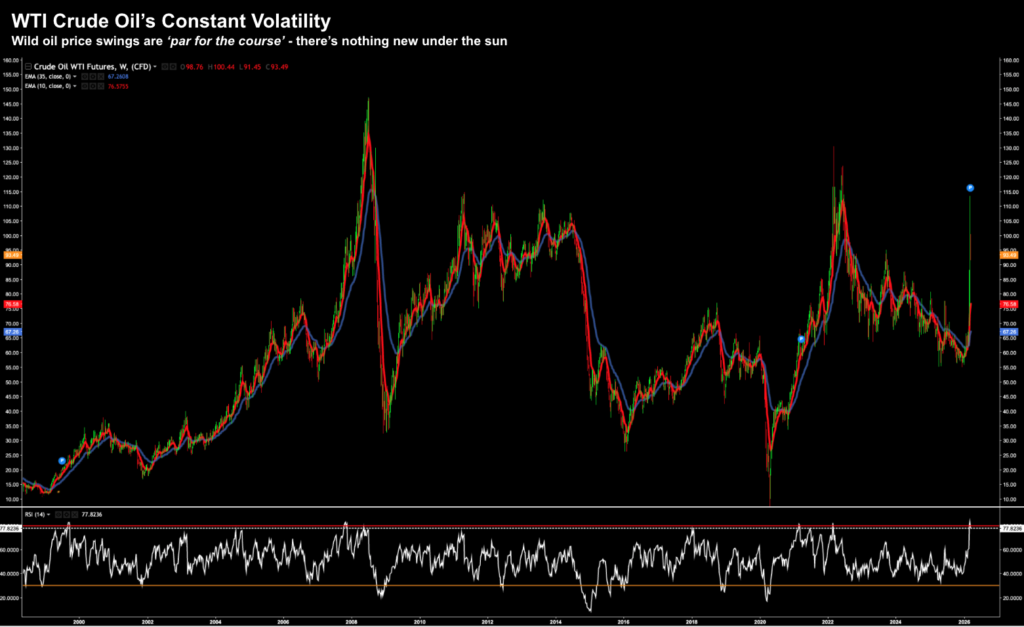
Frameworks to assess the impact of the war Lessons from the previous oil spikes Finding resilient capital in a stagflationary world In the world of macro investing, we often see years where less happens in the energy markets than what…

Private Credit vs 2008: The Hidden Risks of the Leverage Loop Private Credit vs 2008: The Hidden Risks of the Leverage Loop

Private Credit vs 2008: The Hidden Risks of the Leverage Loop

Private credit has grown into a $1.8 trillion market built on leverage loops, opaque valuations, and covenant-lite lending. With banks exposed via $300B in loans and AI disruption threatening cash flows, the real risk isn’t visible market losses — it’s hidden architecture that could transmit stress back into the financial system

Agentic AI and the Future of SaaS: Disruption vs. Structural Destruction Agentic AI and the Future of SaaS: Disruption vs. Structural Destruction

Agentic AI and the Future of SaaS: Disruption vs. Structural Destruction

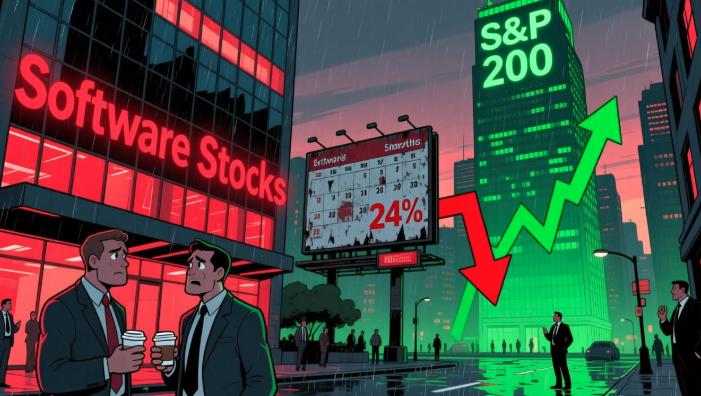
Markets weigh Agentic AI”s threat to traditional application layers. Will AI enhance existing workflows or structurally impair legacy SaaS business models? From blanket euphoria to strategic redistribution On the surface, you could be forgiven for thinking the S&P 500 looks…

The AI Adoption Gap: Applying the Toothbrush Test to Generative AI Valuations The AI Adoption Gap: Applying the Toothbrush Test to Generative AI Valuations

The AI Adoption Gap: Applying the Toothbrush Test to Generative AI Valuations

While AI remains undeniably impressive, its transition from a helpful assistant to a mission-critical necessity is facing a significant adoption gap. With daily active use remains thin, investors are beginning to question the durability of "asset-light" returns as capital expenditure soars into the hundreds of billions. This shift from software-driven scalability to hardware-heavy reinvestment suggests a major reassessment of valuations is underway, as markets weigh the probability of long-term value capture against extreme multiples.

Contrarian Investing: Using Sentiment Analysis as a Market Signal

The Ultimate Contrarian Signal

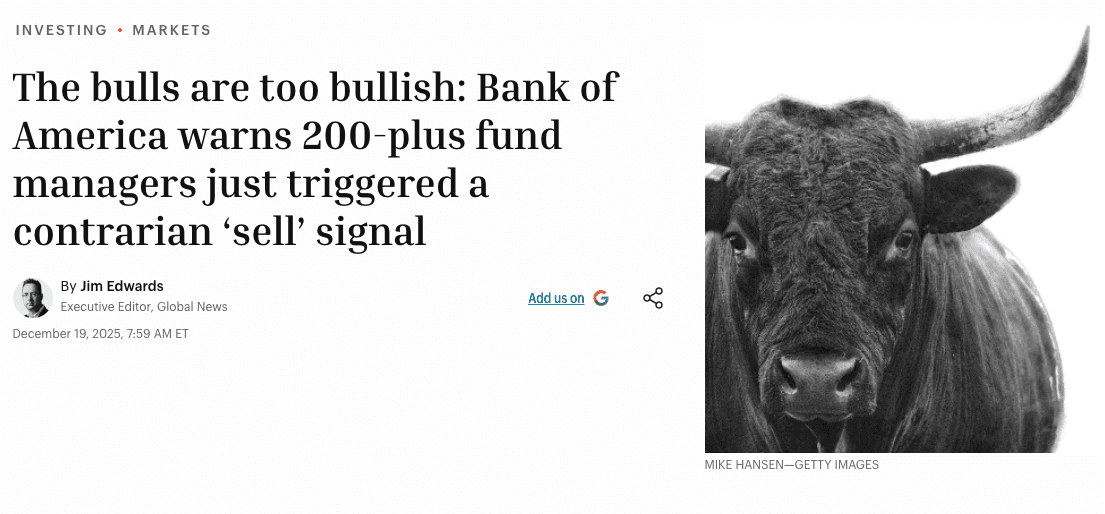
When the crowd leans one way, the boat is at risk of capsizing. With BofA’s Bull & Bear indicator triggering a contrarian "sell" signal and equity inflows hitting record highs, market participants are priced for a "Goldilocks" perfection that leaves zero margin of safety. While consensus bets on double-digit earnings growth and Fed cuts, a "Bear Steepener" in the yield curve suggests the bond vigilantes are revolting against a $1.6T deficit. If the US 10-year creeps higher, today’s 22x forward multiple faces a sharp reality check. I remain 65% long in quality, but patient for the correction.

The FOMO Trap: Why a 40x CAPE Ratio Guarantees a Decade of Lost Returns The FOMO Trap: Why a 40x CAPE Ratio Guarantees a Decade of Lost Returns

The FOMO Trap: Why a 40x CAPE Ratio Guarantees a Decade of Lost Returns

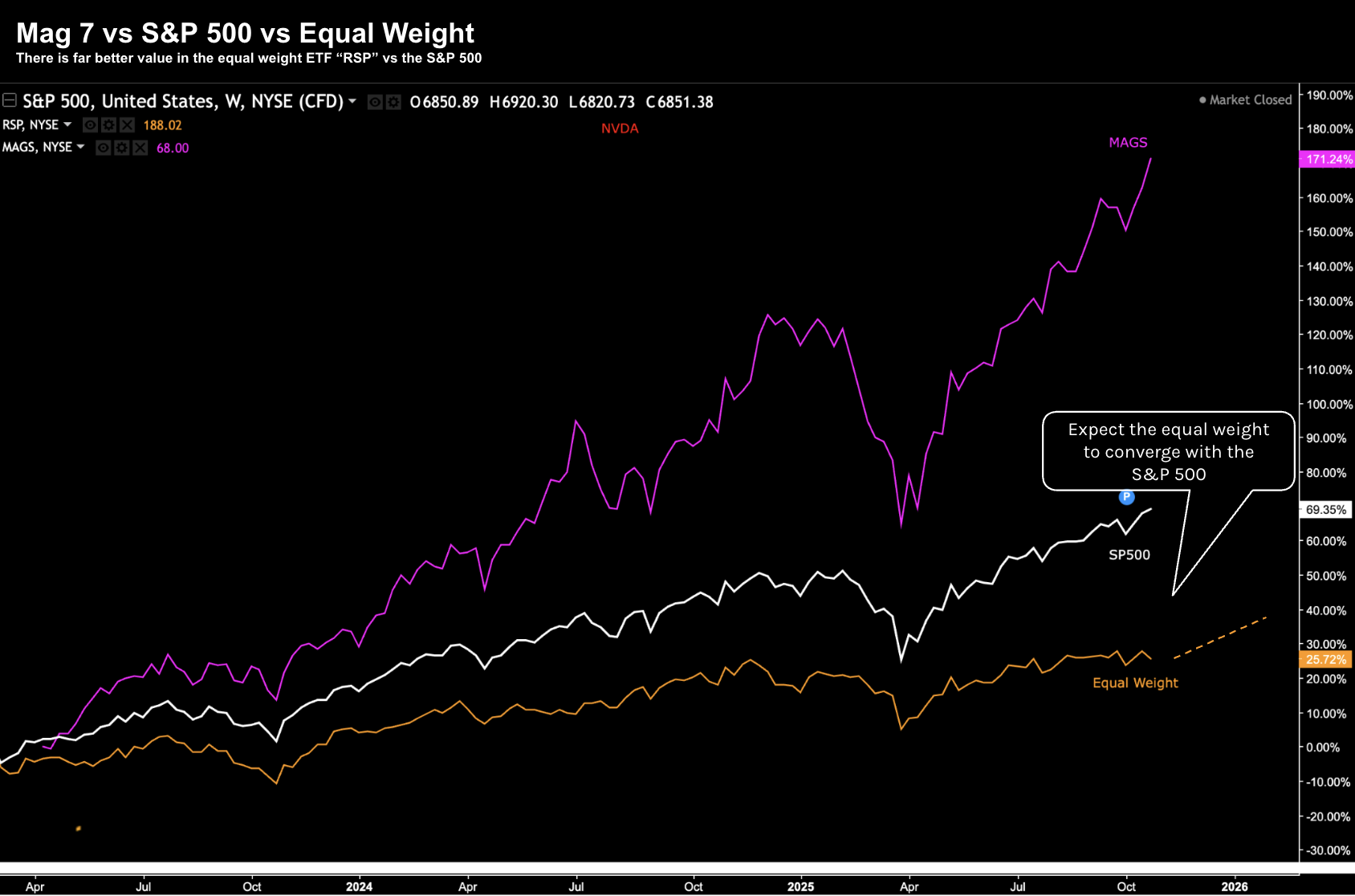
It’s very tempting to chase AI and "Mag 7" gains, but your long-term returns are ultimately determined by the price you pay. With the S&P 500 trading near 25x forward earnings and the Shiller CAPE ratio flashing warnings similar to the 2000 dot-com bubble, the market is lofty territory. History is clear: investing at such elevated valuations drastically lowers subsequent 5 and 25-year returns. While FOMO is powerful, be cautious. As a long-term investor, focus on the risk of what you could lose, not just what you might miss

The Preening Duck: Why Jay Powell and Warren Buffett are Wary of 23x Earnings The Preening Duck: Why Jay Powell and Warren Buffett are Wary of 23x Earnings

The Preening Duck: Why Jay Powell and Warren Buffett are Wary of 23x Earnings

The current market presents a stark contradiction: stocks are high, but the Fed is entering an easing cycle. As billionaire David Tepper notes, he's "constructive on stocks" due to cheapening money but "miserable" because valuations are sky-high. Warren Buffett mirrors this caution, holding a record high of over $344 billion in cash. This balance reflects the core tension: stocks can easily run higher on investor optimism, yet the consensus is that forward earnings multiples are dangerously stretched. Like Buffett in 1969 and 1997, savvy long-term investors are prioritizing capital preservation, maintaining some exposure while waiting for the inevitable mean reversion to bring prices back down to a prudent level.