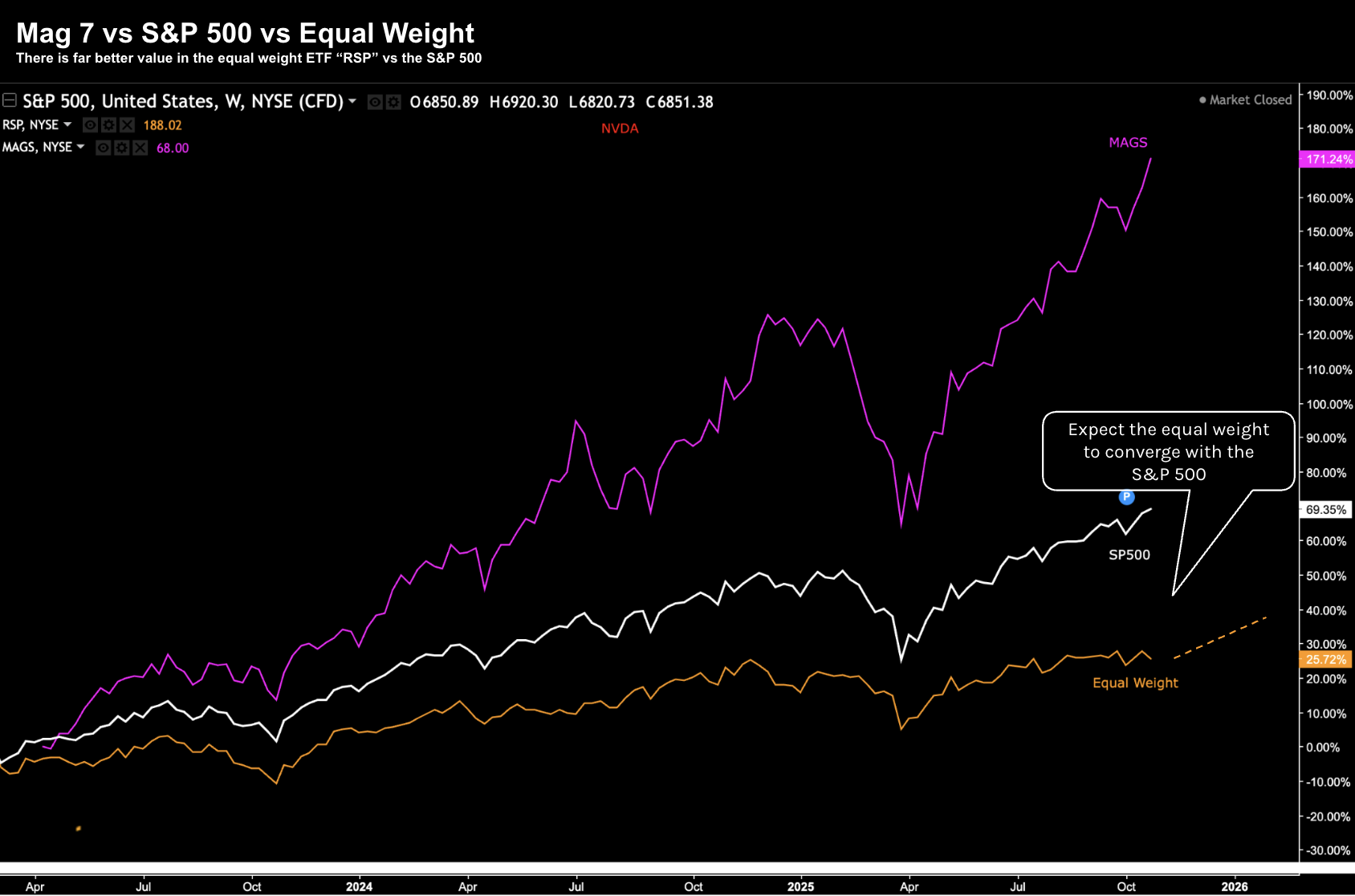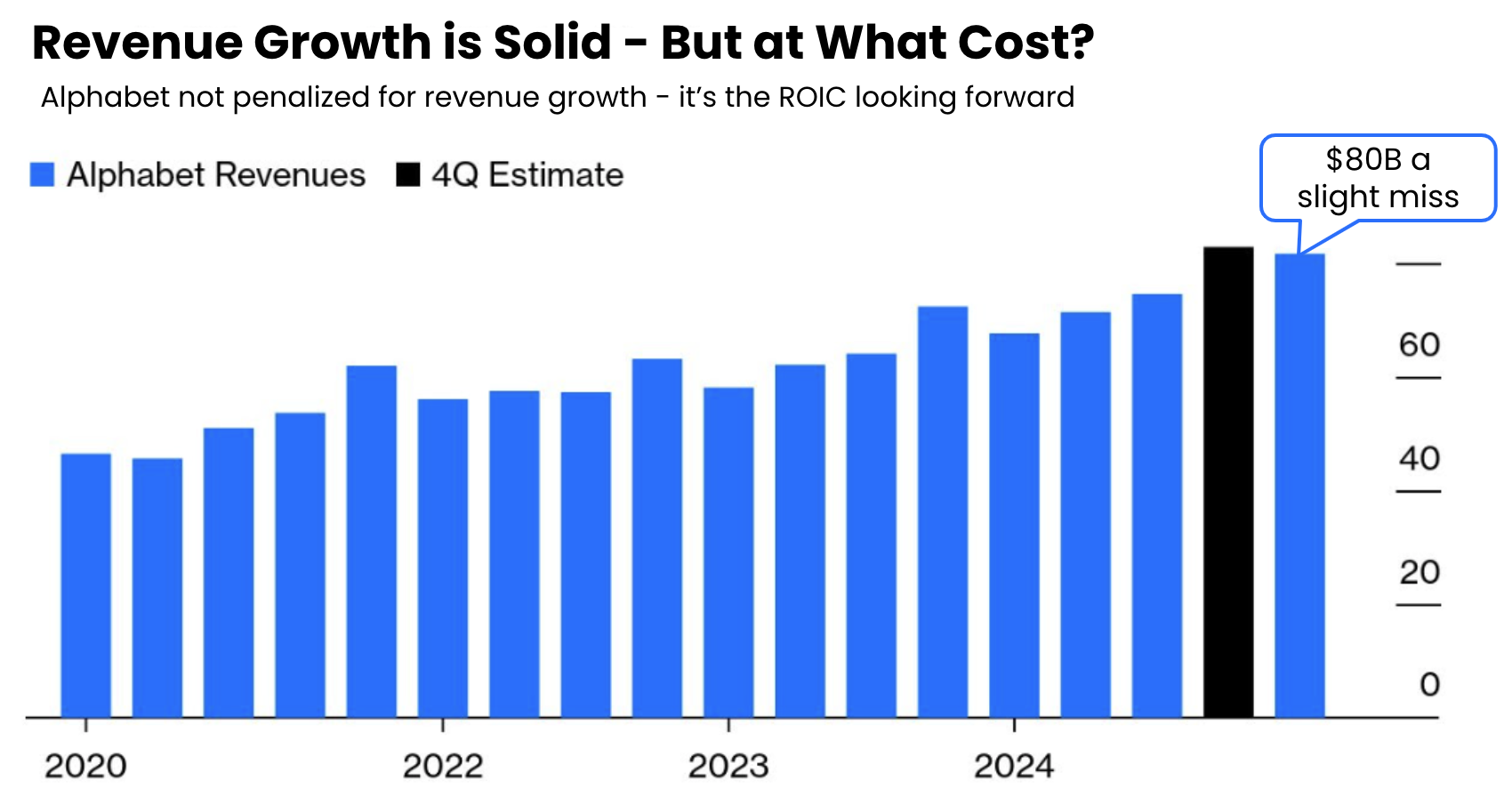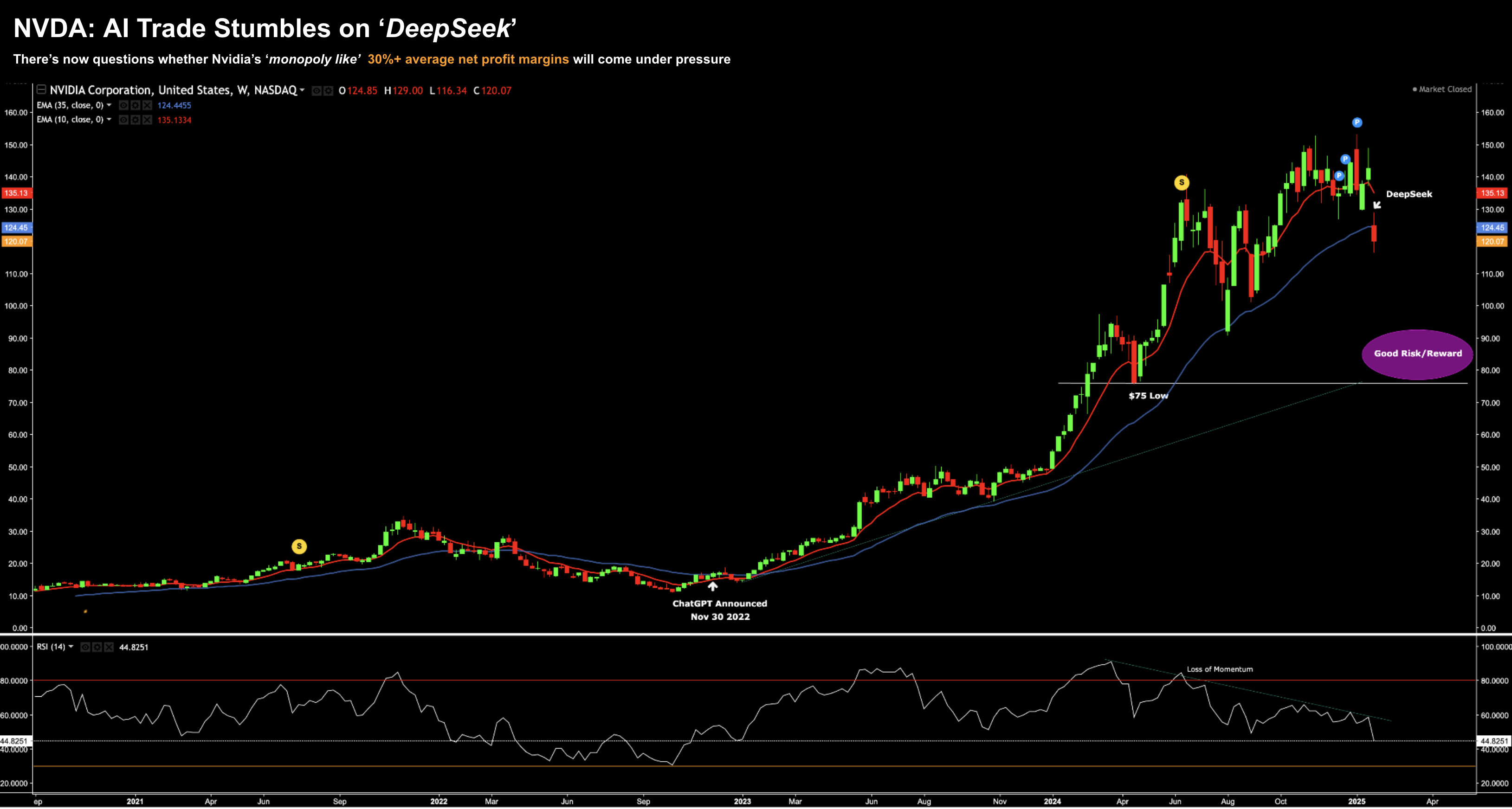

Most of the Mag 7 tech giants are using an extended 5-to-6-year depreciation schedule for their massive GPU investments. Since GPUs typically have a 3-year useful life, this practice artificially inflates current earnings by reducing the reported expense. If these chips rapidly become obsolete, investors paying high multiples must question the impact on future Free Cash Flow and margins when the true depreciation expense inevitably hits. Investors are optimistic that will show very strong returns (and soon) on their half-trillion-dollar bet.
Big Tech
Why You Should Avoid Paying Too Much
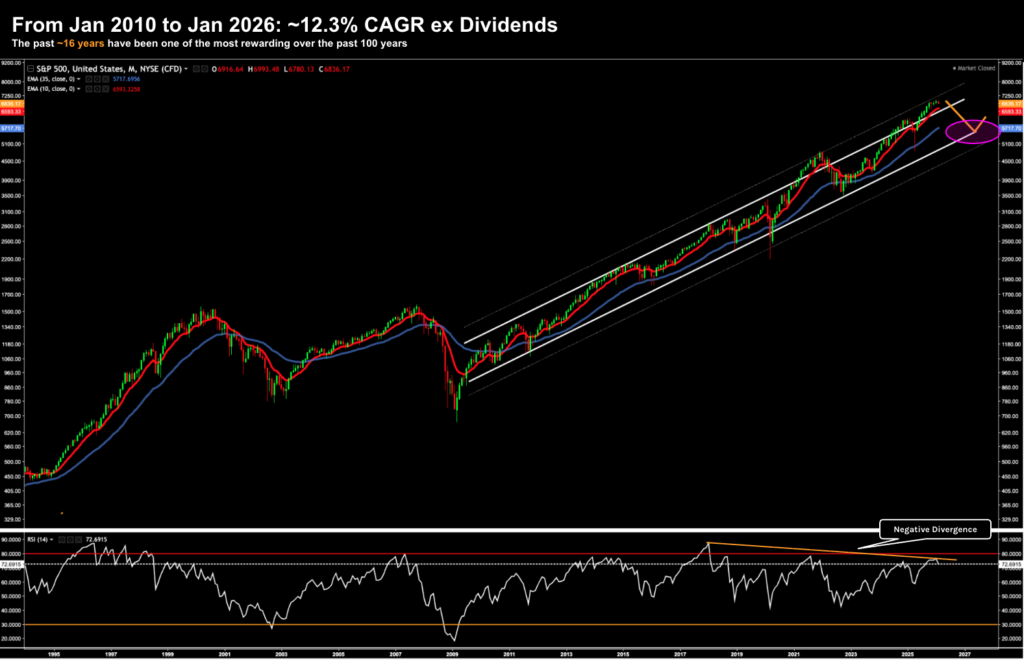
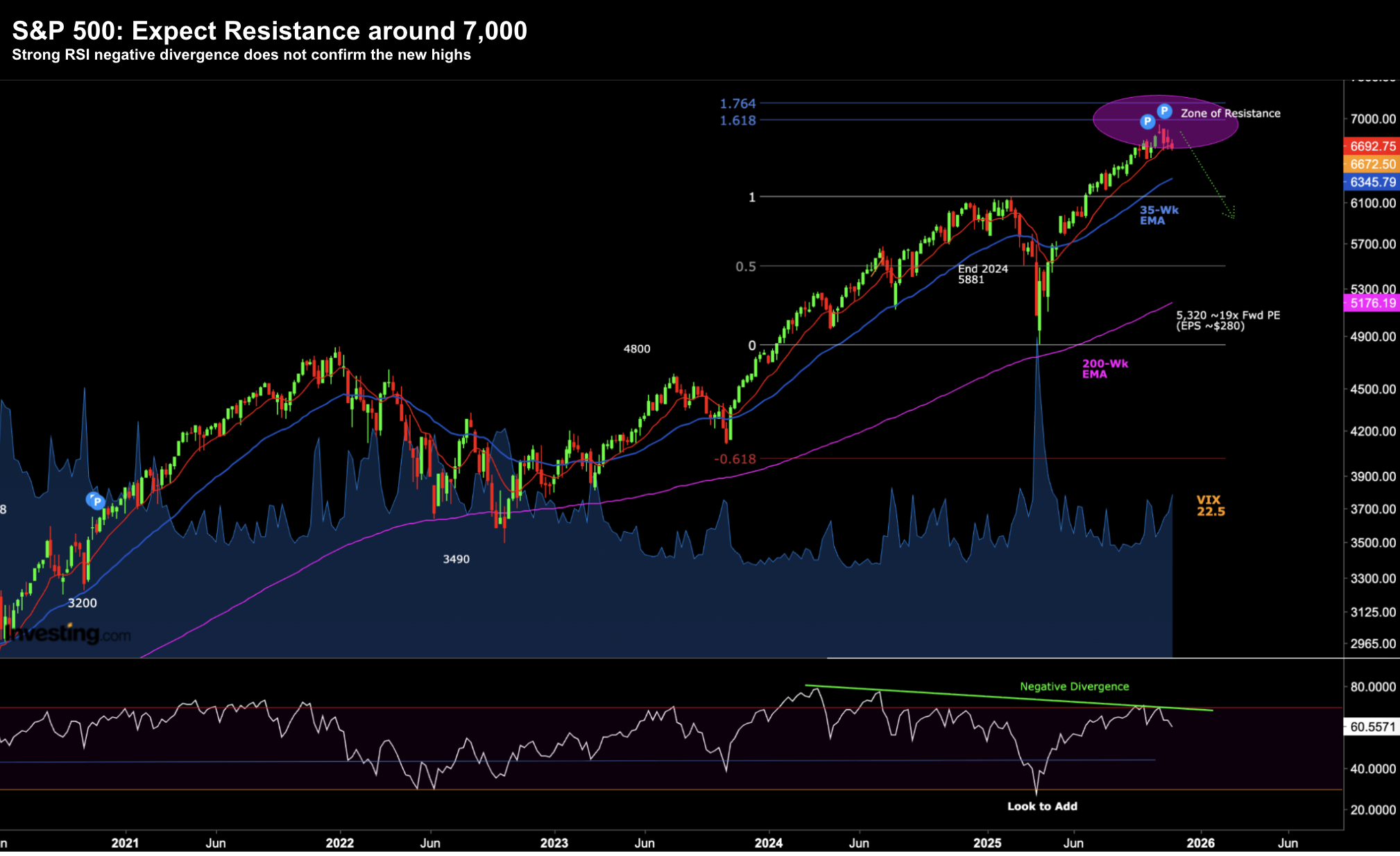
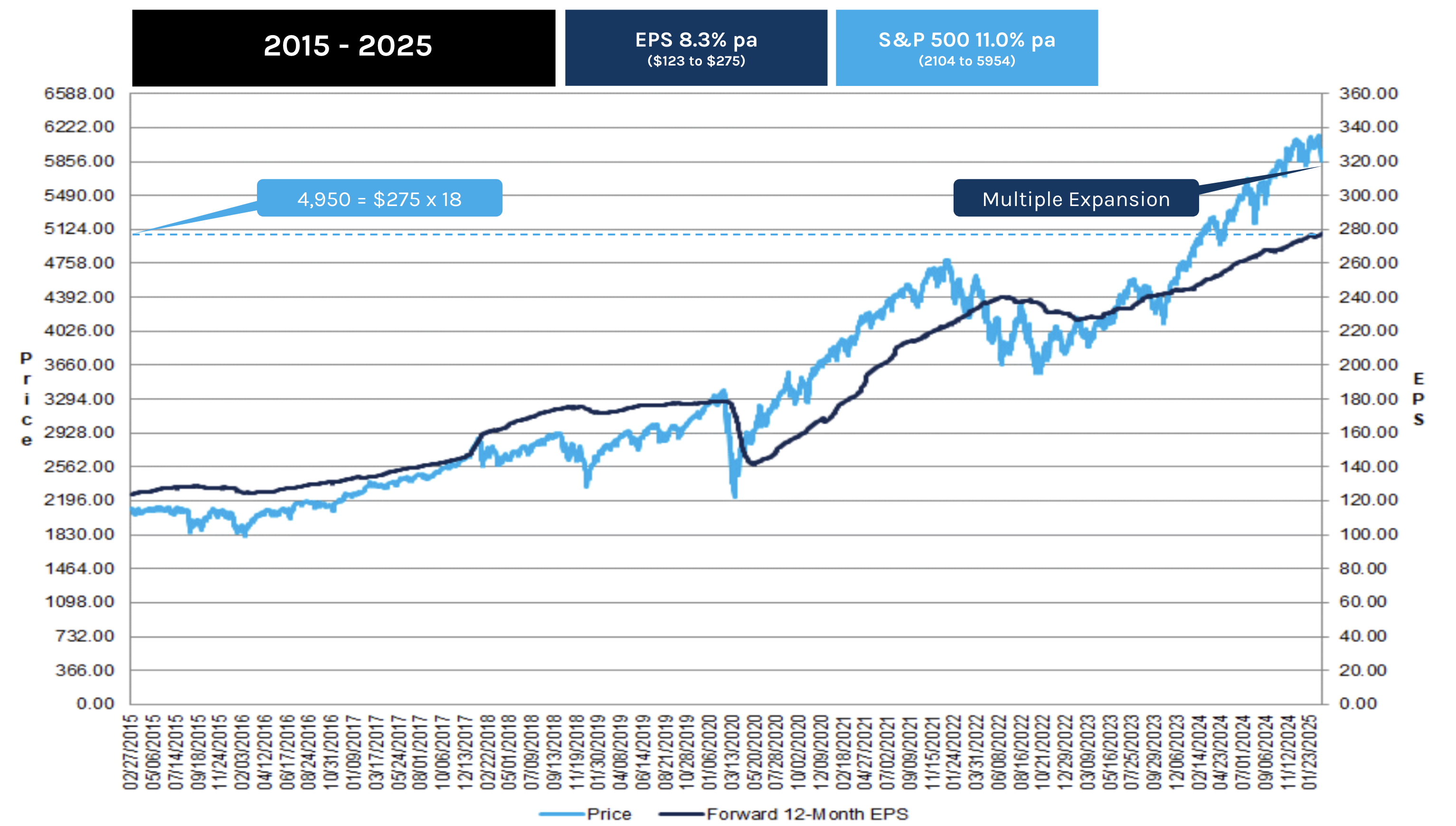
It’s very tempting to chase AI and “Mag 7” gains, but your long-term returns are ultimately determined by the price you pay. With the S&P 500 trading near 25x forward earnings and the Shiller CAPE ratio flashing warnings similar to the 2000 dot-com bubble, the market is lofty territory. History is clear: investing at such elevated valuations drastically lowers subsequent 5 and 25-year returns. While FOMO is powerful, be cautious. As a long-term investor, focus on the risk of what you could lose, not just what you might miss
Large Cap Tech: Cautious on Guidance
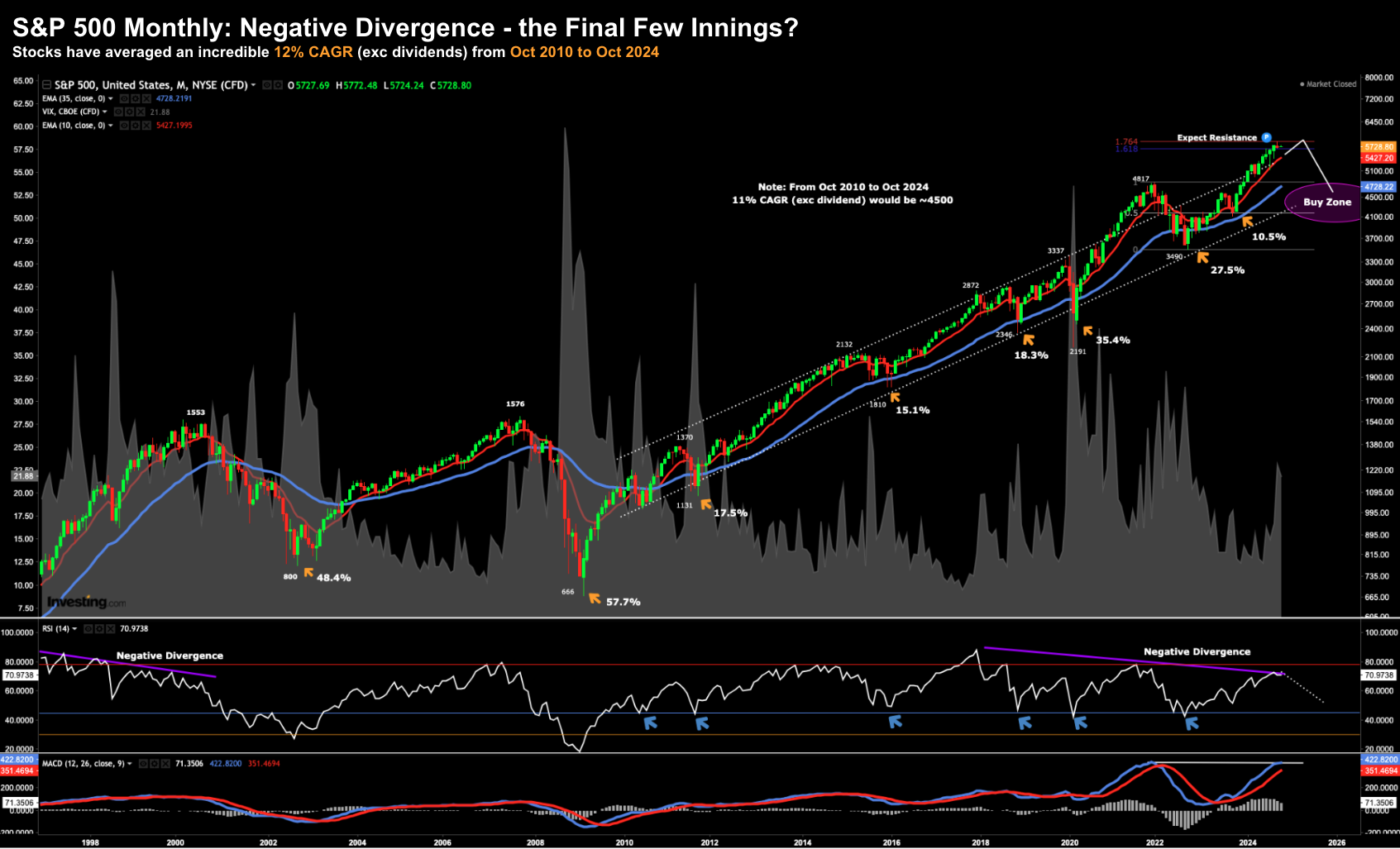
When Charlie Munger was asked the secret to his success – he answered “I’m rational.” Rational is not paying “33x forward earnings” for a company like Apple or Microsoft – despite their quality. Rational is also not selling the S&P 500 when it plunges to trade at just 16x forward earnings – because you are worried about a possible recession. Rational is adding exposure to high quality assets when they are at or below their long-term mean. And the more below the mean they trade – the stronger your (long-term) conviction should be.