Category Earnings

Why Earnings Expectations Feel Too High

Factset reported S&P 500 companies are "highly uncertain" for the balance of this year. This is well above the 10-year average of 179; and more than double the previous quarter. And it makes sense... it's impossible to know what impact tariffs could have over the coming two to three quarters (or more). But what's almost certain - any impact won't be positive. We can say with certainty that tariffs (even if only 10%) are an economic burden - where I estimate the cost to both companies and consumers to be more than $300B. So who will pick up the tab?
What Do Q1 Earnings Tell Us?

We're about half way through Q1 2025 earnings. So far they're showing double-digit YoY growth. However what companies are struggling with is guidance. They have very limited visibility through the "tariff windshield". And whilst stocks are reacting well to past earnings and optimism Trump will back down on his draconian tariffs - it's difficult to gauge both how much damage has been done? For now, markets remain optimistic however I would treat this rally with caution.

Large Cap Tech: Cautious on Guidance

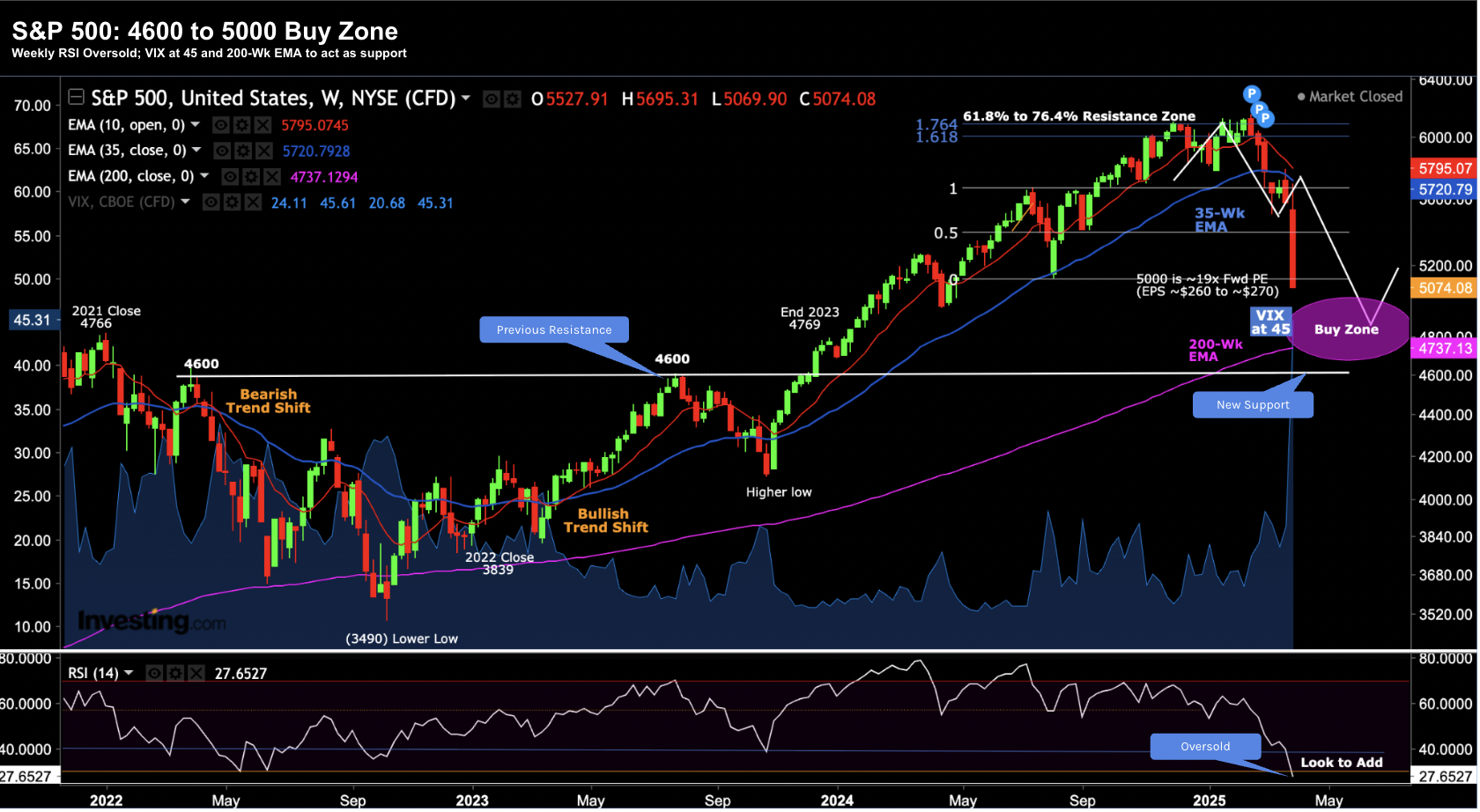
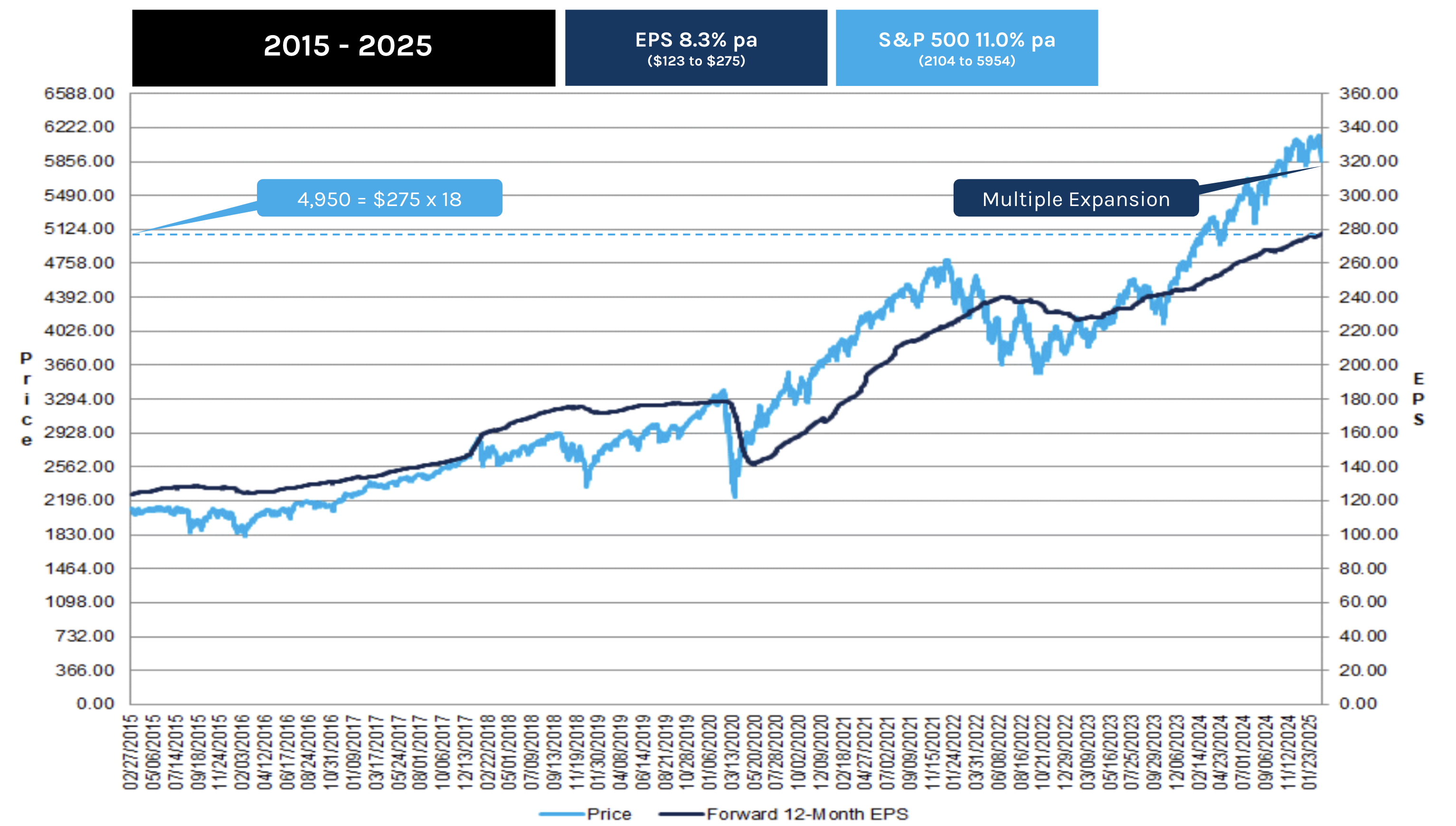
When Charlie Munger was asked the secret to his success - he answered “I’m rational.” Rational is not paying "33x forward earnings" for a company like Apple or Microsoft - despite their quality. Rational is also not selling the S&P 500 when it plunges to trade at just 16x forward earnings - because you are worried about a possible recession. Rational is adding exposure to high quality assets when they are at or below their long-term mean. And the more below the mean they trade - the stronger your (long-term) conviction should be.

Relief Rally Likely to be Temporary

Despite the welcomed relief rally - stocks are not out of the woods. The uncertainty introduced from Trump has inflicted a lot of damage. Not only on the market and its earnings - but on investor, consumer and business confidence. However, the full extent of the damage will only be felt in the months (years) ahead. For example, Bankim Chadha of Deutsche Bank has reduced his target for the S&P 500 for the year, citing doubts over whether tariff policies will be abandoned before they have already driven the economy into a recession. This echoes what I said recently "we could already be in recession"

Stocks Pause on ‘Less than Magnificent’ Earnings

October - synonymous for delivering market jolts - passed with barely a whimper. However, it was the market's first negative month since April. Are stocks losing their mojo? In short, large cap tech earnings from five of the 'Mag 7' were less than magnificent. Meta, Apple and Microsoft all dropped post earnings. Google managed a small 5% rise initially - but gave it all back. Amazon managed hold gains of ~3%. This post talk to what the market expects from the nearly $1 Trillion in AI capex... and how their patience could be starting to wane...

Nvidia Beats Expectations… But Disappoints on Guidance

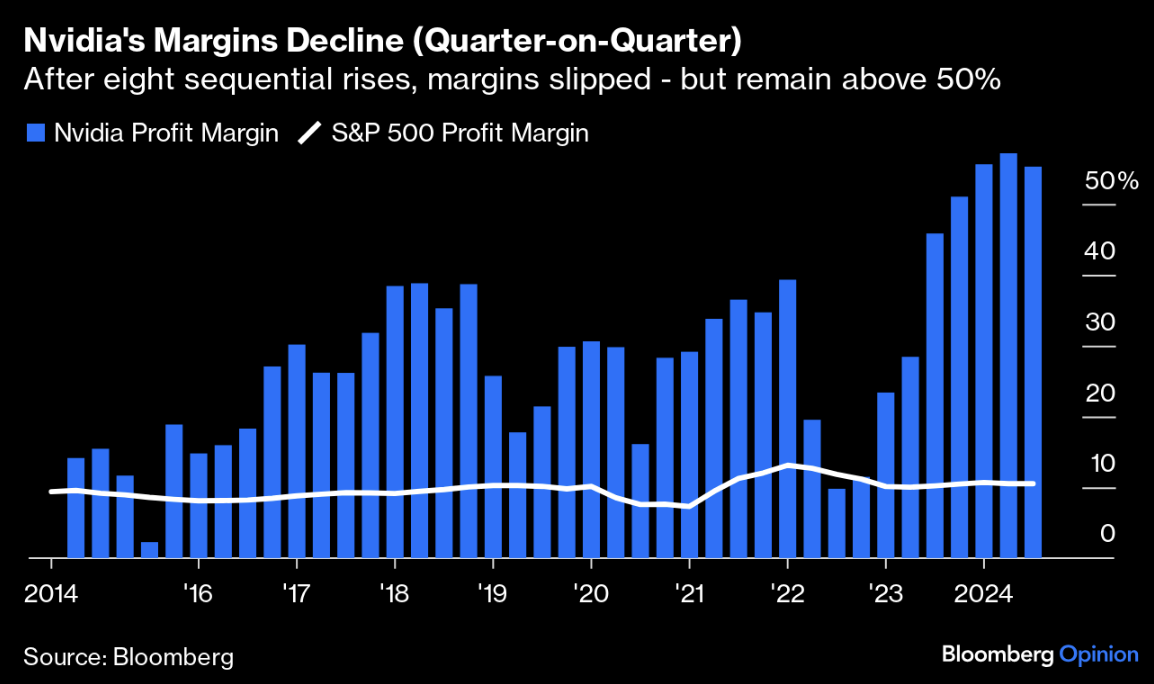
Rarely has a single stock been so 'hyped' coming into earnings as Nvidia. The leading AI chip maker is widely seen as the 'AI' barometer... making their earnings more important than most. My expectation was they would handily beat Q2 revenue and earnings - however issue a softer-than-expected guide. It turns out that's what we got. Make no mistake - this was another exceptionally strong quarter. And despite the softer guide - "only" falling 6.4% should be considered a good result. This post talks about whether Nvidia is still worth a bet post their results. The answer is it depends on your timeframe... but long-term (3+ years) the answer is absolutely yes.

Wall Street Cheer a “Strong Jobs” Report…  Should They?

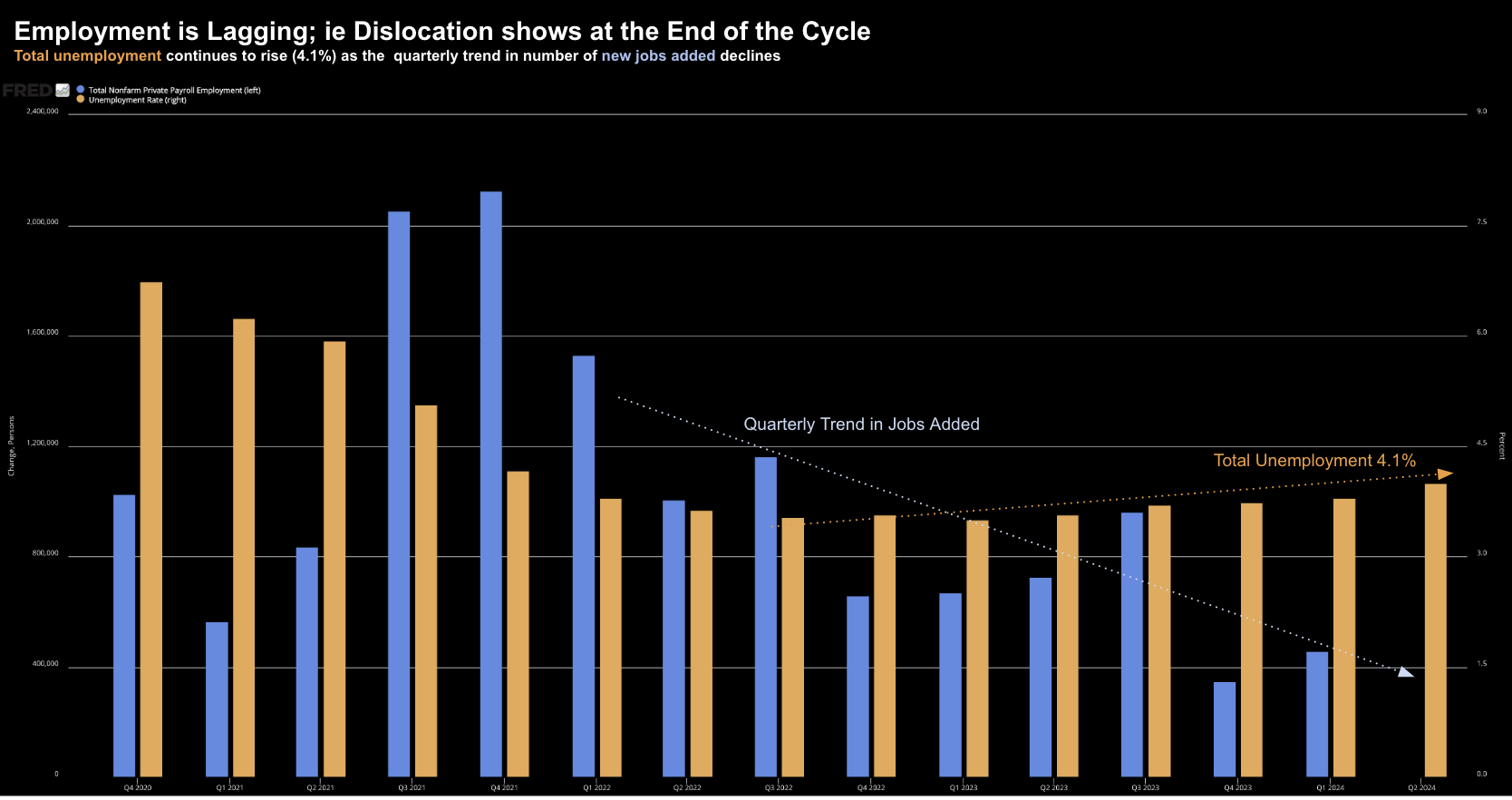
Wall St. cheered a perceived 'strong' monthly June jobs report. The economy added 206K jobs last month - however the unemployment rate moved to 4.1% - its highest level in 2 years. Here's the thing: there was a lot of weakness in the labor market - with most of the jobs coming from government. In addition, April's job gains were revised lower by 111K. And May was revised lower by almost 60K. I think there is material underlying weakness (reflected in slower Real GDP and PCE) and perhaps enough for the Fed to start cutting rates in September or November.

Why ‘Soft Landings’ Deserve Scrutiny

What impact will a 'soft-landing' have on current stock valuations And does there need to be a recession to experience a meaningful (e.g. 12%+) decline? My short answer is no. The gist of this post is to remind investors that you don't need a definitive line-of-sight to a potential recession before protecting gains. I say that because recessions are lagging events - which come at the very end of the cycle. By the time they arrive - the economic damage is already done. Therefore, we need to be in front of the curve. Typically in the 9-months leading up to a recession - stocks continue to trade at or near highs - as analysts raise their outlooks. Unemployment and earnings are usually strong - as GDP keeps its head above zero. But those who are able to understand where we are in the business cycle will pay careful attention to what's happening shortly after peak economic growth.

‘AI’ Trumps the Fed, Inflation and the Economy

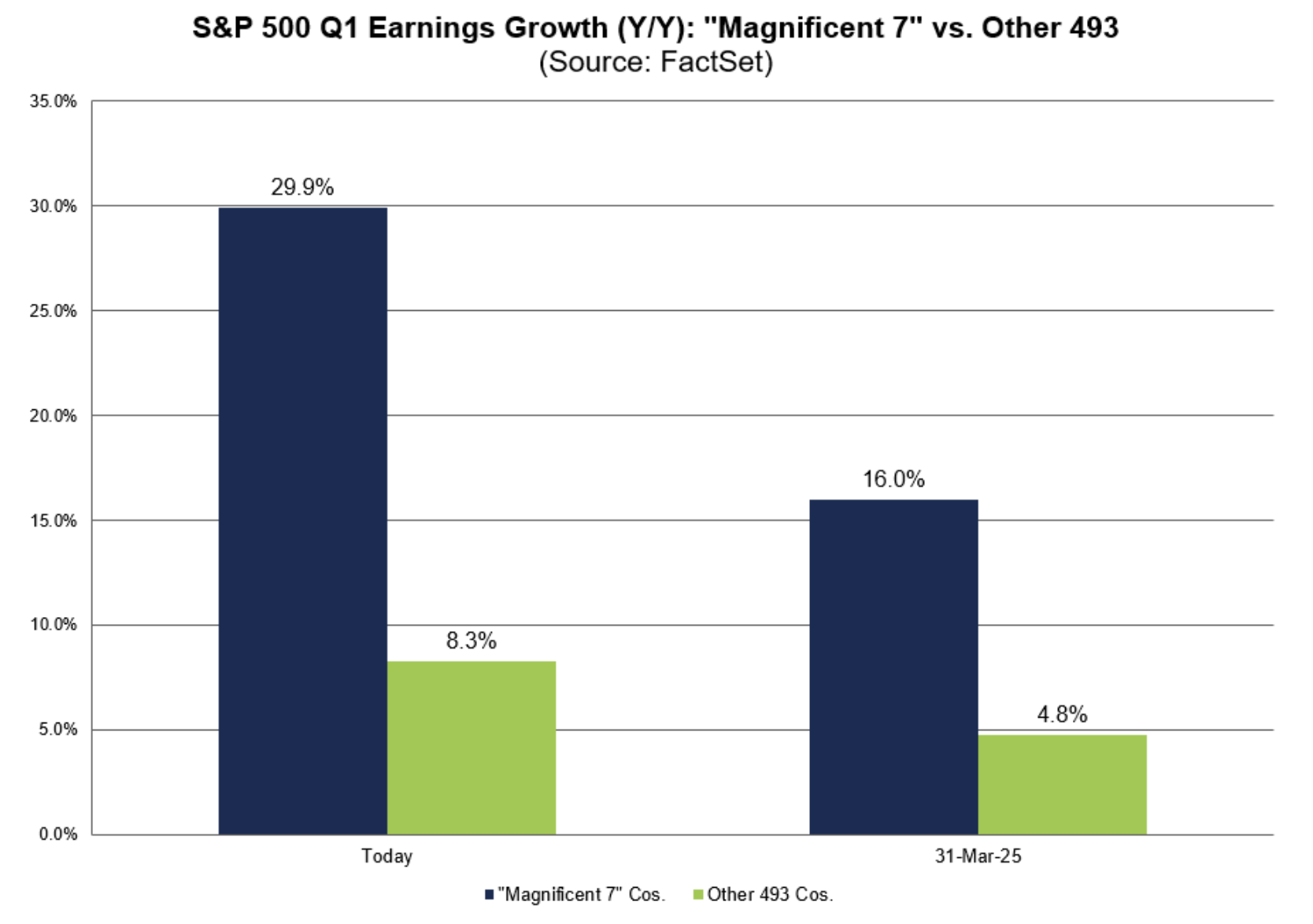
The Artificial Intelligence (AI) narrative continues to dominate sentiment. Whether it was Google, Meta or Microsoft... the (AI) earnings script was similar. Mega-cap tech companies so far have reported impressive earnings and revenue growth with respect to their AI strategies (across online ads, cloud and search). It was music to investor's ears. However, strength in tech earnings isn't necessary conflating to strength elsewhere. To that end, there is a strong bifurcation with earnings... and that raises some questions.

Things Looking Better – But More to Do

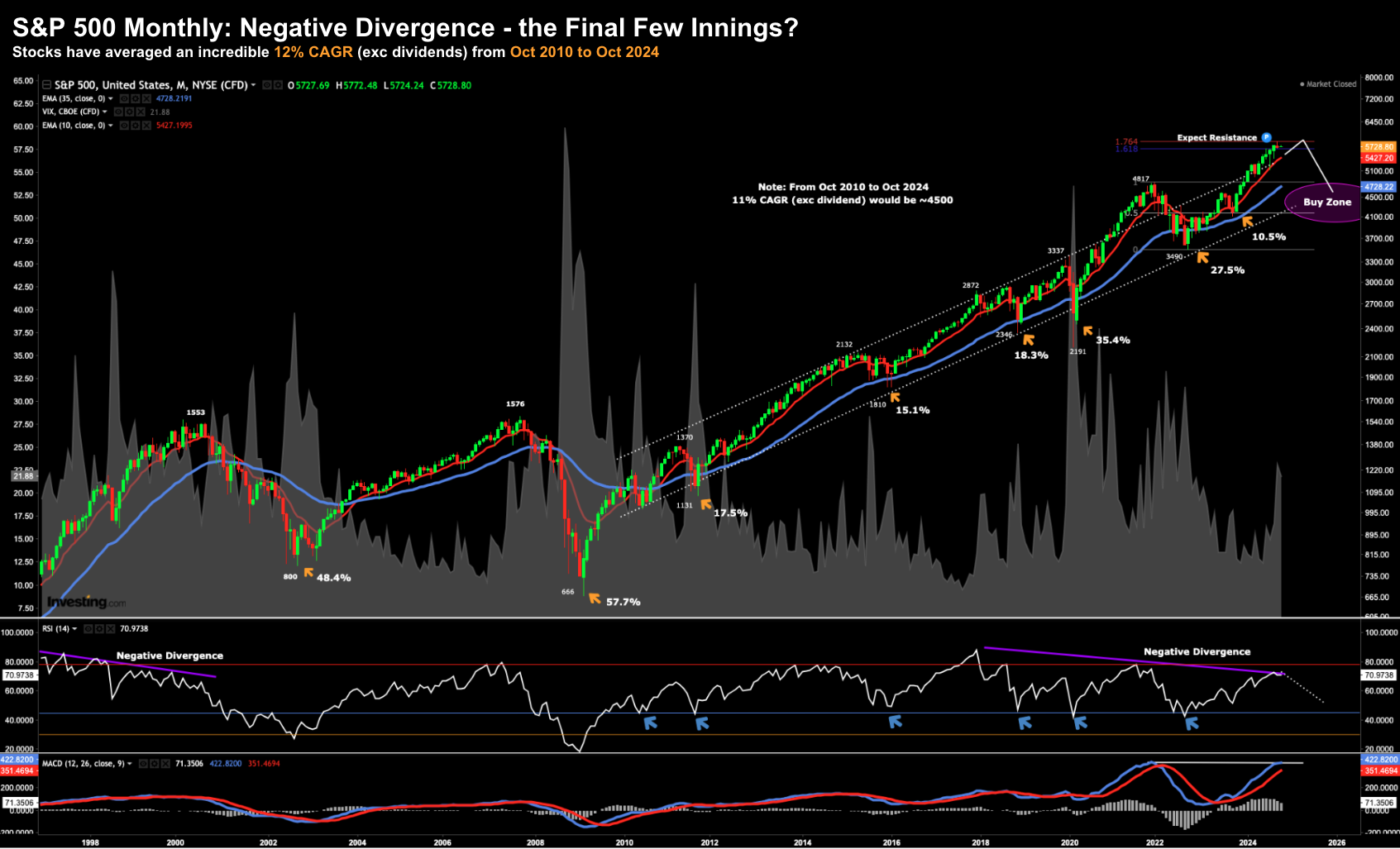
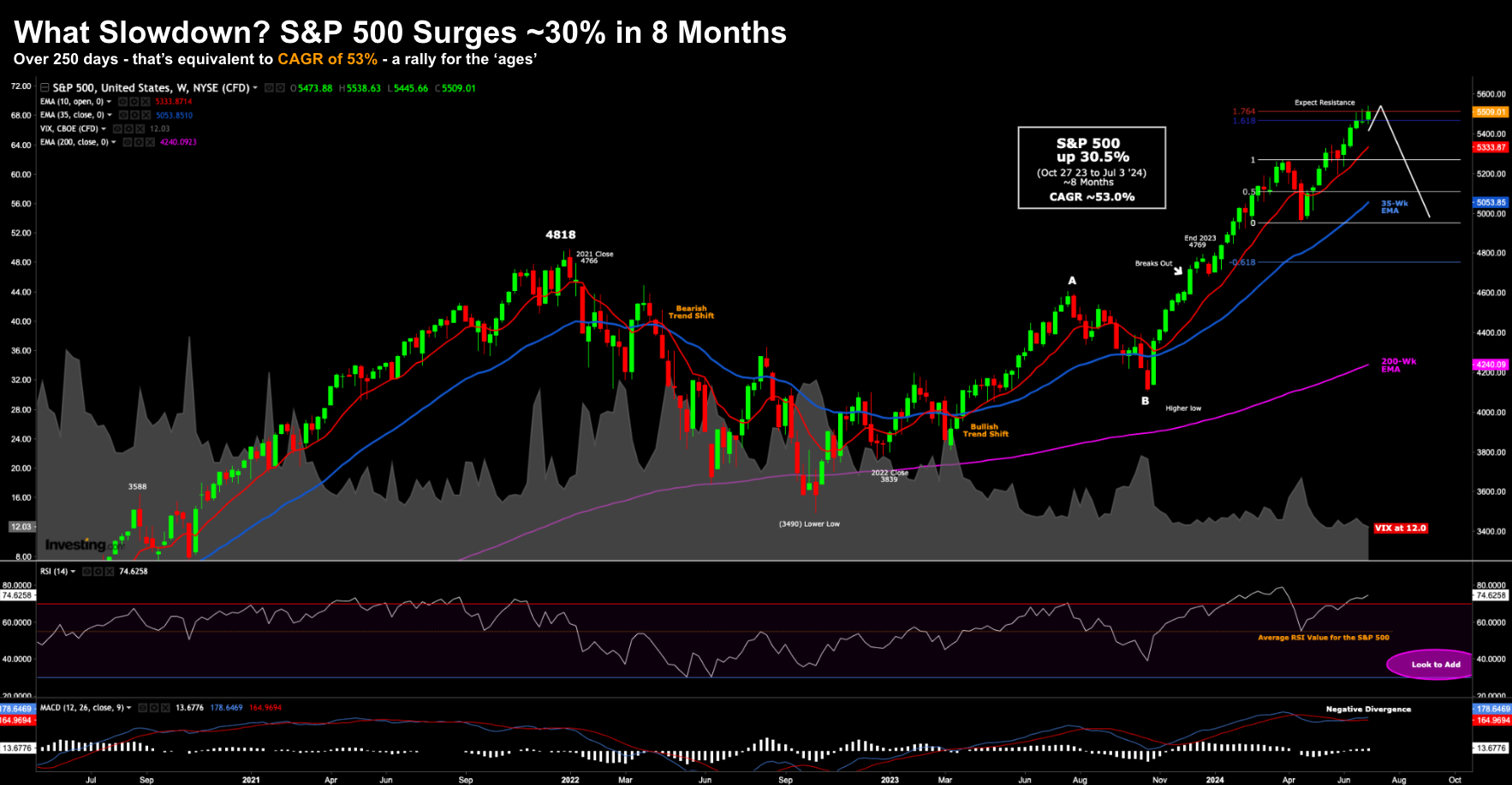
For 23 straight weeks (from late October) - the market has effectively gone straight up. It added ~$12T in market cap with barely a pause - a rally for the ages. Now for ten of those weeks, it was in overbought territory - where the (weekly) Relative Strength Index (RSI) traded above 70. I cautioned readers of a likely (technical) correction. And whilst I stressed the market can remain overbought for several weeks (and it did) - it's also an area to be cautious. This is where sell-offs start. And it seems we could be seeing the start of a 7-10% correction... however it's still early.