Category Generative AI

Investor’s (Valid) Capex Concerns w/AI

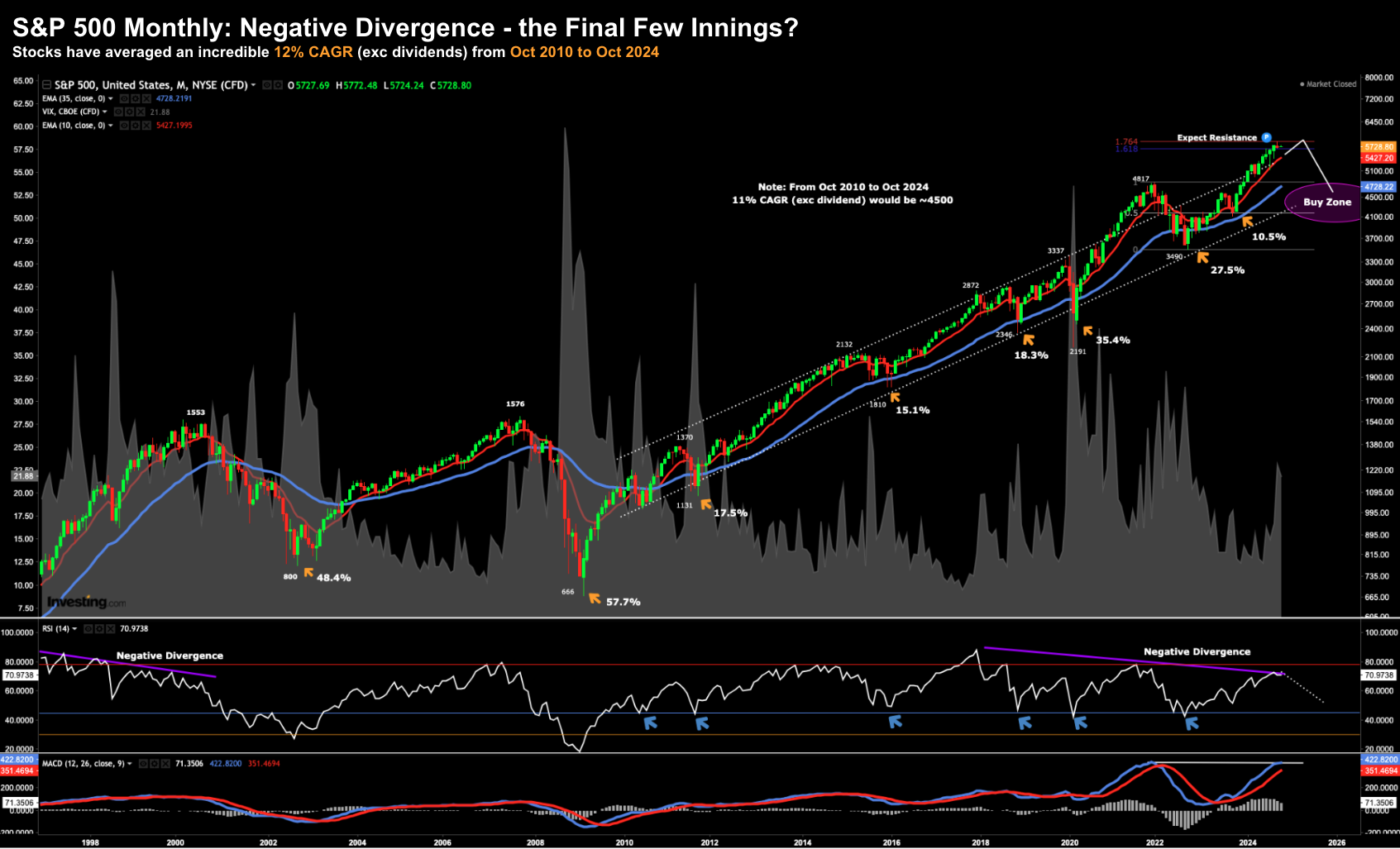
Large-cap tech's planned capex for 2025 is worrying investors. What will be the return on that capital? Never before have these companies made such large bets. Before DeepSeek, it was assumed the tech giants - with their deep pockets and almost limitless resources - would enjoy a wide moat in the AI arena. And from there, that justified the high valuation multiples. Not now. DeepSeek’s arrival challenges those long held assumptions (and valuations).
Investors Starting to Question AI’s ROIC

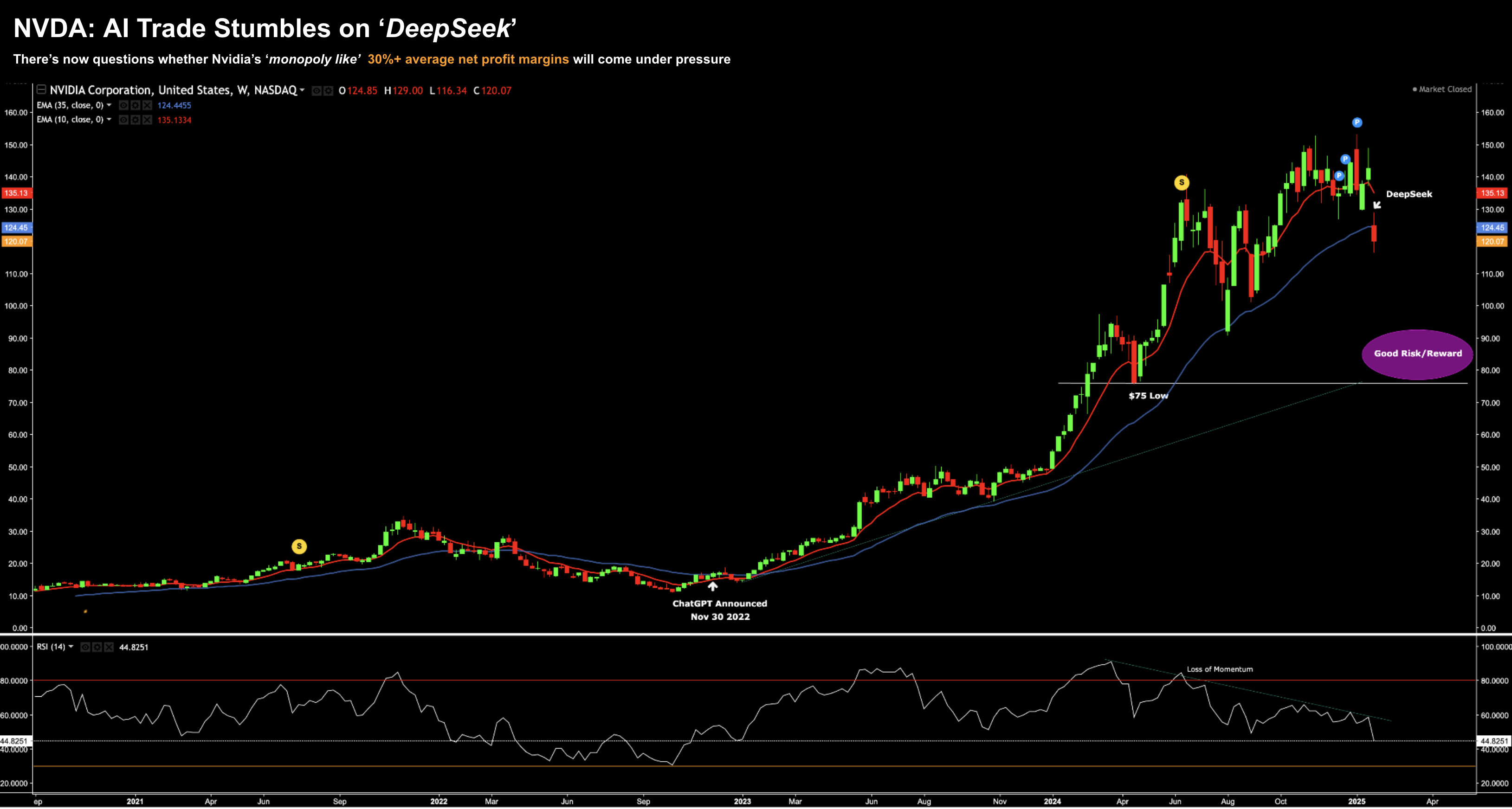
AI investors were caught off guard this week on news of China's ChapGPT rival "DeepSeek". It's alleged DeepSeek was developed far more cost-effectively (millions vs billions) than OpenAI's ChatGPT (and similar large language models). If true (and we don't know) - this raises questions about the sustainability of current U.S. AI infrastructure investments - forecast to top $1 Trillion next year. All of a sudden - valuations for these AI stocks are being questioned.

Stocks Pause on ‘Less than Magnificent’ Earnings

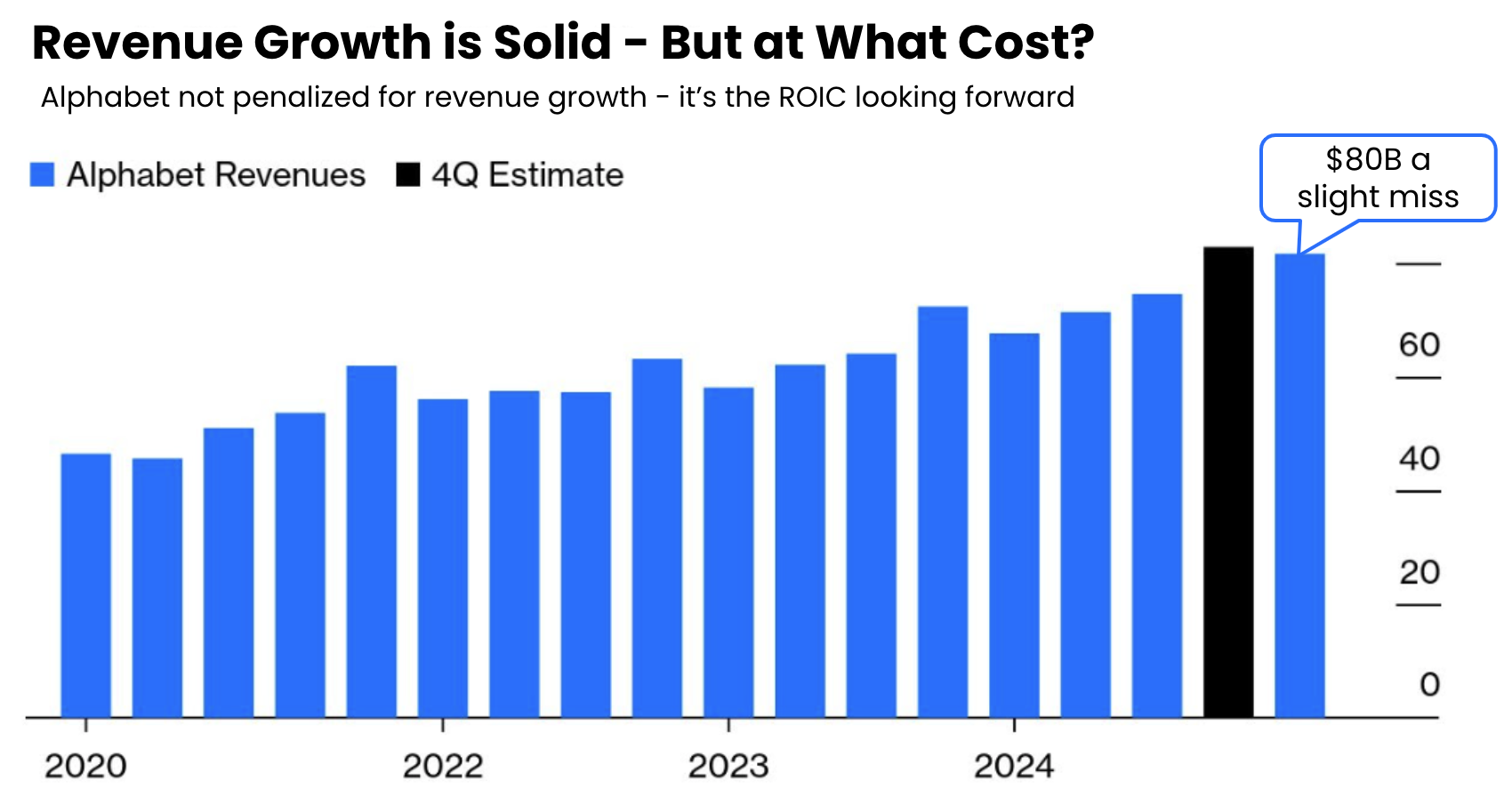
October - synonymous for delivering market jolts - passed with barely a whimper. However, it was the market's first negative month since April. Are stocks losing their mojo? In short, large cap tech earnings from five of the 'Mag 7' were less than magnificent. Meta, Apple and Microsoft all dropped post earnings. Google managed a small 5% rise initially - but gave it all back. Amazon managed hold gains of ~3%. This post talk to what the market expects from the nearly $1 Trillion in AI capex... and how their patience could be starting to wane...

Nvidia Beats Expectations… But Disappoints on Guidance

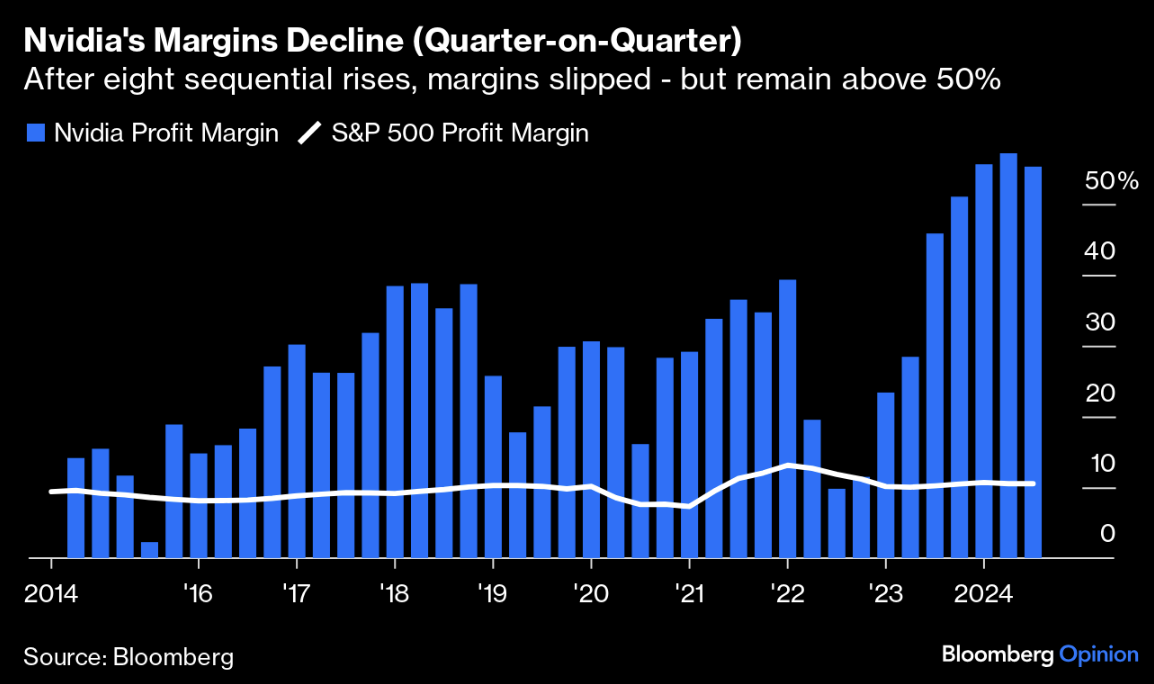
Rarely has a single stock been so 'hyped' coming into earnings as Nvidia. The leading AI chip maker is widely seen as the 'AI' barometer... making their earnings more important than most. My expectation was they would handily beat Q2 revenue and earnings - however issue a softer-than-expected guide. It turns out that's what we got. Make no mistake - this was another exceptionally strong quarter. And despite the softer guide - "only" falling 6.4% should be considered a good result. This post talks about whether Nvidia is still worth a bet post their results. The answer is it depends on your timeframe... but long-term (3+ years) the answer is absolutely yes.

Divergent Signals

The market is wildly enthusiastic about all things "AI". If you're a company - and you don't have an AI narrative - the market doesn't want to know you. However, I also think this is potentially a blind spot. AI will undoubtedly be important and will change the way we do things (as we effectively re-wire tech) - but it's a tool. For example, whilst Wall Street celebrates that an iPhone might be able to better answer our questions - Main Street sees things very differently. Do you think the majority of consumers understand the optimism on Wall Street? And similarly, do you think Wall Street understands why consumers are complaining?

A Different Lens on the ‘AI Bubble’

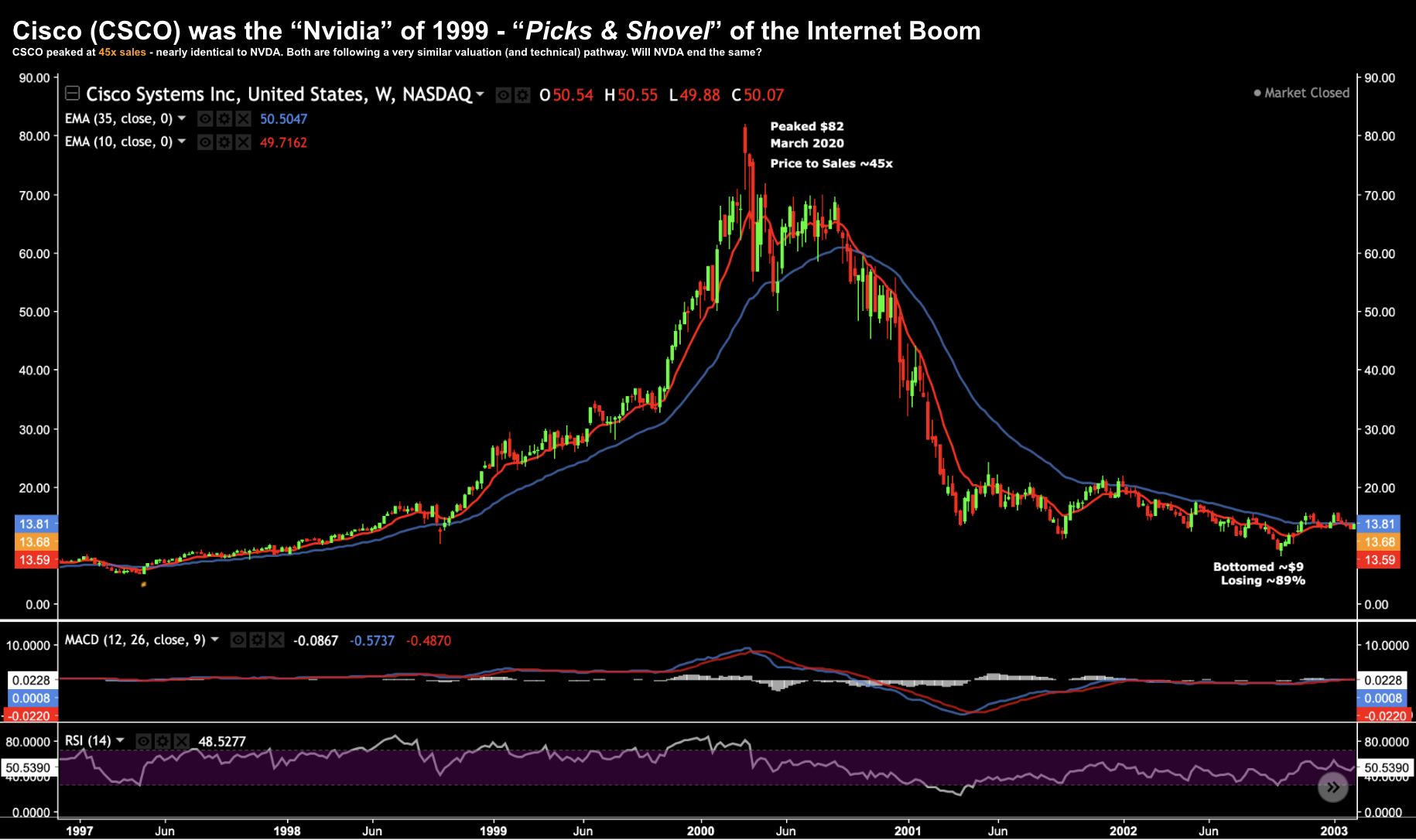
25 years ago Cisco (CSCO) was the largest company on the S&P 500 by market cap. Its shares soared on the demand for networking equipment. But it didn't last. The stock lost 89% of its value in two years. Nvidia is not only charting a very similar technical pattern to CSCO - there are also similarities with valuation metrics. Both the price-to-earnings ratio and price-to-sales multiples have been very similar. What we don't know (or cannot know) is whether the same fate lies ahead for NVDA (as investors pay a staggering 35x sales for a slice of the AI pie)

Are Semi’s Set to Cool their Gen-AI Heels?

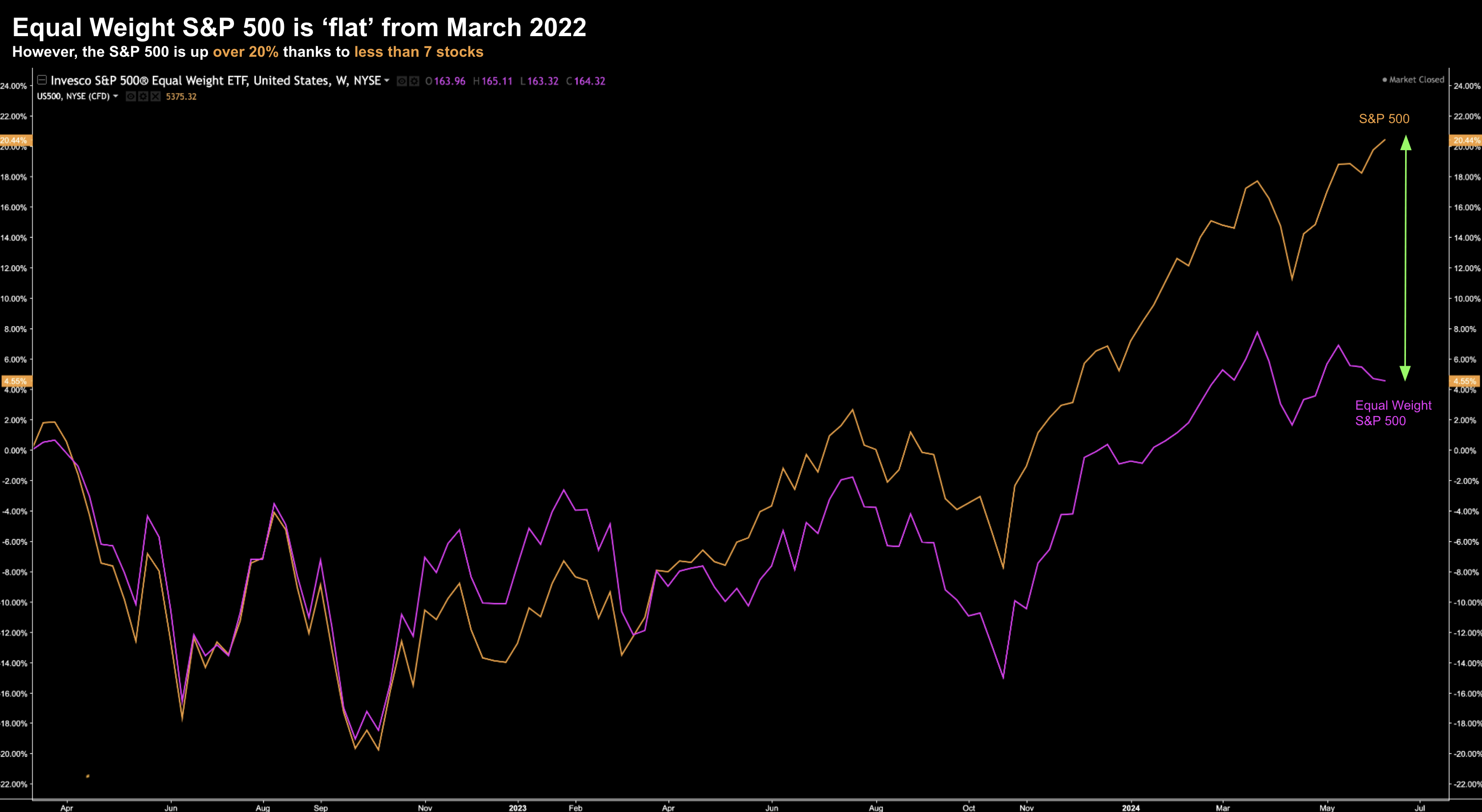
Whilst the technology sector is outperforming the benchmark index this year -- semiconductor stocks have done the bulk of the heavy lifting. And it's not difficult to explain investor FOMO. It's entirely due to the hype around "AI" and specifically something called "Generative AI". For example, in a report by Grand View Research, they valued Gen-AI at ~$13B last year. However, its anticipated CAGR is estimated to be ~36% - which puts the industry hitting $109B by 2030. That's a sharp ramp higher from basically zero two years ago. And today - there a very few chipmakers who produce the GPUs required to meet the insatiable demand. However, is the demand semis are seeing today (and revenue) sustainable long-term? That's unlikely.