Category Inflation

“Heads I Win and Tails You Lose”

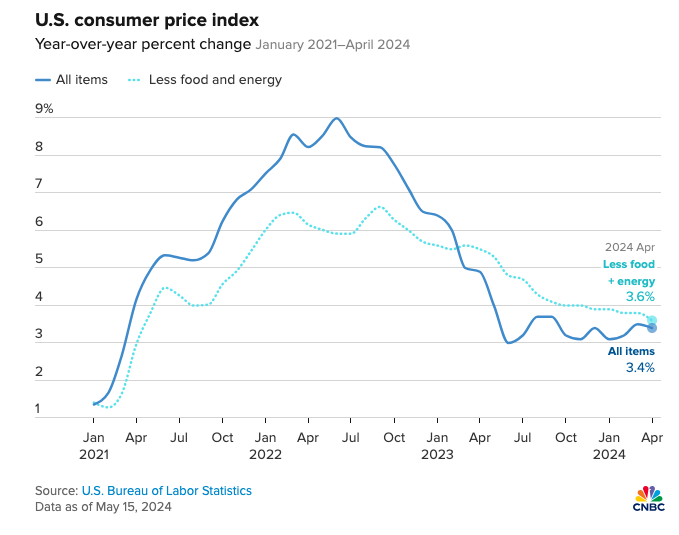
After almost three decades at this game - something you learn is not to fight the tape. Trade against momentum at your own peril. Consider the news today... it was both bad and good. I will start with the (perceived) 'good'. The Consumer Price Index (CPI) was slightly cooler than expected. And whilst it's still a long way above the Fed's target of 2.0% - the market was thrilled it was only up 0.3% MoM and 3.4% YoY. Bond yields plunged and stocks ripped. Sure... 3.4% isn't great... but that's Main Street's problem... Wall Street doesn't care. However, the bad news was retail sales plunged. But wait a minute - that's also "good news" - as it could mean a more accommodative Fed. Heads I win and tails you lose.
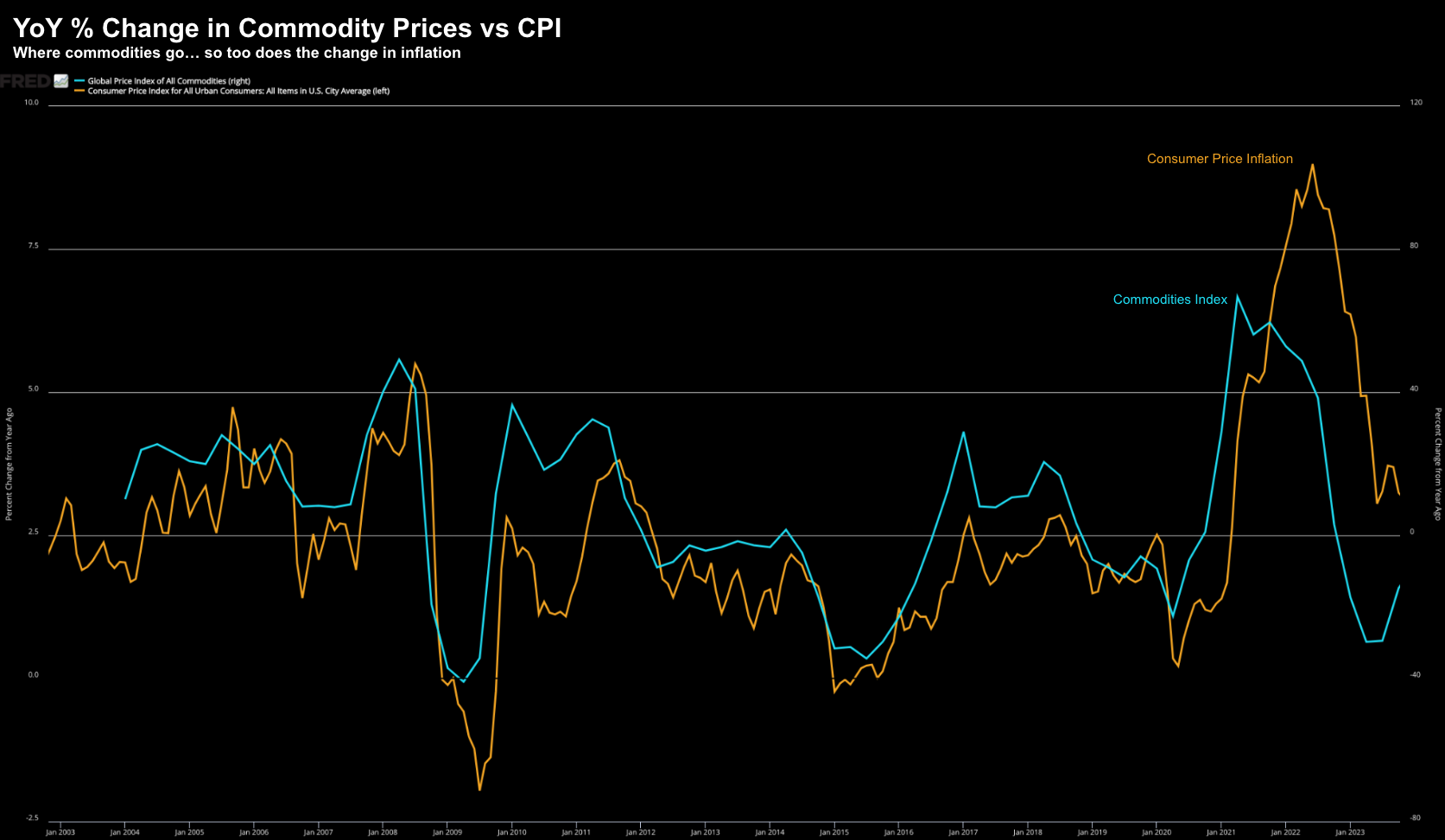
Are Commodities Telling Us Something?

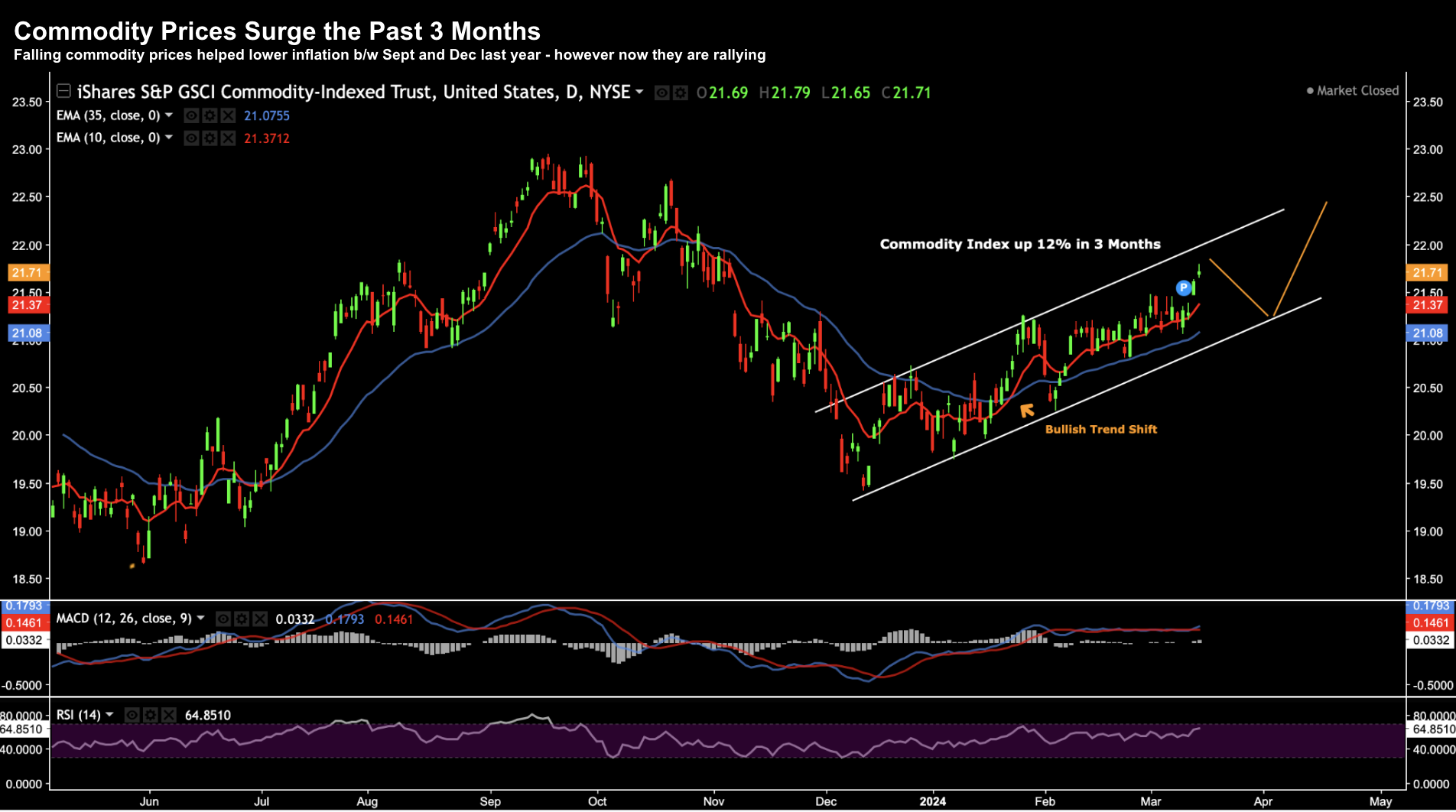
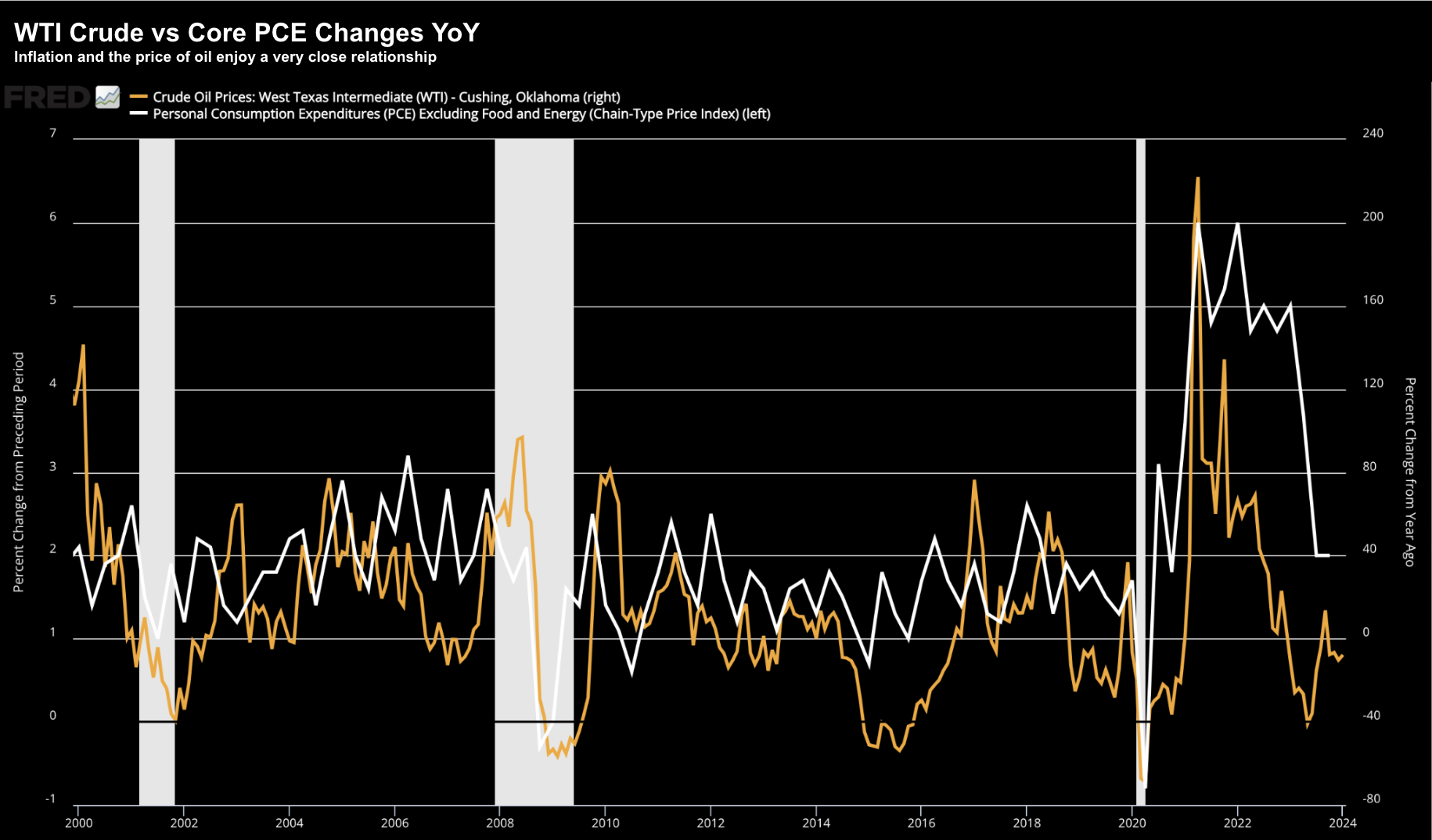
Forecasting things like (not limited to) GDP growth, unemployment and inflation is tricky business. Very few get it consistently right (especially policy makers). And whilst macro forecasting is generally a fool's errand - there are things we can observe to improve our probabilities of success (or at least reduce our risk). Consider inflation... whilst not perfect - there are a set of reasonably strong correlations which exist over extended periods. And it's these types of correlations we can use to our advantage.As I will demonstrate - over the past 5 decades (after the US dollar removed its peg to gold in 1971) - inflation levels have largely correlated to what we see with commodity prices.

Powell Appeases the Market… Or Does He?

For me, there were two (big) questions for the Powell this week: (1) are rate hikes off the table - given faster-than-expected inflation and continuing economic strength? and (2) when will the Fed commence QT tapering (and by how much)? Powell was unequivocal on possible rate hikes... forghedaboudit. Equities cheered. But why remove optionality? Why Powell is so convinced we don't see a re-acceleration in inflation? Admittedly it's a lower probability outcome... but we can't rule it out. But he apparently can...

Rate Cuts and Small Business Optimism Fades

Make that three in a row. Jan, Feb and Mar CPI all exceeded expectations - showing how stubborn inflation can be. And whilst the Fed focuses more on Core PCE (due at the end of the month) - this remains a concern. Here's the thing: non-core inflation continues to hurt real America. Take small business - their confidence is now at 2012 lows. Their primary concern: inflation and higher input costs.

The Real Surprise with Powell’s (Dovish) Statement

Investors were on tenterhooks going into today's Fed interest rate decision. Markets were up sharply the past few weeks - expecting Powell to remain dovish. However two consecutive months of hotter-than-expected inflation prints had some thinking twice. Turns out Powell is a dove. However, he delivered more dovish 'fuel' for stocks that what many expected.

Will Powell Heed Volcker’s Wisdom?

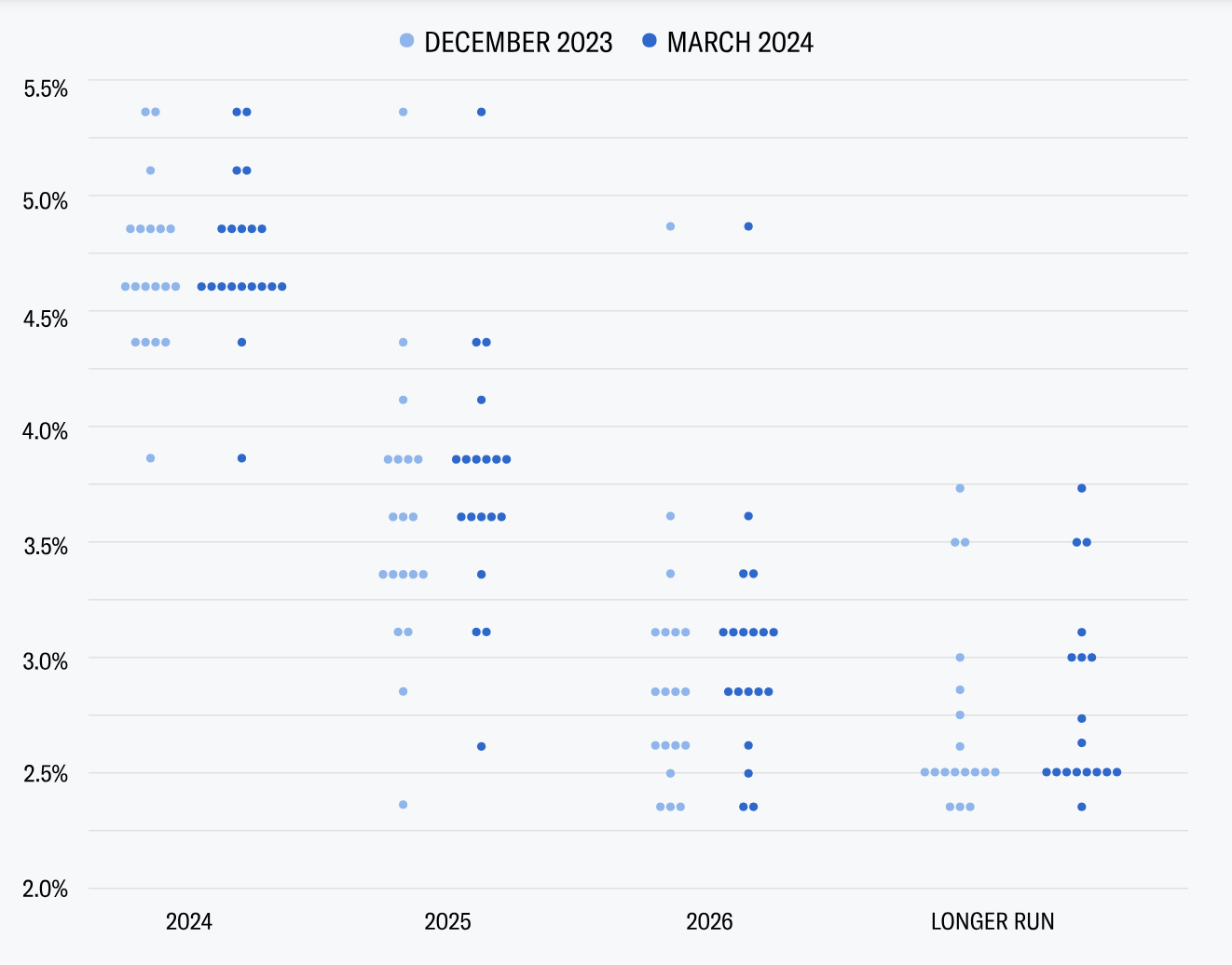
Next week Fed Chair Jay Powell will deliver the FOMC's March statement on monetary policy. Interest rates are not expected to change - however his sentiment might. When we last heard from Powell - he was dovish - igniting a rally in risk assets. However, with inflation heating up and a tight job market - Powell may perform another pivot. Markets expect three rate cuts this year - those expectations might be dialed back to just two.

Markets Expect only 3 Rate Cuts this Year – as Services Inflation Jumps

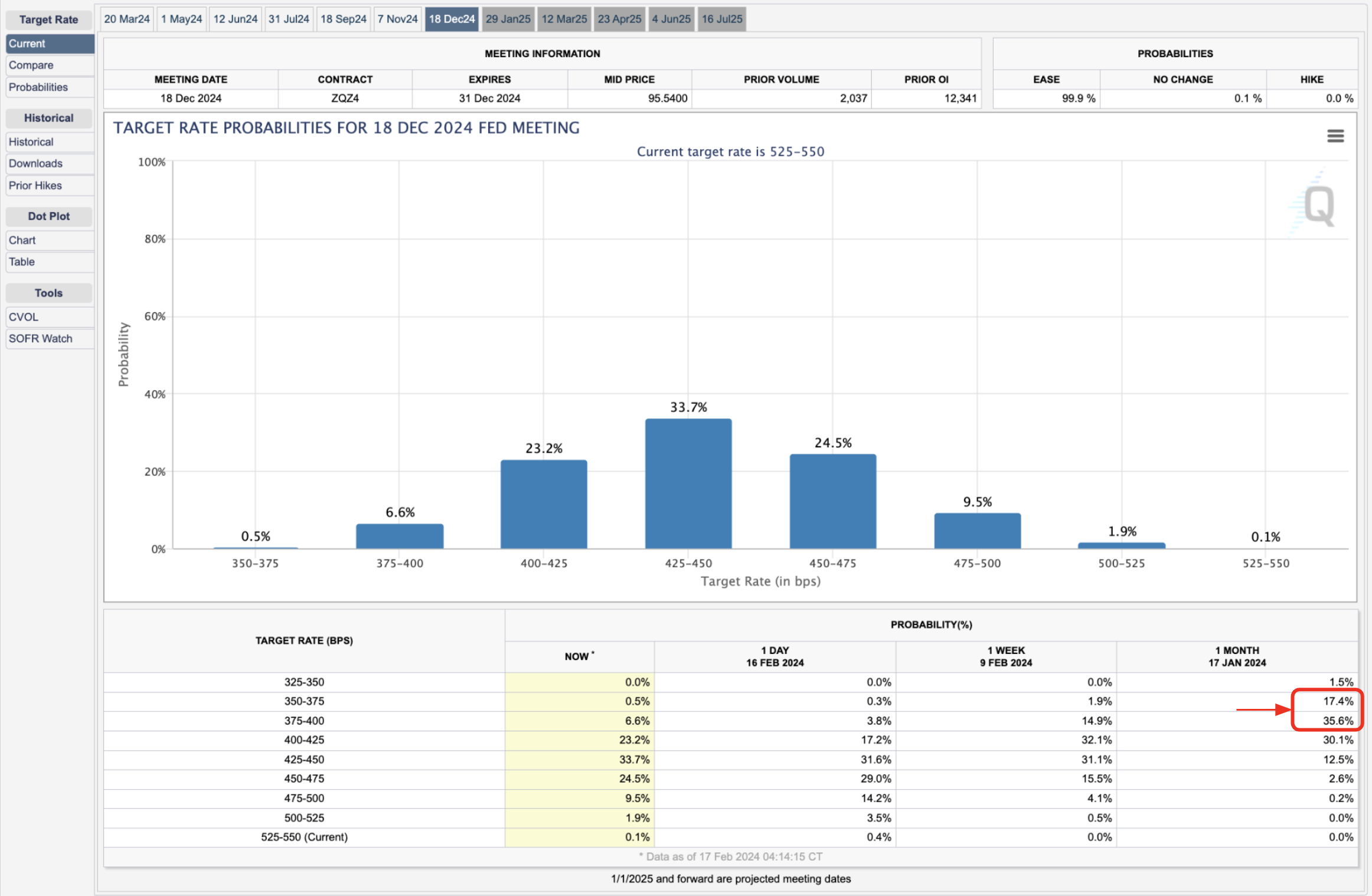
Expectations for rate cuts this year are coming down. For e.g., one month ago the market saw at least six rate cuts before the end of the year (possibly seven). I challenged that assumption - thinking three was more likely (not six). Following news of a hotter than expected Producer Price Inflation (PPI) print for January - those expectations are now down to just three cuts before year's end. That's more aligned to the Fed's intended path.

Traders: Forget “6 Rate Cuts” for ’24

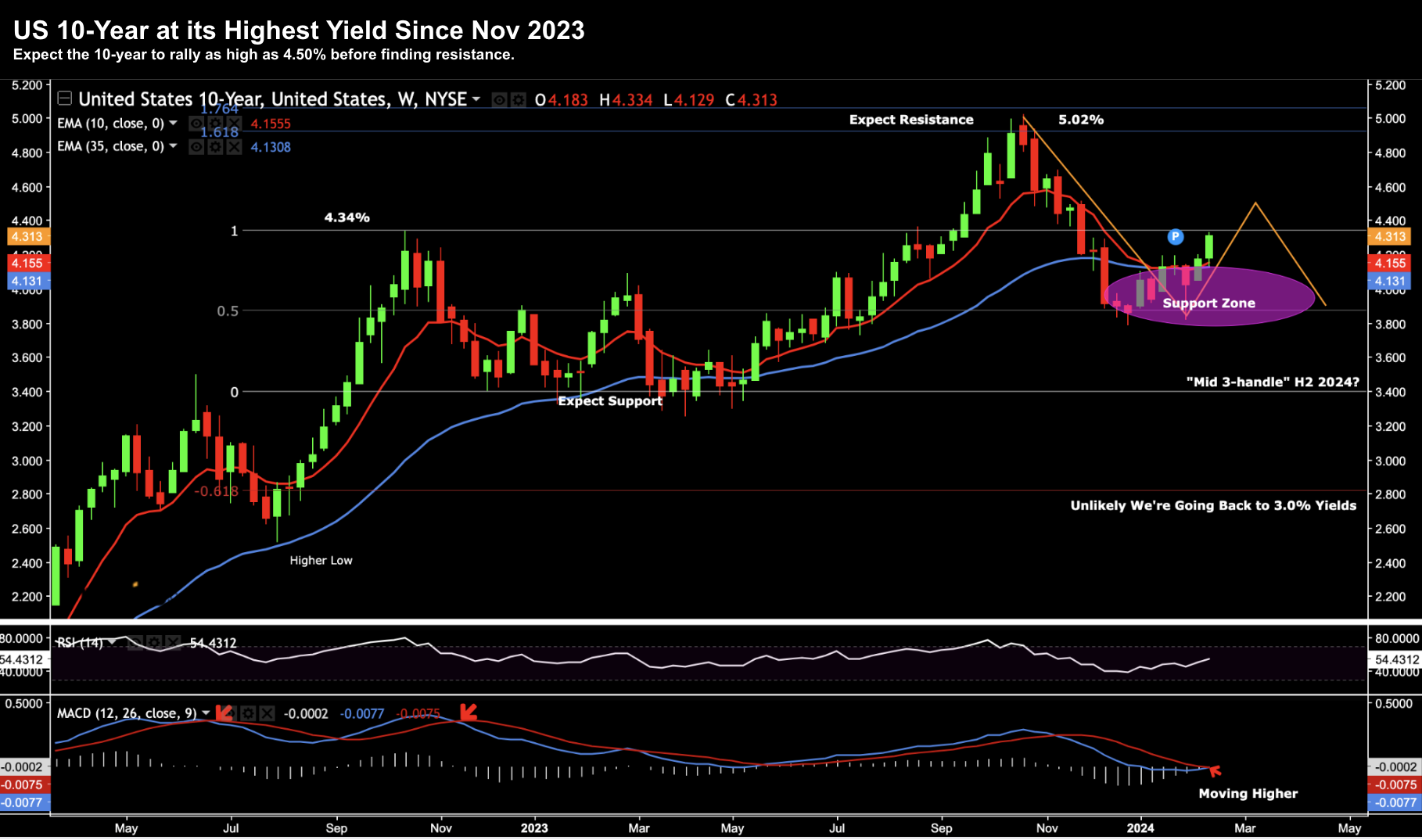
The much awaited January Consumer Price Index (CPI) came in hotter than expected - leading to a small sell off in equities (2%) and a jump in bond yields. The US 10-year pushed 4.30%. But the data should not have been a surprise - there are pockets of strong inflation (eg car insurance up 24% YoY). From mine there are two takeaways: (i) don't expect the Fed to cut "6 times" this year (as I've been saying); and (ii) inflation is not coming down as quickly as many assumed. The good news is the direction for inflation is lower - however the Fed may be forced to hold rates higher for longer. The question then is how will that impact middle-to-lower income earnings - who are already struggling? And what does that do for earnings?

Core PCE Softens – Giving the Fed Scope to Cut

If there's one inflation indicator the Fed tracks more than any other - it's Core PCE (personal consumption expenditures). The PCE price index looks at U.S. inflation by measuring changes in the cost of living for households. It tracks the prices of a basket of goods and services, each with different weightings, to reflect how much a typical household spends every month. Today we learned that Core PCE continues to soften - which is good news. Question is does this give the Fed further scope to cut rates sooner rather than later?

Market Confident on Imminent Rate Cuts Despite Inflation Print

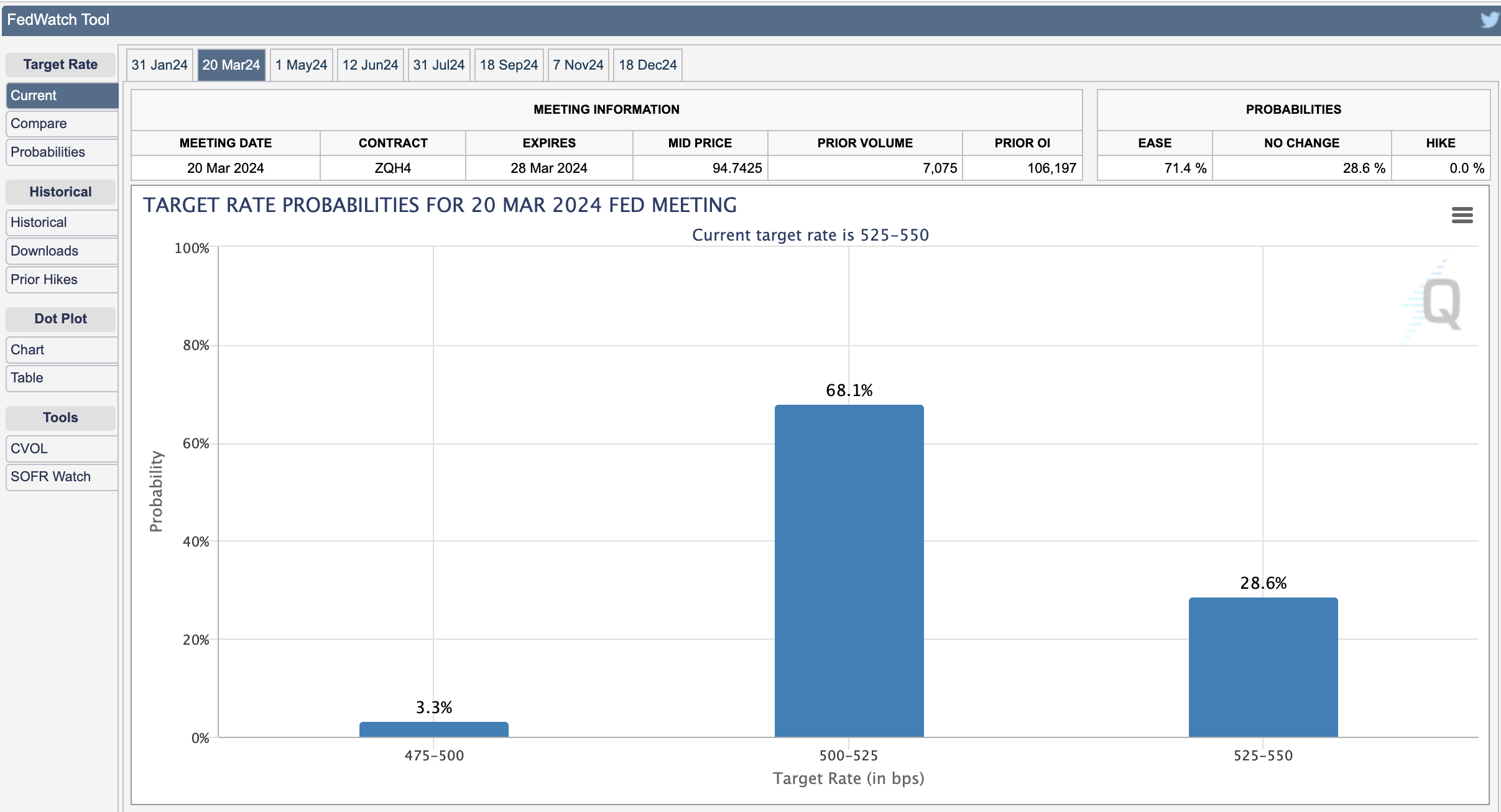
Today we received the final monthly inflation report for 2023 - ahead of the Fed's next policy meeting Jan 30-31. Markets were expecting very good news... but did they get it? On the surface, both prints were slightly higher than expected. However, we saw a mostly muted reaction in both bond and equity markets. Bond yields fell - with the market maintaining its 68% expectation of a rate cut as early as March.