Category Interest Rates / Bonds

Don’t Bet on 50 Bps for Sept.

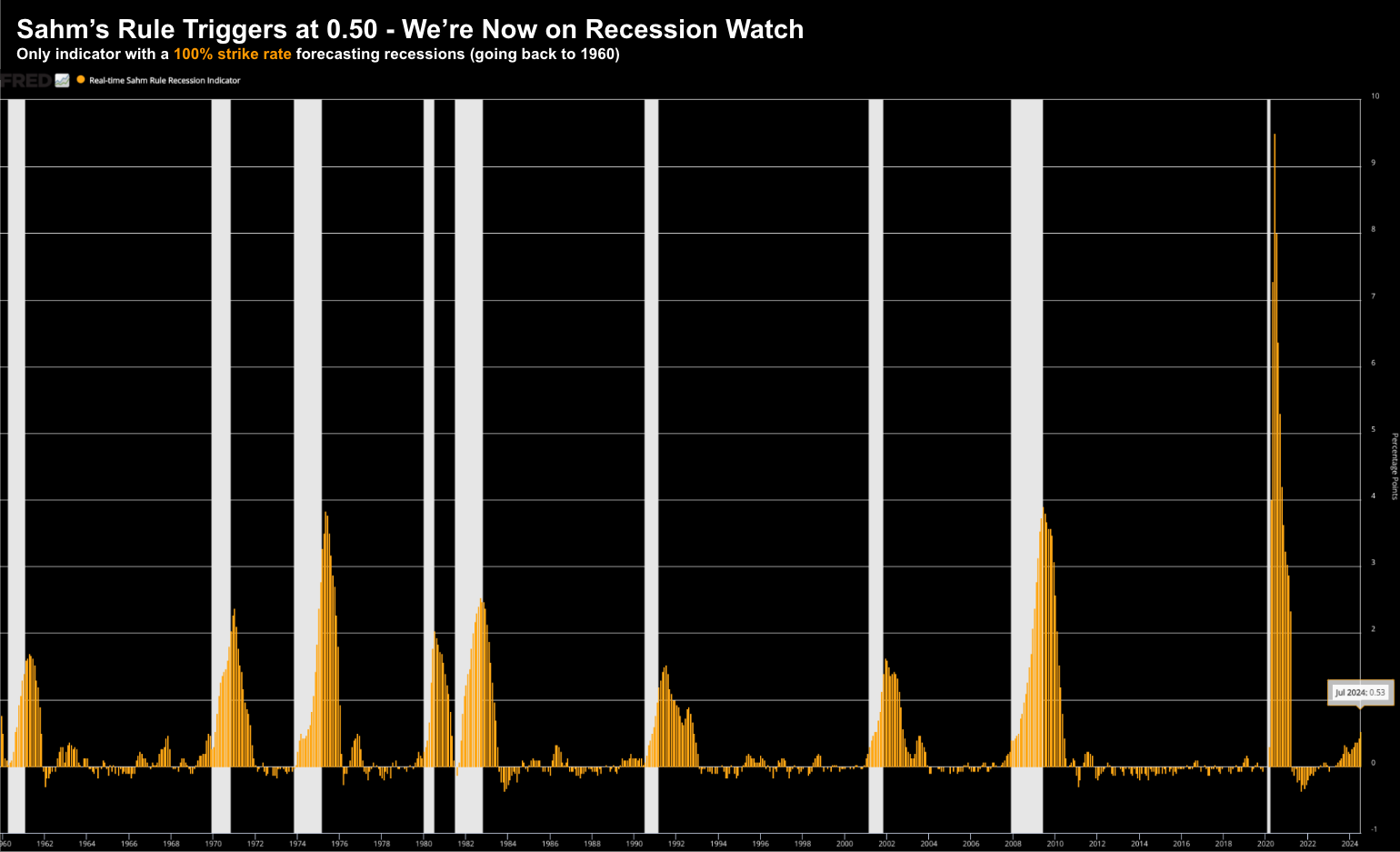
Do we have a 'good, solid' economy or one that's at risk of a recession? Is the employment market robust or one that's slowing sharply? Should the Fed cut 50 basis points or 25? And if 50... why? These are not easy questions to answer - as you can make the case either way (pending your lens). Regardless, the popular narrative is one favoring a soft-landing. Jay Powell echoed this sentiment with a victory lap at Jackson Hole. Former Fed Chair Janet Yellen supported this thesis over the weekend...
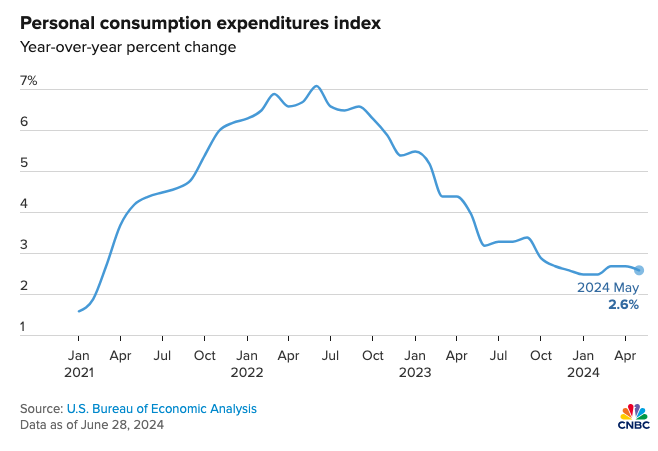
Back to the Scene of the Crime.. And a Warning from PCE

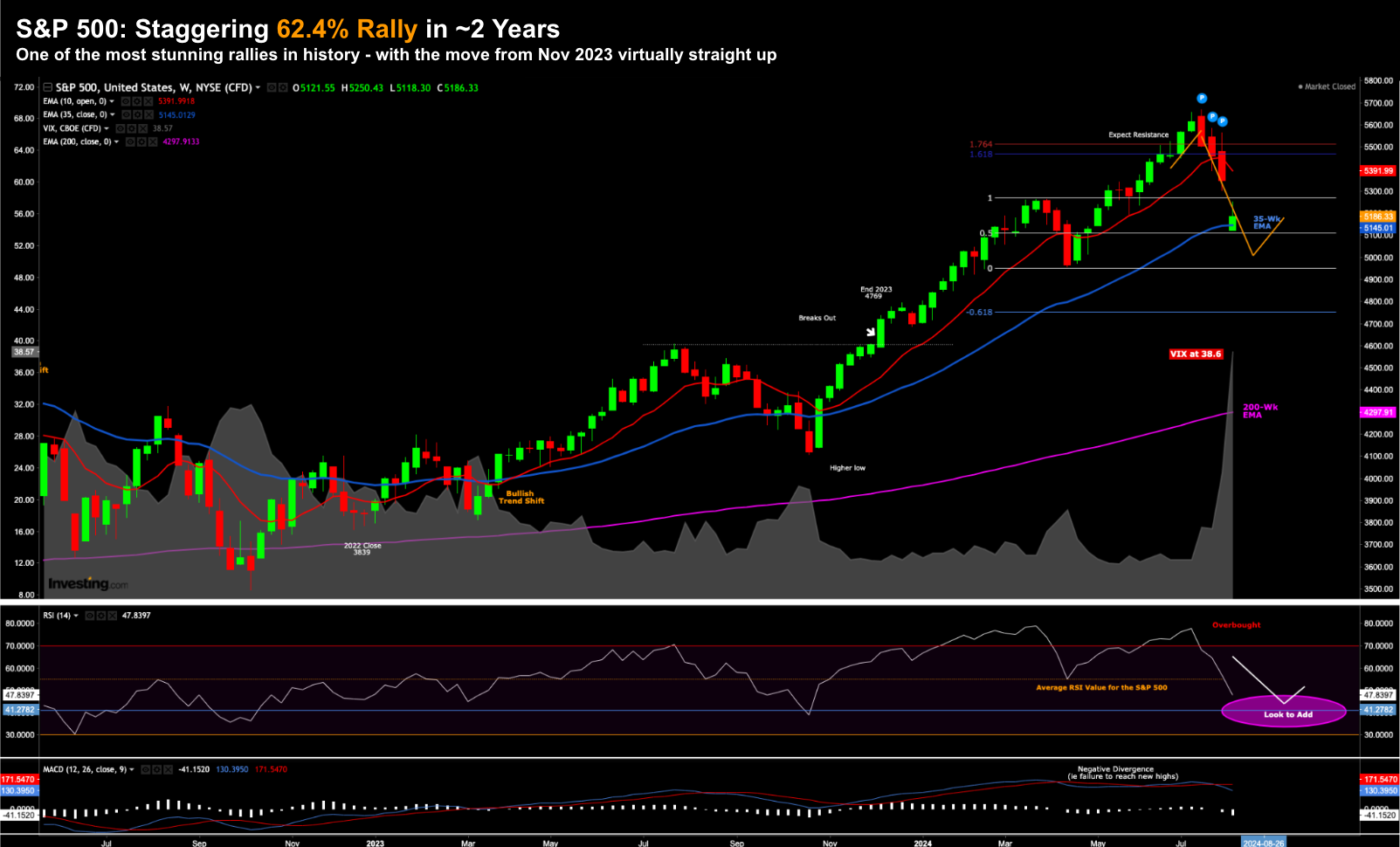
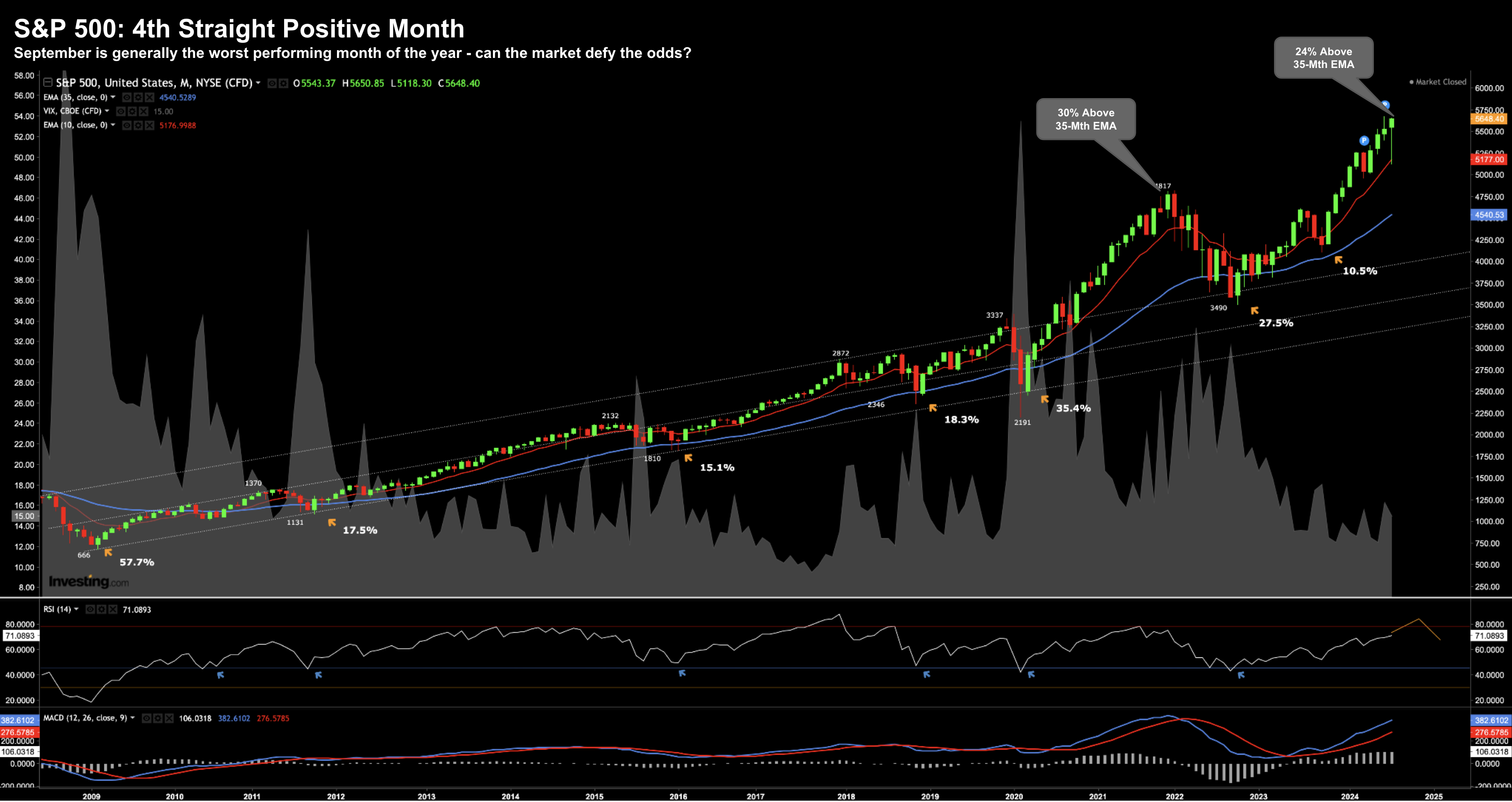
Eight months down. Four to go. After shedding almost ~10% to start the month - the bulls managed to close the market at its highs. Whiplash anyone? The S&P 500 is back to the point where the markets panicked on a growth scare - however it raises a question: (i) can it break through previous resistance (the all-time high of 5669); or (ii) will it perform what traders call a "back and fill"? My guess is the latter - as we head into one of the weaker months of the year.

Powell Takes a Victory Lap

Fed Chair Powell didn't disappoint at Jackson Hole - giving the market what it wanted to hear... rate cuts are coming. All that remains how many and by when? That's not something Powell was ever going to offer (why remove optionality) - but the market is willing to bet we receive at least three cuts by year's end. All eyes now turn to two major economic reports: (i) PCE due Aug 6 and (ii) Aug nonfarm payrolls due Sep 6. For e.g., if Augusts payrolls are similar to June's (where only 114K jobs were added) - we could see the Fed cut rates 50 bps come Sept. What signal will that send to the market?

It’s Not Only Falling Inflation & Growth Risks Driving Rate Cuts

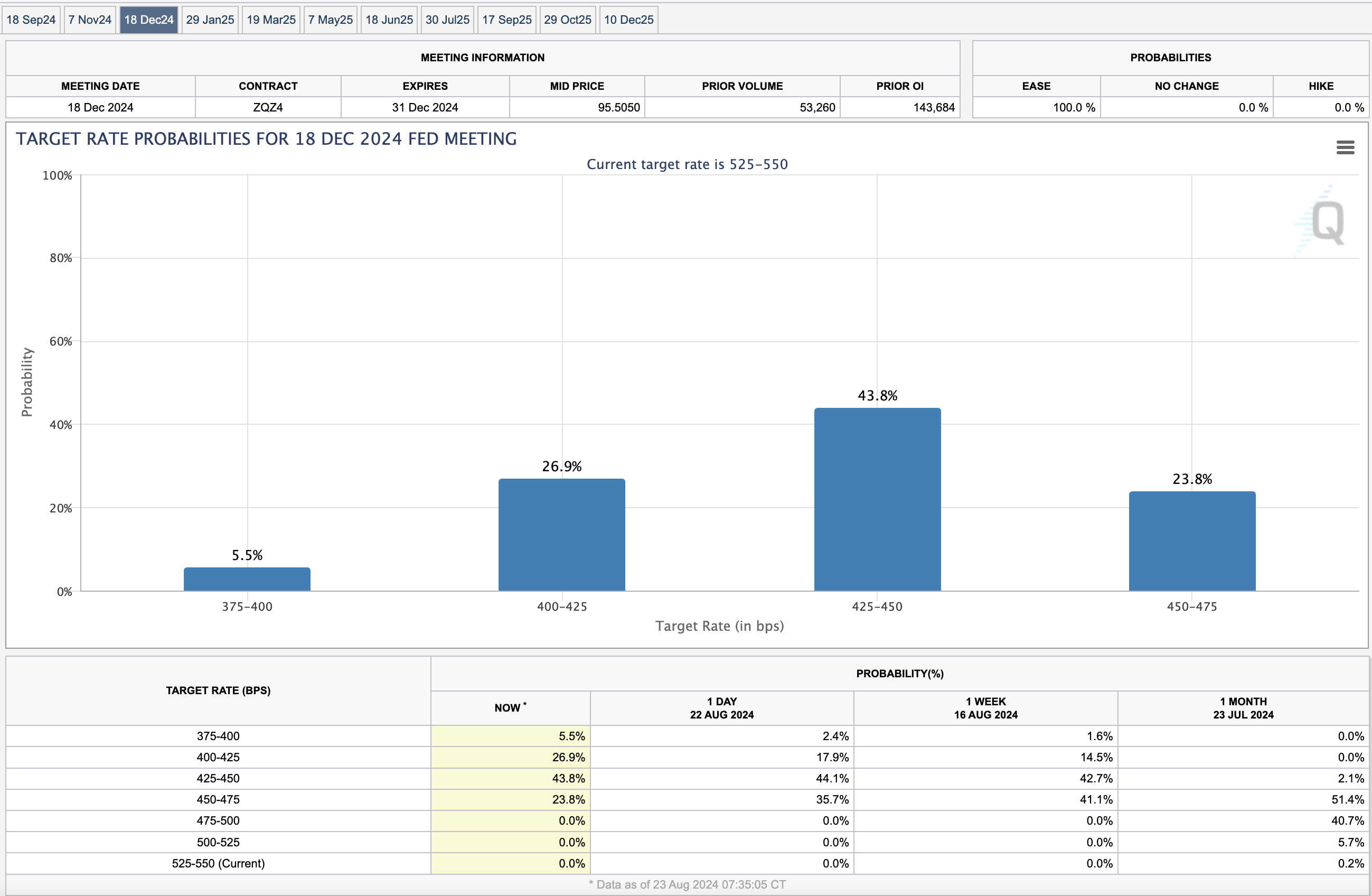
As inflation continues to moderate and the employment picture weakens - markets are trying to gauge just how much the central bank will move. A 25 basis point (bps) cut for September is now a 100% probability according to CME Group’s FedWatch tool. There's a 63.5% chance of a 25 bps cut; and 36.5% of a 50 bps cut. Markets clearly want 50 bps... but they also know that very rarely is there just "only one rate cut". This post explores the relationship between debt growth (across all sectors) and the overall trend for interest rates. It's a relationship which is not often discussed - but would be remiss of investors to ignore.

Fear & Greed

Wall St. is driven by just two emotions: fear and greed. Pending on the degree to which you succumb to these emotions - it will have a profound impact on your bottom line. All too often, most investors will do two things: (i) buy when there is market greed; and (ii) sell when there is fear. It's the opposite of what you should do. However, this is something you need to master if you are to be successful in the game of asset speculation.

So Maybe Valuations Matter?

When I made the difficult decision to reduce my exposure to large-cap tech earlier this year - I wasn't sure how things would pan out. In the short-term - I looked foolish. These stocks surged higher without me. However, since then, large-cap tech is trading lower than when I sold it (on average). But is this a dip you should buy? I don't think so - not just yet. The broader index is only 6% off its all-time high. That's nothing in the larger scheme of things. I'm choosing to remain a little more patient - where I think the index could correct somewhere in the realm to 10-12%.

Powell’s Ready to Cut… And Not Just Once

Today Fed Chair Powell delivered precisely what the market wanted to hear... help is on the way. As a perpetual (closet) dove - Powell did his best to stay balanced however the cat is now out of the bag. Rate cuts are coming. And there will be more than one. Consistent with other meetings - Powell said rate cuts are an option if economic data continues on its current path. In other words, it was the (same) scripted "data dependent" Fed.
However, there were some important nuances.

Real Retail Sales Continue to Warn

When I caught the headline "retail sales hold up in June - better than expected" - I was curious to read the detail. Yes, it's true that nominal sales were flat MoM. But that's not what it states. They don't mention "nominal". As analysts and investors - nominal values are of very little use. What helps us more when forecasting trends (and assessing risks) is real sales. Real retail sales are those adjusted for inflation. And with inflation stubbornly high ~3.0% year-over-year (approximately) - that makes a big difference. When viewed through this prism - real retail sales have been declining for months.

It’s Fed Week… Market Sees Cuts Coming

Are rates restrictive? And if they are - how do you know? That's the question the Fed will address tomorrow - but it's not easy to answer. For example, on the one hand there's a (large) cohort who believe the Fed are falling 'behind the curve' - therefore increasing the odds of a recession. They feel that growth risks are to the downside - and do not need to wait for both inflation and employment data to confirm what's ahead. On the other side of the coin - there are those who think we still run the risk of higher inflation if acting too early.

Is Momentum Waning? More on Why I’m Bullish Bonds into 2025

As part yesterday's missive - I talked to why I think bond yields are too high. For example, I offered a chart showing the declining trend in nominal GDP growth vs what we see with the US 10-year yield. Economic growth is clearly slowing and yet yields are going the opposite way. Why? Therefore, investors should ask themselves what is the catalyst which will take us back to a 3.0% 'growth' mode (i.e. what we saw over Q3 and Q4 of 2023)? For example, is it the consumer? They make up ~70% of GDP with consumption - however they are mostly tapped out (as we have heard in the latest earnings reports). What will it be?