Category Interest Rates / Bonds

Market Confident on Imminent Rate Cuts Despite Inflation Print

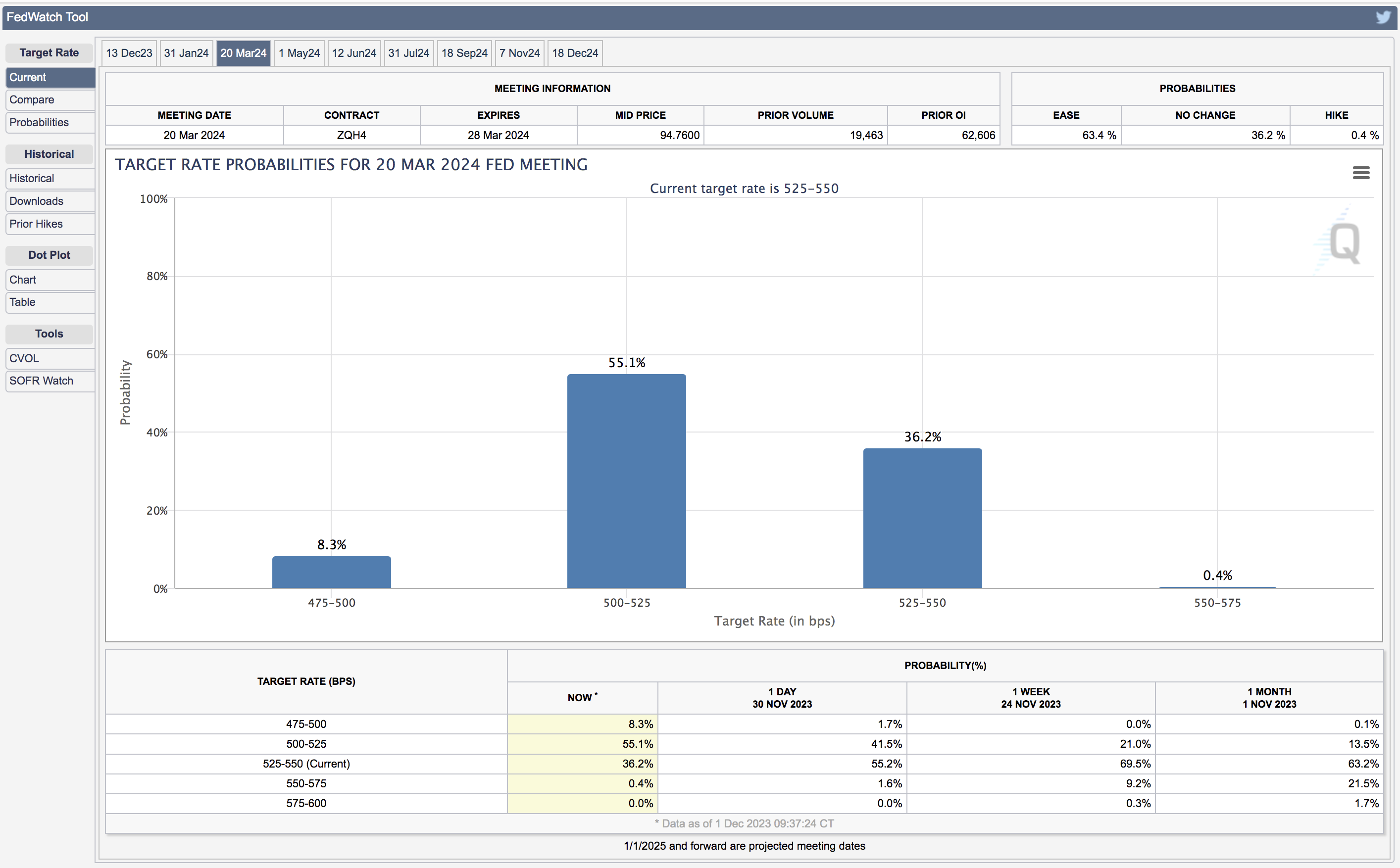
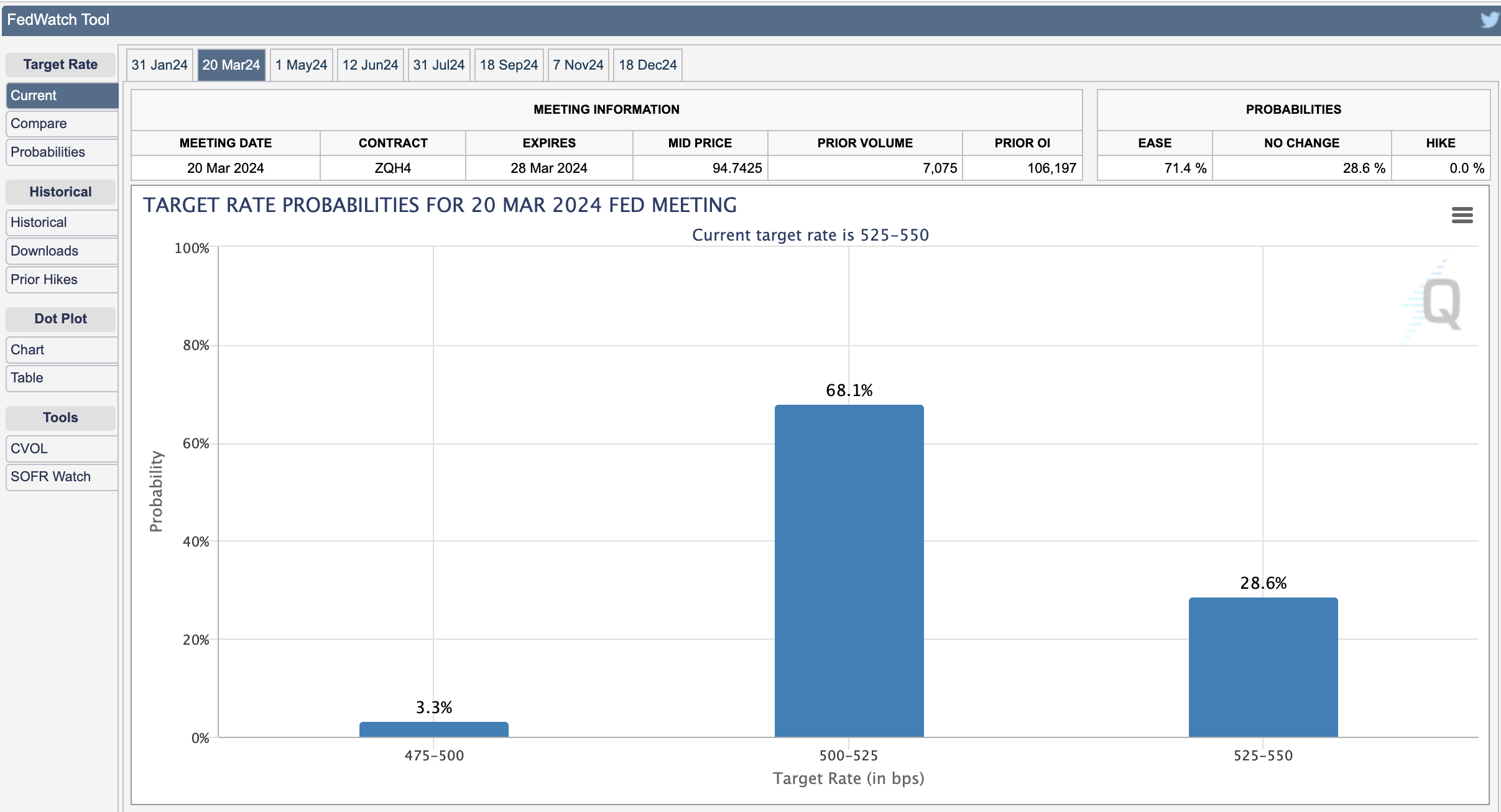
Today we received the final monthly inflation report for 2023 - ahead of the Fed's next policy meeting Jan 30-31. Markets were expecting very good news... but did they get it? On the surface, both prints were slightly higher than expected. However, we saw a mostly muted reaction in both bond and equity markets. Bond yields fell - with the market maintaining its 68% expectation of a rate cut as early as March.
What Just Happened?

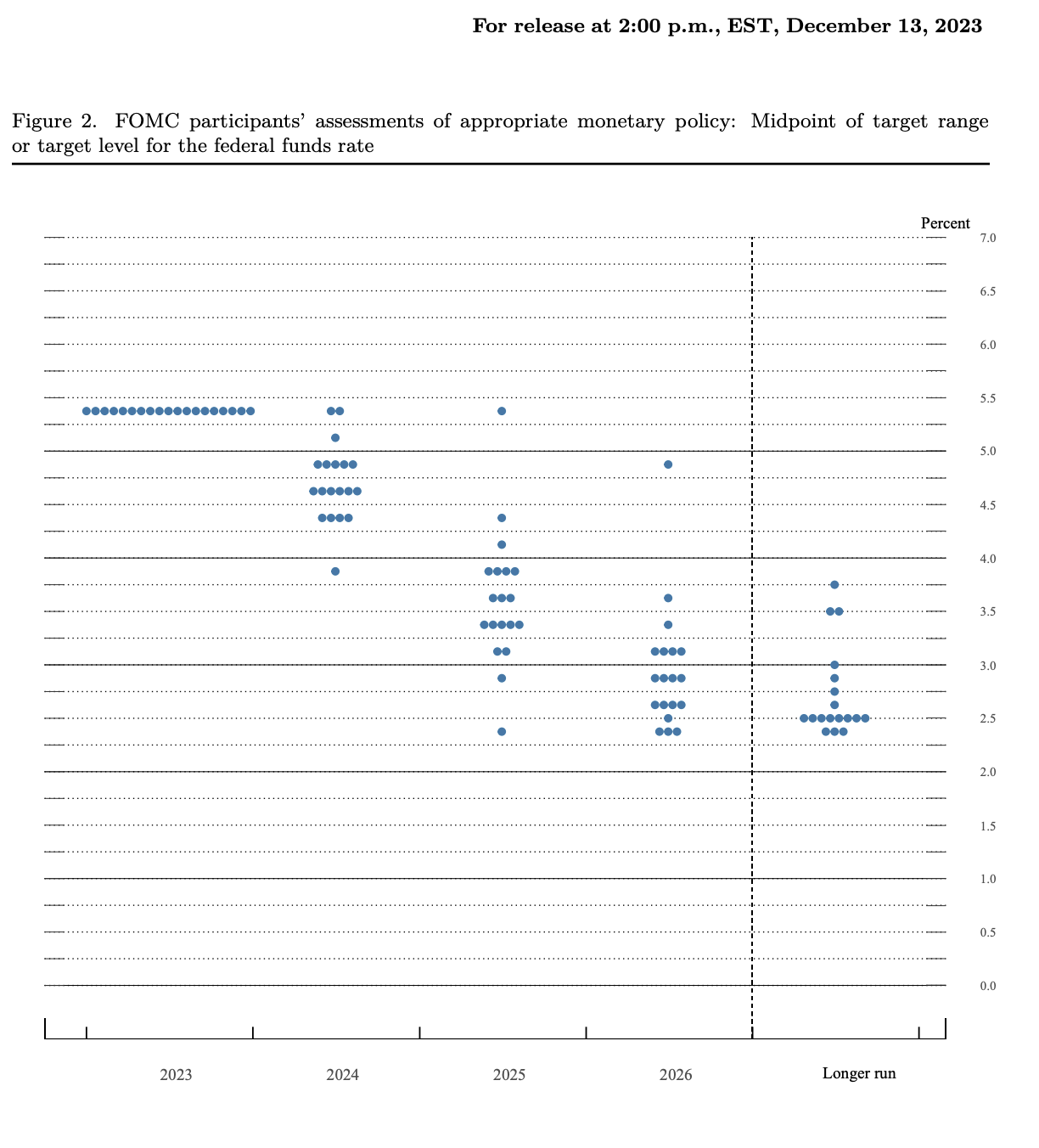
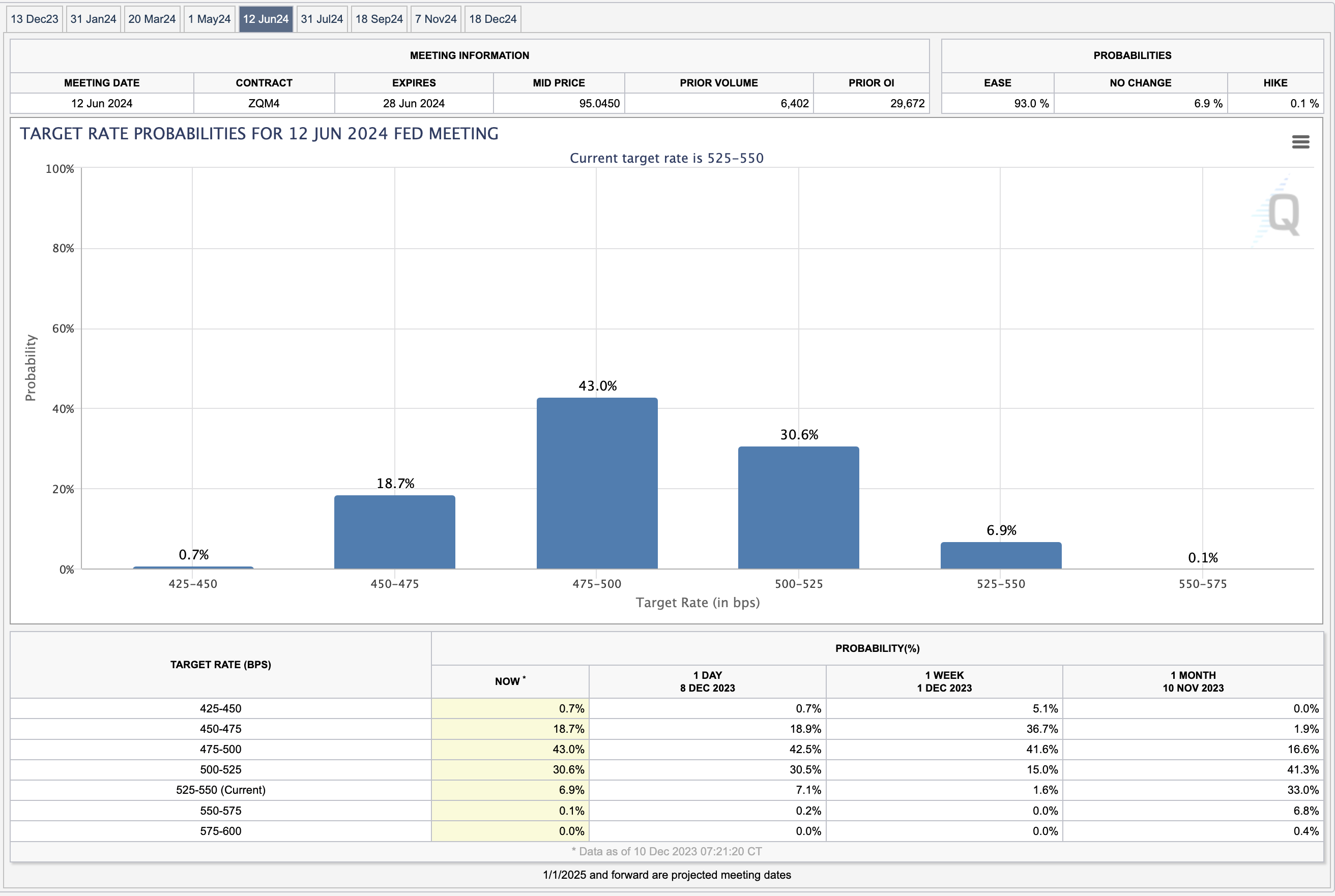
Only two weeks ago Fed Chair Powell said "the FOMC are not thinking about rate cuts". And it was premature to conclude with confidence they are at a sufficiently restrictive level. Well forget all that. Powell performed one of the more remarkable pivots ever seen from the Fed. He pivoted 180 degrees from his sentiment barely 14 days ago. Powell is now talking three rate cuts next year and the Fed have essentially "won the battle" over inflation. My take is the Fed is now more concerned about the business cycle; i.e., recession. There is a reason the Fed will cut - and that is the risk of dislocation in the economy (i.e., recession)

Why Would the Fed Cut? Why Would the Fed Cut?

Why Would the Fed Cut?

Last week the market received what it interpreted as a 'goldilocks' jobs number. Not too hot. Not too cold. But just right. Non-farm payrolls (NFP) increased by 199,000 in November, according to the BLS. This was around 19,000 higher than market expectations - however not hot enough for the Fed to raise rates this week. As an aside, the Government added 49K jobs as part of the 199K (inline with their monthly average). The unemployment rate, meanwhile, fell to 3.7% from 3.9%, marking the longest stretch of unemployment below 4% since the 1970s. That's essentially a full employment picture. So here's my question - why would the Fed consider cuts at full employment?

A Rational Response or Pavlov’s Dog?

Market consensus is for a soft-landing with at least three rate cuts next year. The market does not expect a recession.This may prove correct (I don't pretend to know) - but there are some chinks in the armor. Readers will know I don't subscribe to a soft-landing. Typically in the lead up to a recession - spectators will generally lean towards it being "soft". Few ever forecast 'hard landings'. For example, if you have unemployment below 4% and positive GDP growth - it's hard to see anything else. But very rarely do things land softly. We've seen one over the past five decades. That's not a high ratio. What's more, soft landings are exceptionally rare after 550 basis points of rate hikes (not to mention over $1 Trillion in quantitative tightening - of which we have no parallel).

People Choose What They Want to Hear

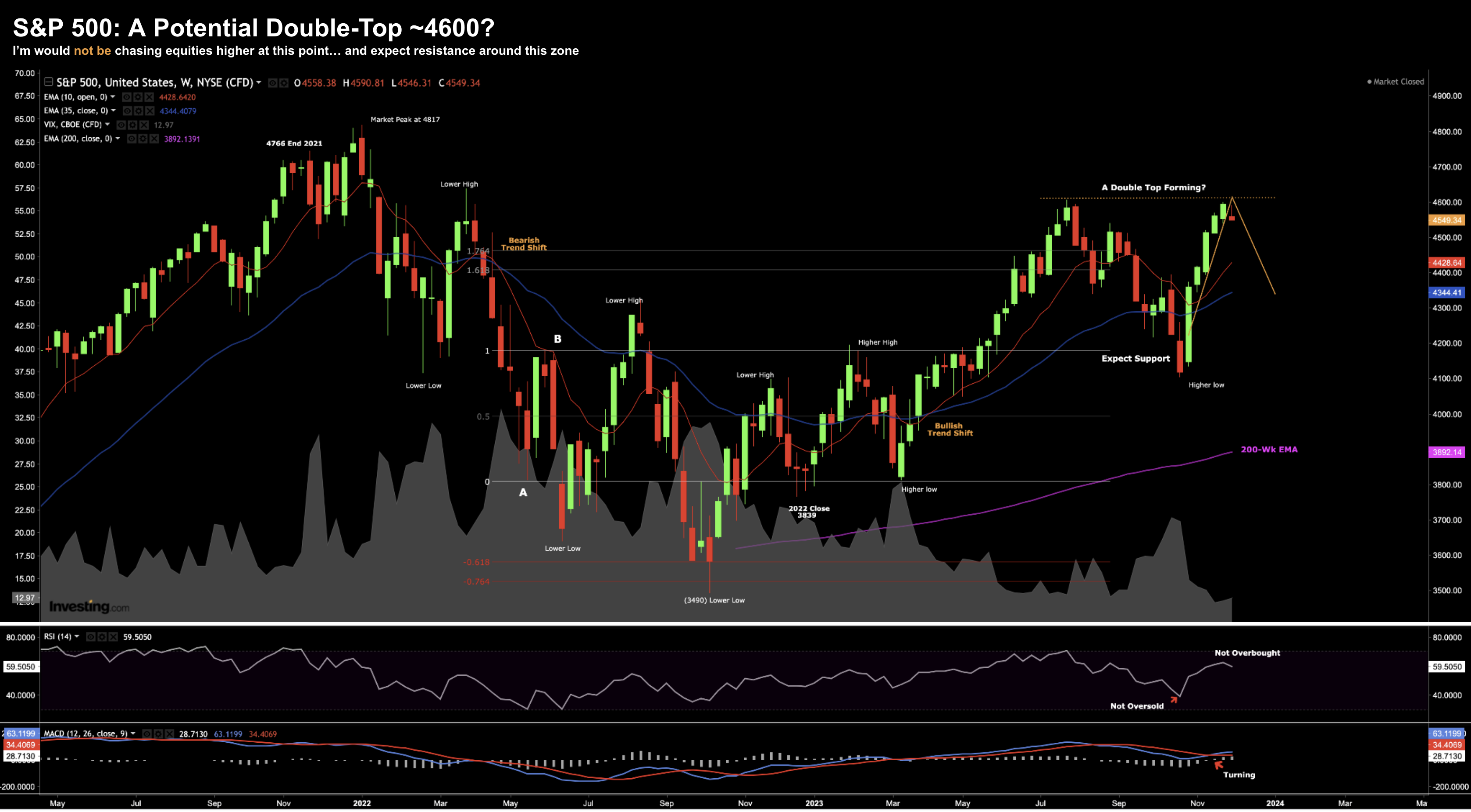
Markets continue their ascent after a blistering November. The Dow and S&P 500 each gained ~9% for the month - in what is typically a seasonally strong time of year. From a year-to-date perspective, the Dow is up 8.5%, the S&P 500 is up ~19% and the Nasdaq up over 35%. The anomaly? 493 of the 500 stocks on the S&P 500 are barely positive for the year (i.e., the equal weighted index). So what's driving the optimism? Simple: the expectation of lower yields and the Fed hitting its terminal rate. This post looks at potential blind spots for the market.

Two Reasons the Fed Could Cut Rates

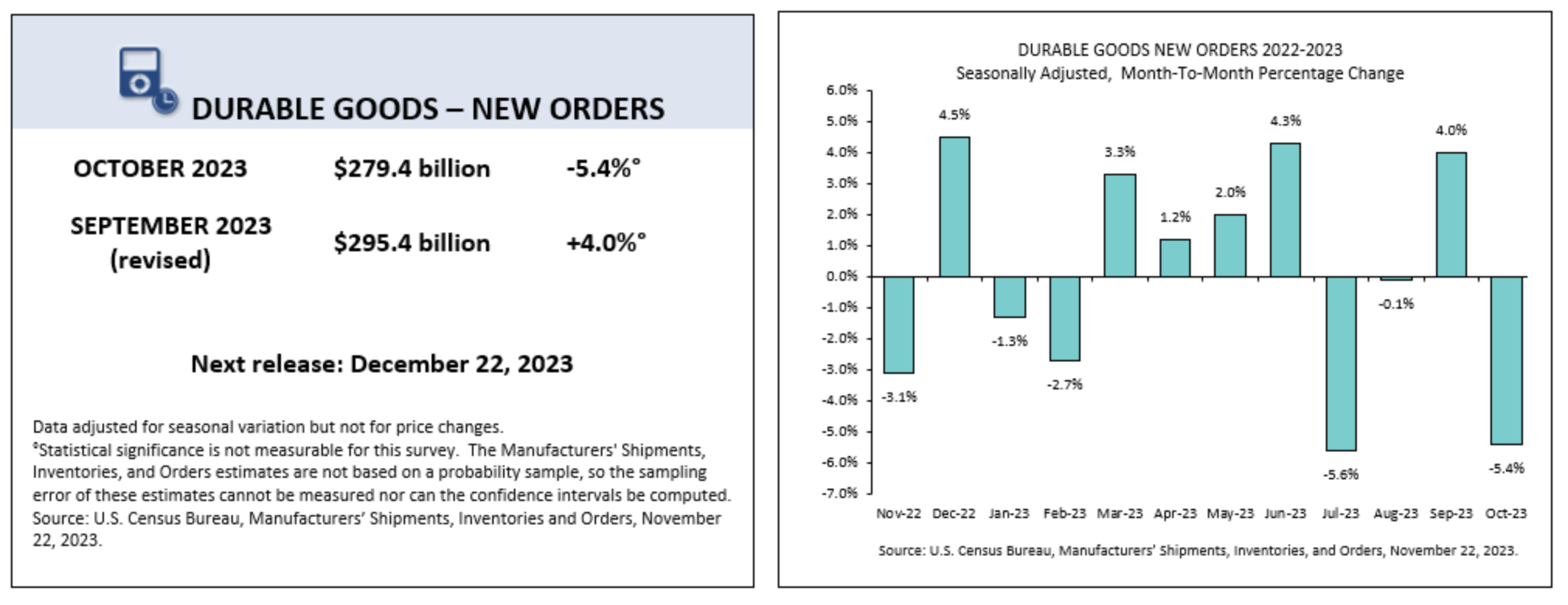
The latest set of economic numbers support a 'goldilocks' scenario for stocks. For example, durable goods orders continue to fall (a positive for inflation); and employment remains robust (a positive for growth). The question is what could cause the Fed to cut rates mid next year (given this is what is priced in)? I will offer two reasons... both of which I think are unlikely before June.

Inflation Trending Lower… But More to Do

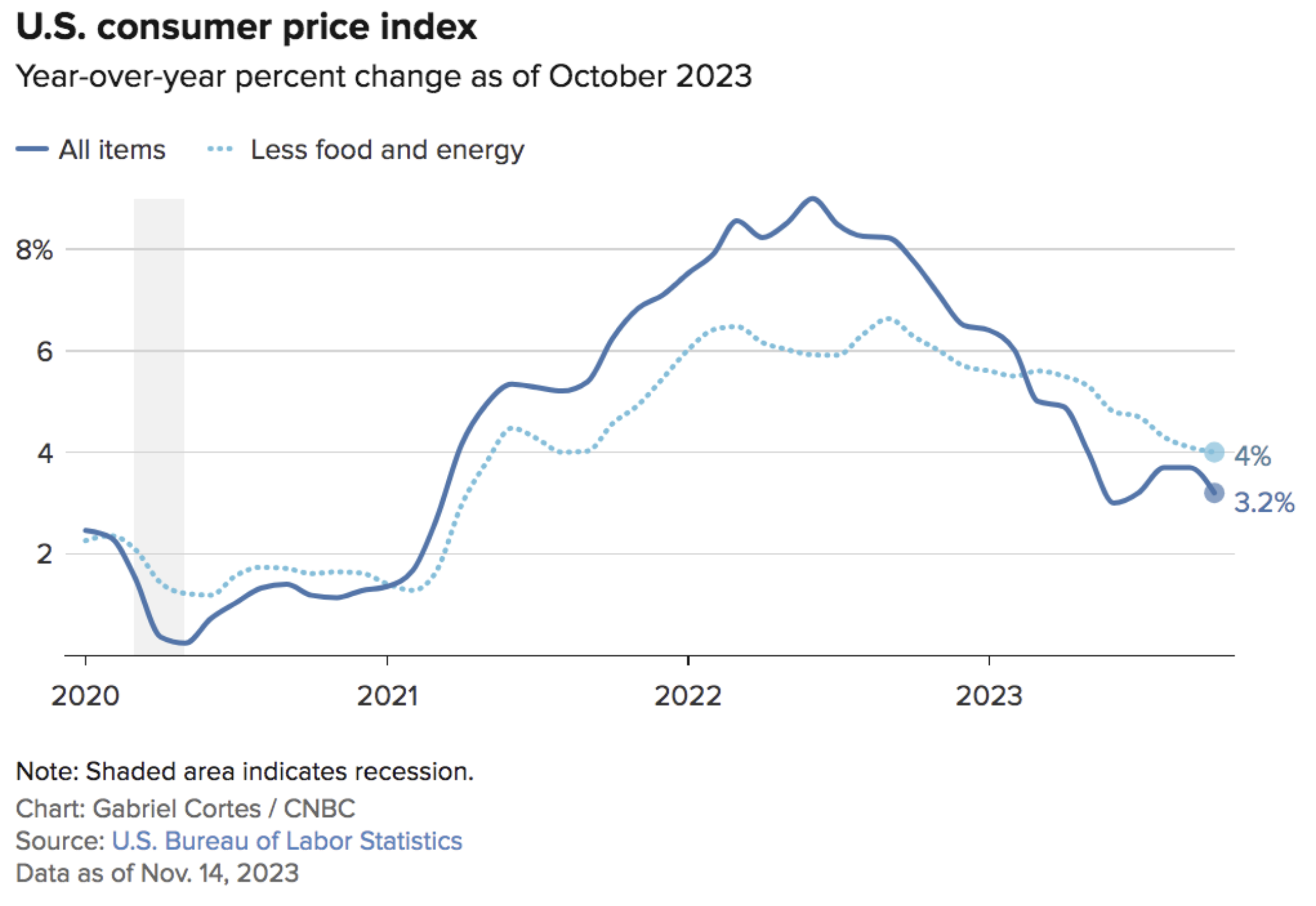
Today we received CPI for October. It was slightly softer than expected and continues to (slowly) trend lower. That's good news. However, stocks jumped on the data and feel its enough for the Fed to end further hikes. What's more - the market is now pricing in rate cuts as early as March. That feels like a dangerous (aggressive) assumption... I think there's a lot more work to do. Remember - getting inflation down from 4% to 2% is where the hard work begins. Wage growth for example remains at 4.2% YoY.

Are Bond Yields and Oil Cracking?

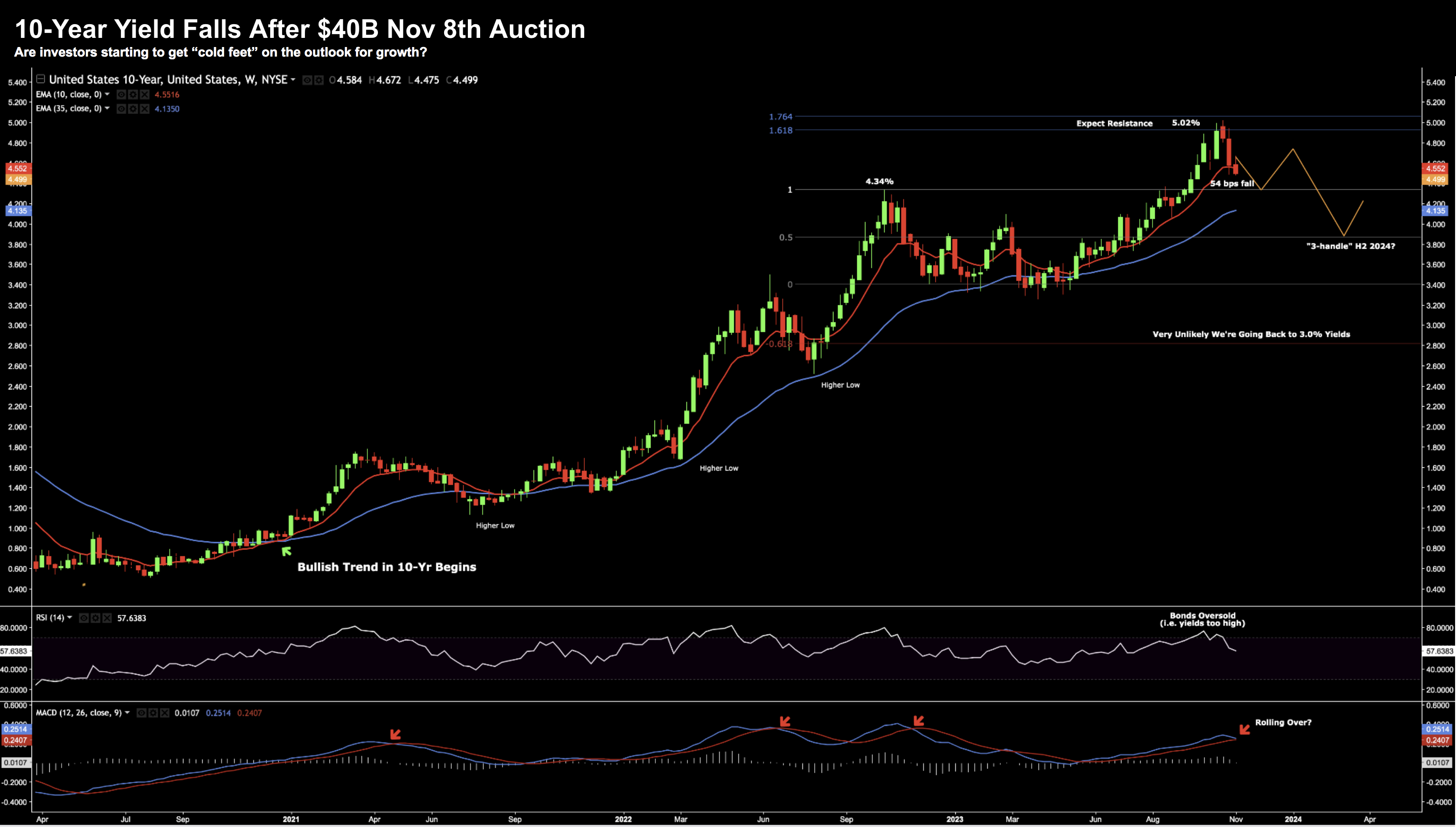
Today was an important day in the bond market. The US Treasury auctioned $40B of 10-Year notes. Coming into the auction - I was worried there would not be a decent bid. For example, if we faced further buyer's strike - these yields were likely to resume their path higher. However, we saw the opposite. The 10-year yield drifted lower. So what does this tell us about future economic growth? Are investors worried? In addition, the price of WTI Crude is also sharply lower... back below US$80/bbl on concerns of weakening demand. Are equities slow to connect the dots - as they are headed in the opposite direction.

For Now, A Slowing Economy is Good News

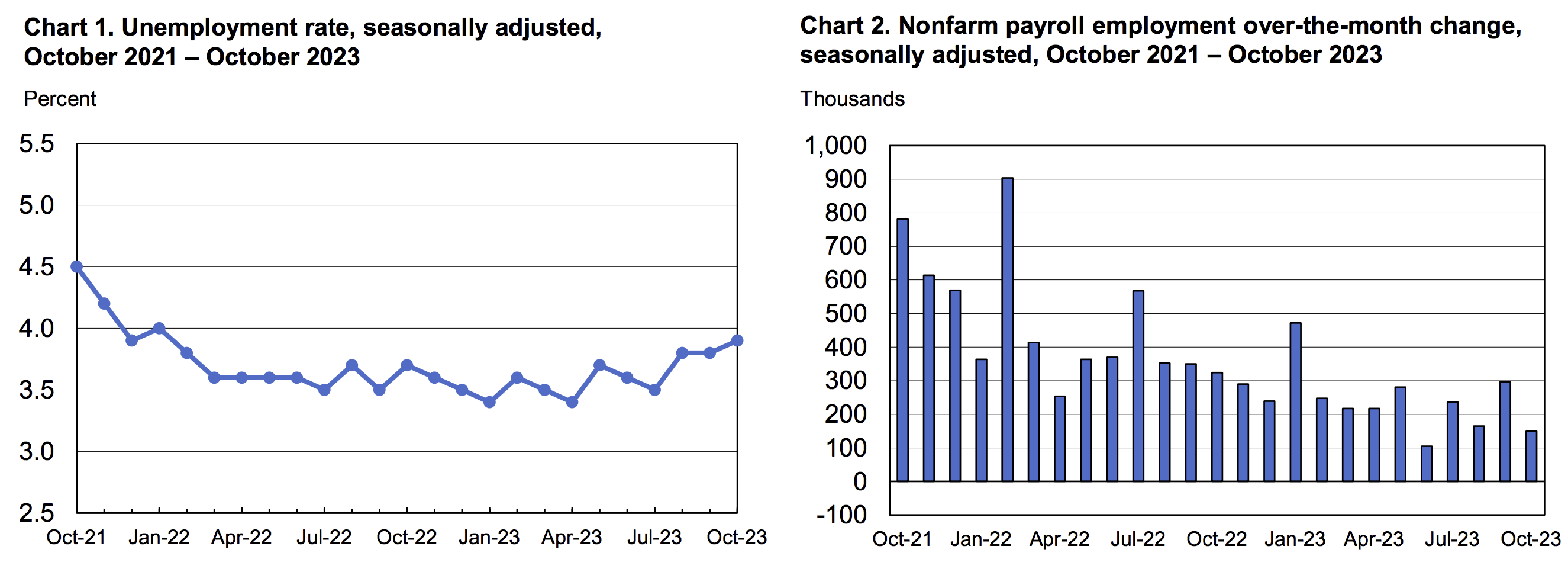
A weaker than expected October payrolls print sent stocks flying and bond yields sharply lower. The S&P 500 finished at 4358 - a whopping 5.9% for the week. It was the market's best week for the year. Renewed bullish enthusiasm was mostly due to investors betting the Fed is done. And that makes sense. For example, if employment, growth and inflation continue to soften - there's every possibility the Fed has hit its terminal rate. However there is a caveat. Not only will the Fed need softer economic data - they are hoping the bond market continues to keep financial conditions tight (i.e. bond yields stay high)

Will This Market Rally Continue?

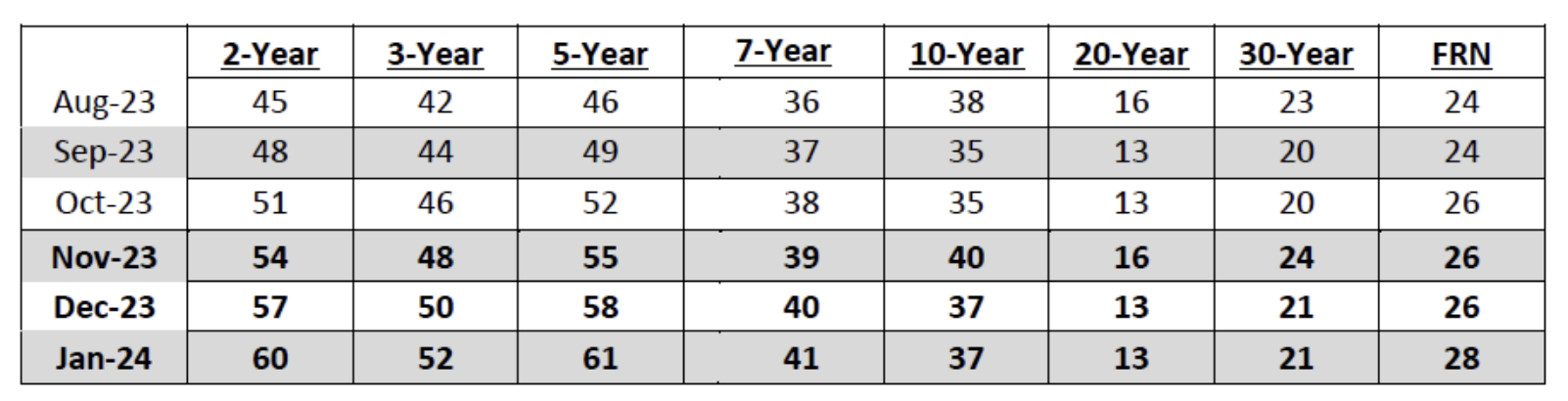
Did we finally hear a 'less hawkish' Jay Powell yesterday? For the first time in months the Fed Chair may have slightly lowered his guard. But barely... as Powell is far from being a dove. A dovish Fed is one that is (a) cutting rates; and (b) ending quantitative tightening. Neither of those things are happening soon. But it wasn't just Powell's language which fired up the bulls. Janet Yellen also played a role - suggesting the government plans to sell less debt than expected... sending bond yields lower.