Category Interest Rates / Bonds

Bye Bye Sugar High

Are equities finally connecting the dots? Maybe. Whilst this has been a difficult market to trade - my sense was to approach with caution. From mine, there were too many open questions. For example, when the market was trading around 4600 - my sentiment was the downside risk outweighed any upside reward. We are now ~8% lower... closer to the zone of where I felt the S&P 500 could trade. In short, valuations were stretched. Put another way, the risk premium for owning stocks wasn't there. But markets pushed higher - taunting the Fed on their "higher for longer" script.

Fed: We’re Not Finished Hiking

Let's start with a quick quote from yesterday's missive: "From mine, Powell will deliver a hawkish tone leaving the door wide open for further hikes in November or December if needed". That's exactly what he said. From my lens, Powell sounded hawkish today - reminding investors they are are not done hiking. Not yet. And if I'm to be blunt - he has sounded hawkish at every meeting this year. But investors will often choose to hear what they want to hear. Be conscious of what biases you have. The script is higher for longer and the market is yet to adjust. It will.

Fed Trying to Thread a Narrow Needle

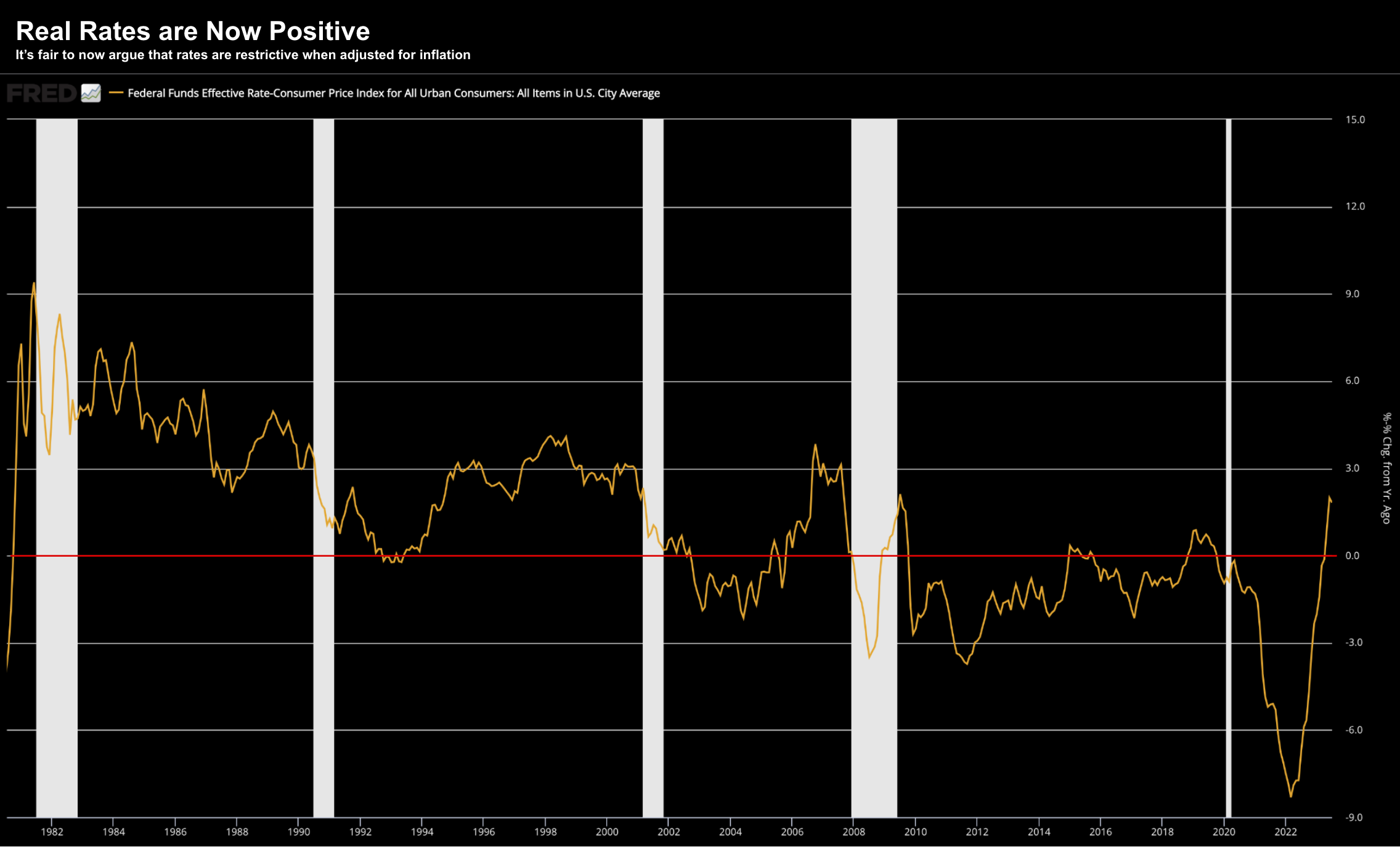
Tomorrow we will hear from the Fed. It's very unlikely the world's most influential central bank will raise rates this month. However, it's my view Jay Powell is not about to drop any dovish hints. Remember: just because they may be closer to the end of rate hikes - that doesn't mean they are about to cut. Rate cuts are dovish. However, rates staying higher for longer is hawkish. And as inflation comes down, this means real rates are rising (with the Fed on hold). From mine, we hear a hawkish Fed tomorrow. And the market has not priced that in.

History Lessons 

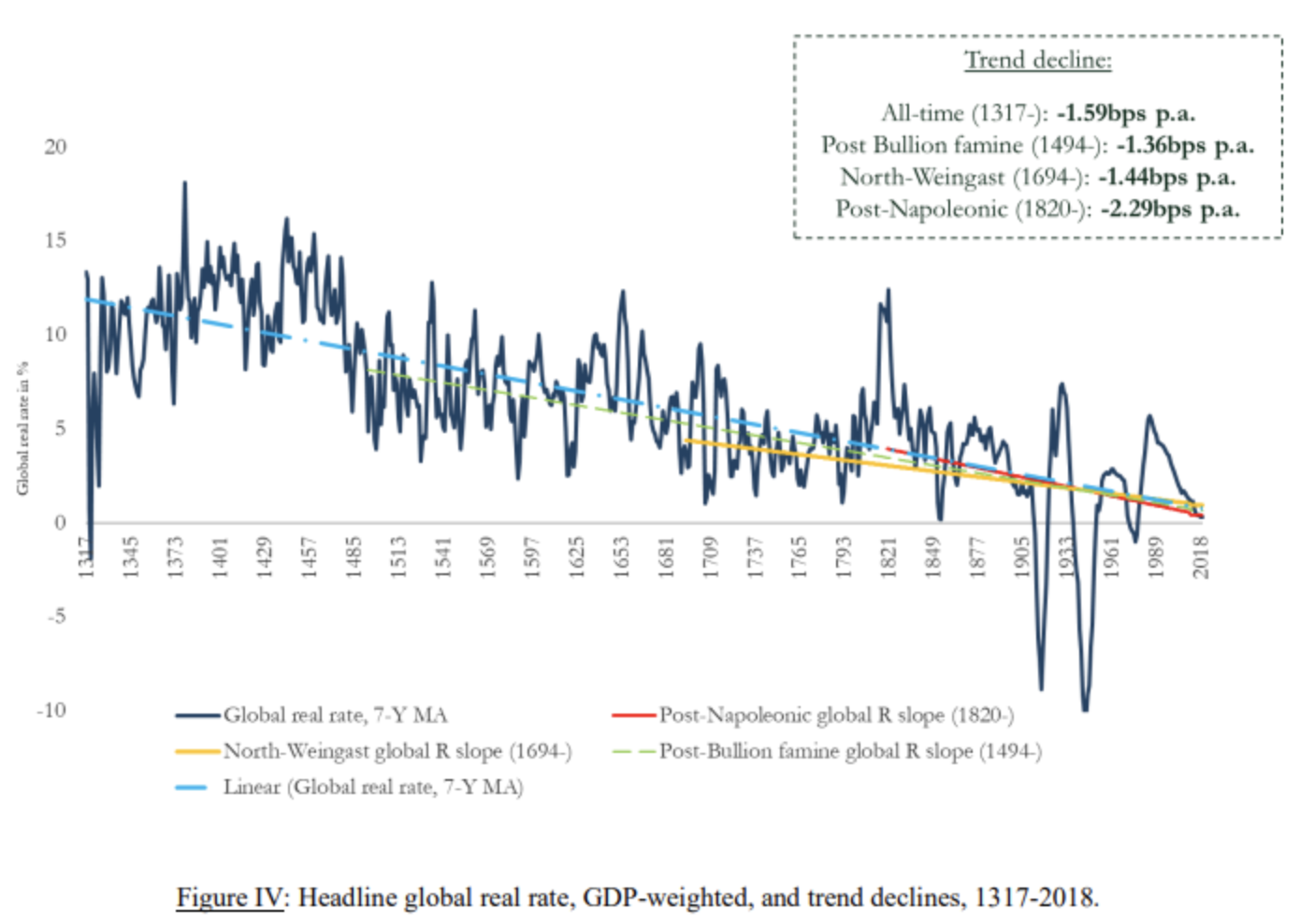
History offers us valuable lessons. During the week, I read an interesting Bloomberg article citing research from financial historian Paul Schmelzing. He explained at a Jefferies (Hong Kong) forum that it’s effectively impossible for data from recent decades to offer insight into whether there’ll be a lasting impact on borrowing costs from the pandemic. This is interesting as the popular narrative is rates will remain high for a very long time.... but will they?

Where Do We Go From Here?

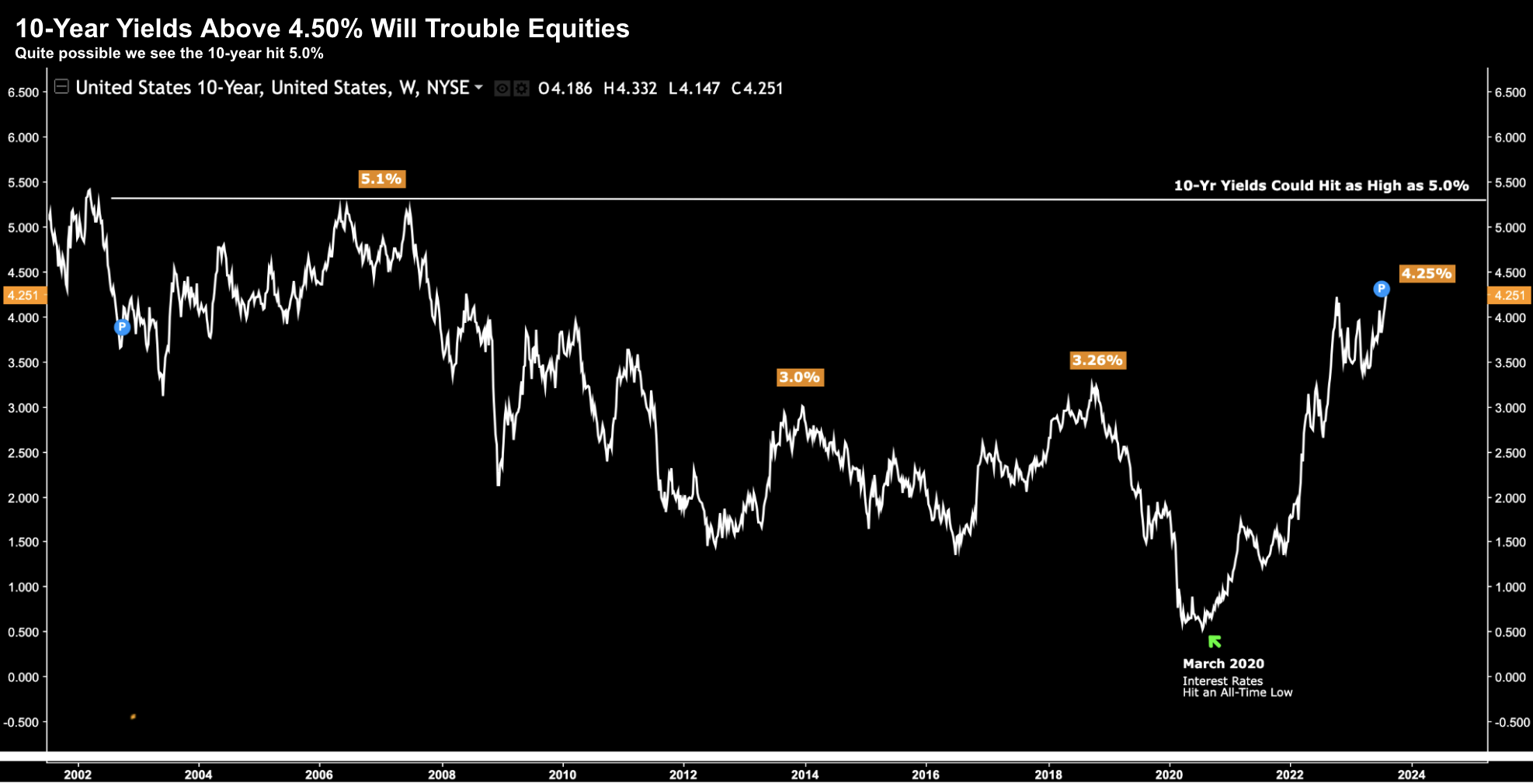
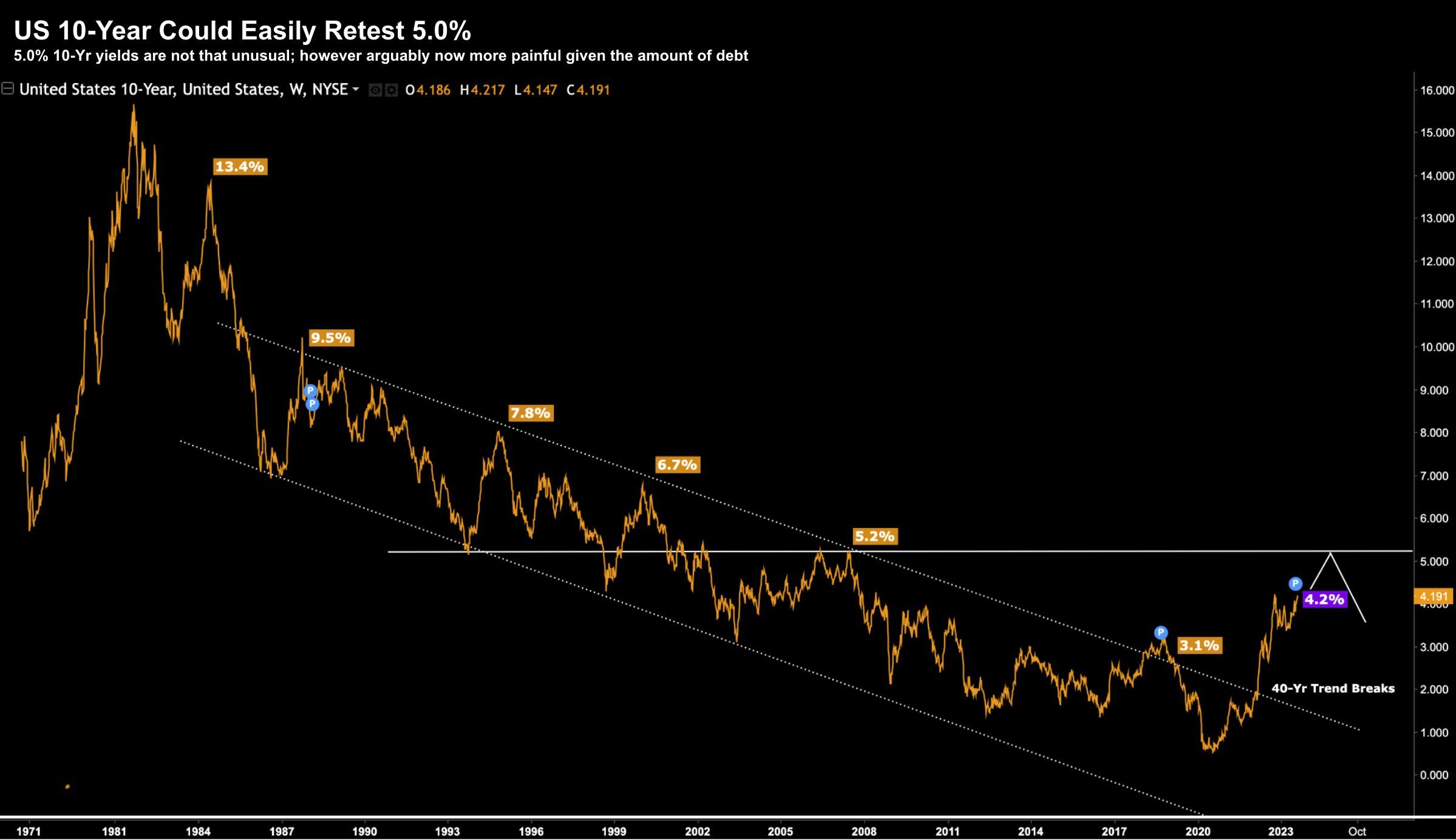
Major averages pulled back this week on fears rates could remain higher for longer. Makes sense - with the US 10-year above 4.25% - that's a reasonable assumption. But here's the thing: get used to it. Whilst rates might feel 'tighter'... rates are still not historically high. Not even close. What was not normal was rates being artificially suppressed to near zero for 15 years. And that might prove to be a difficult adjustment for some people. So where to from here? The honest answer is none of us know. What follows are some of the assumptions being made; and perhaps gaps in the market's thinking... it starts by asking quality questions.

“Navigating by the Stars Under Cloudy Skies”

Today Fed Chair Jay Powell offered his latest sentiment on the economy and monetary policy from the Jackson Hole Summit. Whilst he leant hawkish (my expectation) - he also admitted he doesn't know what's ahead. Nothing wrong with that... better decision making starts by first recognizing what we don't (or can't) know. Powell stated "... as is often the case, we are navigating by the stars under cloudy skies". Question is - what does that mean for markets and rates ahead?

Beware the “Bear Steepening” of the Curve

My last post talked about how the market is now taking its cues from bond yields (less so the Fed) Don't get me wrong... what the Fed does (or says) matters. We will hear more from Chair Jay Powell at the end of the week. Expect hawkish tones. To recap on what I shared earlier this week - globally long-term bond yields trade at their highest levels in 15 years. However, what's interesting is the shorter-end (e.g. 2-year and below) is not keeping pace. This has net the effect of "steepening" the all-important 10/2 yield curve. Question is - will that be a problem? History may offer some clues.

Now less about the Fed… It’s about Bond Yields

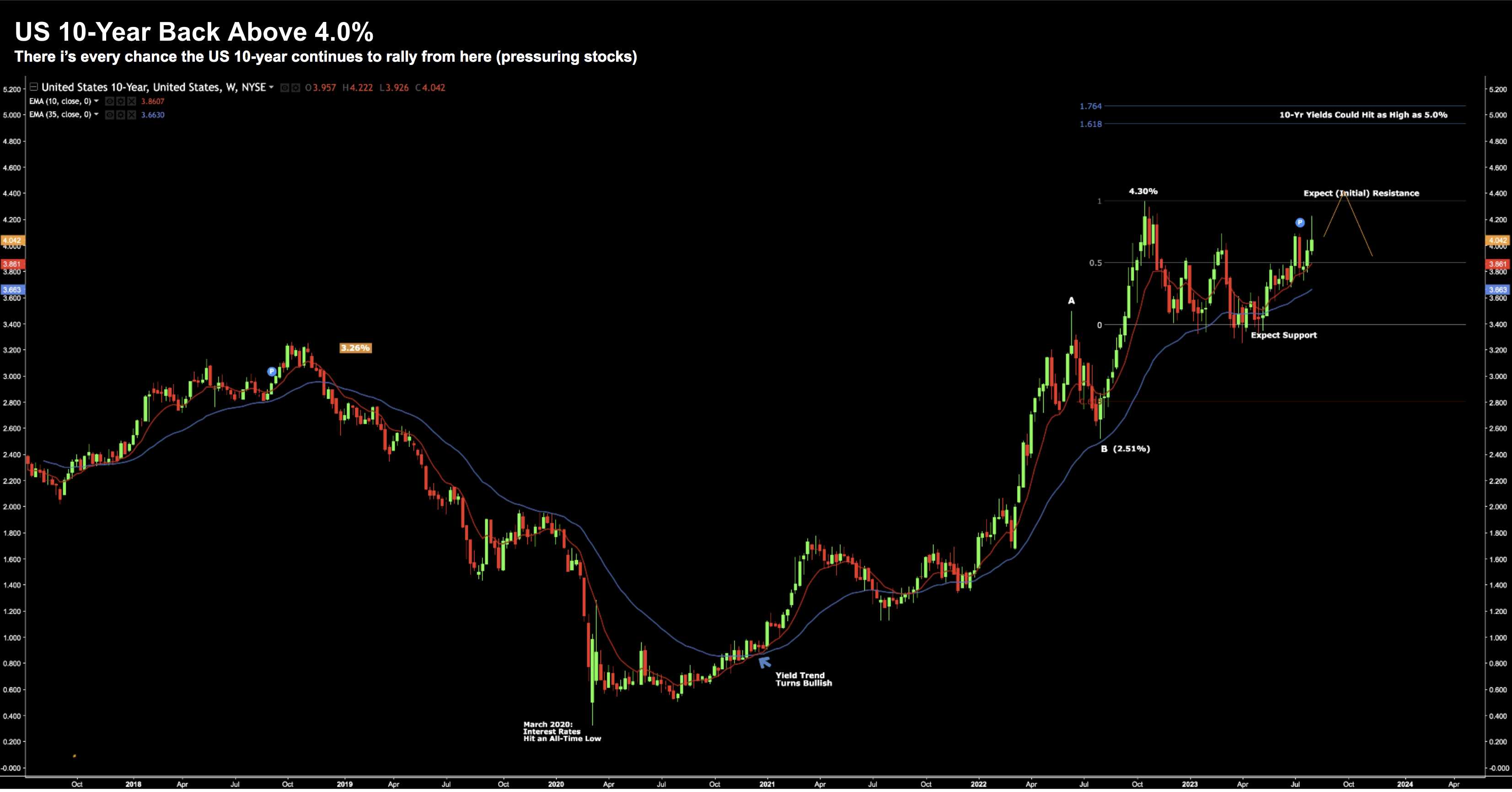
In ~11 years writing this blog - I've never seen a move in bond markets like the past 24 months. 10-year yields traded below 0.5% not that long ago. Money was next to free. Now that instrument will return 4.25% risk free. The 12-month T-Bill is a very attractive 5.34%. But it's not just in the US - it's global. Germany, Australia, Japan and the UK... yields on major fixed-income benchmarks are moving higher. In the UK, the 10-year gilt is yielding its most in 15 years. For me, where the market goes is more about bond yields than what the Fed do next...

The One Chart that Matters Most

If you were asked what is the most important metric in global finance - what would you answer be? The S&P 500? The US Dollar? Gold Something else? My answer is the US 10-year yield. Everything in finance is a function of this asset. For those less familiar with the game of asset speculation - this is a very important concept to understand. What's more, its importance extends well beyond the stock market. To begin, the US 10-year yield is the proxy for financial instruments such as your mortgage, your car loan, student debt, your credit card etc. More than that - how this bond trades also signals investor confidence.

Buffett is Buying Bonds

Warren Buffett is pouring tens of billions of Berkshire money into short and longer-term bonds. And I'm not surprised... For e.g., Jul 9th I offered this post "Think About Adding Bonds". Shorter-term bills were offering investors ~5.50% and the longer-date 10-year bond above 4.0%. That's attractive for a number of reasons... this post explains why.