Category Sahms Rule

When Bad News is Bad News

Last weekend I questioned whether markets could break out to the upside; or perform what trader's refer to as a "back and fill". My best guess was the latter. In turns out, things traded 'per the script', where the S&P 500 suffered its worst week since March 2023 - giving back 4.20%. The Nasdaq fared far worse - shedding ~6% - led by large losses in popular AI chip stocks. So why are market's worried? It's concerns about growth. With a market trading close to ~22x forward earnings - expecting YoY EPS growth of 11% -- that's not consistent with 'slowdown' scenario.
So Maybe Valuations Matter?

When I made the difficult decision to reduce my exposure to large-cap tech earlier this year - I wasn't sure how things would pan out. In the short-term - I looked foolish. These stocks surged higher without me. However, since then, large-cap tech is trading lower than when I sold it (on average). But is this a dip you should buy? I don't think so - not just yet. The broader index is only 6% off its all-time high. That's nothing in the larger scheme of things. I'm choosing to remain a little more patient - where I think the index could correct somewhere in the realm to 10-12%.

Wall Street Cheer a “Strong Jobs” Report…  Should They?

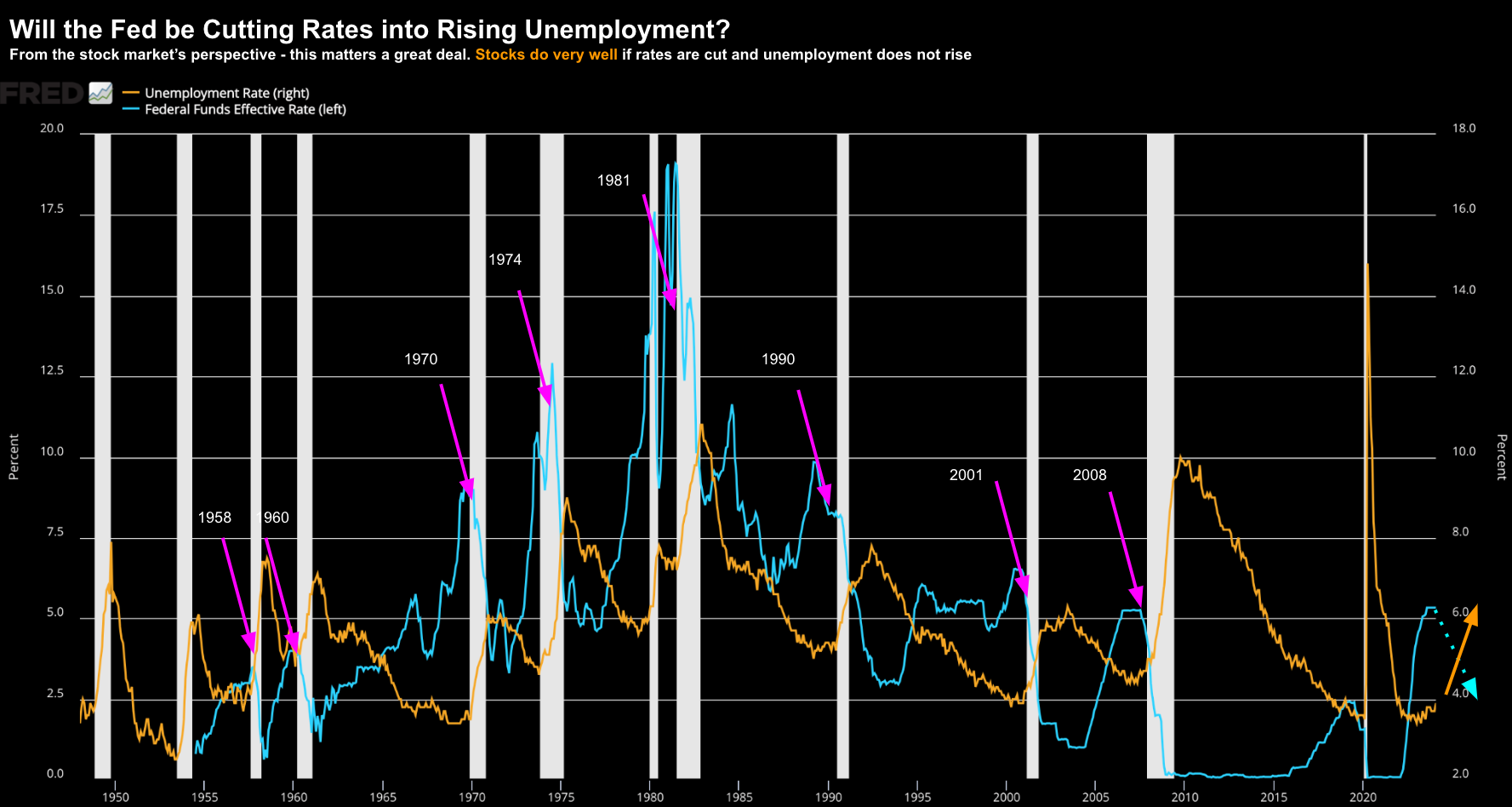
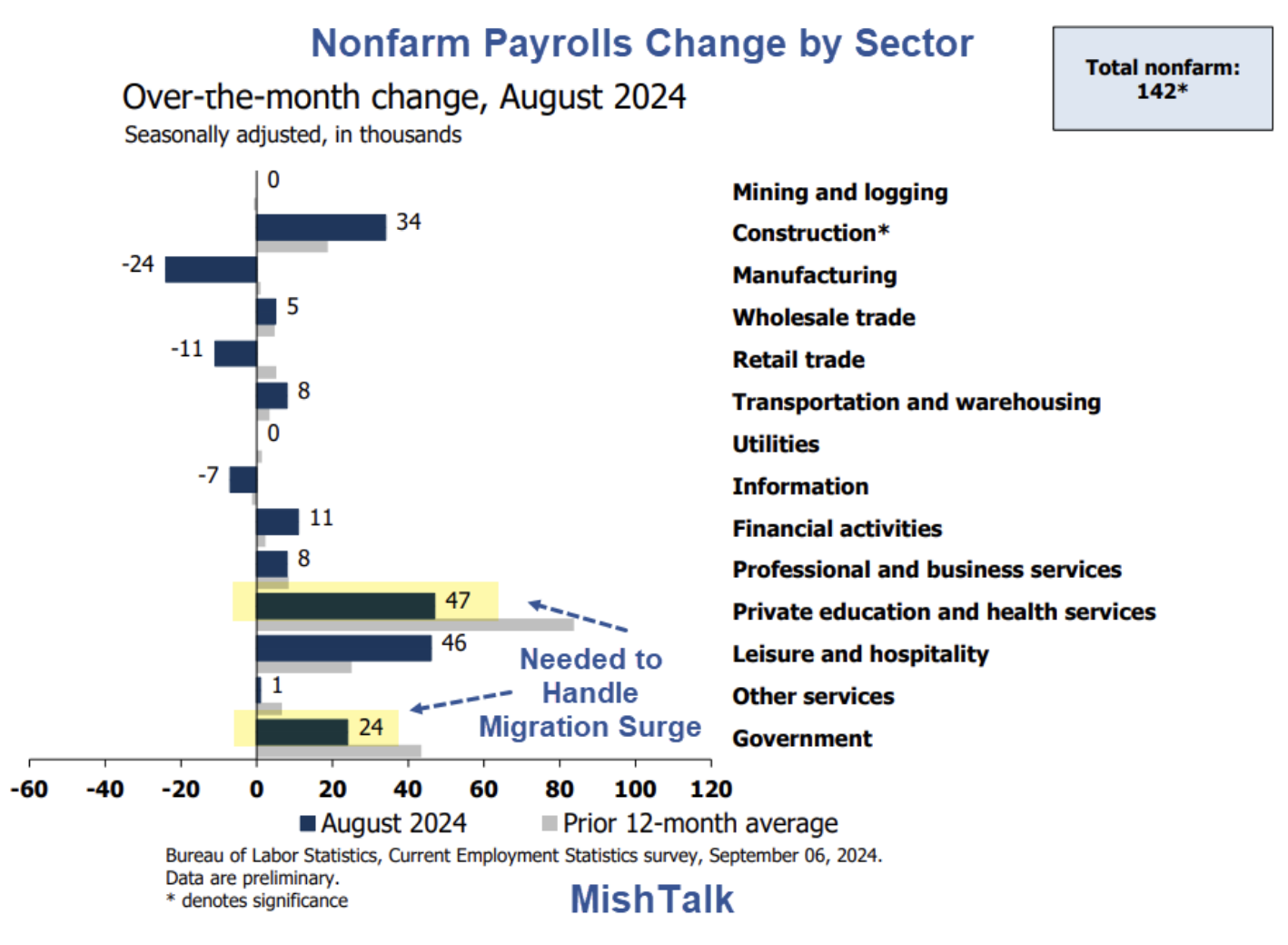
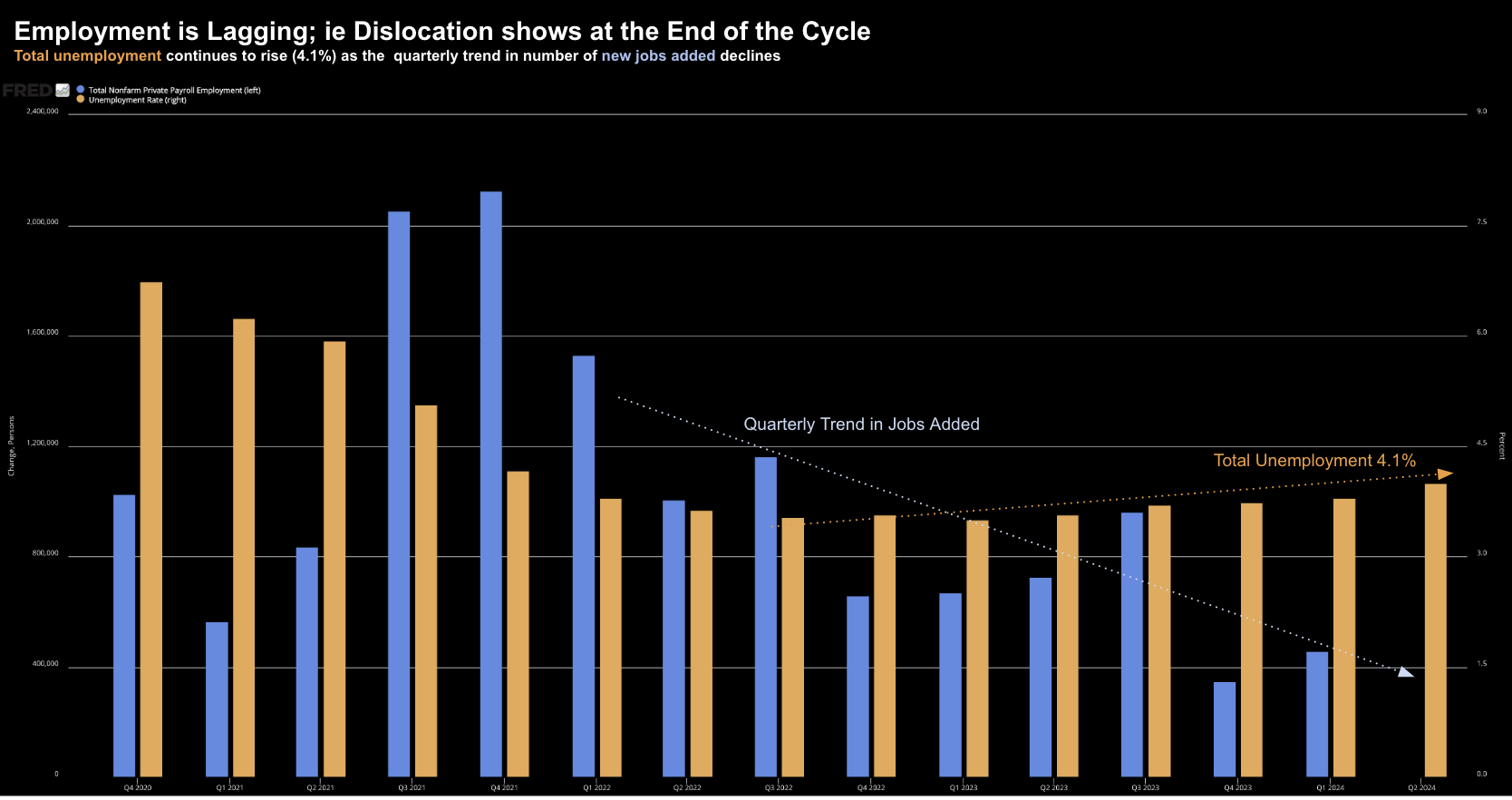
Wall St. cheered a perceived 'strong' monthly June jobs report. The economy added 206K jobs last month - however the unemployment rate moved to 4.1% - its highest level in 2 years. Here's the thing: there was a lot of weakness in the labor market - with most of the jobs coming from government. In addition, April's job gains were revised lower by 111K. And May was revised lower by almost 60K. I think there is material underlying weakness (reflected in slower Real GDP and PCE) and perhaps enough for the Fed to start cutting rates in September or November.

Rate Cut Hopes for 2024 Start to Fade 

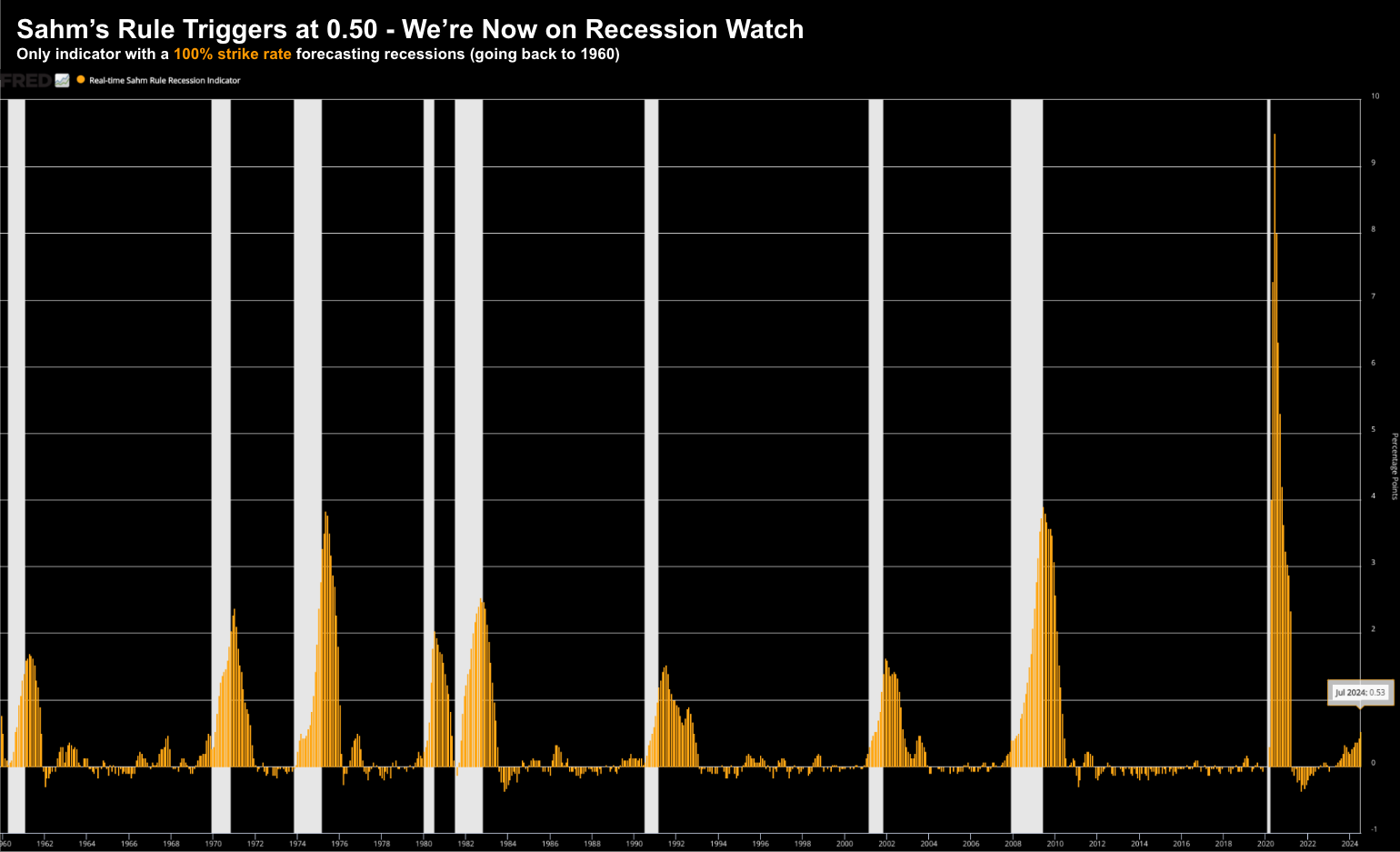
Just as market participants were starting to get hopeful rate cuts could be coming - that door was slammed shut. Yields surged opposite a stronger-than-expected monthly payrolls number. Heading into the print - the market was looking for softness in the labor market - with maybe 190K jobs added. Recent data had suggested jobs were slowing - paving the way for the Fed to cut rates as early as July (with a 70% chance assigned to September). As it turns out, monthly job gains were said to be 272,000. That said, there are some ambiguities with the report - with the unemployment rate jumping to 4.0%. Is Sahm's Rule about to trigger in the coming months?

Are These Recession Indicators Broken?

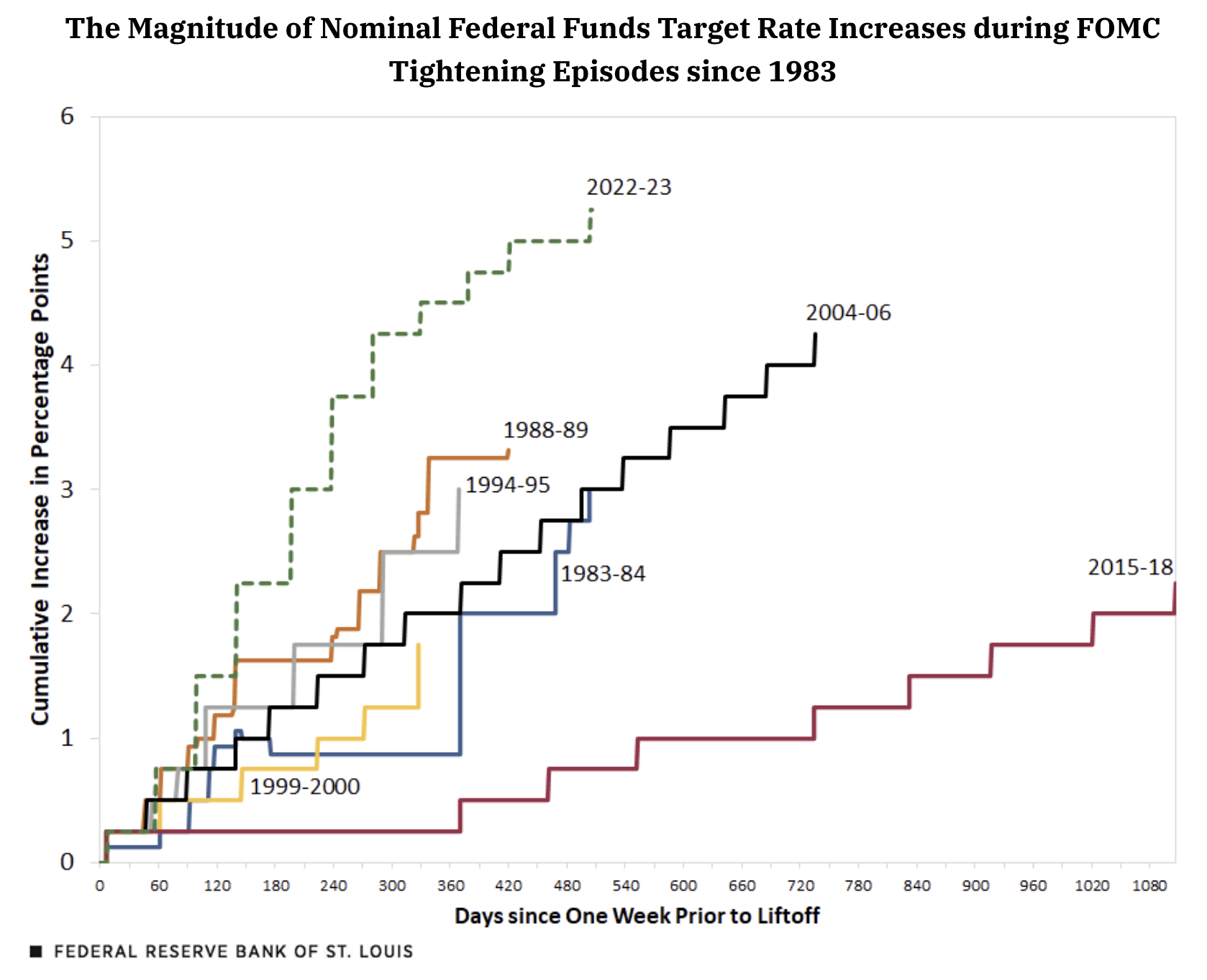
At the conclusion of their July 26 '23, meeting, the Federal Open Market Committee (FOMC) voted to raise the target range of the federal funds rate by 25 basis points to 5.25% to 5.50%. The S&P 500 traded around 4,000 points at the time - some 16% off its ~4800 January high. Markets had reason to be worried... Investors had not seen the Fed this aggressive at any time in the past 40 years... and conditions seemed ripe for a recession. What's more, most widely cited indicators suggested this was a likely outcome. However, it didn't happen? Why not? Are popular recession indicators no longer relevant?

Don’t Fight the Fed…

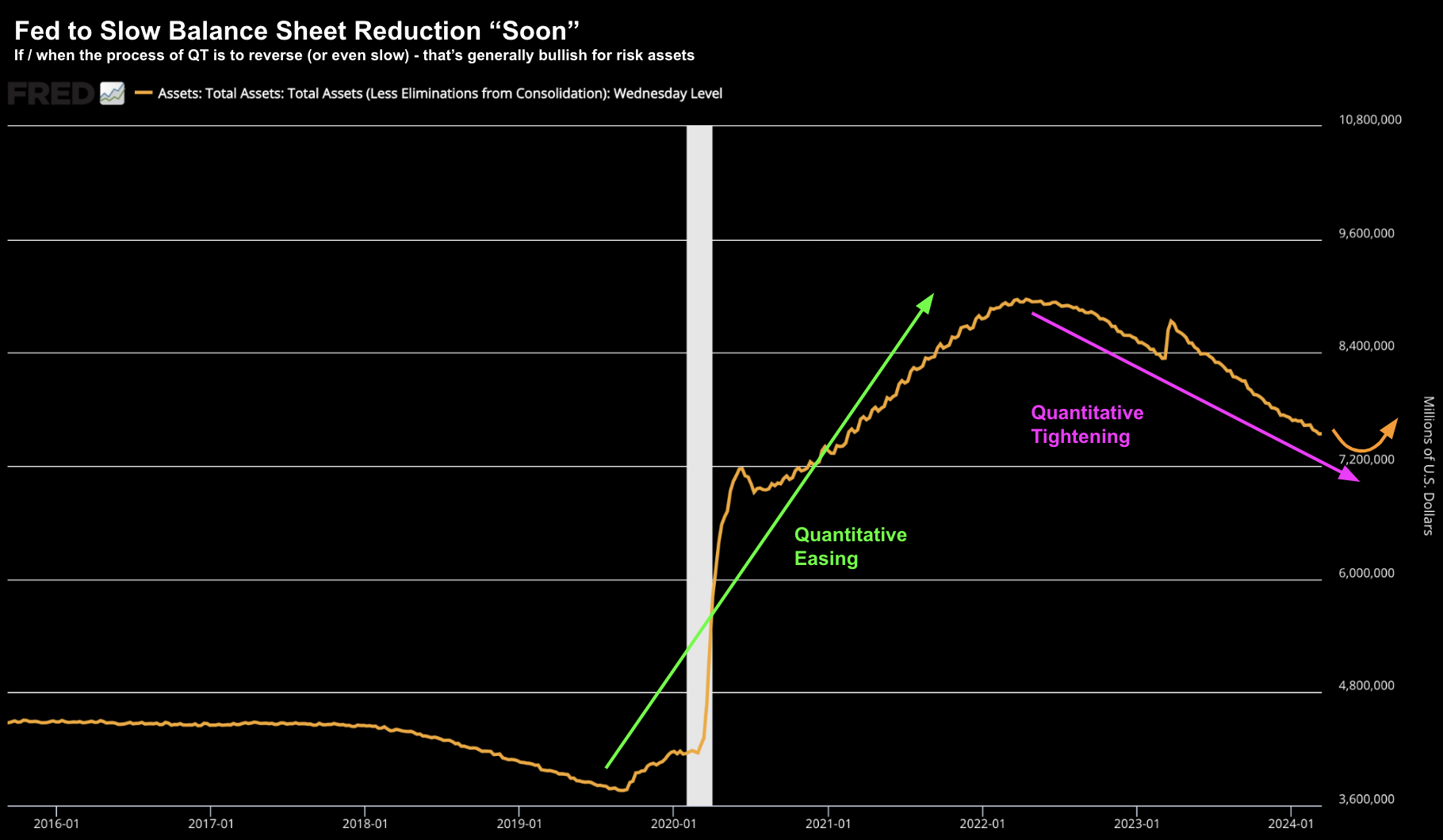
"Don't fight the Fed" is a popular Wall St. adage for investors. The phrase was coined by well known investor Marty Zweig in 1970. At the time, Zweig explained the Federal Reserve policy enjoys a strong correlation in determining the stock market’s direction. Fast forward ~50 years and his theory has proven mostly correct.