Category Tariffs

The Tariff Inflation Trap: Why Core CPI and Corporate Tax Cuts Conflict The Tariff Inflation Trap: Why Core CPI and Corporate Tax Cuts Conflict

The Tariff Inflation Trap: Why Core CPI and Corporate Tax Cuts Conflict

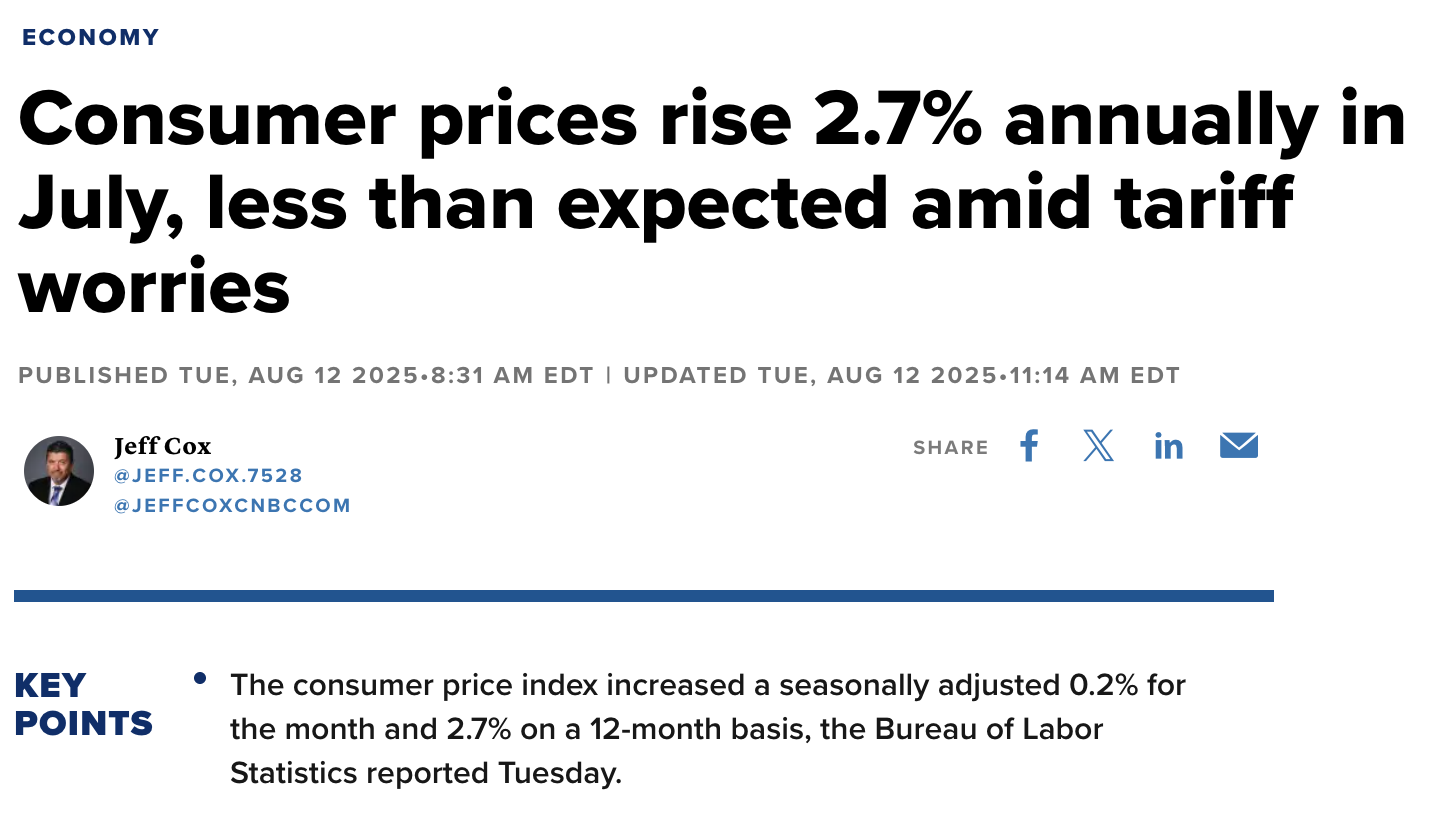
Market speculators held their breath for the latest inflation data, betting on a "soft" reading that would pave the way for a long-awaited rate cut. With stocks at record highs, their hopes were clearly pinned on a favorable outcome. While the headline CPI number was lower than expected, the Fed's preferred measure of core inflation, which excludes food and energy, continues to creep higher. This suggests that prices for most goods and services are still on the rise. Meanwhile, a chorus of voices, including political appointees, are urging the Fed to cut rates.
The Real PCE Rule: Why the Fed is Trapped by Tariff-Induced Stagflation The Real PCE Rule: Why the Fed is Trapped by Tariff-Induced Stagflation

The Real PCE Rule: Why the Fed is Trapped by Tariff-Induced Stagflation

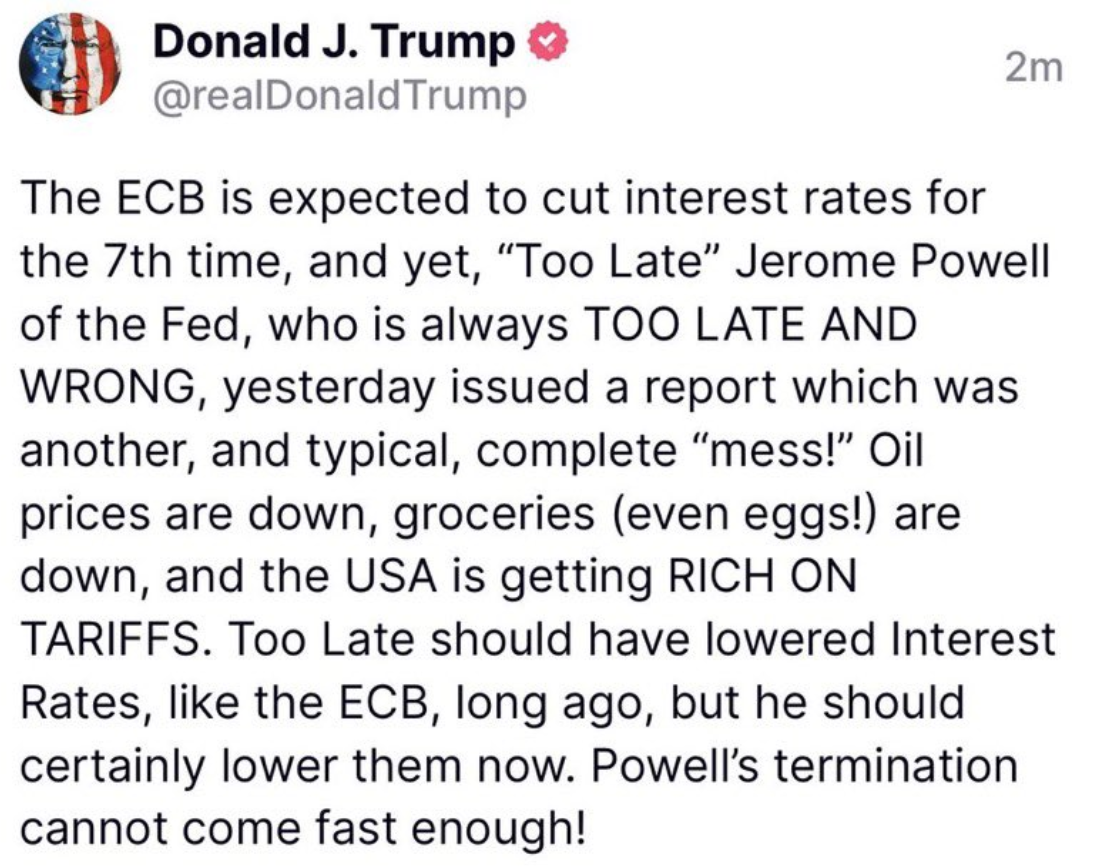
You have to feel for Jay Powell. He's in a tough spot - facing pressure from the market and the President to cut rates. However, to his credit - he can separate the noise from the signal. The Fed Chairman reiterated his narrative - signaling the need for a more cautious stance amid ongoing economic uncertainty. In addition, he emphasized the Fed needs to maintain credibility and independence. However, there was some dissent within the ranks...

Consumption Tax: Why the Market is Mispricing Trade Deals Consumption Tax: Why the Market is Mispricing Trade Deals

Consumption Tax: Why the Market is Mispricing Trade Deals

The market is cheering the "better than feared" trade deals with the likes of Europe and Japan. Yes, 15% is better than 30%. But 30% would be an embargo - not a tariff. 15% will not be good for global trade. Growth will slow; consumption will fall; resulting in fewer jobs. Trump's terrible tariffs will be at least ~12% more than what we had at the beginning of the year. This consumption tax will need to be paid by someone... just a question of who. The market is not pricing this in....

The TACO Trap: Why the S&P 500 Mean Reversion and the 5% Bond Yield are the Real ‘Sell in May’ The TACO Trap: Why the S&P 500 Mean Reversion and the 5% Bond Yield are the Real ‘Sell in May’

The TACO Trap: Why the S&P 500 Mean Reversion and the 5% Bond Yield are the Real ‘Sell in May’

The market is betting Trump is all bluster and no action. The acronym "Trump Always Chickens Out" (TACO) is sure to piss the President off. Now, if the TACO trade is right, then Trump's threats will lose their power as a negotiating tactic. Therefore, on the assumption Trump believes in protectionism - he may have to follow through on some of his rhetoric. Markets seem to think that won't happen...

Navigating Market Panic: What Surging Bond Yields and Peak Fear Tell Us Navigating Market Panic: What Surging Bond Yields and Peak Fear Tell Us

Navigating Market Panic: What Surging Bond Yields and Peak Fear Tell Us

It's very difficult to know if we're at or close to a market bottom. They rarely occur over the space of weeks - it generally takes months. But I cannot predict when (or what) the bottom will be. However, I think the ~20% correction from the market high (6147) to the low (4834) tells me a large portion of the selling is behind us. For example, we're now starting to see equity exposure significantly reduced and cash levels raised. This is a good sign... as there are a lot less people to sell.

Buying Peak Fear: Why a VIX Above 45 is a Rare Long-Term Opportunity Buying Peak Fear: Why a VIX Above 45 is a Rare Long-Term Opportunity

Buying Peak Fear: Why a VIX Above 45 is a Rare Long-Term Opportunity

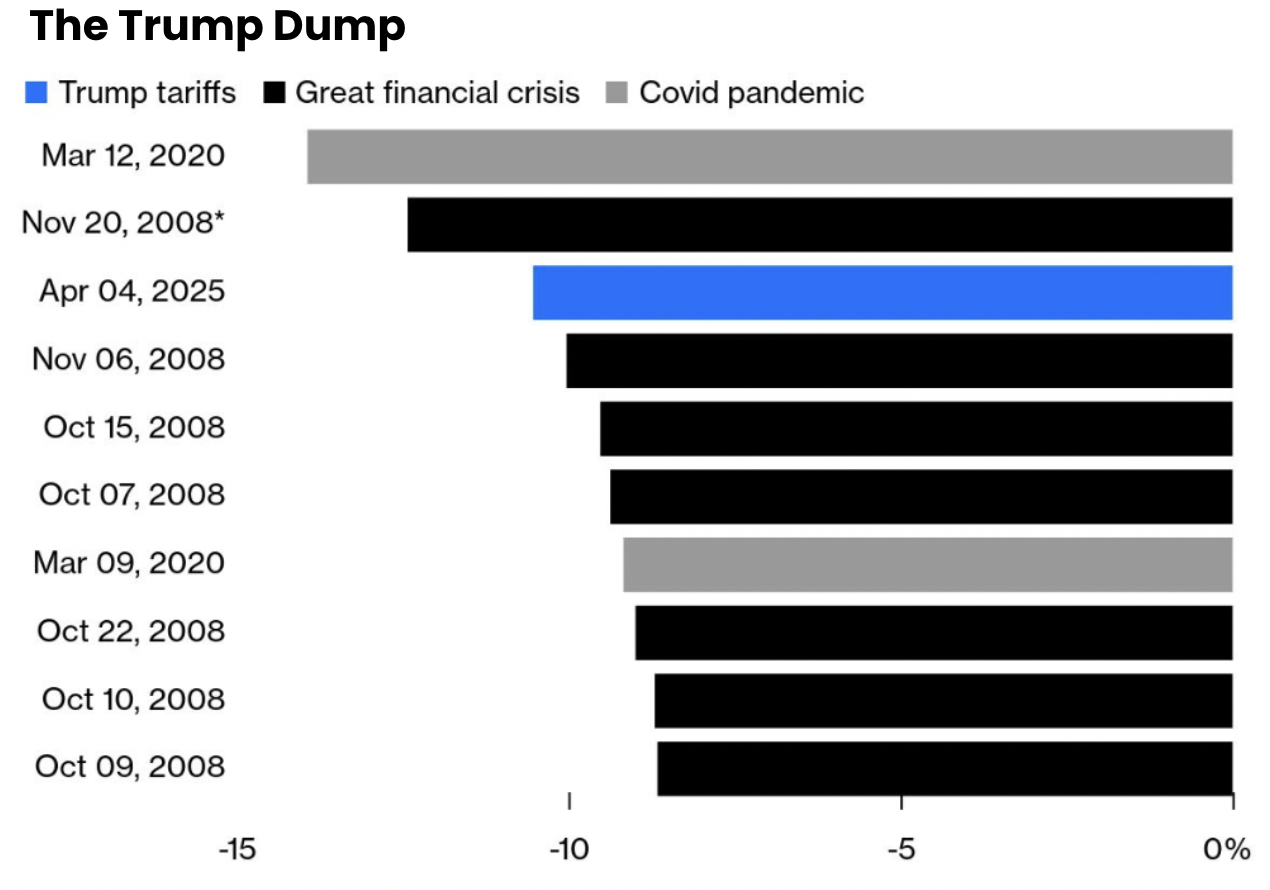
It's official... the stock market is now 'on sale'. Panic selling has set in with the VIX trading above 45 - something we have only seen 7 times over the past 25 years. For those who resisted chasing extreme valuations the past 12 months - your patience has been rewarded. Valuations have come down. In turn, the longer-term risk reward is now more attractive than what it was only a couple of months ago. But these are rare times. For e.g., it was the only third time this decade that the S&P 500 shed more than 10% in two days.

The Tariff Trap: Navigating Market Uncertainty and the Folly of Forecasting The Tariff Trap: Navigating Market Uncertainty and the Folly of Forecasting

The Tariff Trap: Navigating Market Uncertainty and the Folly of Forecasting

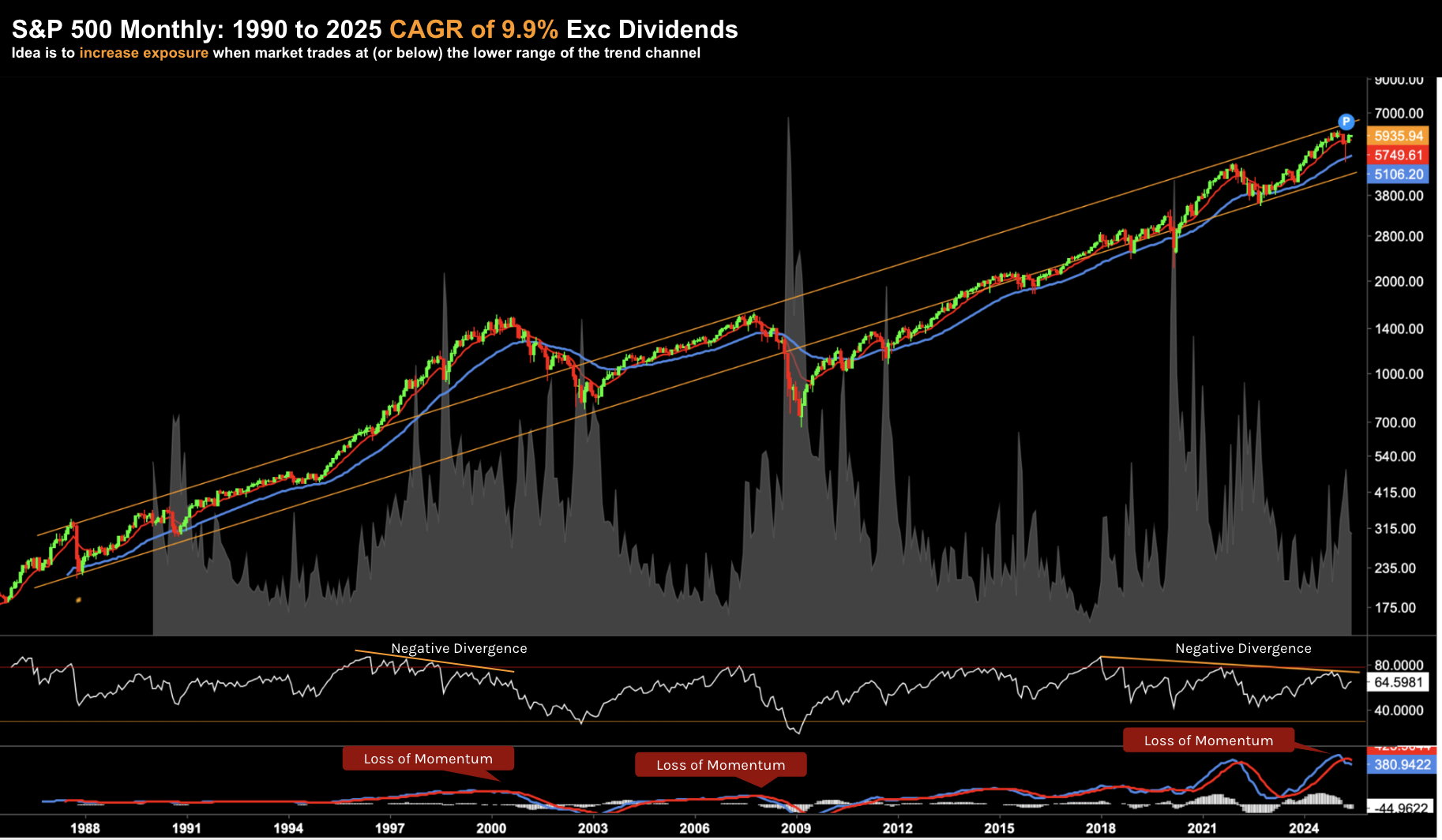
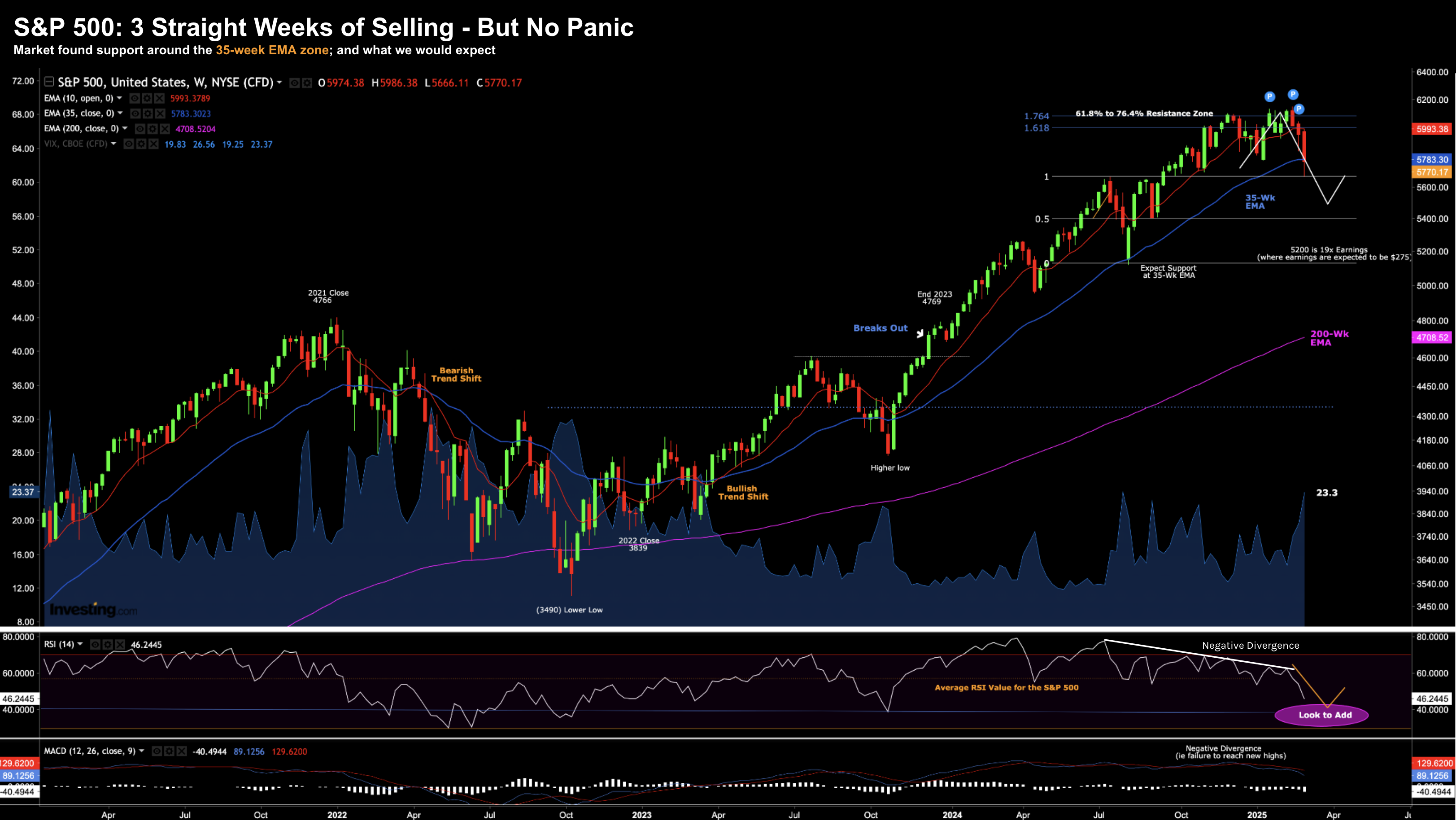
Approx 2 months ago - it felt like markets were starting to hedge their bets. How could I tell? Whilst the market was trading near record highs (around 6100) - momentum was fading. I commented on both the weekly MACD and RSI falling - whilst prices remained high. Technicians call this "negative divergence". Quite often it suggests prices are at greater risk of easing. Since then they've dropped ~6%. The week ending March 7th was the worst week for the year and the third straight week of losses... more to come? I think so...

The Anatomy of a Growth Scare: How Tariffs, Tightening, and Inflation Impact Markets The Anatomy of a Growth Scare: How Tariffs, Tightening, and Inflation Impact Markets

The Anatomy of a Growth Scare: How Tariffs, Tightening, and Inflation Impact Markets

We started this year with the market pricing in only "good things". We had (a) the Fed ready to continue its easing cycle; (b) business friendly administration looking to cut taxes and lower regulation; and (c) the promise 'limitless' returns from AI. Investor expectations were very high - evidenced by the valuation multiples they were willing to pay (whether it was P/E; P/FCF; EV/EBIT etc). Traders were all leaning to one side of the boat. However, shares prices have lost all momentum the past 12+ weeks.

Zero Sum Game

Trump's favorite word in the dictionary is "tariff". In his view, it just needs a little public relations (PR) help. I don't know about that. Personally, I'm not a fan of tariffs. Over the long-run, history has shown they do more harm to the economy vs help. Better PR won't change that. However, in the very near-term (24-36 months) - they can be seen to add jobs and create benefits for the protected industry(s). From that lens, people are mistaken to believe they're working (as that's what's visible). But what about the unseen? To help explain, I'll draw on the timeless work of Adam Smith. The protectionist policies of today are not only reminiscent of those in the seventeenth and eighteenth centuries -- but are arguably worse in their complexity and scale.

Tariffs: More than Just Trade Imbalances

Since Trump's election win - it's clear he's willing to use access to (lucrative) U.S. markets as leverage to achieve broader objectives. And major trading partners are taking notice. For e.g., the ECB's Chief - Christine Lagarde - has suggested European countries should look at how to avoid (new) tariffs by buying more US made goods. And South Korea is looking at buying more US based LNG. What's clear is any potential tariffs are becoming an integral part of a larger strategy to reorient global trade relations around issues such as greater security, immigration and health priorities. That is, they're not exclusively aimed at reducing economic imbalances.