Category US 10-Year Yield

Wall Street Sounds the Alarm… 

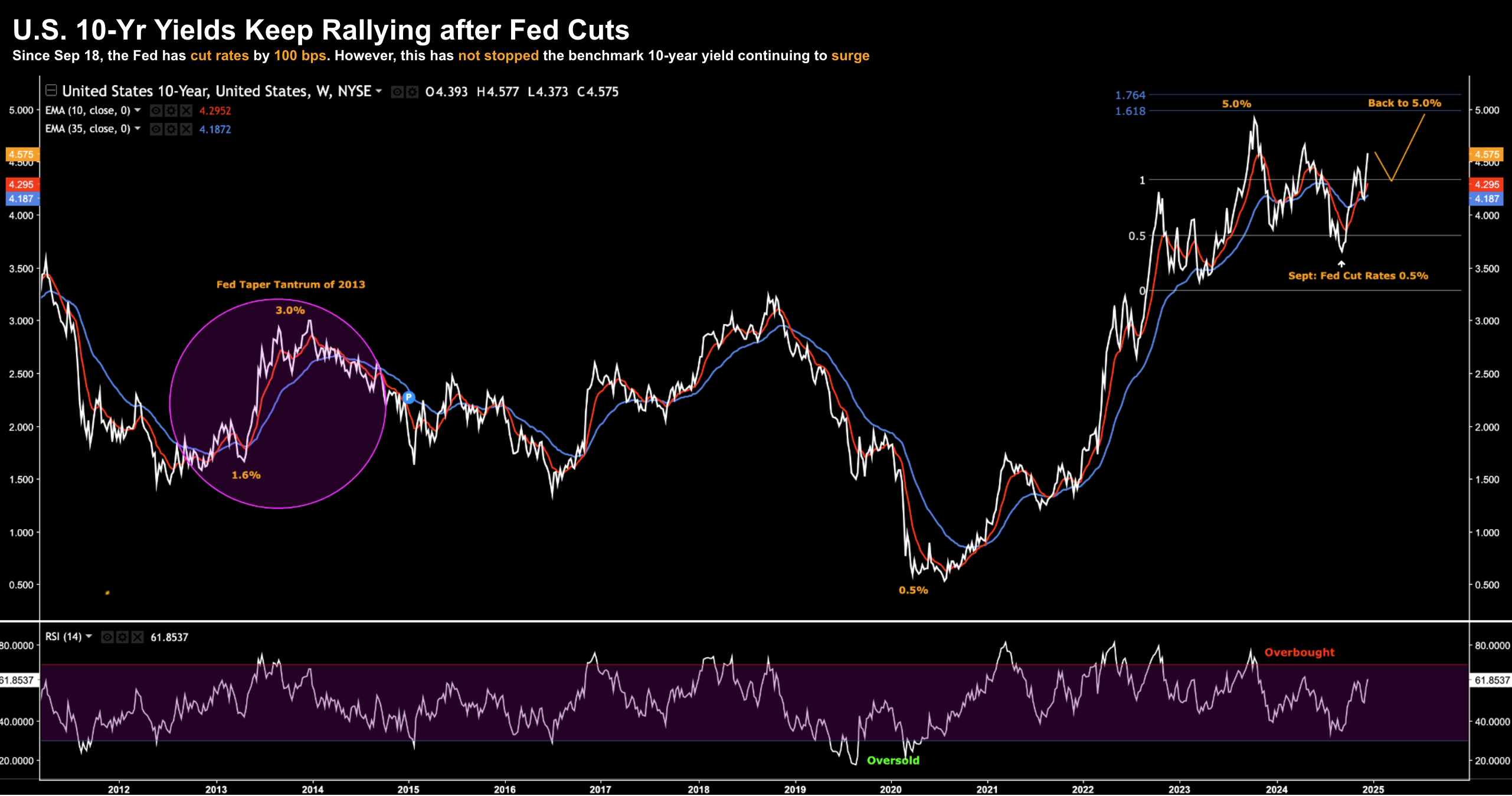
It would not surprise me to see the market give back 10–15% over the coming weeks and months. Valuations are very full and the economic data is weakening. But something to watch is the bull-steepening of the 10-yr / 3-mth yield curve from inversions. Whilst not a great timing too - generally its 'vector' is correct. That's a warning - despite the Fed cutting rates.
Don’t Choke On Your TACOs

The market is betting Trump is all bluster and no action. The acronym "Trump Always Chickens Out" (TACO) is sure to piss the President off. Now, if the TACO trade is right, then Trump's threats will lose their power as a negotiating tactic. Therefore, on the assumption Trump believes in protectionism - he may have to follow through on some of his rhetoric. Markets seem to think that won't happen...

Equity Risk Premium Isn’t There

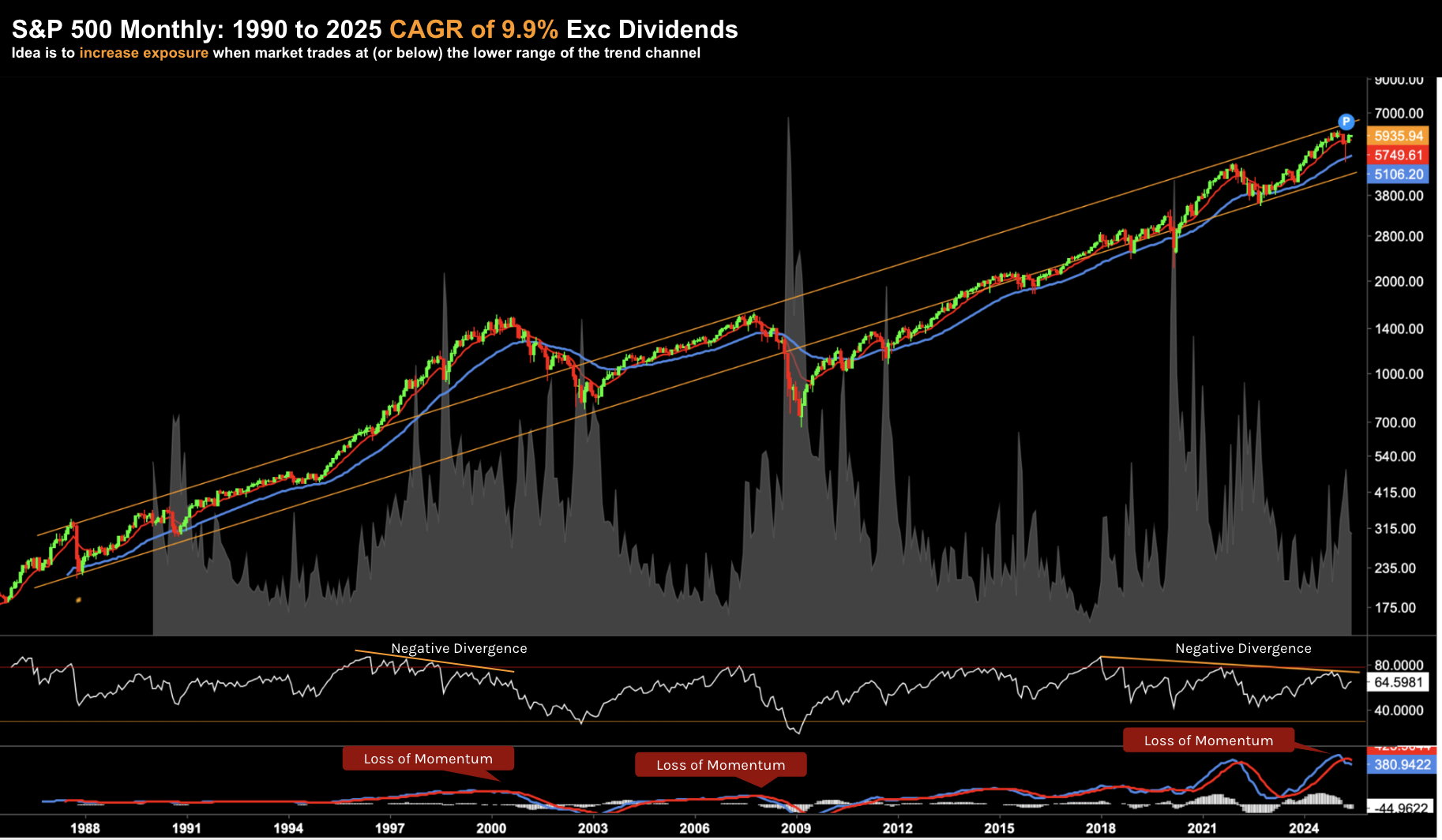
The S&P continues its impressive six week rally - up over 22% from its early April low of 4,835. At 5,916 - this represents a forward price to earnings (PE) ratio of ~22x - with earnings per share (EPS) expected to be ~ $270 this year. If we take the inverse of 22x - that gives us the market's earnings yield; i.e., 4.56%. The question whether 4.56% represents a good risk/reward? There's an easy way to answer that... let's explore.

Are We Closer to a Market Bottom?

It's very difficult to know if we're at or close to a market bottom. They rarely occur over the space of weeks - it generally takes months. But I cannot predict when (or what) the bottom will be. However, I think the ~20% correction from the market high (6147) to the low (4834) tells me a large portion of the selling is behind us. For example, we're now starting to see equity exposure significantly reduced and cash levels raised. This is a good sign... as there are a lot less people to sell.

The Key to Growth: Business Investment

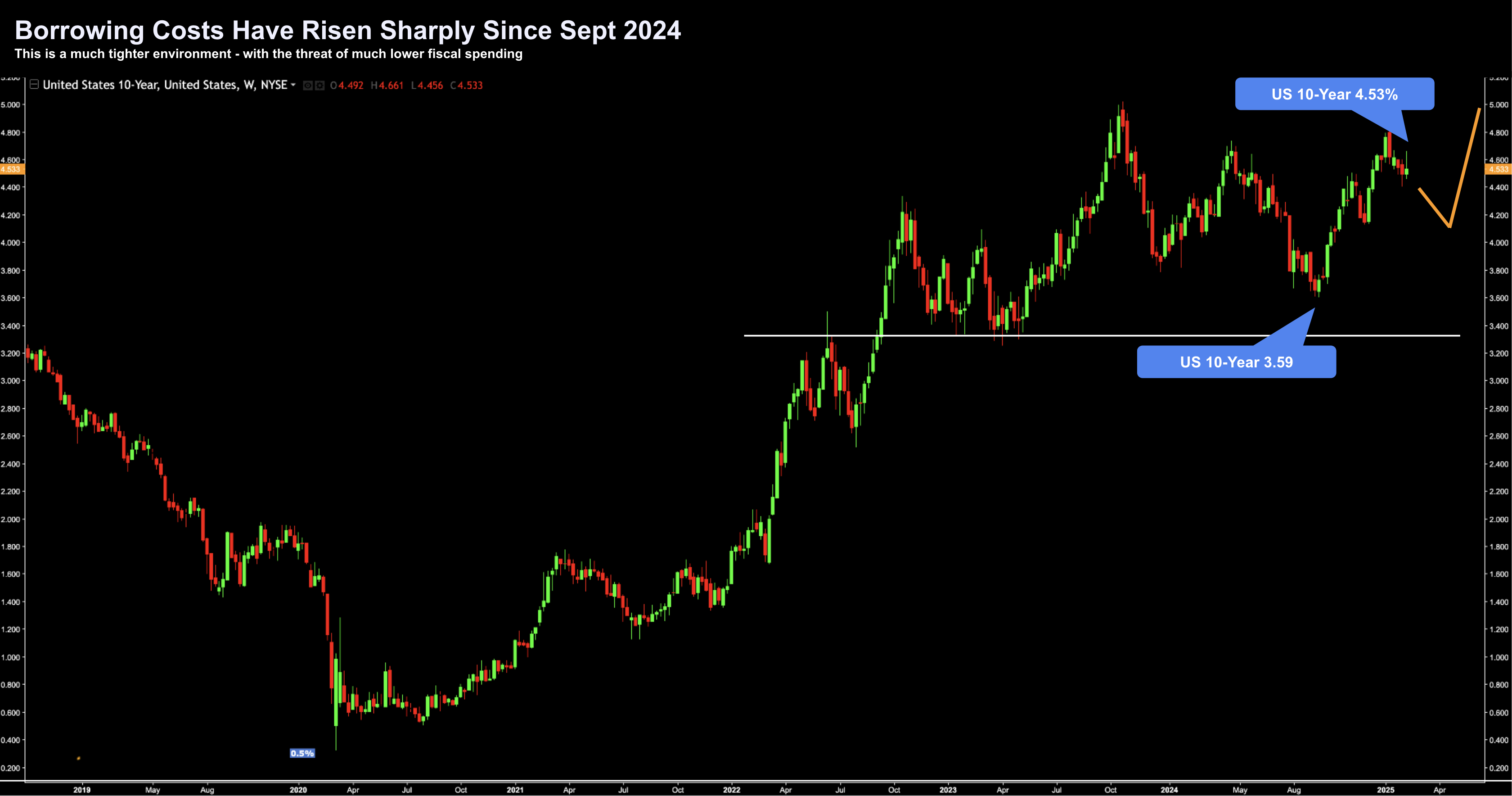
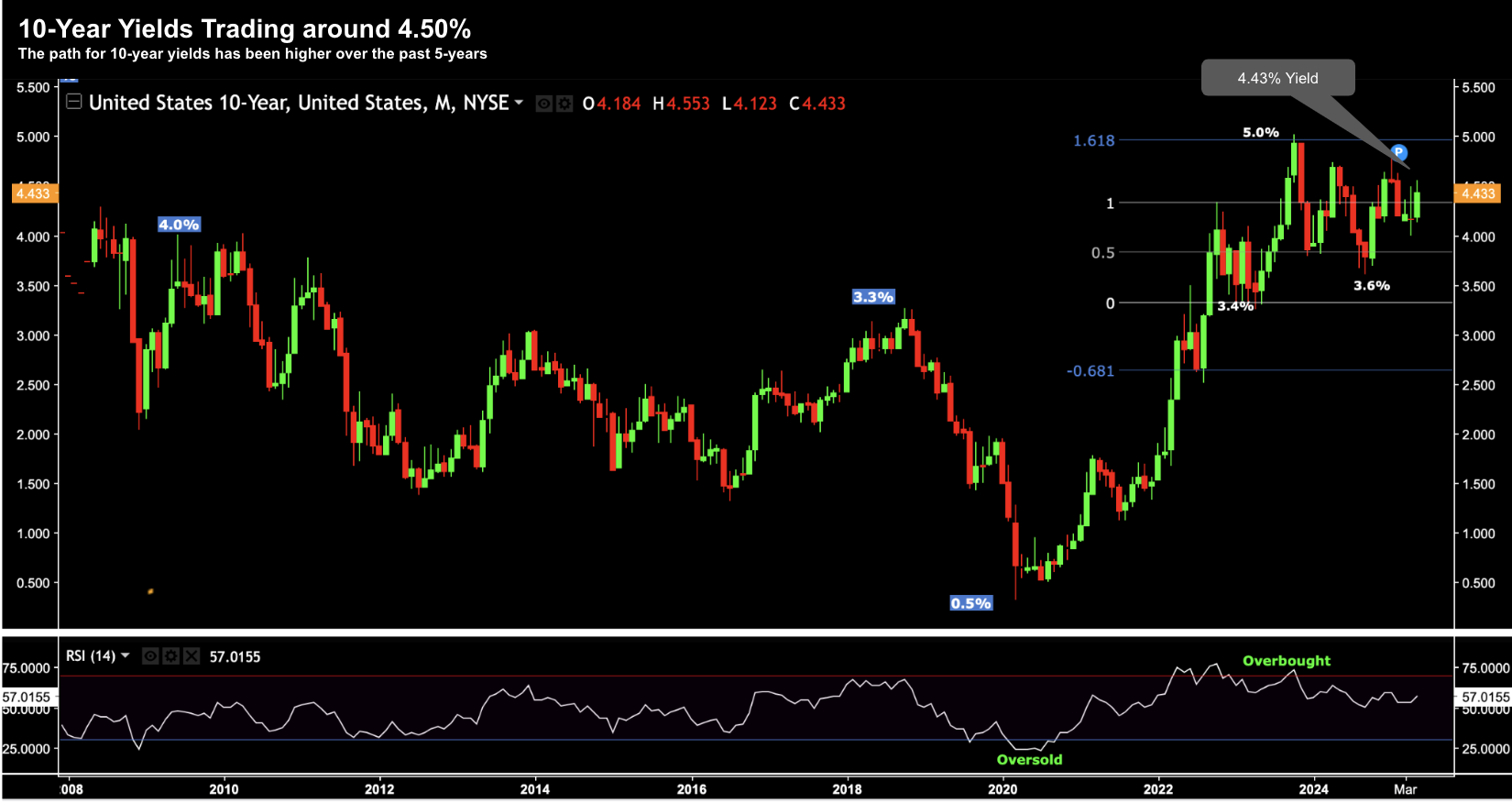
With 10-year yields trading around 4.50% (with the possibility to go higher) - why haven't equities sharply corrected? It's a good question. For e.g., on the surface, one might think equities would struggle given the zero risk premium investors are receiving. But that has not been the case. The stock market has withstood the sharp rise in bond yields (for now anyway). However, I believe there is a simple explanation. It's the amount of liquidity in the system. Liquidity is abundant - evidenced by the very low credit spreads in the market (participants see very little risk). Generally credit spreads widening are your first sign of trouble.

Ready for a ‘Growth Scare’?

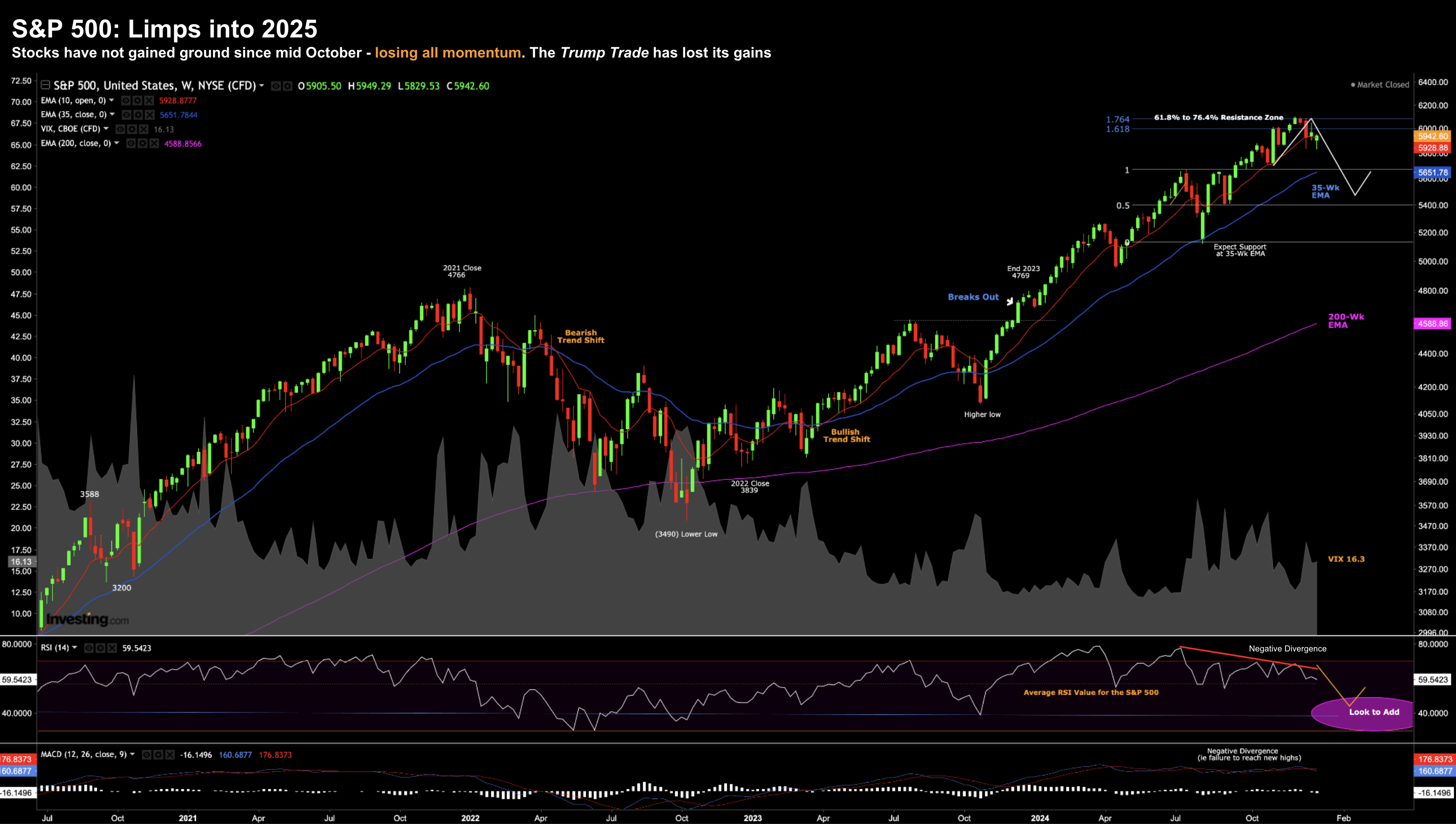
We started this year with the market pricing in only "good things". We had (a) the Fed ready to continue its easing cycle; (b) business friendly administration looking to cut taxes and lower regulation; and (c) the promise 'limitless' returns from AI. Investor expectations were very high - evidenced by the valuation multiples they were willing to pay (whether it was P/E; P/FCF; EV/EBIT etc). Traders were all leaning to one side of the boat. However, shares prices have lost all momentum the past 12+ weeks.

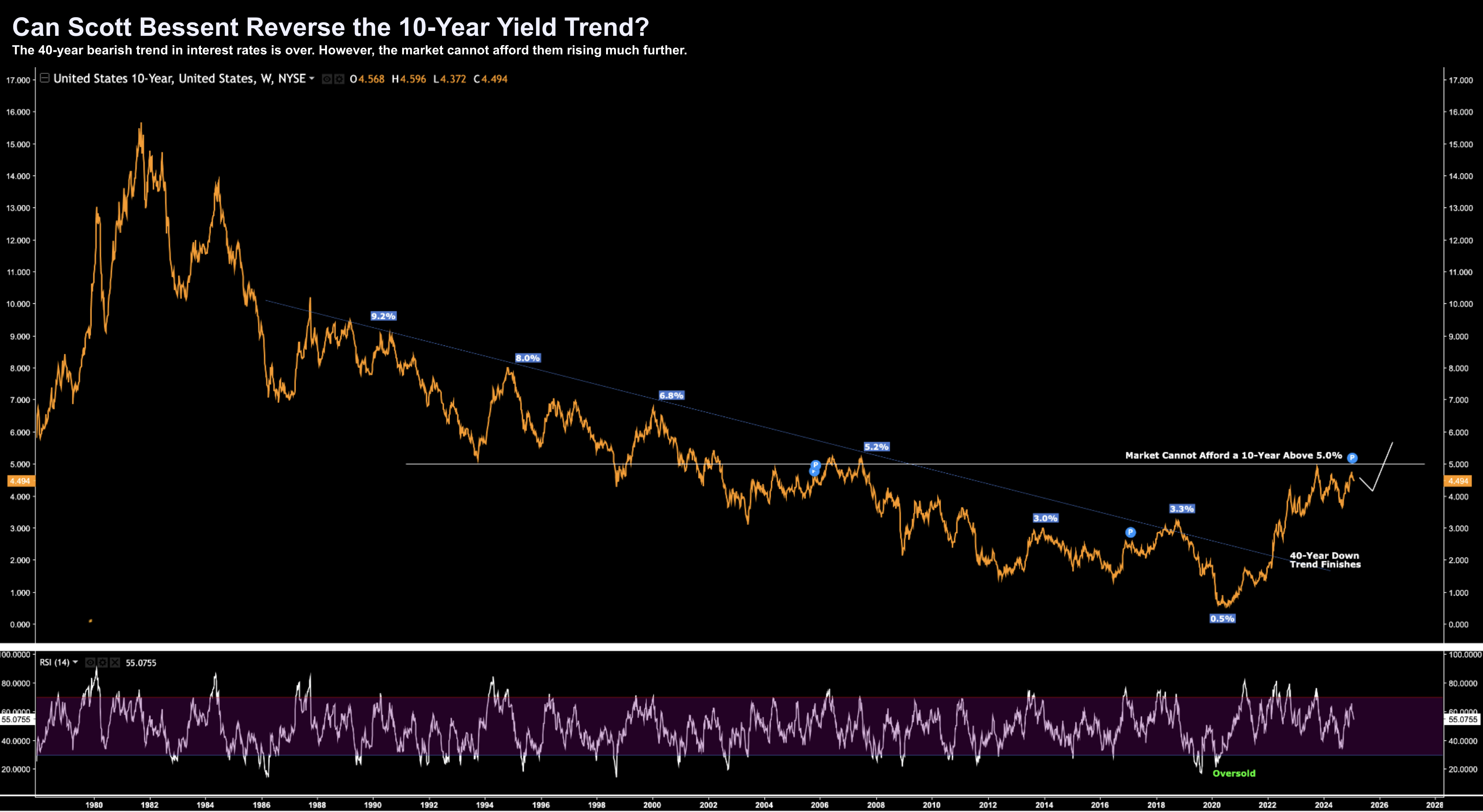
Bessent Wants a Lower 10-Yr Yield… But How?

The new US Treasury Secretary - Scott Bessent - is focused on the right goal. He wants a lower US 10-year yield. The former Hedge Fund manager knows how important a lower US 10-year treasury is to the growth of the economy (and the government). His direct language reflects a reality - as most people don't borrow at the short end (i.e., the rate set by the Fed)

And The New Year Begins… Slowly

The trading year for 2025 is under way. Markets have worked their way through the so-called Santa Clause Rally. For those less familiar - this refers to a period of trading between the last five trading days of December and the first two trading days of January. This year Santa delivered a fat lump of coal. The market lost ground. So what does that mean for 2025? Absolutely nothing! Don't read anything into it! What's more important is Q4 earnings season... and how company's perform.

End of 20-Year Cheap Money Era

Equities were seemingly caught off balance with the Fed's 'surprise hawkish shift'. From mine - there was very little surprising about it - you only needed to look at the data. However, what I was more interested in was how Powell would explain why they were cutting rates. As it turns out he struggled - leading to a small sell off in stocks. The irony was Powell did a better job of explaining why rates should not be lowered (which is obviously at odds with their decision to cut).

The Trump Trade Stalls

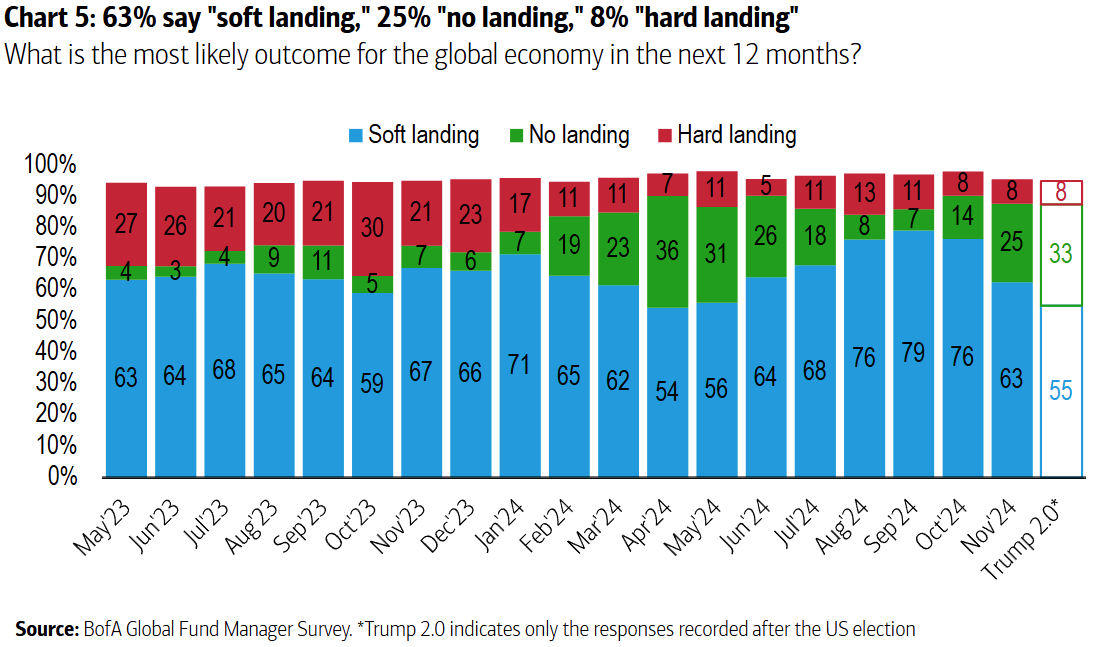
Last week when assessing the surge in markets - I offered examples of how market (sector) dynamics shifted. Adding to that theme - I was not overly surprised to read how institutional investors are putting money to work. For example, Bank of America Corp.’s monthly survey of global fund managers indicates that Trump's decisive win is perceived as a potential turning point for investment strategies. And whilst that could be true - it pays to look at history... what can we gauge from Trump 1.0 (and the impact on markets).