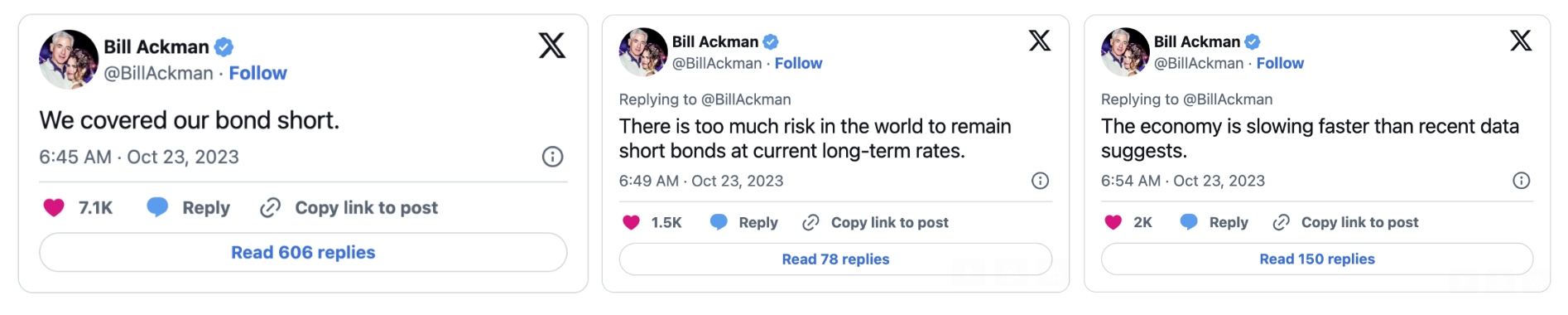
Did Ackman Just ‘Ring the Bell’ on Bond Yields?

Over the weekend - I made the case for investing in fixed income. I think there's a compelling longer-term opportunity for investors - where fixed income warrants exposure in your portfolio. Turns out, it may not be just me thinking this way. For example, last week I referenced Howard Marks' latest memo. He explained how some are offering equity-like returns for investors (e.g., above 8% for non-investment grade debt). What's more, Warren Buffett said he was increasing his exposure to bonds (at the short and long-end) a couple of months ago. Today billionaire investors Bill Ackman and Bill Gross were sounding the horn. Question: are we getting closer to a near-term peak in long-term yields?
Investors Start Weighing the Risks

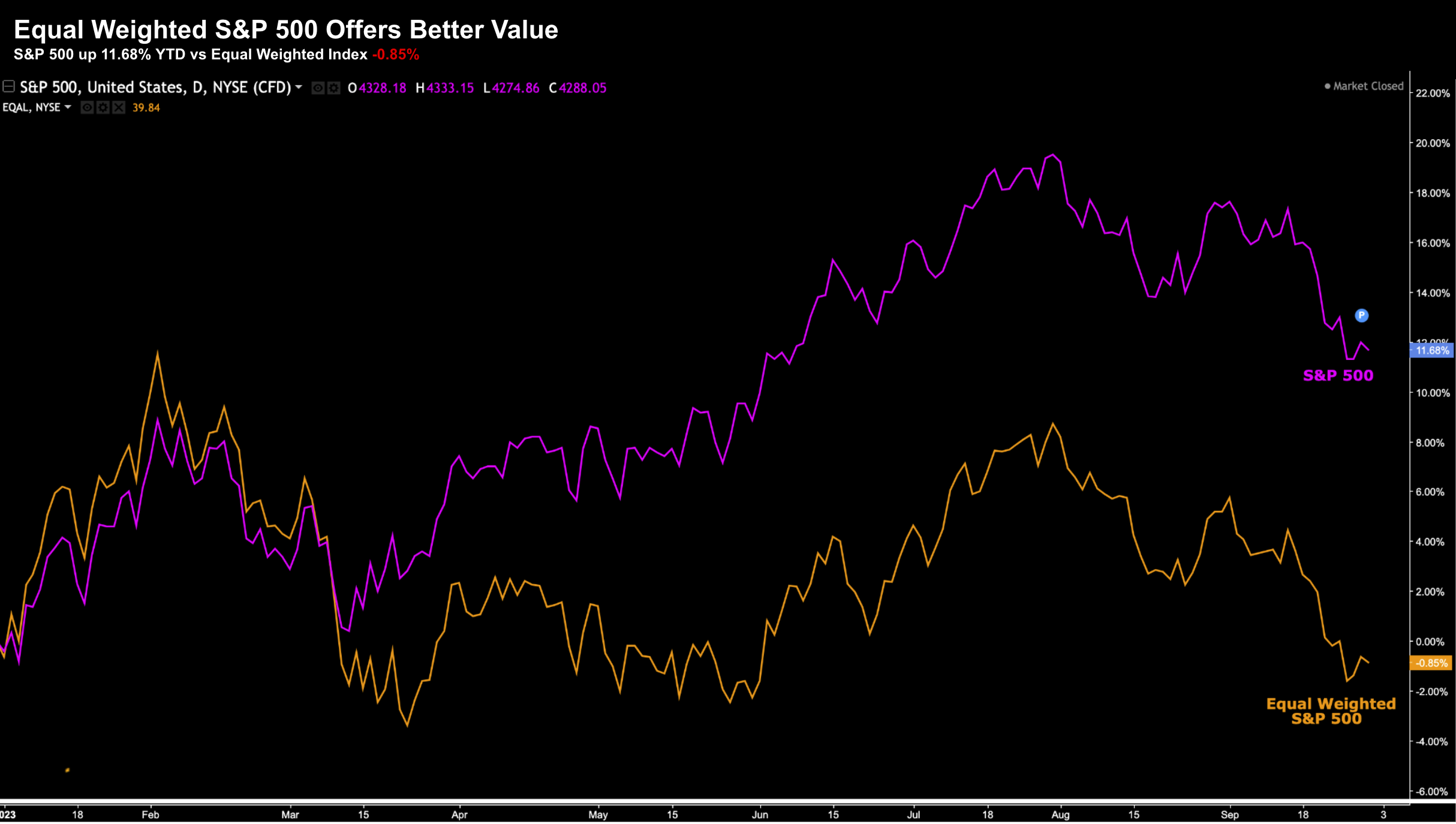
Investors have hit pause on equities - evaluating a new set of risks. For example, the S&P 500 is now trading close to the same level it was at the end of January. 8 months of gains gone! The world's largest index is up ~10% year to date... losing 2.4% this week. When you consider the S&P 500 lost ~19% last year.... it has not been a good two years. This post looks at why the outlook has deteriorated with 4 key charts: (i) 10-year yield; (ii) 10-2 yield curve; (iii) VIX; and (iv) gold - which touched $2,000 this week. What does it all mean?

Why Powell Oscillates b/w Dovish & Hawkish

Is Powell dovish or hawkish? The answer is he is both. And it's intentional. Part of the Chairman is looking in the rear-view mirror (strong jobs, GSP growth, wage pressure and inflation); and part of him is looking ahead (weaker growth; falling jobs; lower inflation). He straddles both sides. But what she he pay more attention to? The answer is the latter - but he can't ignore the former. That said, I also think the Chair's choice of language was interesting. He believes above trend growth and strong jobs are what's causing inflationary pressure - maybe in part. But I will argue it's the lagging effect of monetary policy... when you increase money supply by 40% in just 2 years.

Rethinking Asset Allocation

Last week we were treated to another thought provoking memo from Howard Marks. Apart from Warren Buffett and Stan Druckenmiller - very few investment managers boast a better 40+ year record than Marks. These investing legends rarely speak. But when they do - pay close attention. Marks' note was follow-up to his previous memo titled "Sea Change". Here's the TL;DR: investors need to re-think their longer-term investment strategies. He is of the view the next decade (or more) won't be the same as the last. A rising tide is unlikely to lift all boats. However, this also brings meaningful new opportunities for double-digit returns. We just need to start looking in different 'pockets'.

Sticky Inflation Equals Sticky Rates

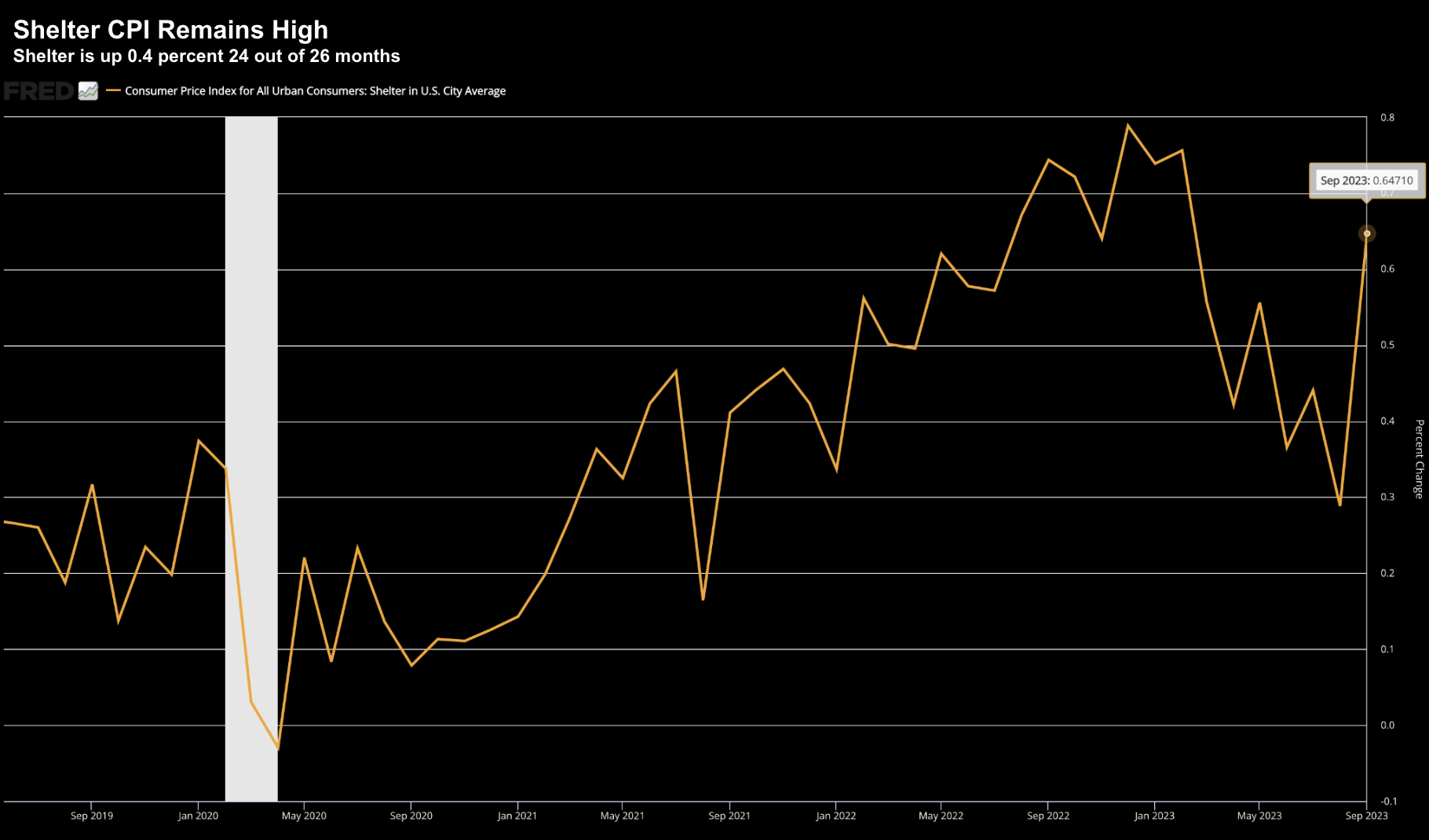
If we needed a reminder on how persistent some components of inflation are - we got it this week. Core consumer price inflation (CPI) remained more than double the Fed's target rate - with rents surging to 0.65% month-on-month. And whilst both headline and core were largely inline with expectations, inflation remains uncomfortably high. As soon as the CPI numbers hit the tape - probabilities of an additional 25 bps hike went up. Markets had not priced that in. What's more, the probabilities of rate cuts next year dropped. It's premature to conclude the Fed has hit their terminal rate...

One Case for Bond Yields Falling in 2024

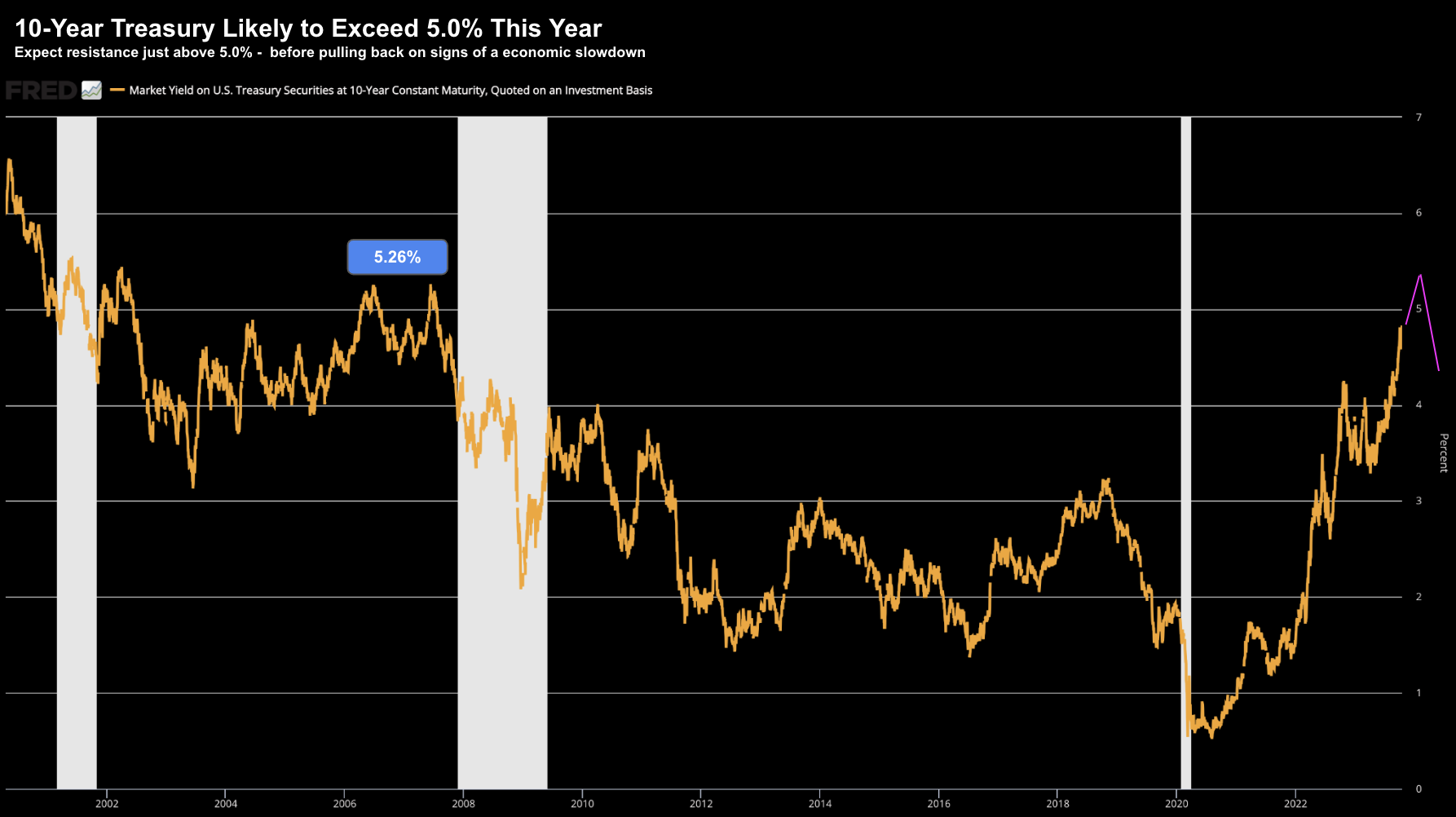
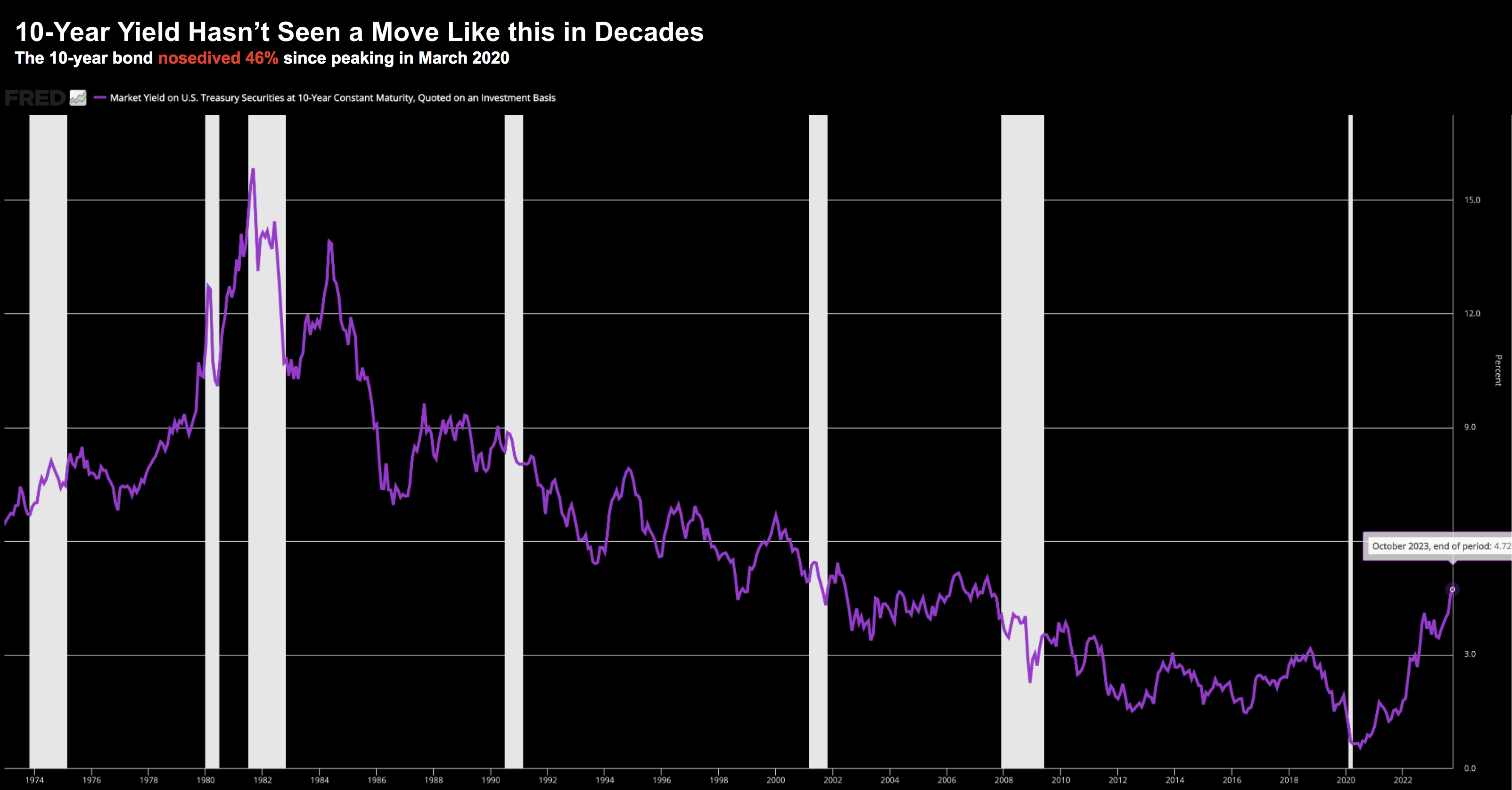
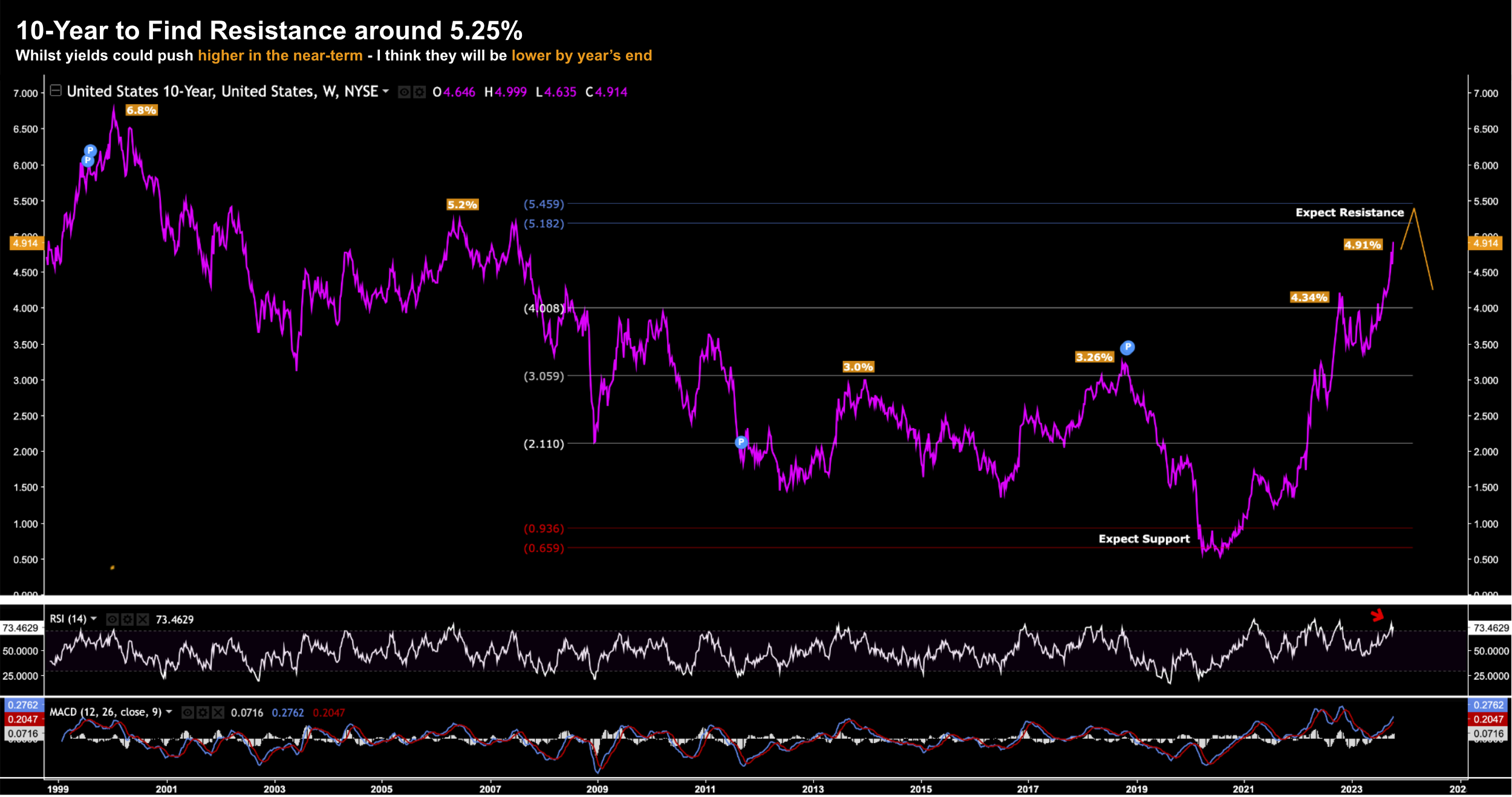
It's been a horrible 3-years for bond / fixed income investors. In short, they have been slaughtered as yields shot higher. For example, losses in long-maturity bonds (e.g. greater than 10 years in duration) are close to historical levels. Consider the all-important US 10-year treasury.... an asset which underpins every financial asset. It has plunged 46% since peaking in March 2020. Put another way, these yields went from ~0.5% at their lows to ~4.8% last week. What we've seen in the bond market is one of the most severe market crashes on record. 30-year bonds have plunged ~53%. As a parallel, the equity market crashed 57% during the 2007-09 financial crisis

Just How ‘Strong’ was the Sept. Jobs Report?

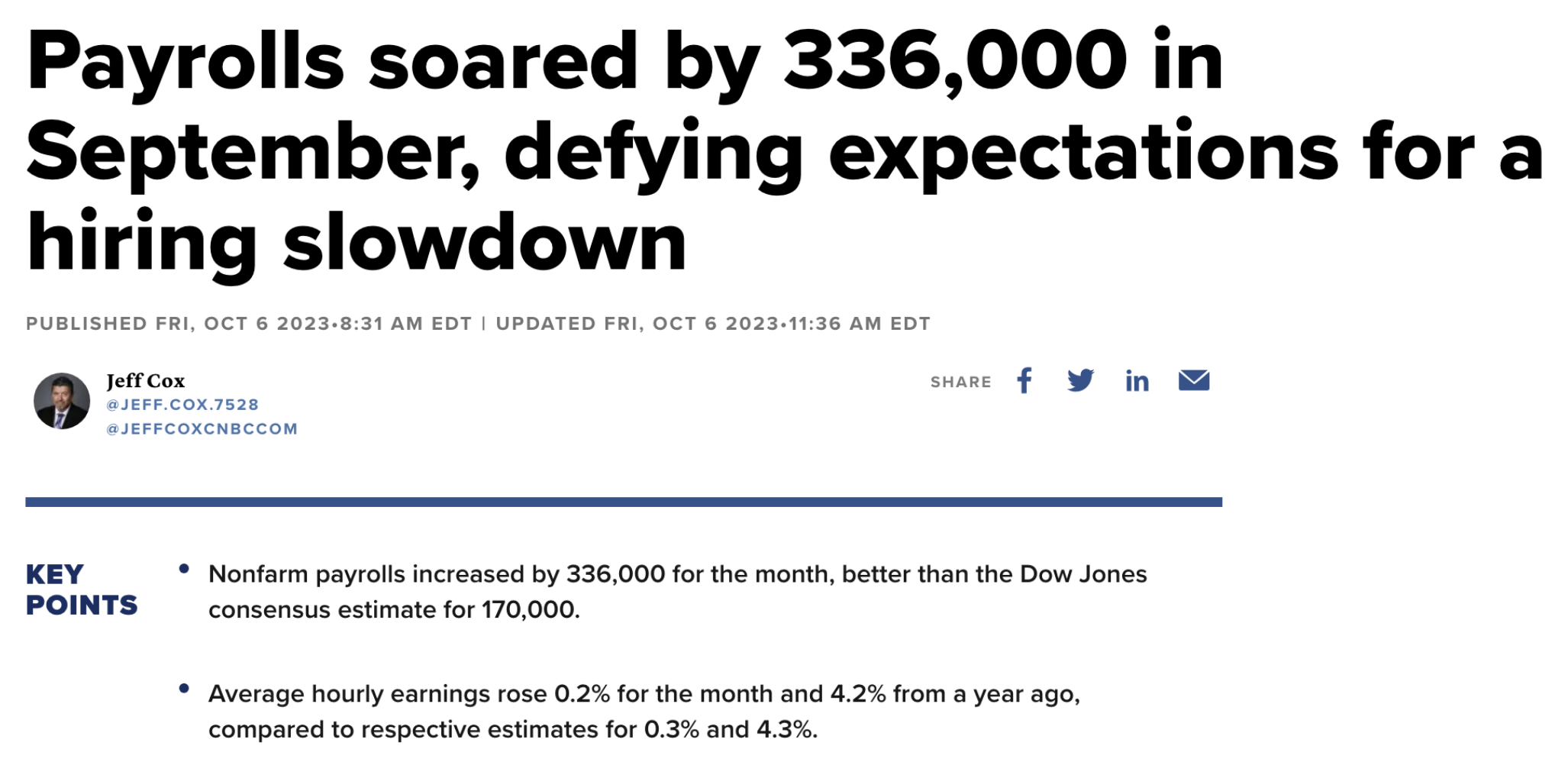
Never take a headline print at face value. There's always more to the story - where it pays to dive into the details. Digging below the surface takes some work - however it's worth doing. Last week was a great example. The BLS told us 336,000 jobs were added vs expectations of 160,000. Sounds strong? But was it? Not really. For example, since June 2023, full-time employment is lower by some 696,000 jobs

Not Just Equities Trading ‘Per the Script’

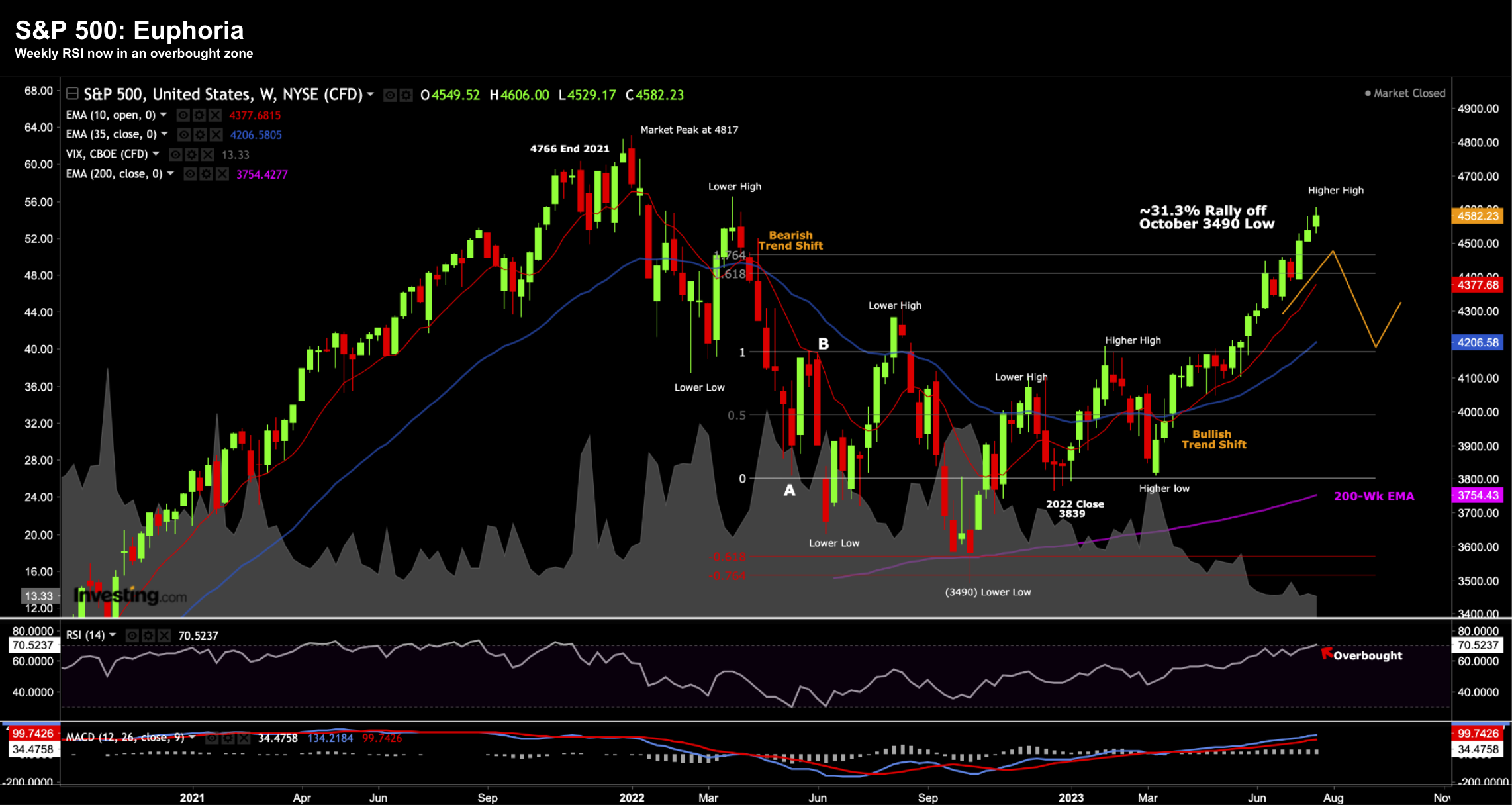
A little over 2 months ago - I described the market as "euphoric". For example, valuations were in excess of 20x forward earnings - despite what we saw in bond markets. Something was horribly wrong. My simple advice was do not add to positions at those levels. The downside risks were just too high. My thesis was whilst stocks could easily rally to ~4500 -- any further meaningful upside felt 'limited' . Turns out we didn't go too much higher. Now stocks could easily catch a bid in the 4200 zone - that's what I expect. However, the risk/reward still doesn't look that favourable...

Is it Still Going to be a “Soft Landing”?

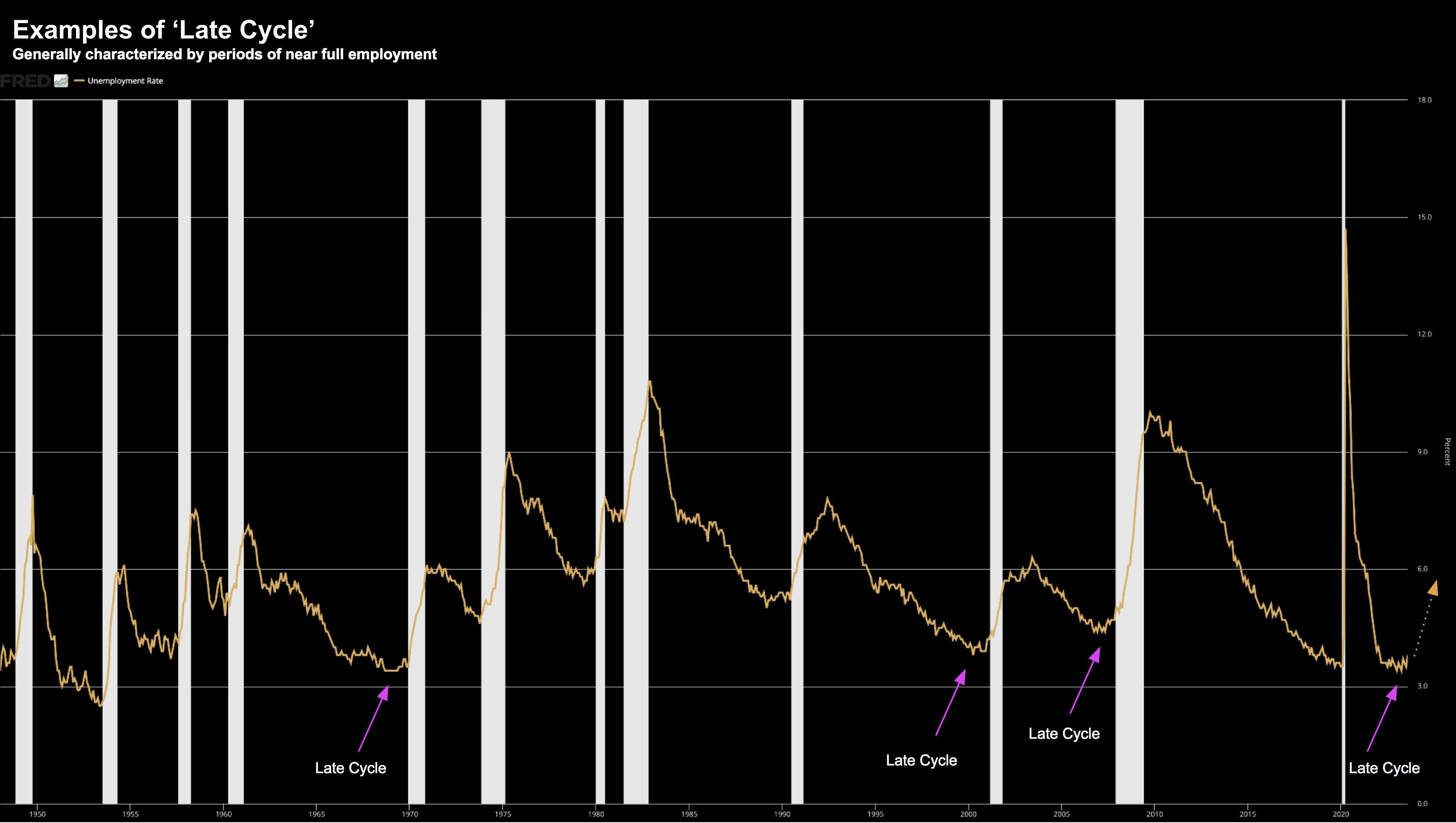
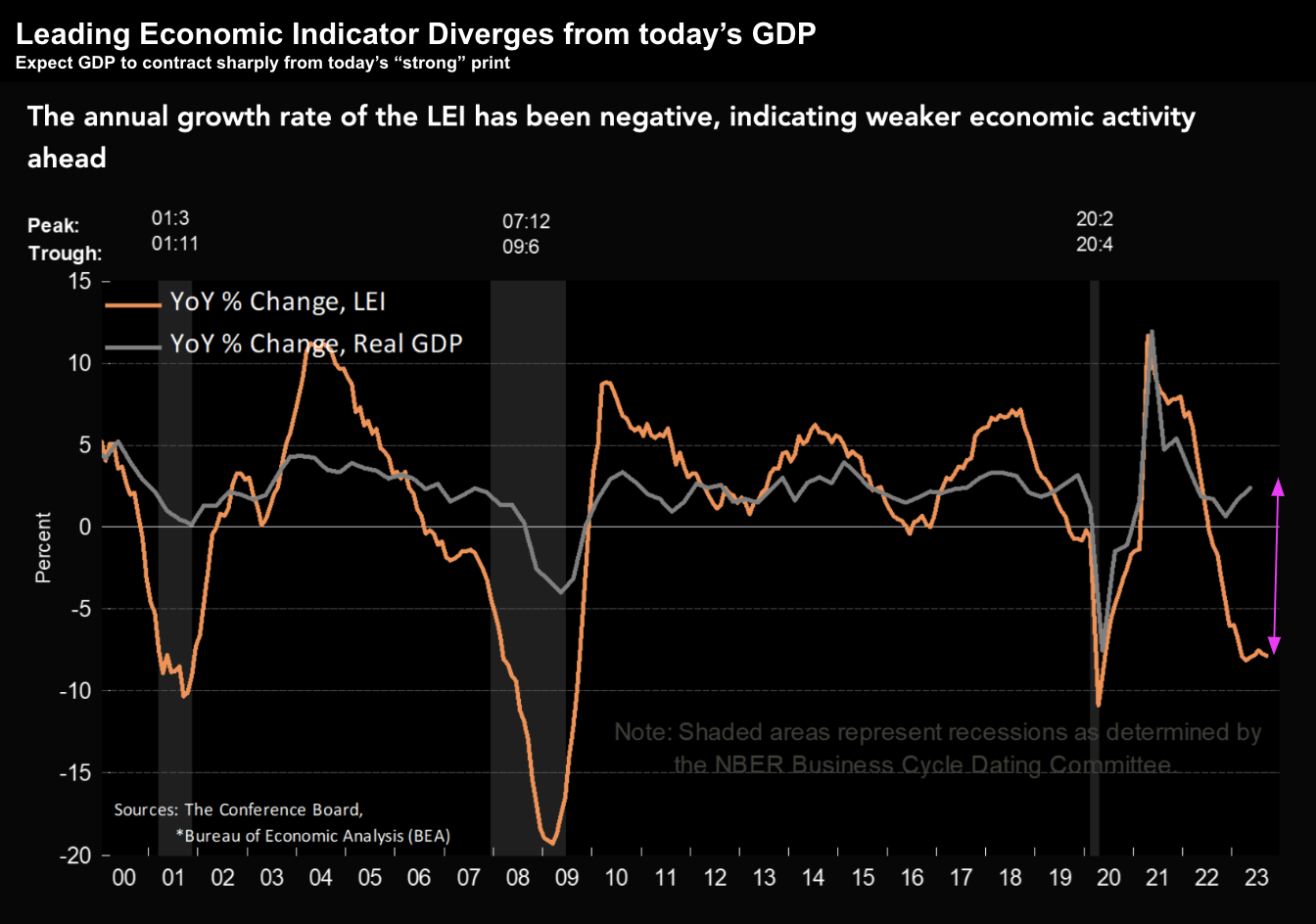
2023 has been one of the more difficult years to navigate. For example, if you chose the wrong stocks, sectors or simply decided to hide in cash - you didn't fare well. However, what's also made it hard has been the various shifts in sentiment the past ~9 months. These shifts have 'whipped' traders around. Today, with the US 10-year yield challenging almost 5.0% - the "R" word is back in the vernacular. Much of this can be explained by understanding where we are in the economic cycle... and today it's "late cycle". The challenge is navigating this phase is the most difficult of any... as it will often last longer than many expect.

September Didn’t Disappoint

Coming into September - I reminded readers it has the worst record of any calendar month. The Trader's Almanac tells us the S&P 500 has lost an average of 1% each September over the past 10 years. And over the prior 25 years - the average monthly returns are -0.67%. Dismal. This year, the S&P 500 gave back 4.9% for the month. But it wasn't just September - stocks hit the pause button after June. For the quarter, the Index surrendered 3.64%.The Nasdaq fared far worse - losing 4.12%. None of this should come as a surprise...

Bye Bye Sugar High

Are equities finally connecting the dots? Maybe. Whilst this has been a difficult market to trade - my sense was to approach with caution. From mine, there were too many open questions. For example, when the market was trading around 4600 - my sentiment was the downside risk outweighed any upside reward. We are now ~8% lower... closer to the zone of where I felt the S&P 500 could trade. In short, valuations were stretched. Put another way, the risk premium for owning stocks wasn't there. But markets pushed higher - taunting the Fed on their "higher for longer" script.

The Battle-lines are Drawn

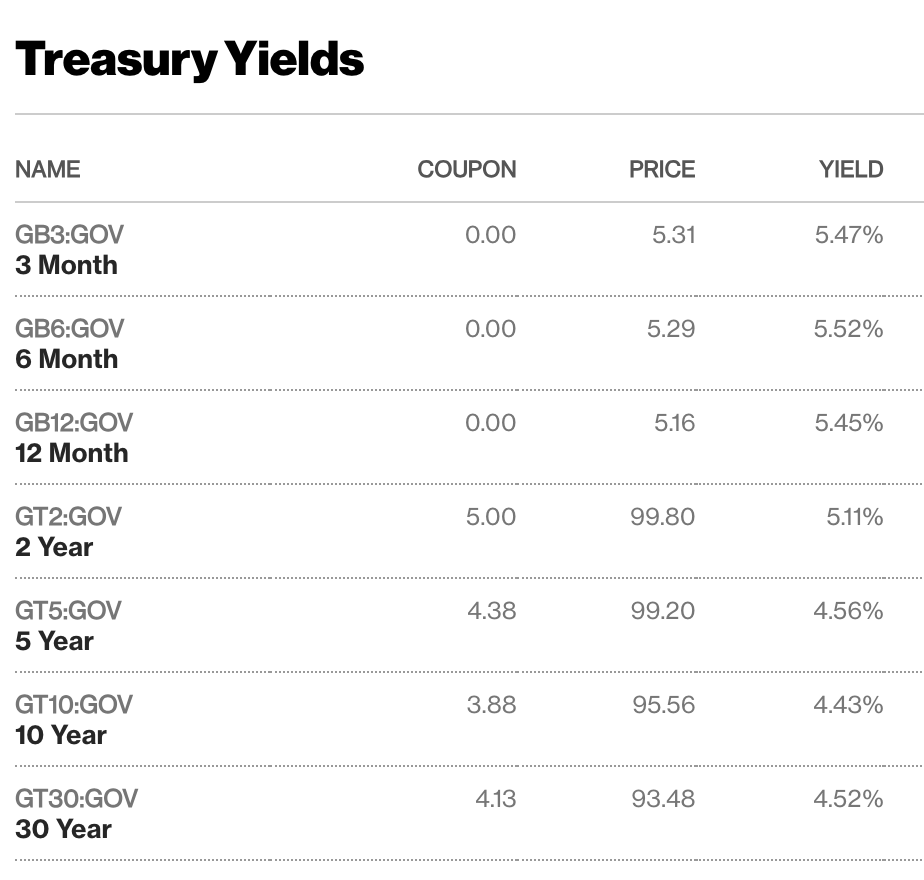
Here's today's question: do you think 18.3x forward earnings is a good risk/reward bet? For me, the answer is no. And I say this because investors have a very compelling alternative. We don't need to look any further than bond yields. For example, the 12-month US treasury yield offers investors 5.45%