adriant

adriant

Real PCE & Wages Trend: Consumers Keep Spending

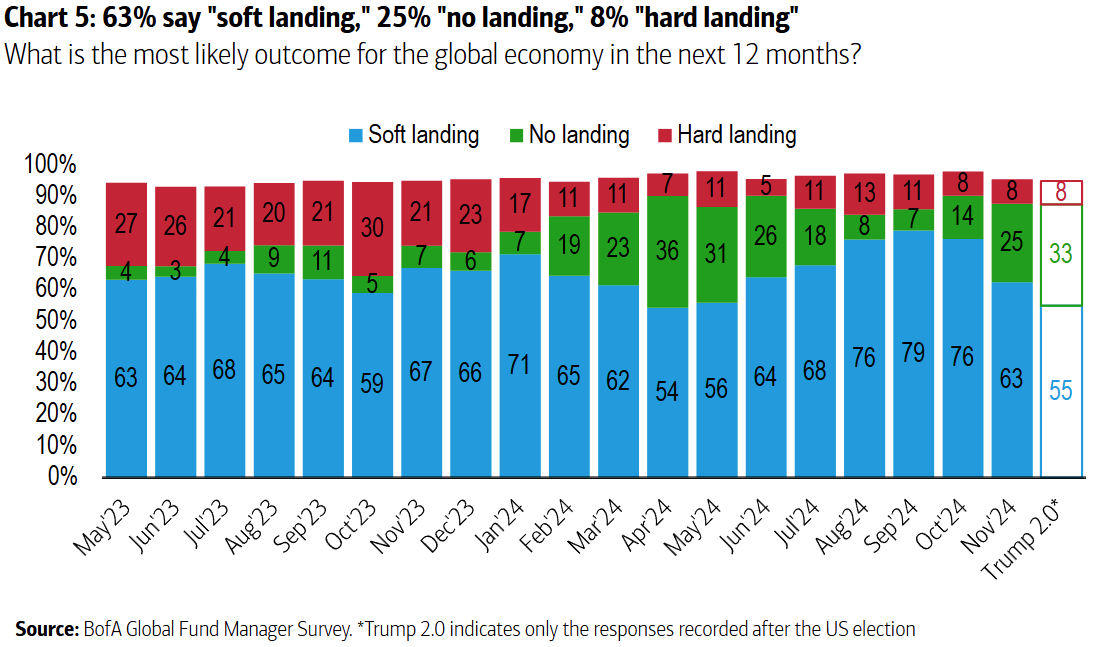
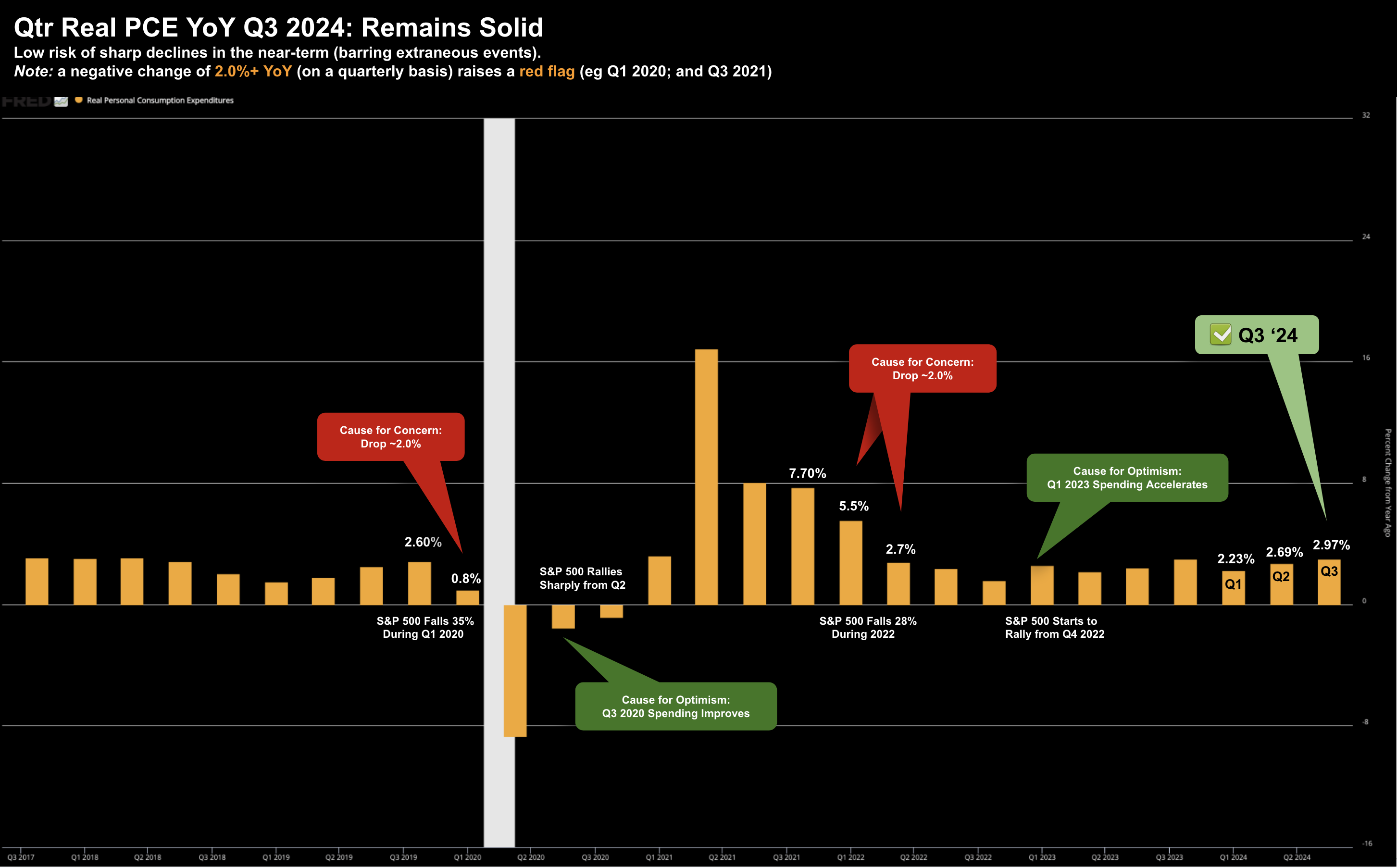
This week we received my preferred leading economic (and stock) indicator: real personal consumption expenditures (PCE). As a preface to this missive - as a long-term investor - our job is to carefully assess the risks. Part of that equation is knowing exactly where we are in the business cycle. For e.g., do you think we’re at the beginning or middle of an economic advance (with more to go)? Are we about to encounter a significant change in direction? If so, is that change for the better or for the worse?

Stocks Pause on ‘Less than Magnificent’ Earnings

October - synonymous for delivering market jolts - passed with barely a whimper. However, it was the market's first negative month since April. Are stocks losing their mojo? In short, large cap tech earnings from five of the 'Mag 7' were less than magnificent. Meta, Apple and Microsoft all dropped post earnings. Google managed a small 5% rise initially - but gave it all back. Amazon managed hold gains of ~3%. This post talk to what the market expects from the nearly $1 Trillion in AI capex... and how their patience could be starting to wane...

Decoding the Drop in Oil

Middle East tensions are rising. However, oil prices are dropping. Why? The Israeli missile attacks on Iran, while not entirely unforeseen, triggered a negative response in the oil market. Now this may seem curious... contrary to expectations of a price surge due to heightened geopolitical tensions, crude oil prices plunged ~5%. In short, market sentiment tends to prioritize economic supply and demand concerns over (short-term) geopolitical risks

Stocks Losing Momentum

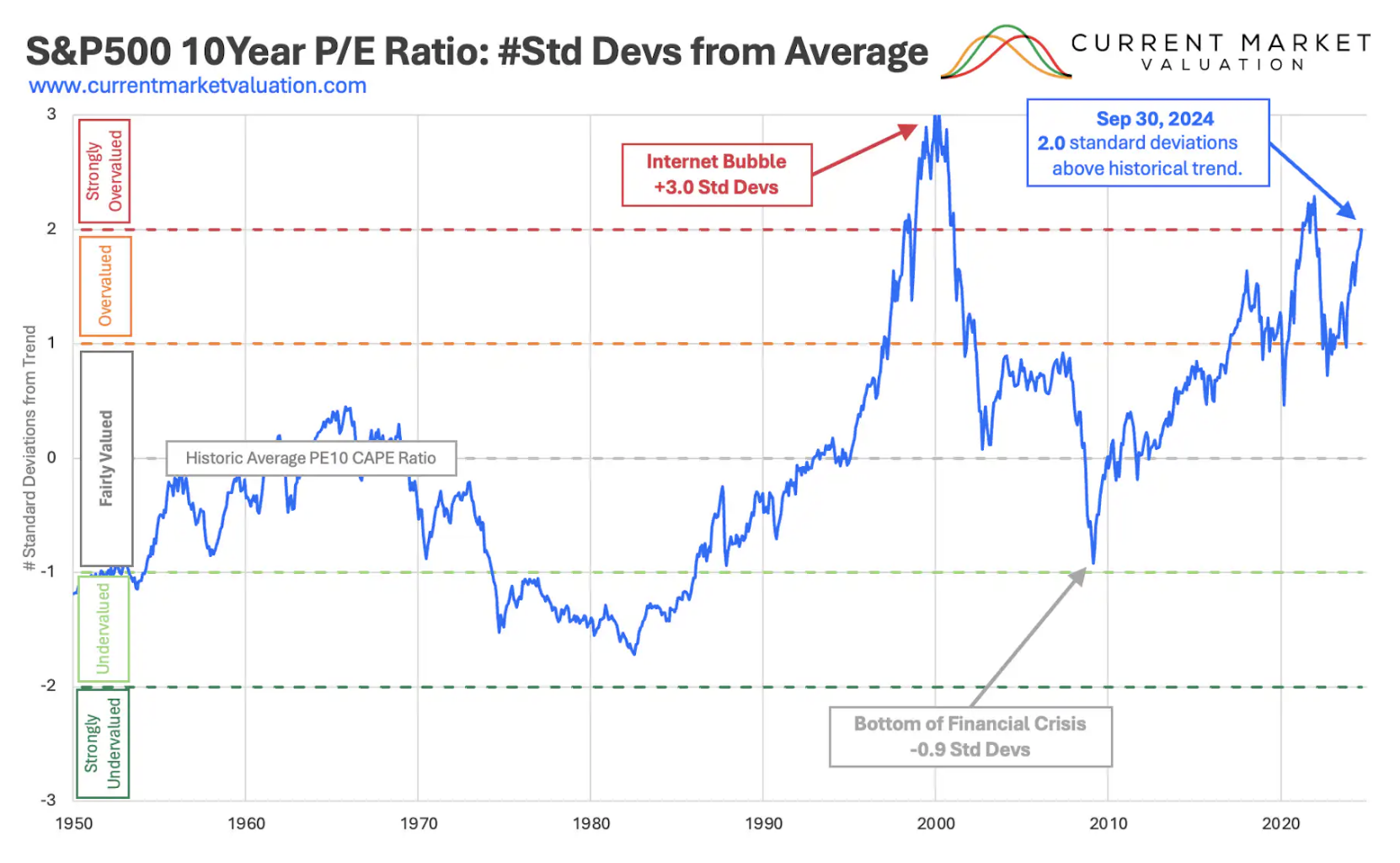
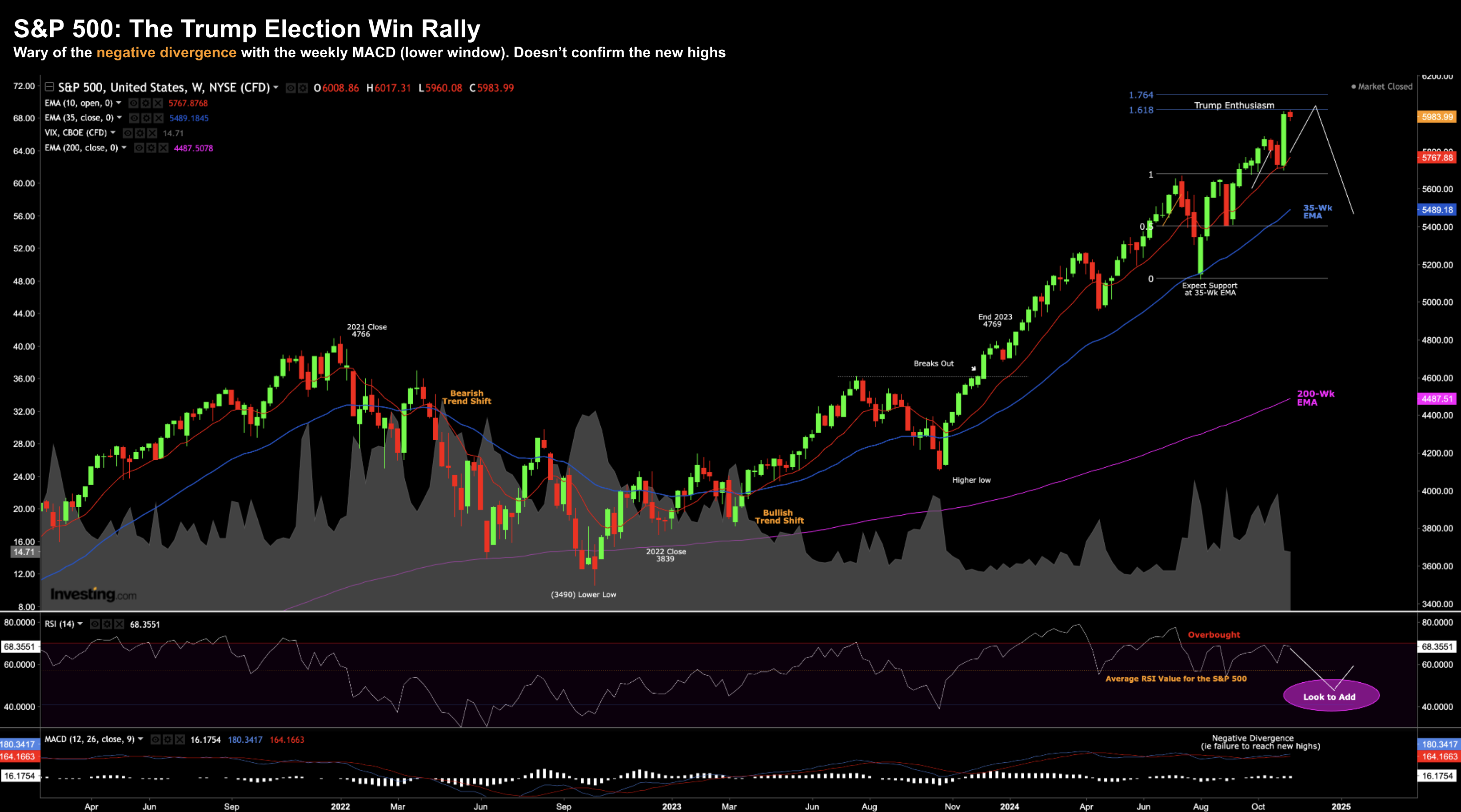
Are stocks starting to lose momentum? This week saw the S&P 500 reverse course - its first losing week since early September. Could there be more to come? My answer is yes - perhaps as much as 7-10%. However, it's a question of timing. Irrespective, paying 22x forward earnings is a higher-risk bet.

The Bond Vigilantes Strike Back

Several weeks ago I suggested investors consider reducing their exposure to 10-year treasuries. At the time, the world's most important debt security was yielding around 3.80%. They would continue to fall to a near-term low of 3.60%. In this case, the timing was good as these yields have rallied some 60 bps in turn crushing bond prices. For example, EDV and TLT have dropped more than 10%. So why are 10-year yields rising in the face of Fed cuts? There's a good reason: term premium. Bond owners demand a premium if owning the debt of a fiscally irresponsible government. And this has major implications for investors...

Why Buffett’s Mentor Would Reduce Risk

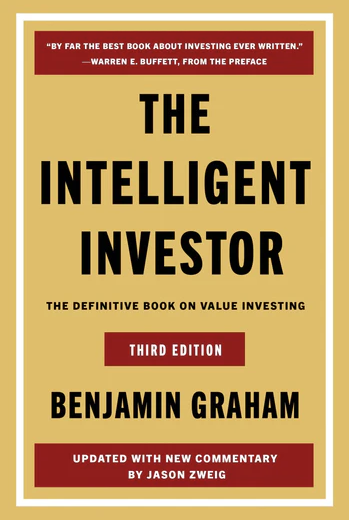
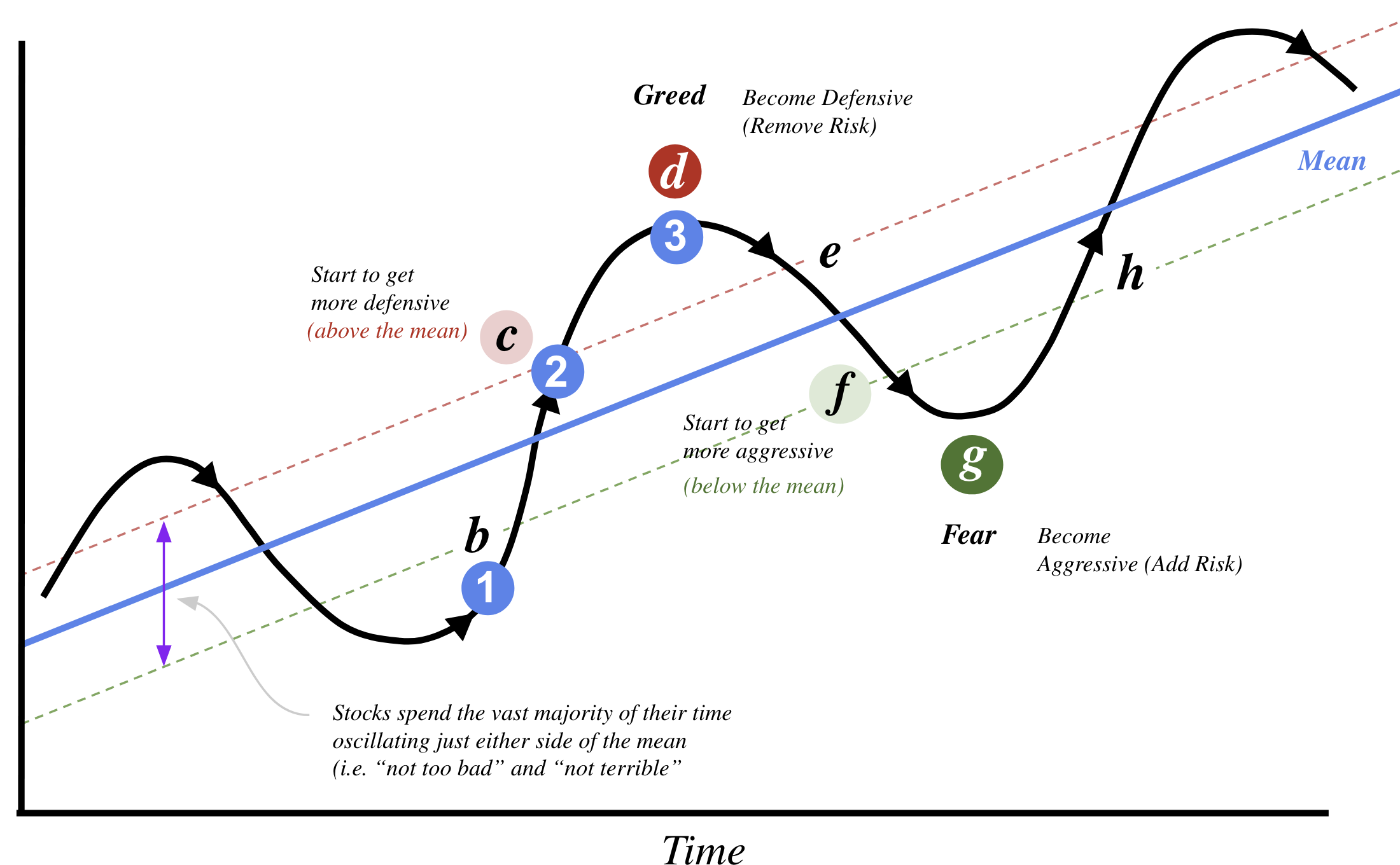
I've been re-reading "The Intelligent Investor" by Benjamin Graham. Warren Buffett called it "by far the best book on investing ever written" - crediting Graham with laying the foundation for his entire investment philosophy. The book taught me three powerful lessons: (1) above all else, investing is about protecting your capital; (2) investors should strive to pursue adequate and sustainable gains; and (3) it requires overcoming self-defeating behaviors (e.g., fear, greed and bias). The lessons could not be more timely given today's excessive valuations.

Not All Consumers Are Spending

Never underestimate the U.S. consumers want to spend. Well some of them at least. Last month's retail figures exceeded expectations - up 1.7% YoY in nominal terms (not adjusted for inflation). But here's the important point - these are nominal sales and only one month of data. One month is not overly helpful. When averaged over one quarter (which helps remove noise) - adjusted for inflation ( real terms) - and assessing the year-over-year change - growth is negative. And they have been negative in real terms for 9 straight quarters... this matters.

The Fiscal Tailwinds Helping Stocks

Will fewer rate cuts dampen the enthusiasm for stocks? It certainly hasn't to this point. And could higher bond yields impact stock valuations? So far the market is not bothered. These (and other) questions need to be weighed carefully with the S&P 500 trading ~21.5x forward earnings. And whilst the multiple is heavily skewed by the 'Mag 7' - 21.5x is far from cheap. What's more, from a historical perspective, paying a multiple above 20x offers investors a very low risk premium (e.g., with the risk free rate above 4.0%). But wait... what's to say stocks cannot rise further? We'll explore why they can...

The Inflation Puzzle: ‘Services’ Remain Sticky

In a perfect world, inflation should be boring. Boring is good. However, when you inject an additional $6+ Trillion into the economy with far fewer goods being produced, inflation becomes a story. Last month's inflation report showed headline (and core) CPI ticked higher. However, what caught my eye was "supercore" inflation - something the Fed says is a good predictor of future prices. Suerpcore is services inflation less shelter. This was up 4.4% YoY - also moving higher. The reason: pressures with wage growth - which remains around 4.7% YoY

Are Chinese Stocks ‘Investable’?

The recent rally of over 25% in Chinese was something we've not seen in over a decade. Beijing’s 'stimulus blitz' excited both institutional and retail investors alike. As context, China has struggled with deflationary pressures due to a prolonged real estate downturn and weakening domestic consumer confidence. In addition, a slew of economic data in recent months has missed expectations, raising worries the world’s second largest economy may not achieve its 5% full year growth target. The question is can the central government turn things around with more stimulus? I doubt it....