adriant

adriant

Weighing Risk(s) More Useful than Forecasting a Number

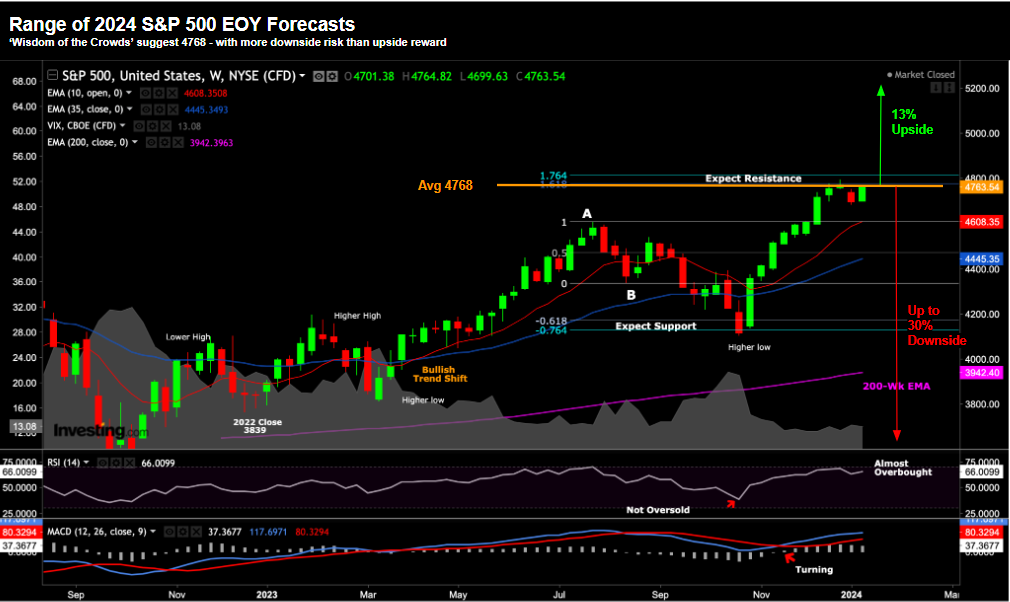
Around this time of year - a wrath of 'experts' forecast where they believe the S&P 500 will finish the year. For me it serves little purpose. For one, most of the time forecasts are typically wrong (and by a wide margin). Second, as time goes by, more information will come to hand which often changes our view. From there, forecasts should be updated. Third, there are almost always random events which reset the game. What happens to forecasts then? They are typically tossed out the window. With that, let's look at what the market "experts" believe we will see this year - and I will offer my approach.
Jobs Data: Choose Your Narrative

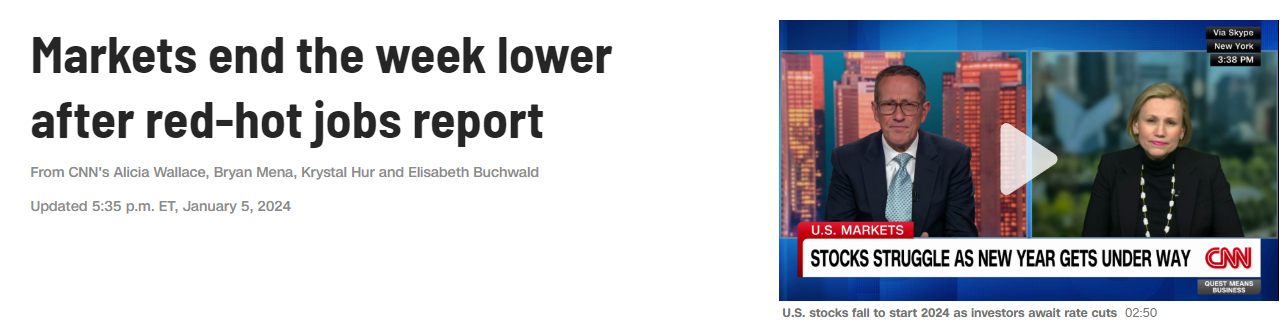
Today we learned that December added 216K jobs. CNN reported it as a "red hot" print. Was it? From mine, the headline number offers us very little. For example, what I want to know is the following (a) where are the jobs are being added (e.g. public vs private sector and what sectors); (b) what are people being paid per hour (is it rising or falling?); (c) are people working longer hours (as part time work doesn't pay a mortgage); and finally (d) what's the prevailing trend (as one month's data doesn't account for much). The headline number doesn't provide this detail - therefore we need to dig a little. My quick take - this report is weaker than what the headline suggests.

Santa’s Rotten Apple

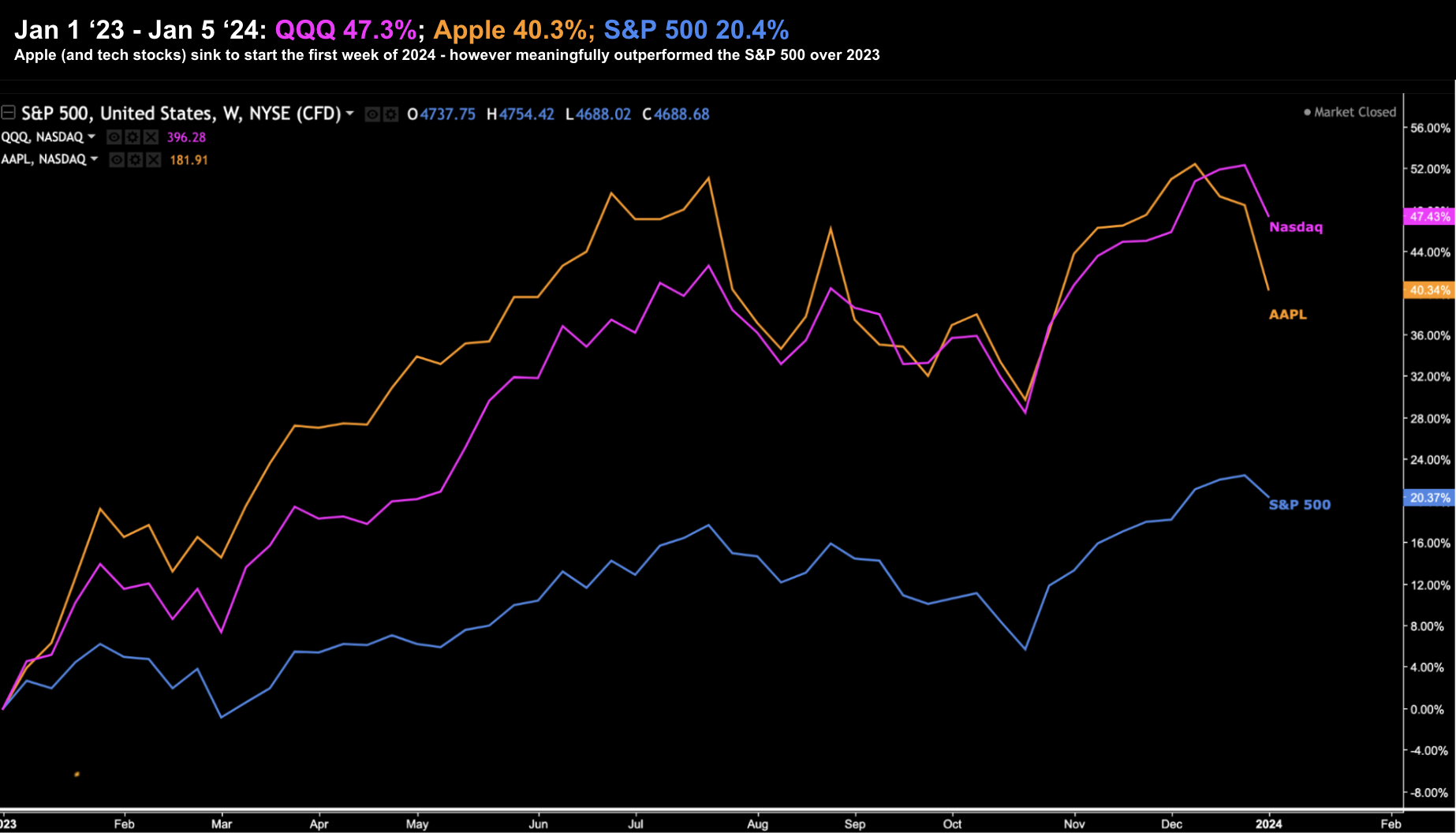
What happened to the Santa Clause Rally? Bahhh humbug! For those less familiar, a Santa Claus Rally involves a rise in stock prices during the last 5 trading days in December and the first 2 trading days in the following January. Over these 7 trading days in question, stock prices have historically risen 76% of the time (to the tune of ~1.3%) - far more than the average performance over a 7-day period. But this year the market received a fat lump of coal. Or more accurately - perhaps a "bad apple". Some feel that's potentially a bad omen for the year ahead... giving rise to the popular Wall St. maxim "... if Santa Claus should fail to call, bears may come to Broad and Wall"....

Reverse Goldilocks Coming?

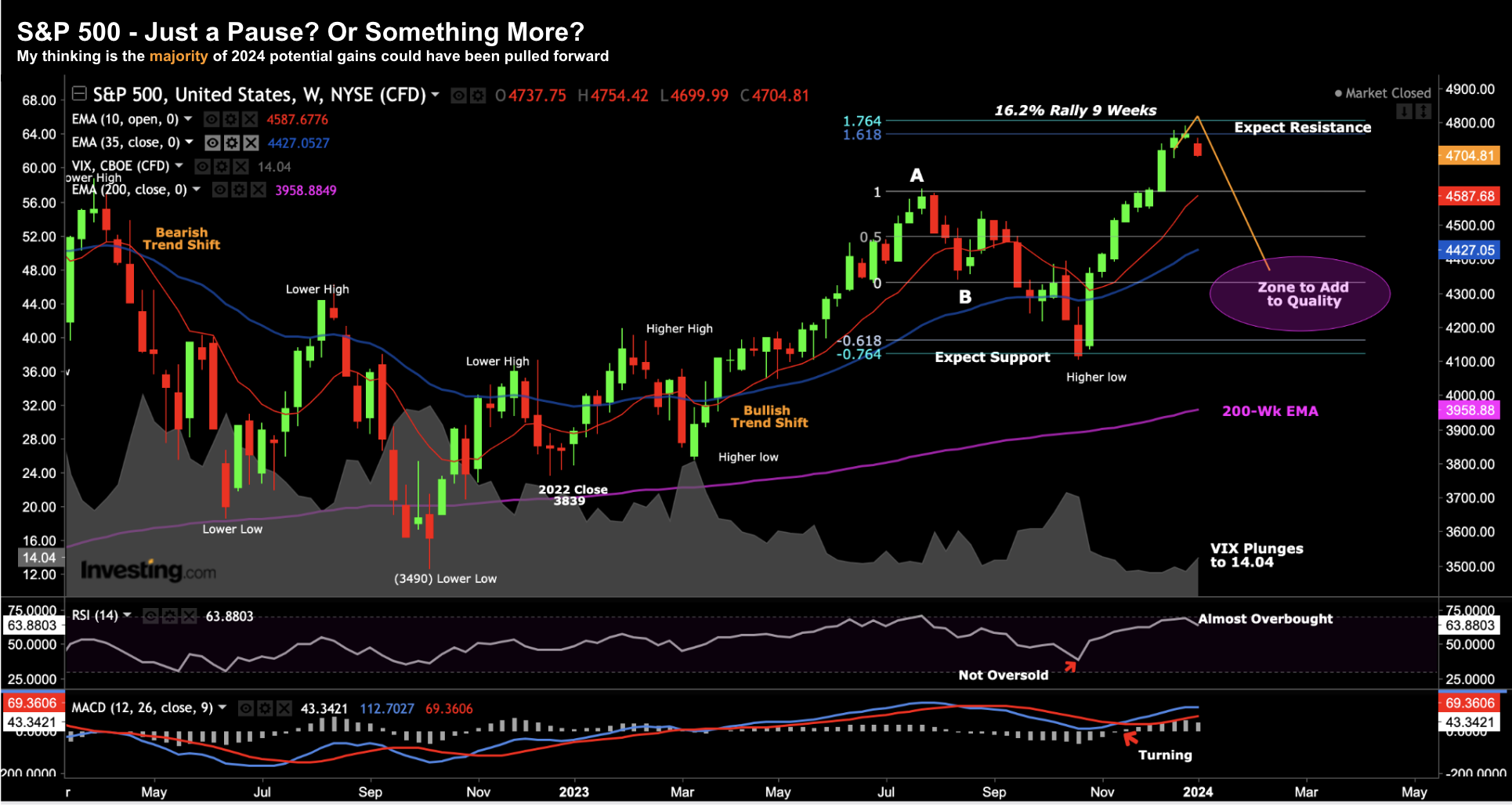
2024 has not started the way we ended 2023. From mine, late last year feels a lot like what we saw at the end of 2021 (and early 2022). At the time, investors chased momentum in fear of missing out ('FOMO') - pushing multiples into what I considered 'higher risk' territory (i.e., above 20x forward). It was a time to lower exposure. As we start the new year - stocks are taking a pause. And it's not unexpected given the sharp run higher. However it begs the question... could it be something more than a pause? Of course we don't know the answer (no-one does). Where there is uncertainty - all we have are probabilities.

89 Books to Make You Smarter

"In my whole life, I have known no wise people (over a broad subject matter area) who didn't read all the time—none" - Charlie Munger. This post includes a collection of 89 books I've read which will make you smarter (and a better investor). Old Charlie also told us ".. if it’s wisdom you're after, you are going to spend a lot of time sitting on your ass and reading". Amen to that.

2023 – The Year in Review

2023 has come to a close... and what a year it was. For many, it will go down as one of the more challenging. For others, they will have banked some very attractive gains. In short, the S&P 500 recovered from its worst year in over a decade - finishing the year 24.2% higher. As for myself, my portfolio returned 19.63%. I made some errors this year (which I will discuss) but also had a couple of wins. Net-net - it was a solid year given the unchartered waters we were navigating.

Many Lessons in One Great Chart

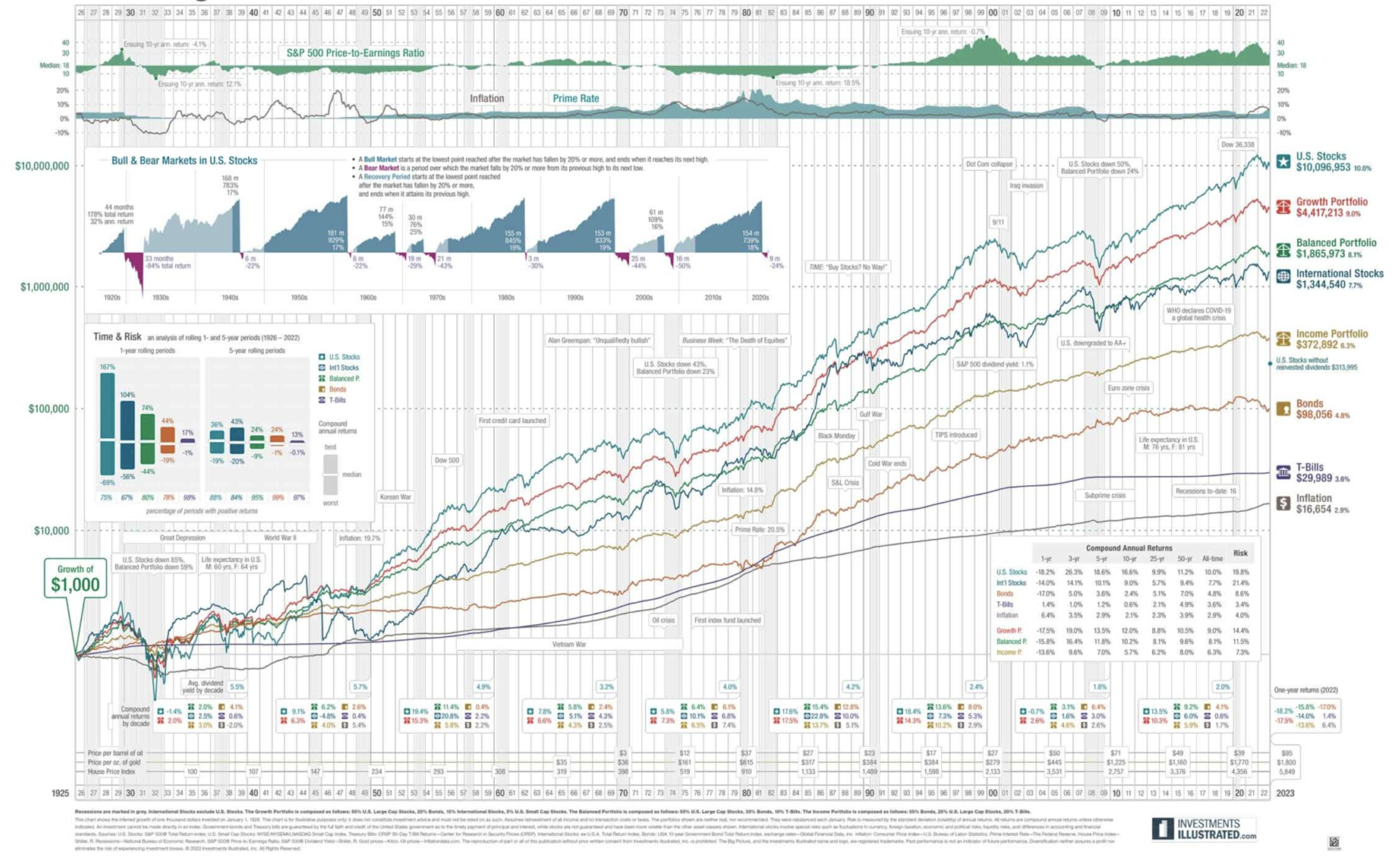
This post looks at one of the most compelling / informative long term charts I've come across. For example, it shows relative PE ratios, interest rates, bond yields, bull and bear markets along with performance. For me, not only does it reinforce the power of time with asset speculation - it also highlights the opportune windows when to add risk (and when not to). The latter is far more important.

Did We Just Pull 2024’s Gains Forward?

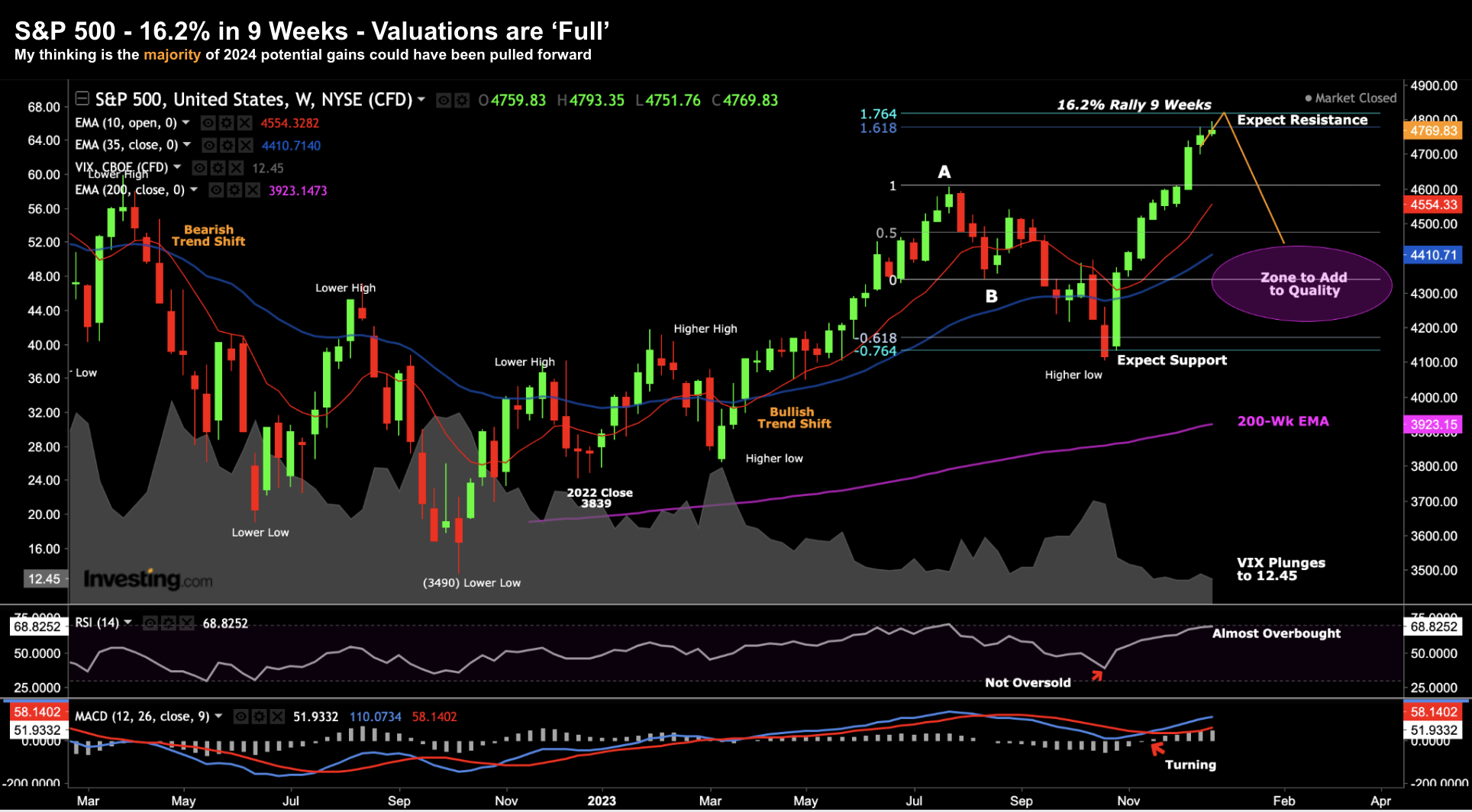
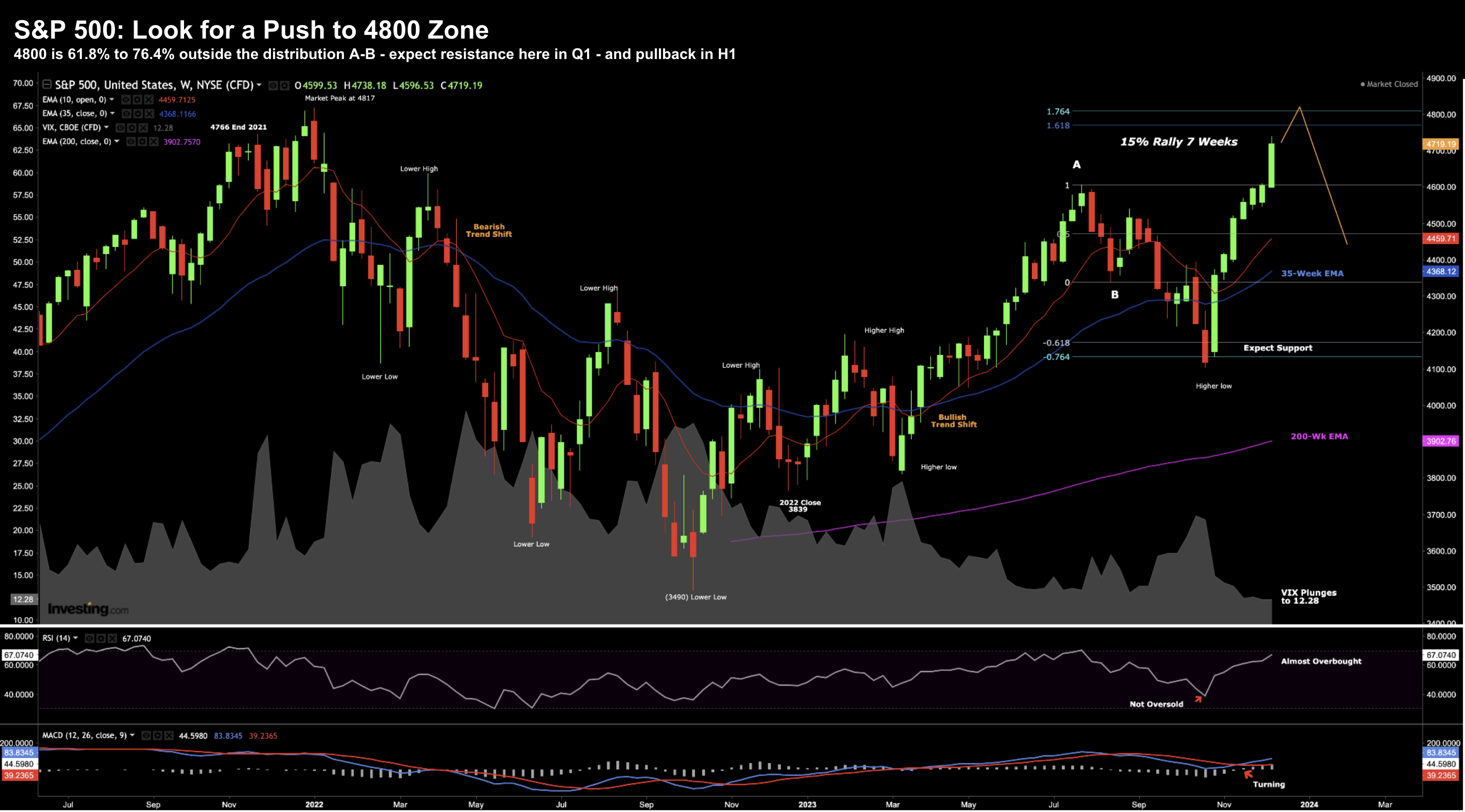
Stocks were already partying into the Fed meeting (up ~12% over 6 weeks) - however when Powell provided his December update on monetary policy - he simply turned up the music. Risk was on. So here's my question - with stocks up an incredible 15% in just 7 weeks - how much of next year's potential gains have been pulled forward? Is it riskier now to buy stocks than it was a few weeks ago? To be clear, stocks are likely to add to their gains before the year is done - however we are now trading close to 20x next years earnings. That's not a bargain.

What Just Happened?

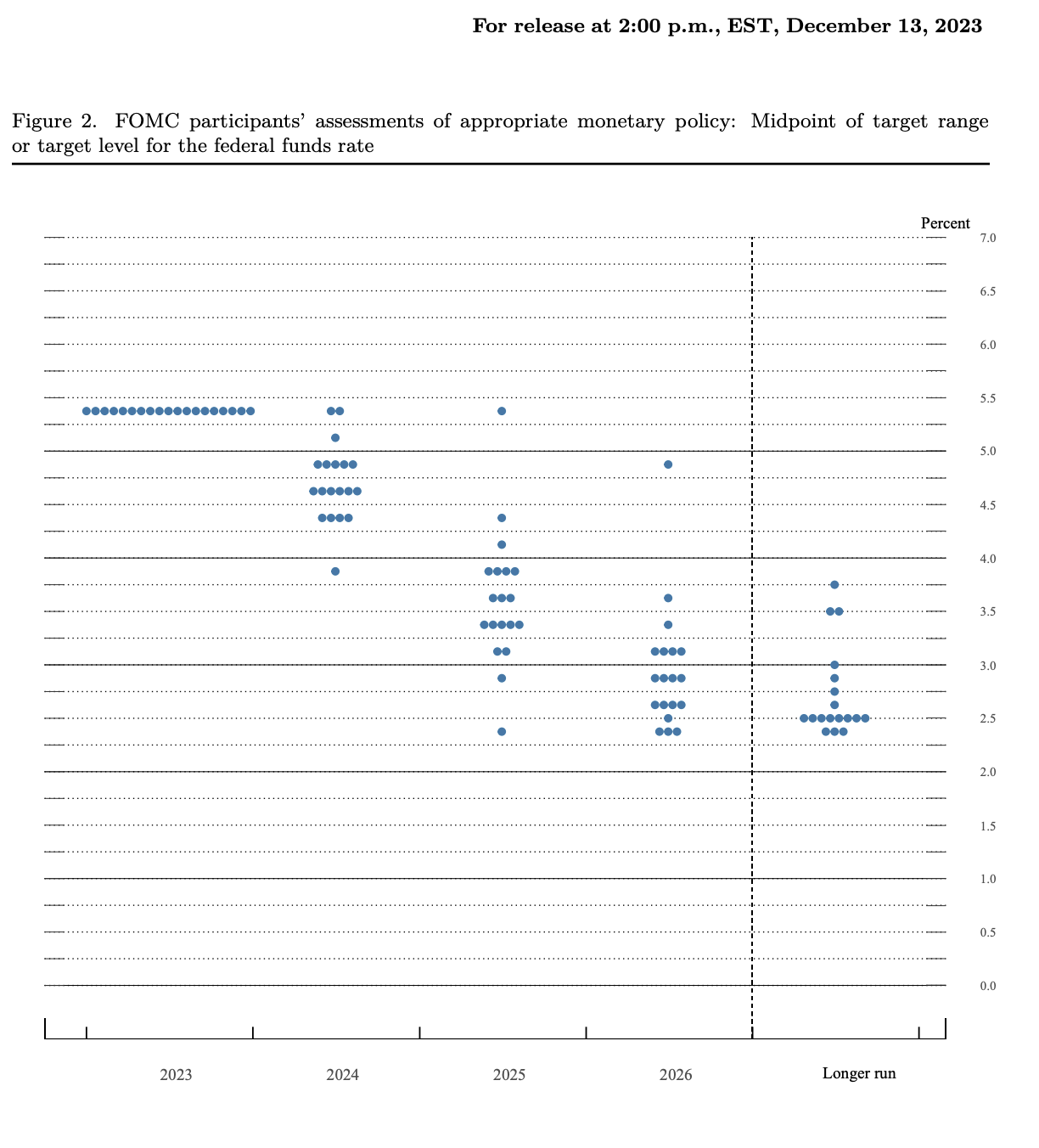
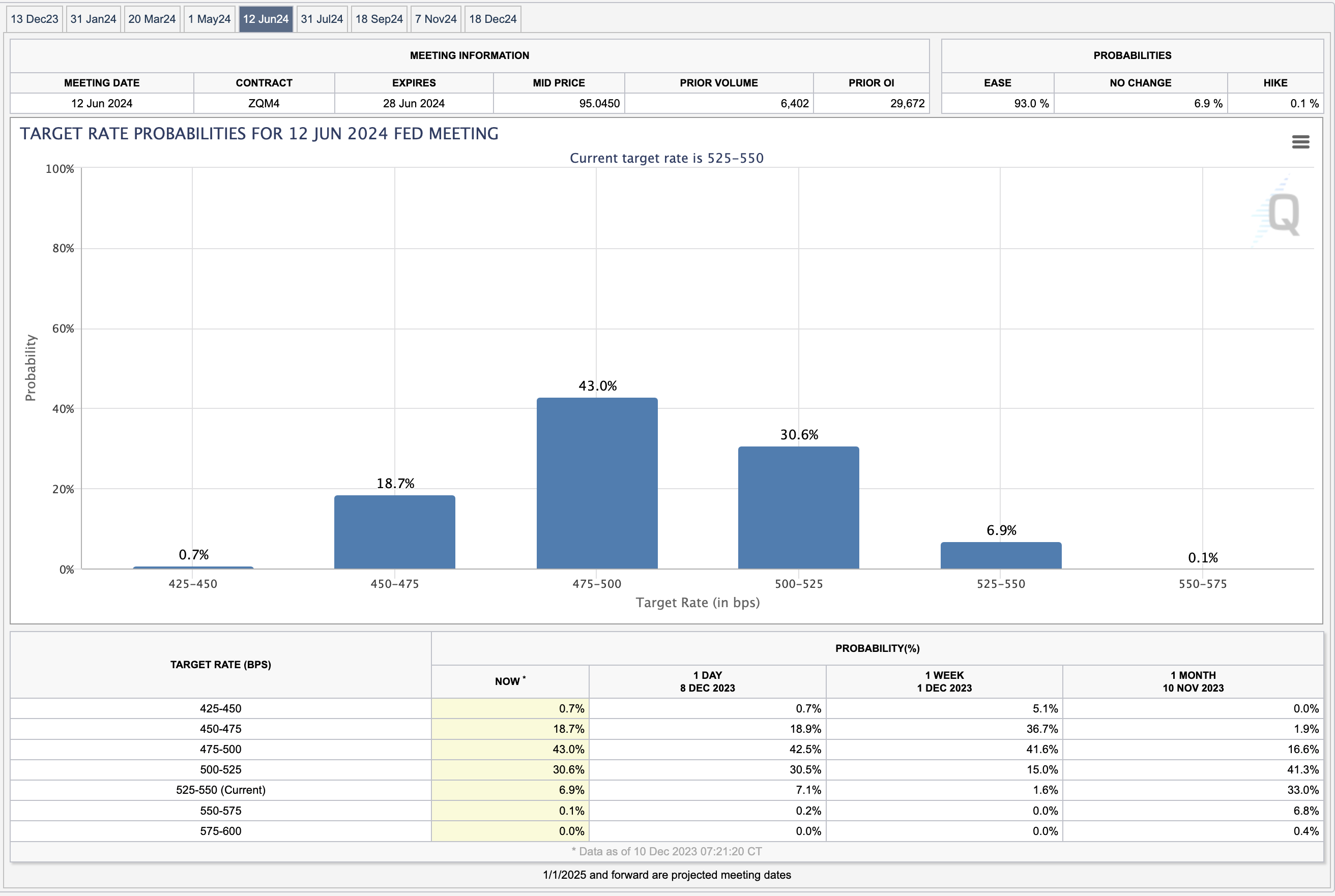
Only two weeks ago Fed Chair Powell said "the FOMC are not thinking about rate cuts". And it was premature to conclude with confidence they are at a sufficiently restrictive level. Well forget all that. Powell performed one of the more remarkable pivots ever seen from the Fed. He pivoted 180 degrees from his sentiment barely 14 days ago. Powell is now talking three rate cuts next year and the Fed have essentially "won the battle" over inflation. My take is the Fed is now more concerned about the business cycle; i.e., recession. There is a reason the Fed will cut - and that is the risk of dislocation in the economy (i.e., recession)

Why Would the Fed Cut? Why Would the Fed Cut?

Why Would the Fed Cut?

Last week the market received what it interpreted as a 'goldilocks' jobs number. Not too hot. Not too cold. But just right. Non-farm payrolls (NFP) increased by 199,000 in November, according to the BLS. This was around 19,000 higher than market expectations - however not hot enough for the Fed to raise rates this week. As an aside, the Government added 49K jobs as part of the 199K (inline with their monthly average). The unemployment rate, meanwhile, fell to 3.7% from 3.9%, marking the longest stretch of unemployment below 4% since the 1970s. That's essentially a full employment picture. So here's my question - why would the Fed consider cuts at full employment?