Category S&P500

Thoughts on 2026… Thoughts on 2026…

Thoughts on 2026…

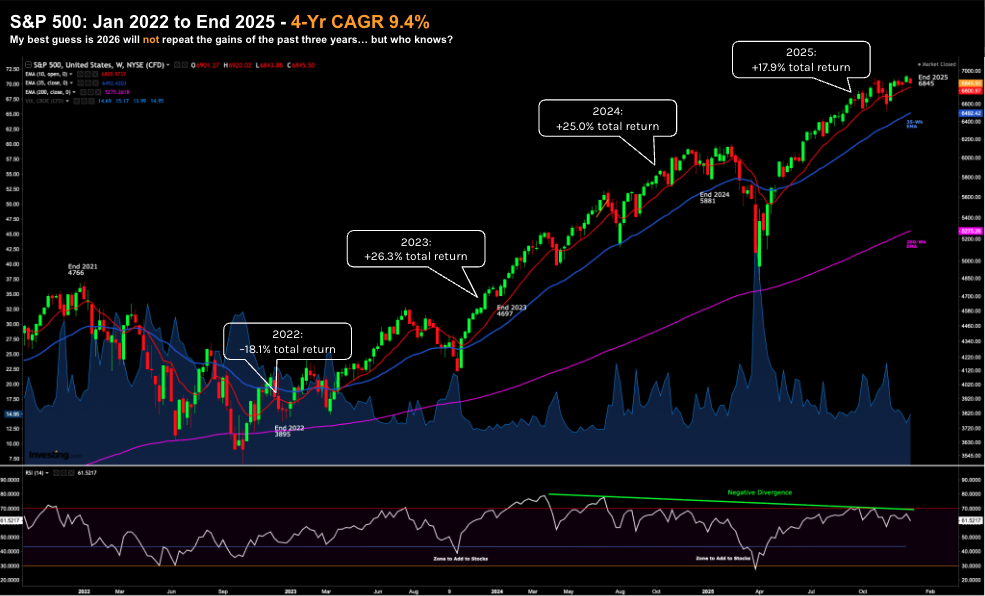
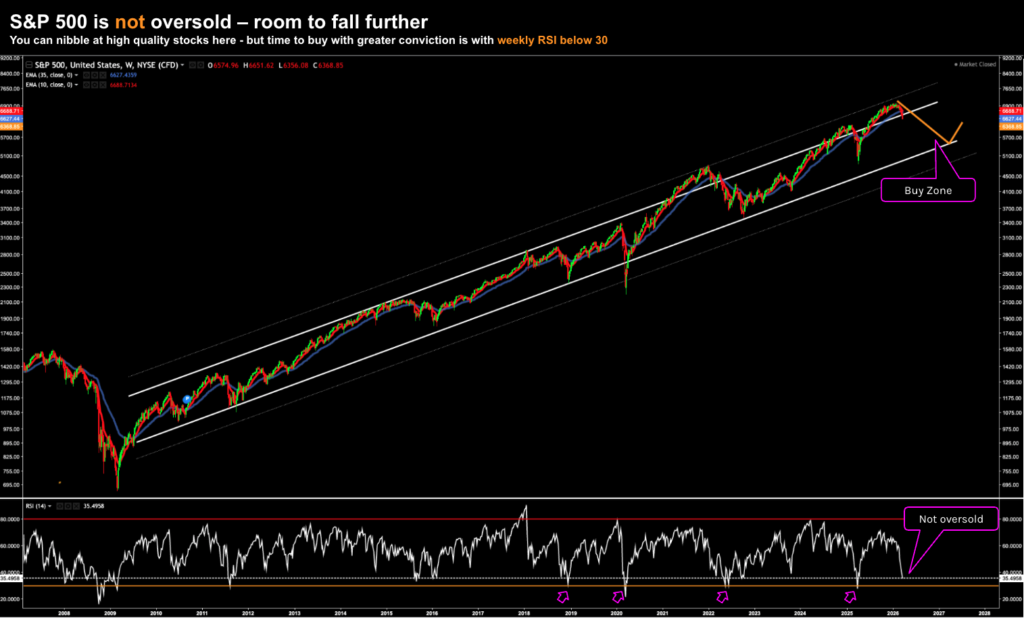
After three years of spectacular gains, 2026 demands a strategic pivot. I outline five critical themes determining market direction: rising unemployment risks, sticky inflation, a hawkish Fed, AI capex scrutiny, and a steepening yield curve. With valuations stretched, the easy money is gone. Investors should prioritize high-quality assets and cash optionality, preparing for a potential 15–20% correction. The focus now shifts from chasing momentum to preserving capital and awaiting reasonable valuations.

Why You Should Avoid Paying Too Much

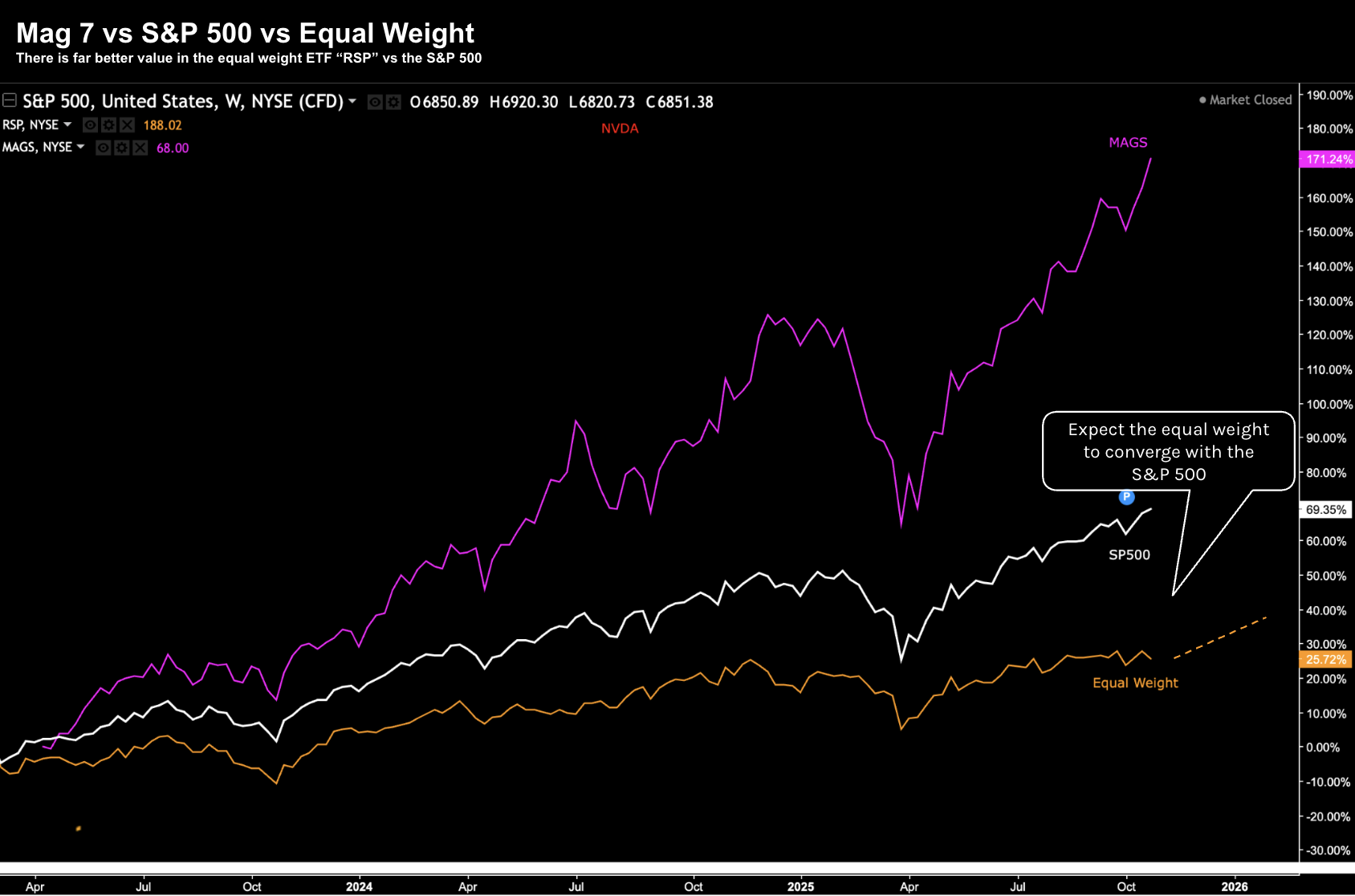
It’s very tempting to chase AI and "Mag 7" gains, but your long-term returns are ultimately determined by the price you pay. With the S&P 500 trading near 25x forward earnings and the Shiller CAPE ratio flashing warnings similar to the 2000 dot-com bubble, the market is lofty territory. History is clear: investing at such elevated valuations drastically lowers subsequent 5 and 25-year returns. While FOMO is powerful, be cautious. As a long-term investor, focus on the risk of what you could lose, not just what you might miss

S&P 500 Faces a Litmus Test

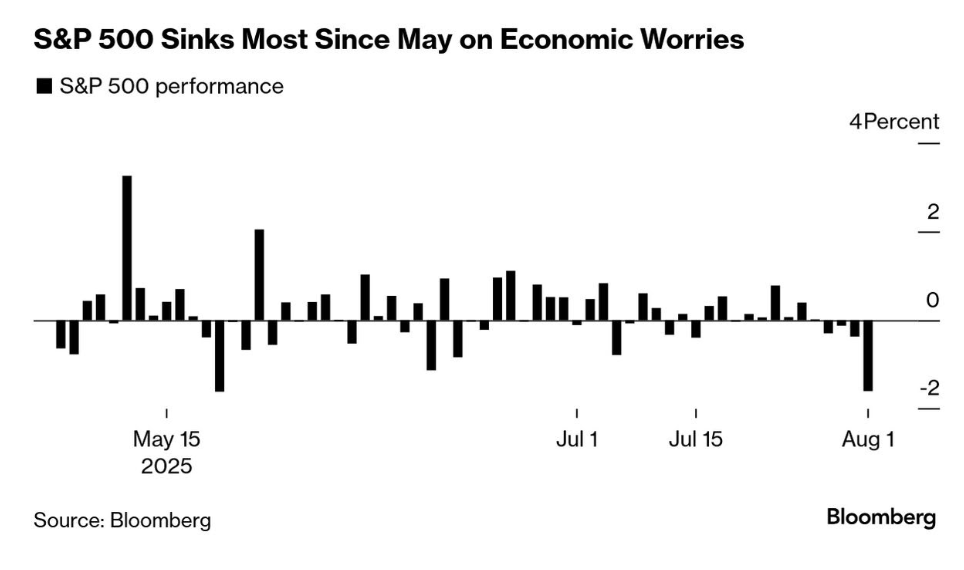
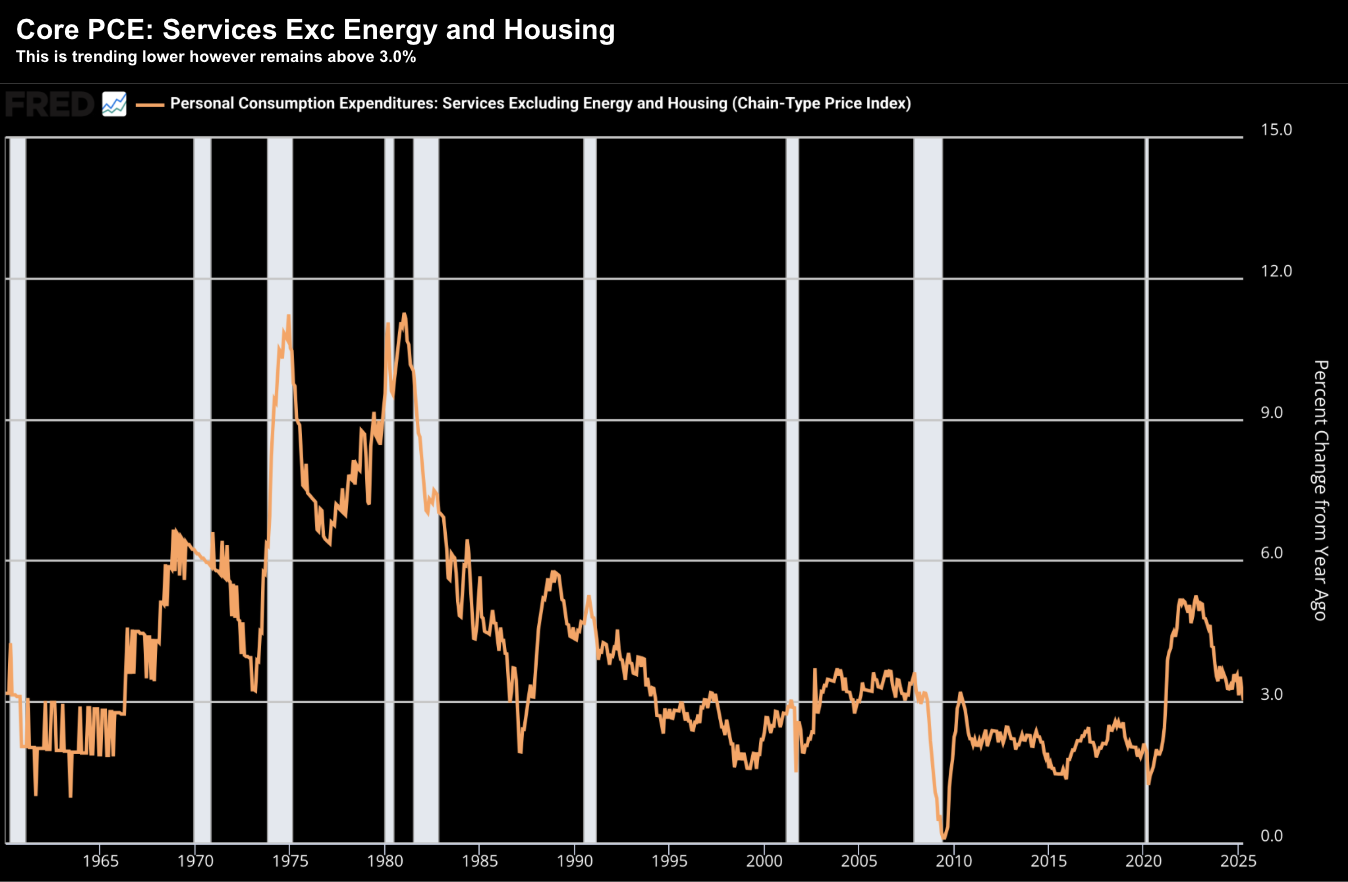
The labor market is clearly slowing. The "stag" in stagflation is here - what's less clear is the "flation" component. With respect to growth - we see slowing in housing, consumer spending and now job creation. The payrolls data was nothing shy of a disaster. And whilst the headlines will report on the dismal 73,000 jobs added (well below the ~140K job additions expected) - the massive 258,000 negative revisions over May and June is cause for concern.

15%+ Tariffs Are Not Reason to Cheer

The market is cheering the "better than feared" trade deals with the likes of Europe and Japan. Yes, 15% is better than 30%. But 30% would be an embargo - not a tariff. 15% will not be good for global trade. Growth will slow; consumption will fall; resulting in fewer jobs. Trump's terrible tariffs will be at least ~12% more than what we had at the beginning of the year. This consumption tax will need to be paid by someone... just a question of who. The market is not pricing this in....

A Very Complacent Market… 

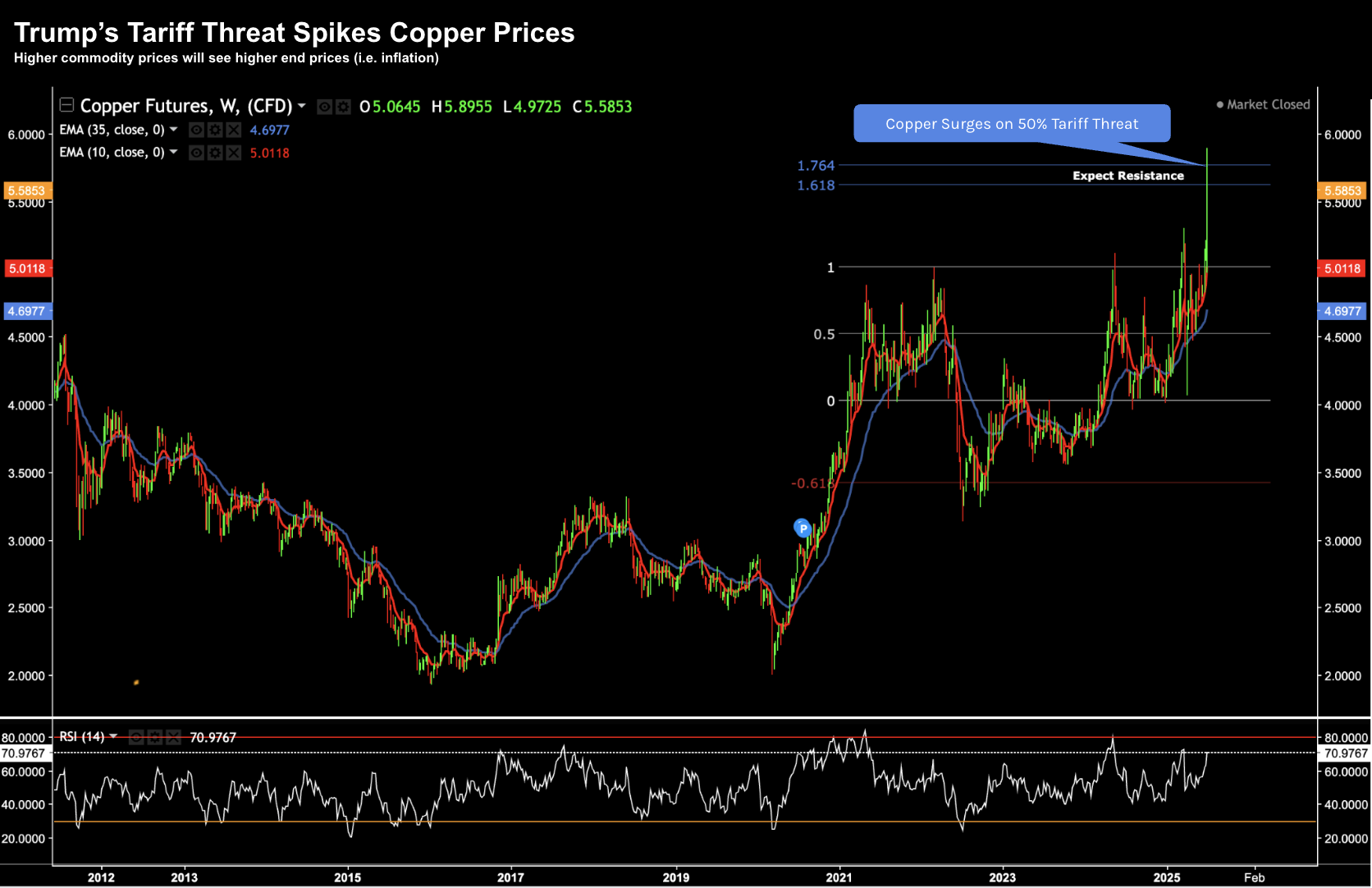
Recent developments in Trump's draconian trade policies — marked by steep tariffs, fluctuating commodity markets and geopolitical maneuvers — present a highly complex and uncertain landscape. Despite dramatic announcements and headline-grabbing tariff threats, markets have remained oddly resilient, while underlying forces quietly shift. For e.g., Trump's imposition of steep tariffs—such as 200% on pharmaceuticals and 50% on copper—has less to do with traditional economic rationale and more with political leverage

S&P 500 Hits Stall Speed

Another week comes to close - as we draw near the end of the second quarter. For the past two weeks or so - investors are reluctant to push prices much higher. From mine, the index is not only expensive - trading near a forward price-to-earnings (PE) ratio of 22x - the downside risks don't handily offset the (possible) upside reward. For eg, it would not surprise me to see the S&P 500 trade up to a zone of 6,200 (adding another 5% or so). However, equally I see a possibility for a 10% to 20% move lower given the risks to earnings growth, inflation (from tariffs), employment and geopolitical tensions.

Patience Alone Doesn’t Get it Done

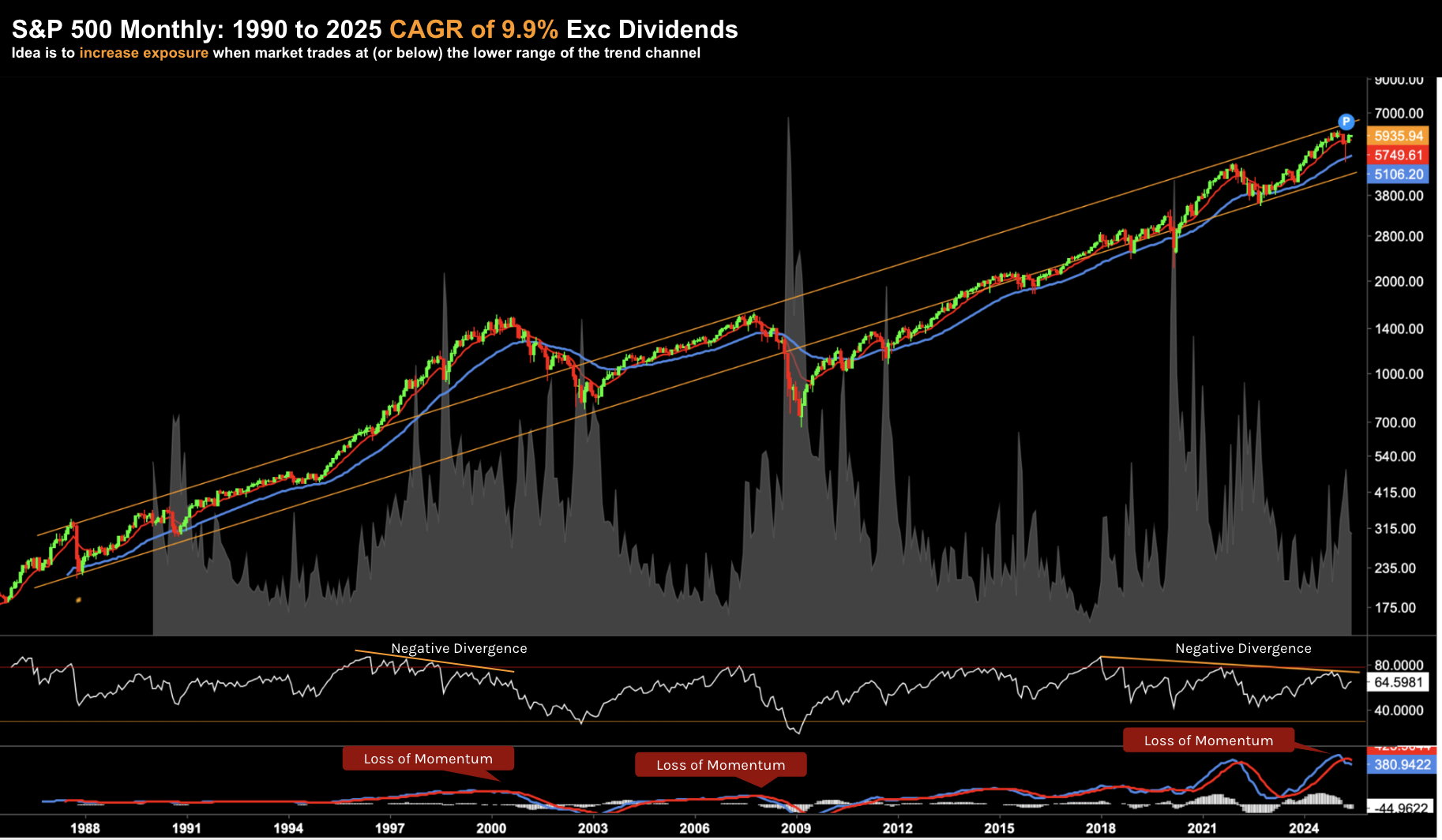
Over the past ~40+ years - the S&P 500 Index has returned an average of ~9.3% annually exc. dividends (i.e., 171.6 Jan 1985 to 5,979.5 Jan 2025). If we limit that to the past decade (from 2015) - that avg annual return increases to 11.4% (excluding dividends). But what matters most is (a) the price you pay; and (b) when you get out. Sitting tight for 10 years does not guarantee a 10% return...

Bond Vigilantes To Have the Final Vote

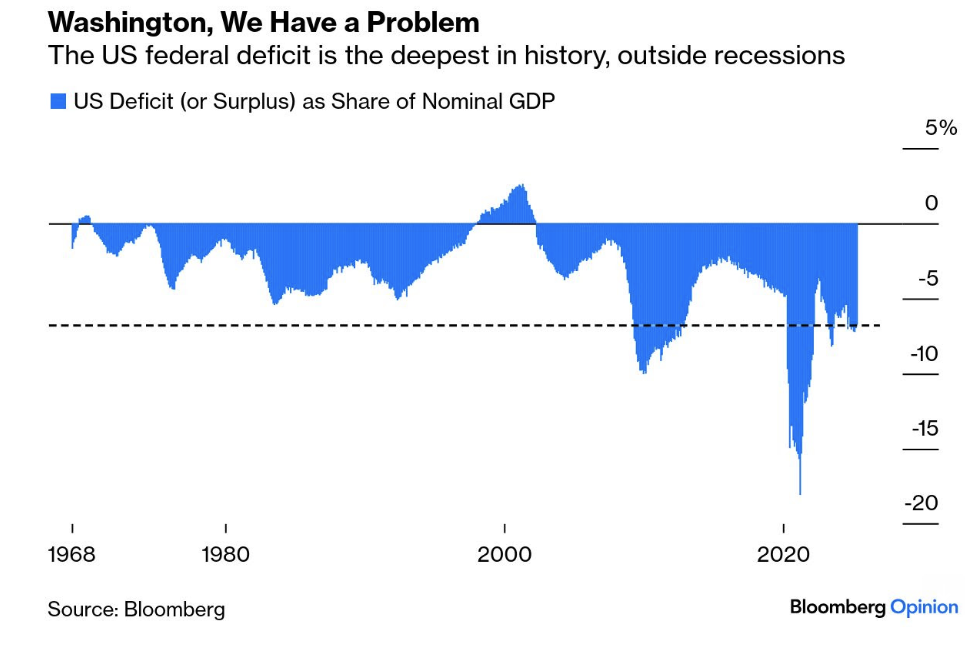
Markets paused to take a breath this week following a six-week ~22% surge. The S&P 500 surrendered a routine ~2.80% - after touching a 12-week high of 5,968. With the market trading at 22x fwd earnings (a premium in any environment) - investors are arguably more mindful of (a) ongoing tariff risks- with new threats from Trump on Europe and Apple; and (b) the thread of rising bond yields - and any potentially widening of the deficit.

What Do Q1 Earnings Tell Us?

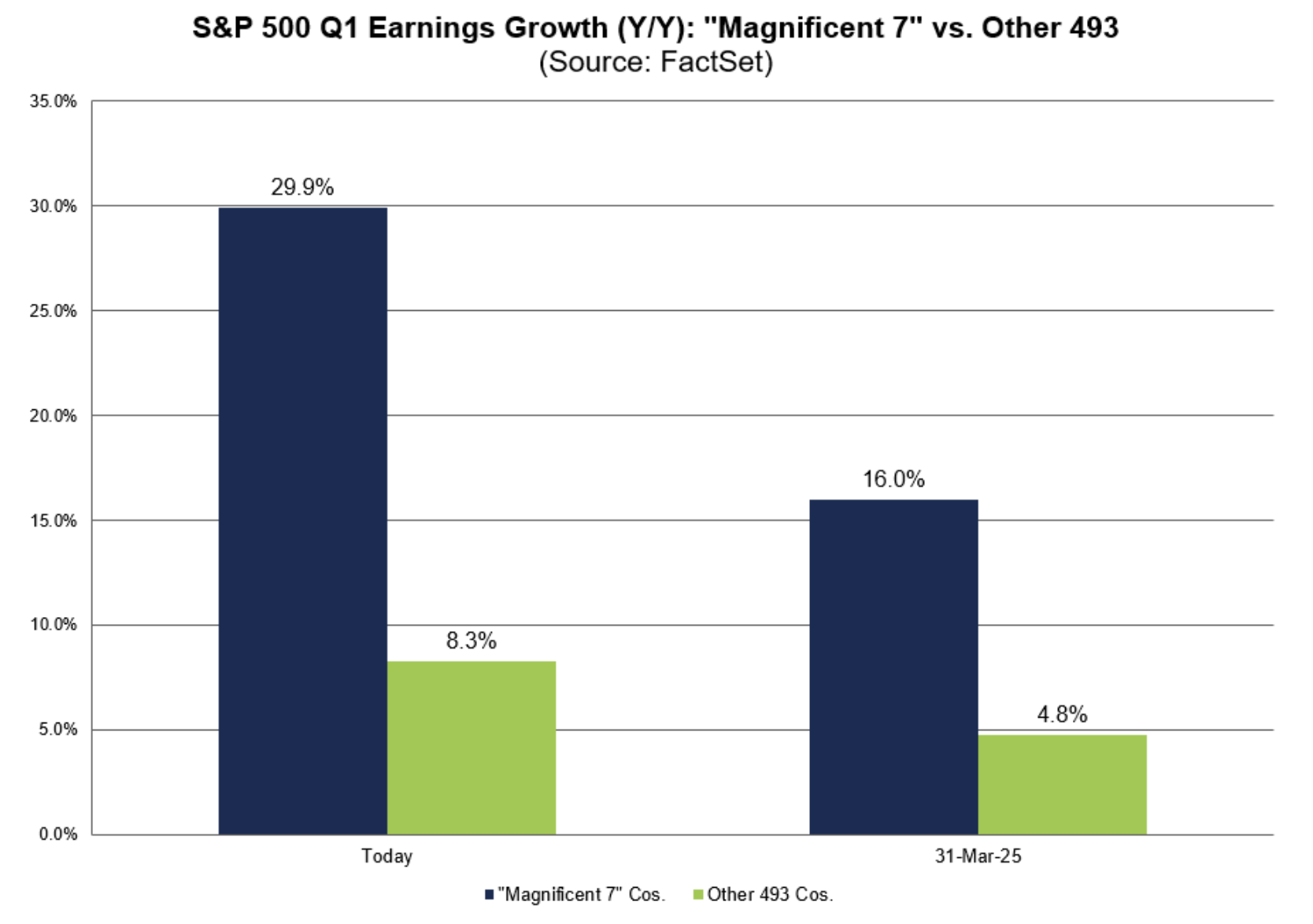
We're about half way through Q1 2025 earnings. So far they're showing double-digit YoY growth. However what companies are struggling with is guidance. They have very limited visibility through the "tariff windshield". And whilst stocks are reacting well to past earnings and optimism Trump will back down on his draconian tariffs - it's difficult to gauge both how much damage has been done? For now, markets remain optimistic however I would treat this rally with caution.

Relief Rally Likely to be Temporary

Despite the welcomed relief rally - stocks are not out of the woods. The uncertainty introduced from Trump has inflicted a lot of damage. Not only on the market and its earnings - but on investor, consumer and business confidence. However, the full extent of the damage will only be felt in the months (years) ahead. For example, Bankim Chadha of Deutsche Bank has reduced his target for the S&P 500 for the year, citing doubts over whether tariff policies will be abandoned before they have already driven the economy into a recession. This echoes what I said recently "we could already be in recession"