Category S&P500

The Trump Trade Stalls

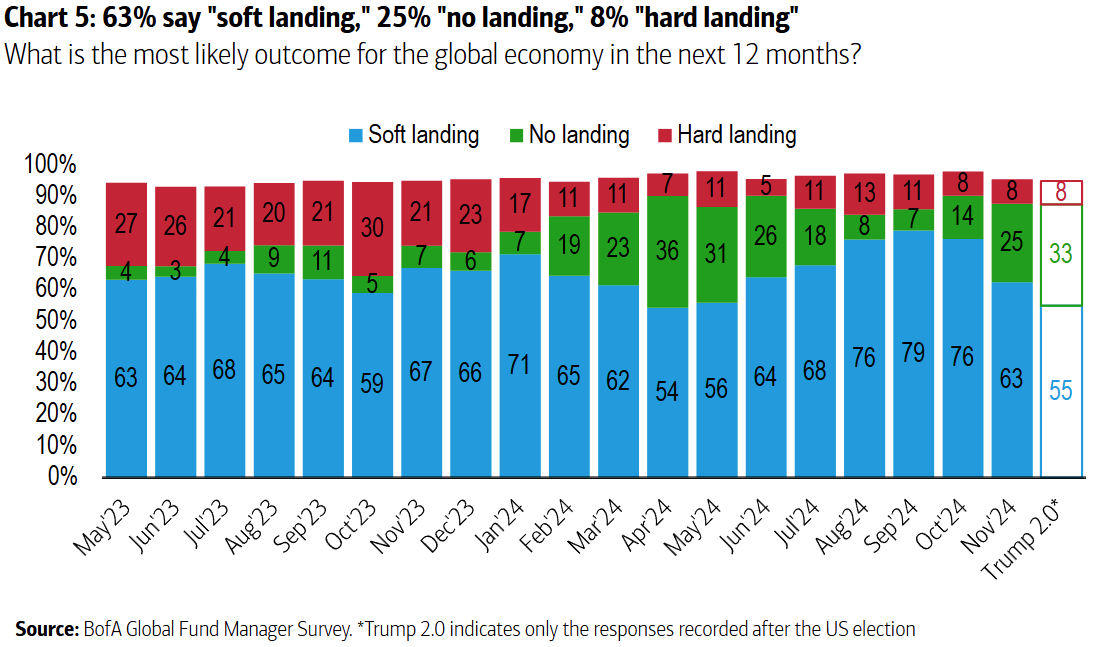
Last week when assessing the surge in markets - I offered examples of how market (sector) dynamics shifted. Adding to that theme - I was not overly surprised to read how institutional investors are putting money to work. For example, Bank of America Corp.’s monthly survey of global fund managers indicates that Trump's decisive win is perceived as a potential turning point for investment strategies. And whilst that could be true - it pays to look at history... what can we gauge from Trump 1.0 (and the impact on markets).

Red Sweep Turbocharges the Market

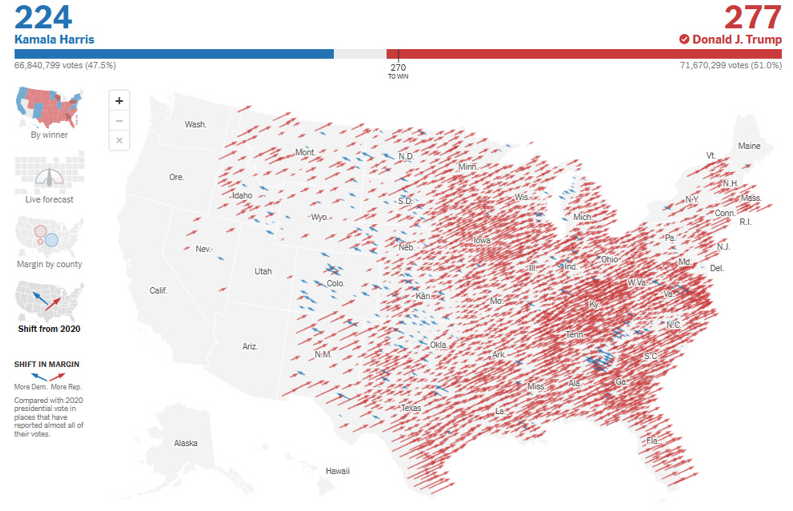
Trump's decisive win last week has seen significant shifts in market sentiment. Markets are optimistic that Trump's tax cuts and deregulation will turbocharge growth. And they might. But what implications will Trump's policies mean for the US dollar, long-term bond yields and foreign trade? As investors, you need to evaluate both what is seen vs unseen. There will be both opportunities and challenges... however they will be very sector specific.

Stocks Losing Momentum

Are stocks starting to lose momentum? This week saw the S&P 500 reverse course - its first losing week since early September. Could there be more to come? My answer is yes - perhaps as much as 7-10%. However, it's a question of timing. Irrespective, paying 22x forward earnings is a higher-risk bet.

Not All Consumers Are Spending

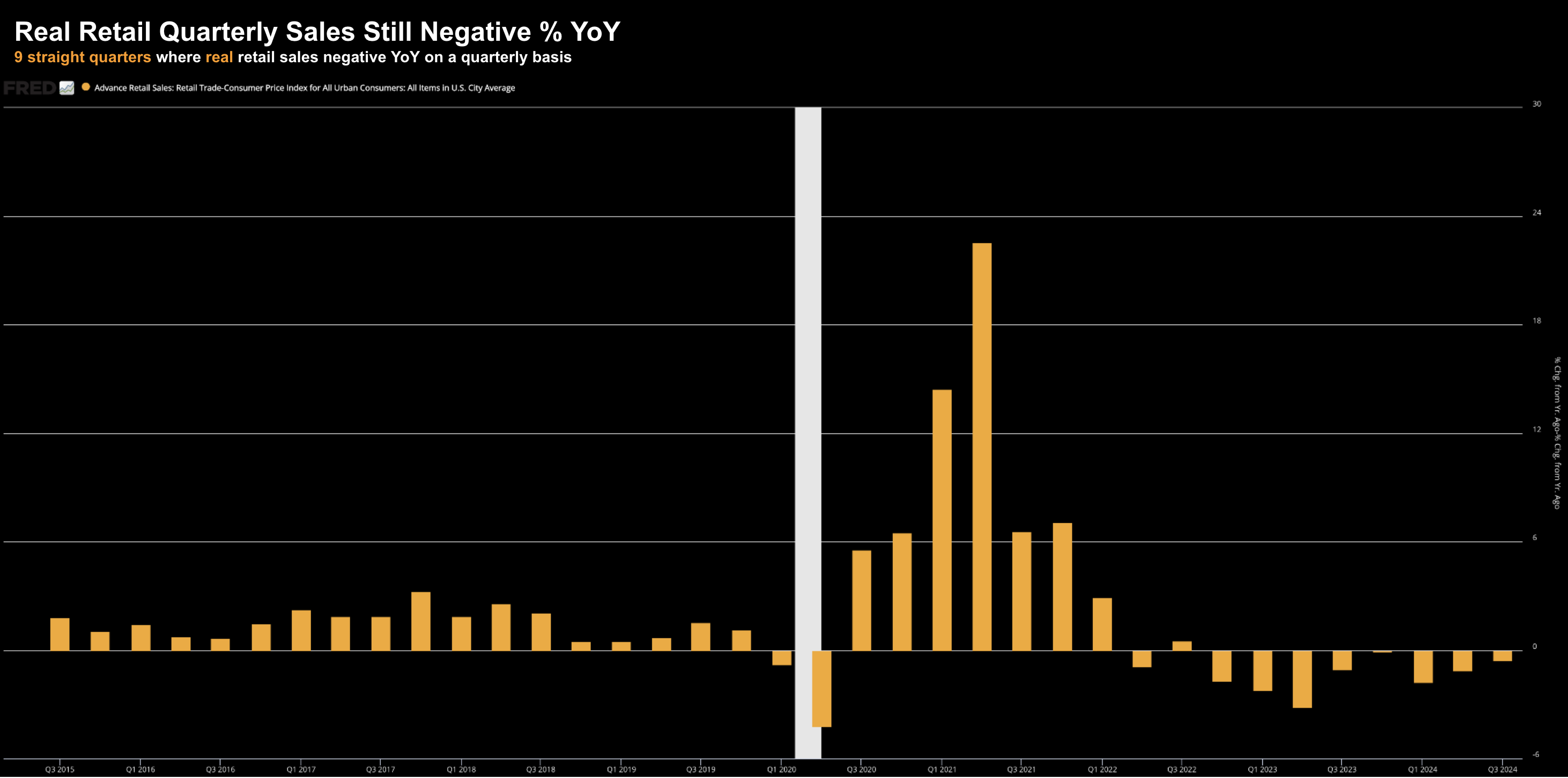
Never underestimate the U.S. consumers want to spend. Well some of them at least. Last month's retail figures exceeded expectations - up 1.7% YoY in nominal terms (not adjusted for inflation). But here's the important point - these are nominal sales and only one month of data. One month is not overly helpful. When averaged over one quarter (which helps remove noise) - adjusted for inflation ( real terms) - and assessing the year-over-year change - growth is negative. And they have been negative in real terms for 9 straight quarters... this matters.

The Fiscal Tailwinds Helping Stocks

Will fewer rate cuts dampen the enthusiasm for stocks? It certainly hasn't to this point. And could higher bond yields impact stock valuations? So far the market is not bothered. These (and other) questions need to be weighed carefully with the S&P 500 trading ~21.5x forward earnings. And whilst the multiple is heavily skewed by the 'Mag 7' - 21.5x is far from cheap. What's more, from a historical perspective, paying a multiple above 20x offers investors a very low risk premium (e.g., with the risk free rate above 4.0%). But wait... what's to say stocks cannot rise further? We'll explore why they can...

Fed’s Task in Changing Times

How aggressive can the Fed be in the coming months? The economic data doesn't suggest a material slowdown - surprising to the upside in most cases. Therefore, are markets pricing in too many rate cuts? Maybe... longer-term yields are rallying post rate cuts. What's this mean?

Defensive Sponges Soaking Up Liquidity

After enduring its worst week since March 2023, the S&P 500 rebounded with its best performance of the year. From mine, this kind of week-to-week unpredictability highlights the futility of attempting to predict short-term gyrations. It's not something I pretend to be able to do. My approach prioritizes a longer-term perspective - as it increases the odds of success. It's near impossible to attempt to trade around Mr. Market - you can never know what his mood will be from one day to the next. Therefore I choose to maintain a cautiously invested strategy - where ~65% of my capital remains in high quality stocks.

Thoughts on the Rest of the Year

Over the past year or so - one of the key investment themes has been "bad news is good news". Bad news implied the Fed was more likely to cut rates. For example, after the market incorrectly assumed we would see 6 or 7 rate cuts at the start of the year - the Fed have finally come to the table. In other words, the economic risks (to growth) are sufficient enough for the Fed to act. This is important. What happens during this transition is "bad news is no longer good news". History shows us when economic conditions worsen during an easing cycle - stocks perform poorly. Therefore, the market's primary concern now is whether the Fed has waited too long?

Back to the Scene of the Crime.. And a Warning from PCE

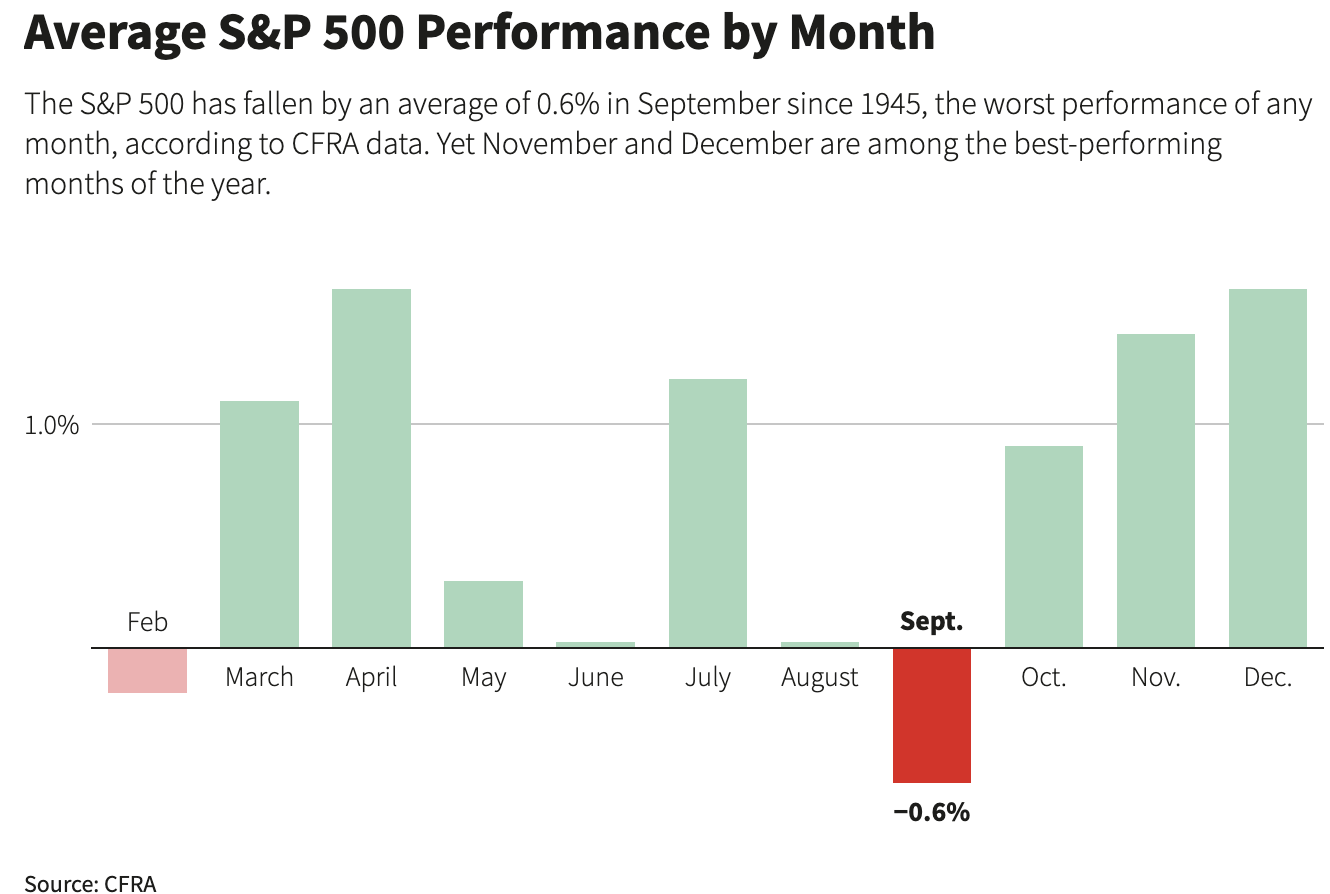
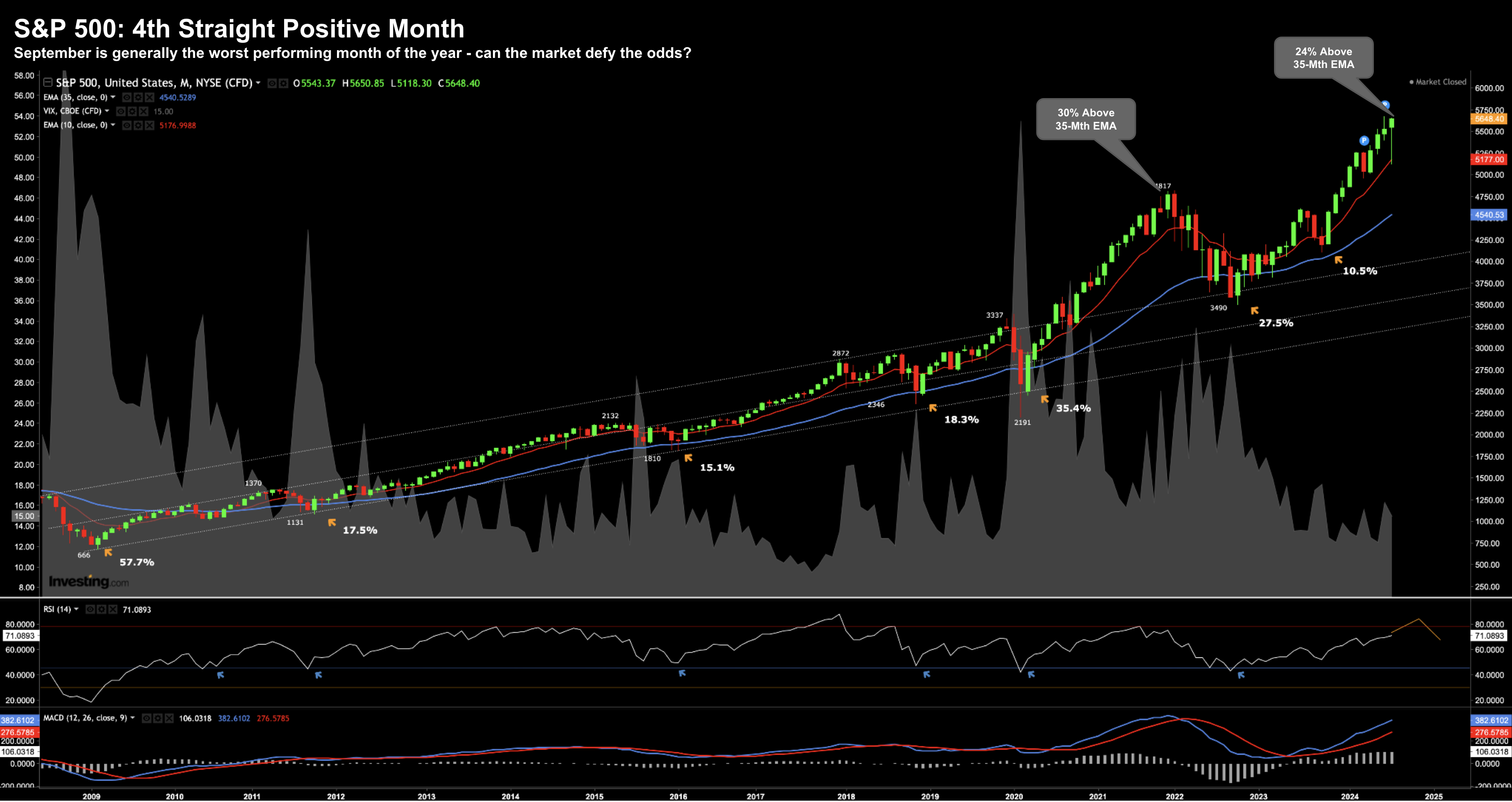
Eight months down. Four to go. After shedding almost ~10% to start the month - the bulls managed to close the market at its highs. Whiplash anyone? The S&P 500 is back to the point where the markets panicked on a growth scare - however it raises a question: (i) can it break through previous resistance (the all-time high of 5669); or (ii) will it perform what traders call a "back and fill"? My guess is the latter - as we head into one of the weaker months of the year.

Fear & Greed

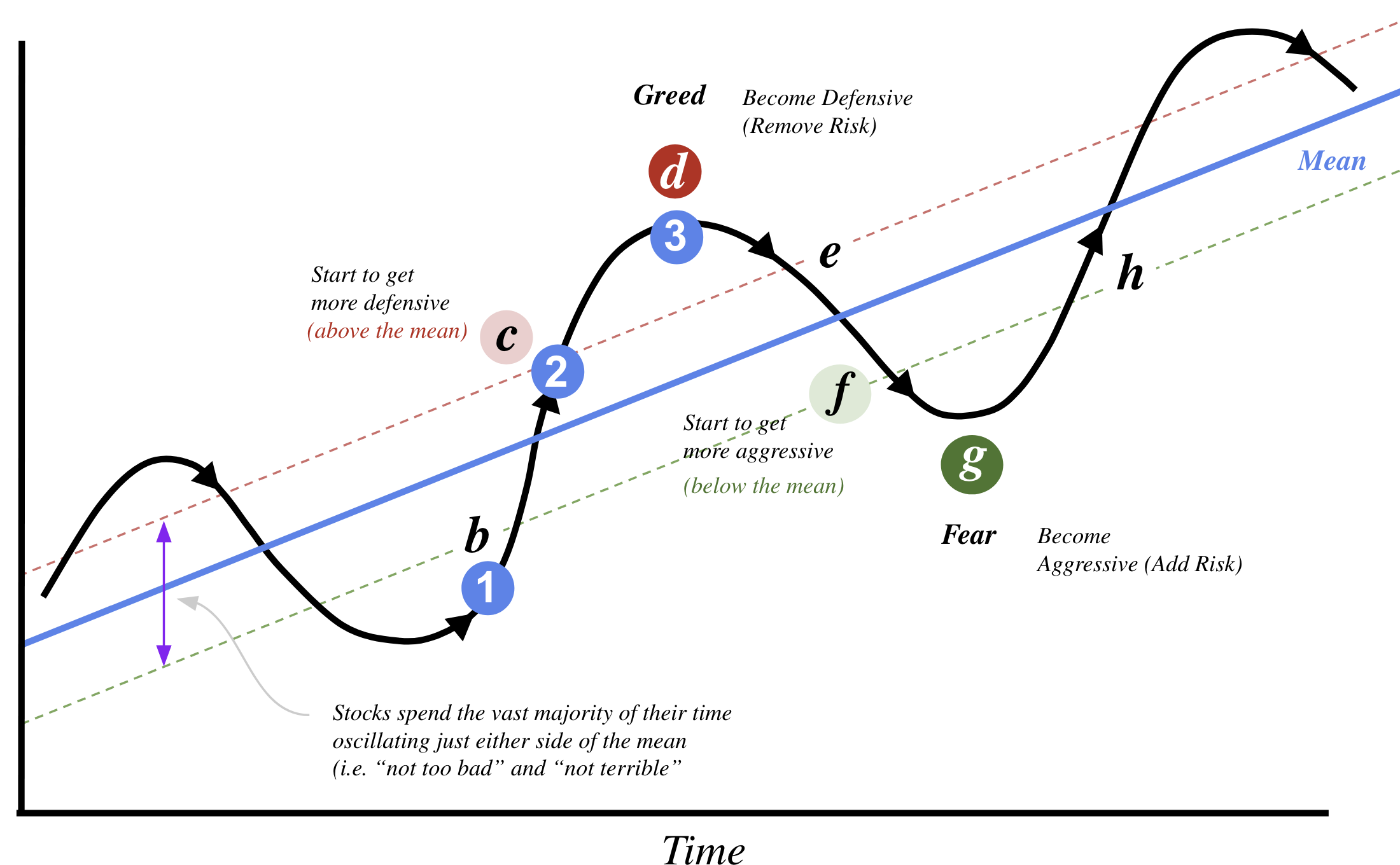
Wall St. is driven by just two emotions: fear and greed. Pending on the degree to which you succumb to these emotions - it will have a profound impact on your bottom line. All too often, most investors will do two things: (i) buy when there is market greed; and (ii) sell when there is fear. It's the opposite of what you should do. However, this is something you need to master if you are to be successful in the game of asset speculation.