adriant

adriant

Nvidia Can’t Stop Stocks Wobbling

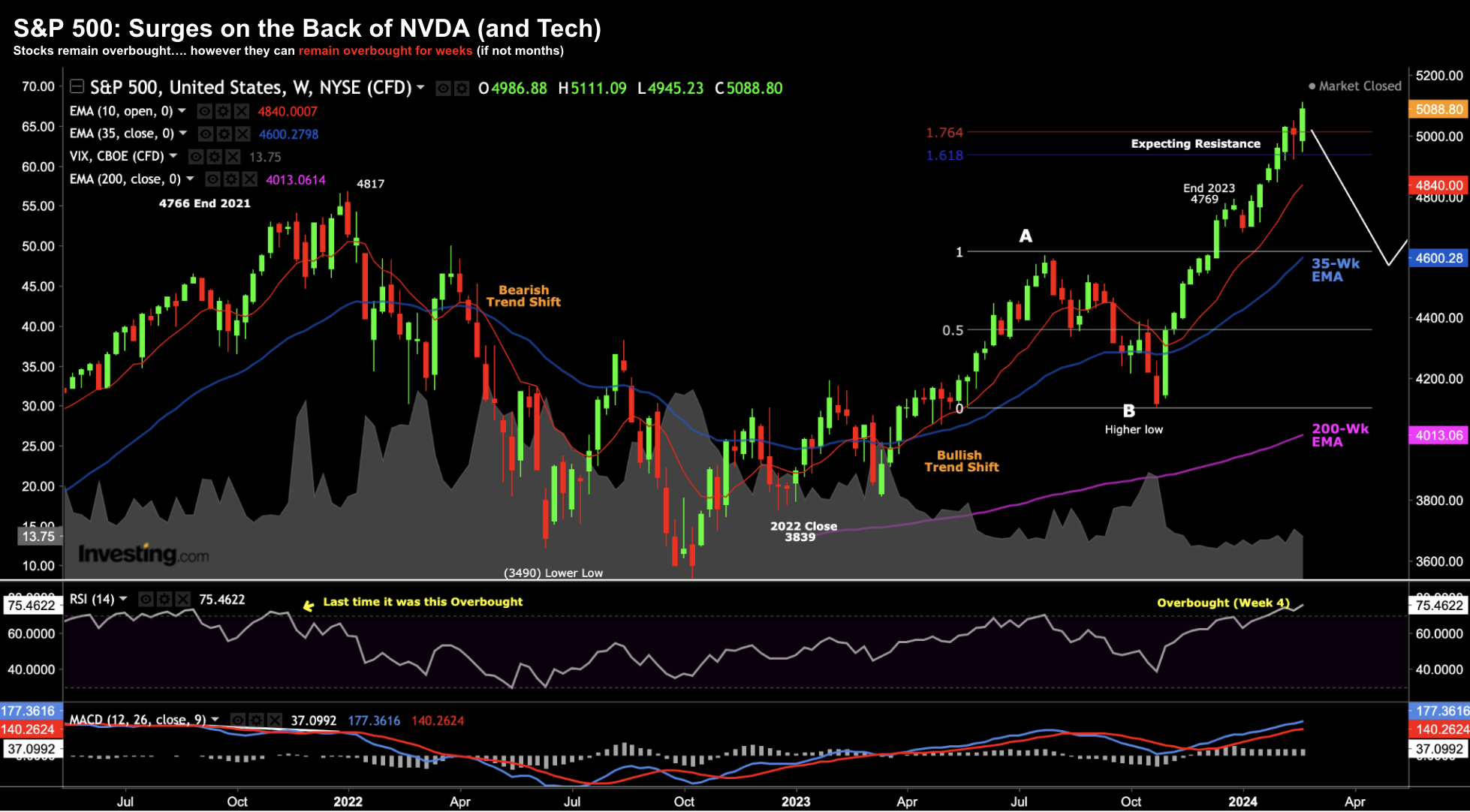
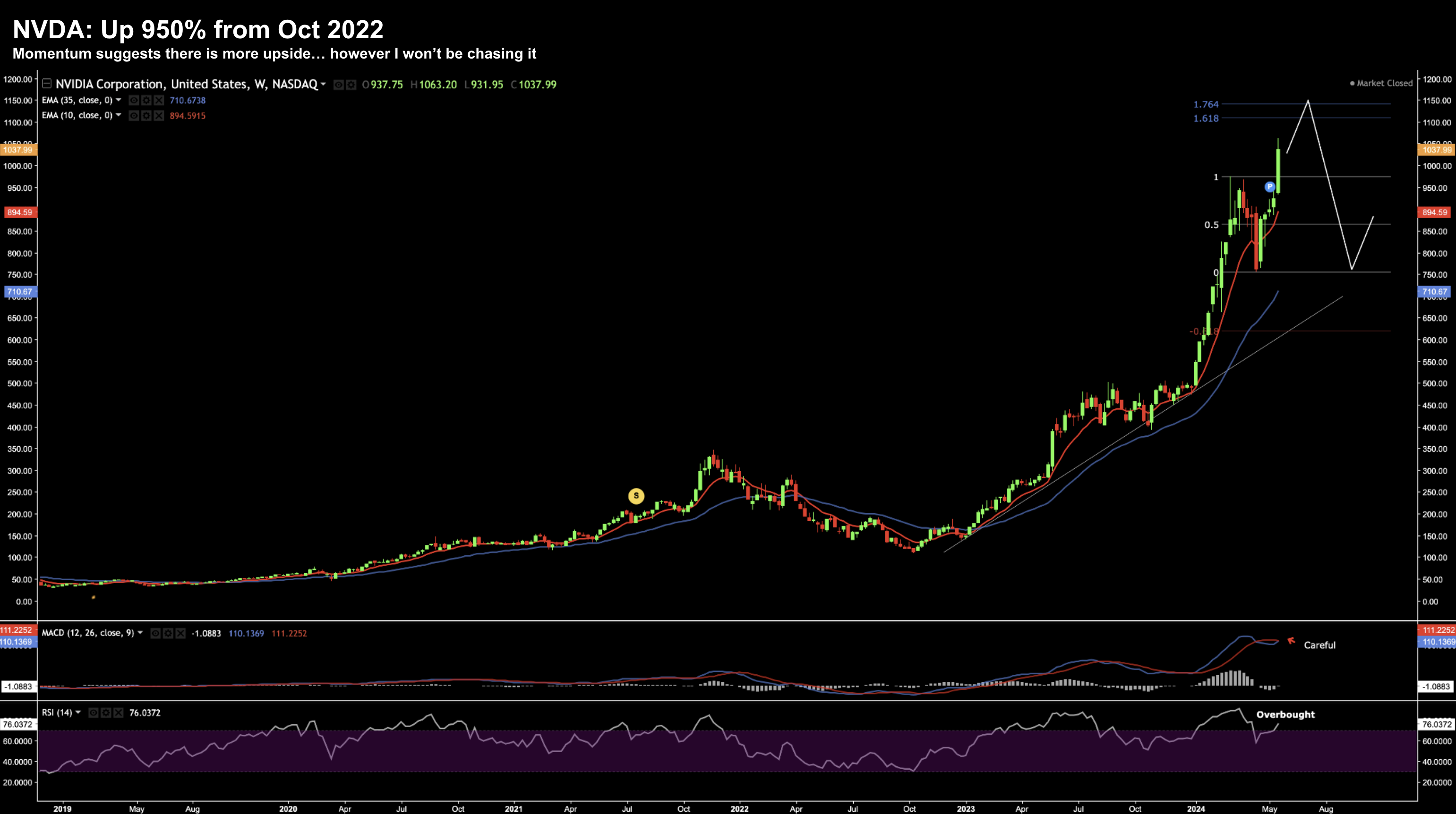
What we've seen from Nvidia the past 18 months reminds me of Cisco in the late 1990's. I wrote about this recently... not much has changed. The path of earnings and the share price have been similar. NVDA's revenues are up over 2.5x on a YoY basis, causing EPS to be up over 4x over the same period. 18% EPS growth in a single quarter is very impressive but here's my question... will we see that in 2 or 3 years from now? We didn't from CSCO - it collapsed. Time will be the judge of that.... not me. Despite the expected "beat and raise" from the AI chip maker - the rest of the market fell sharply. Without NVDA's ~9% share price gain - the S&P 500 would have been down 1.5% for the day. That tells us how narrow this market is - extremely dependent on stellar earnings from a handful of companies like NVDA. That's not a healthy setup.
Are These Recession Indicators Broken?

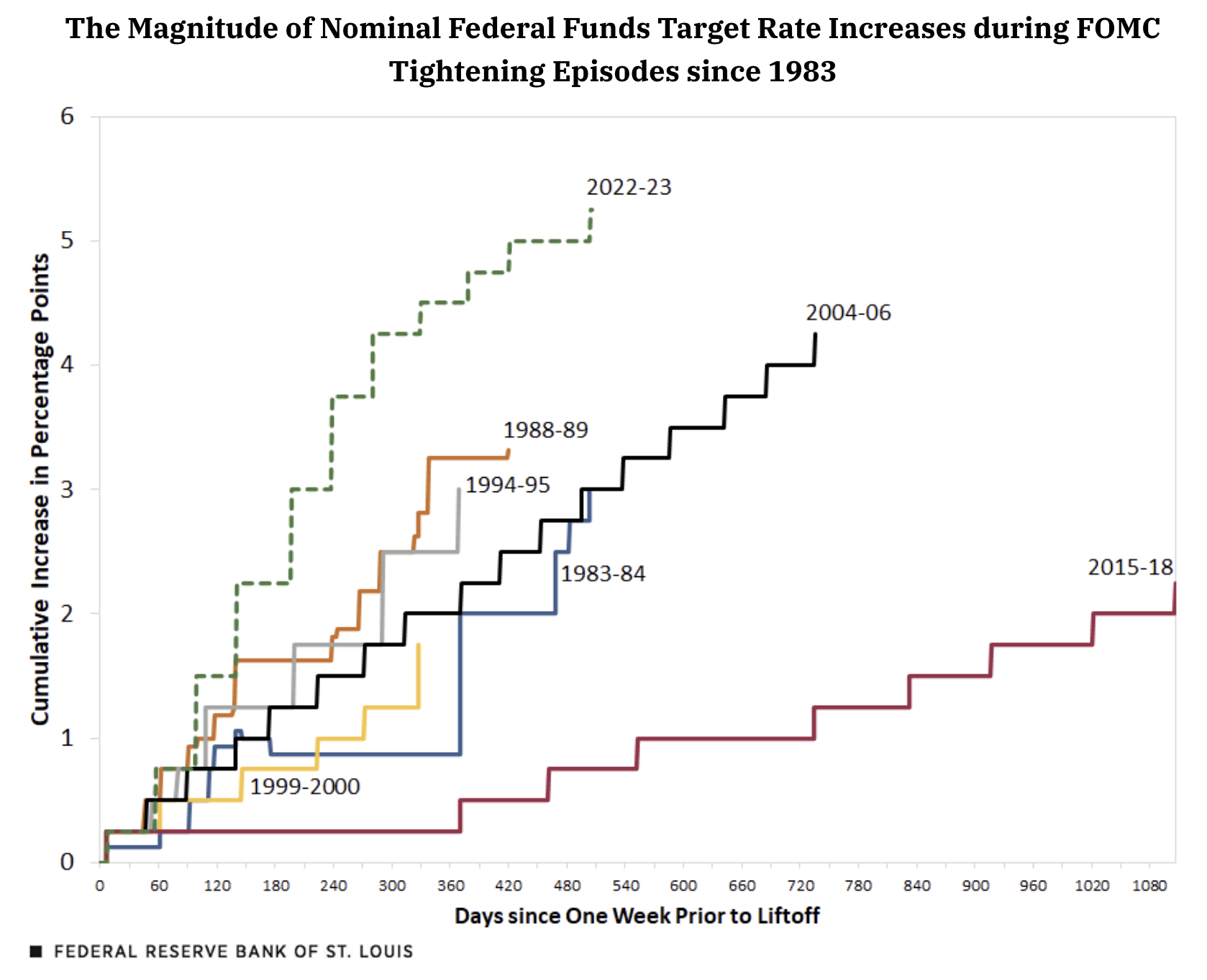
At the conclusion of their July 26 '23, meeting, the Federal Open Market Committee (FOMC) voted to raise the target range of the federal funds rate by 25 basis points to 5.25% to 5.50%. The S&P 500 traded around 4,000 points at the time - some 16% off its ~4800 January high. Markets had reason to be worried... Investors had not seen the Fed this aggressive at any time in the past 40 years... and conditions seemed ripe for a recession. What's more, most widely cited indicators suggested this was a likely outcome. However, it didn't happen? Why not? Are popular recession indicators no longer relevant?

“Heads I Win and Tails You Lose”

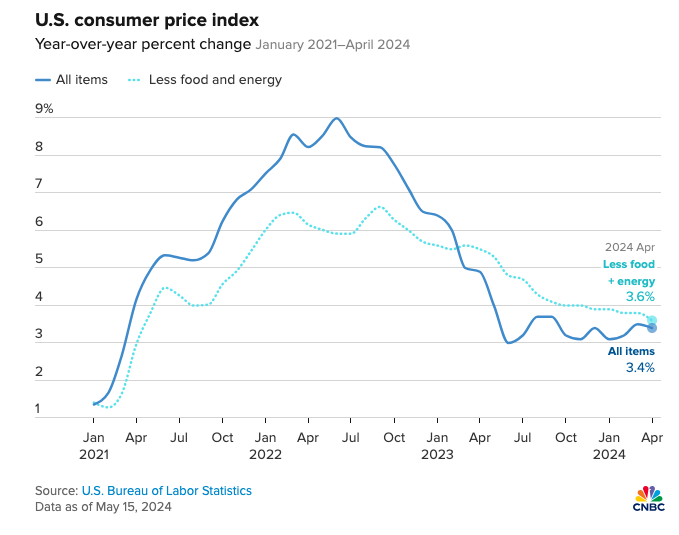
After almost three decades at this game - something you learn is not to fight the tape. Trade against momentum at your own peril. Consider the news today... it was both bad and good. I will start with the (perceived) 'good'. The Consumer Price Index (CPI) was slightly cooler than expected. And whilst it's still a long way above the Fed's target of 2.0% - the market was thrilled it was only up 0.3% MoM and 3.4% YoY. Bond yields plunged and stocks ripped. Sure... 3.4% isn't great... but that's Main Street's problem... Wall Street doesn't care. However, the bad news was retail sales plunged. But wait a minute - that's also "good news" - as it could mean a more accommodative Fed. Heads I win and tails you lose.

For Now… Bad News is Still Good News 

Never confuse the stock market for the economy. They are two very different things. And whilst there are times when the two will trade in unison - there are also plenty of occasions when they diverge. Now is possibly the latter. For example, this week we had a plethora of 'less than positive' economic news. But it didn't stop the market surging back to near record highs. Why? Every bit of bad (or soft) economic news is a step closer for the Fed to lower rates.

Are Commodities Telling Us Something?

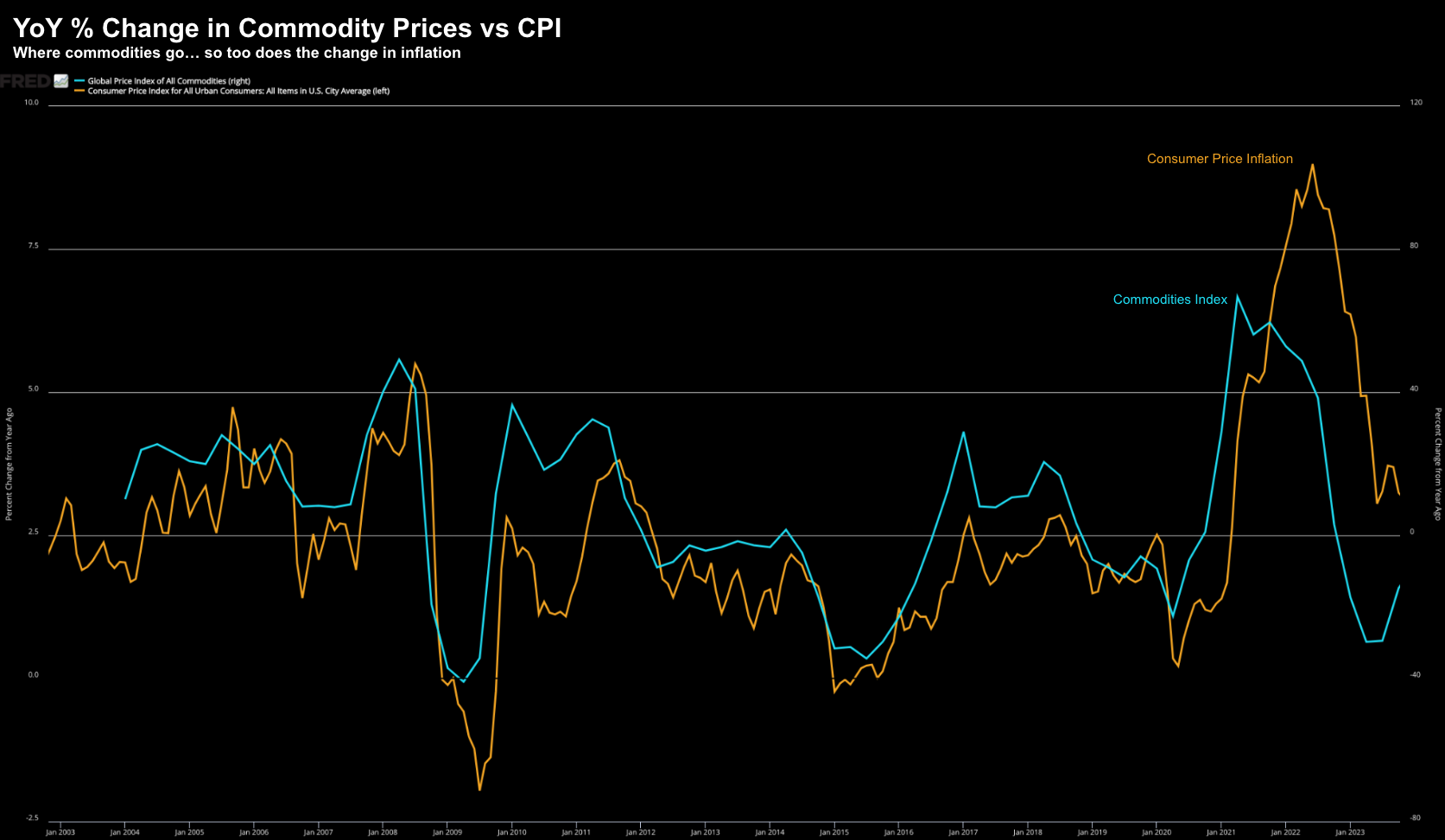
Forecasting things like (not limited to) GDP growth, unemployment and inflation is tricky business. Very few get it consistently right (especially policy makers). And whilst macro forecasting is generally a fool's errand - there are things we can observe to improve our probabilities of success (or at least reduce our risk). Consider inflation... whilst not perfect - there are a set of reasonably strong correlations which exist over extended periods. And it's these types of correlations we can use to our advantage.As I will demonstrate - over the past 5 decades (after the US dollar removed its peg to gold in 1971) - inflation levels have largely correlated to what we see with commodity prices.

Powell Appeases the Market… Or Does He?

For me, there were two (big) questions for the Powell this week: (1) are rate hikes off the table - given faster-than-expected inflation and continuing economic strength? and (2) when will the Fed commence QT tapering (and by how much)? Powell was unequivocal on possible rate hikes... forghedaboudit. Equities cheered. But why remove optionality? Why Powell is so convinced we don't see a re-acceleration in inflation? Admittedly it's a lower probability outcome... but we can't rule it out. But he apparently can...

‘AI’ Trumps the Fed, Inflation and the Economy

The Artificial Intelligence (AI) narrative continues to dominate sentiment. Whether it was Google, Meta or Microsoft... the (AI) earnings script was similar. Mega-cap tech companies so far have reported impressive earnings and revenue growth with respect to their AI strategies (across online ads, cloud and search). It was music to investor's ears. However, strength in tech earnings isn't necessary conflating to strength elsewhere. To that end, there is a strong bifurcation with earnings... and that raises some questions.

Risk vs Reward

Warren Buffett once told us "the stock market is a device for transferring money from the impatient to the patient”. Which one are you? And while it sounds cliché, the power of patience is real. We need patience for two things: (i) allow our existing investments to work over time; and also (b) if buying, waiting for prices to come to us (eliminating FOMO). For example, some investors may have felt left out the past three months (I certainly did) - as 'hot' momentum stocks like Nvidia, Netflix, Meta and others surged. Fundamentals were not front of mind - where investors thought nothing of paying 40x plus earnings. The momentum trade had taken hold. But as we know - things inevitably revert to the mean.

Things Looking Better – But More to Do

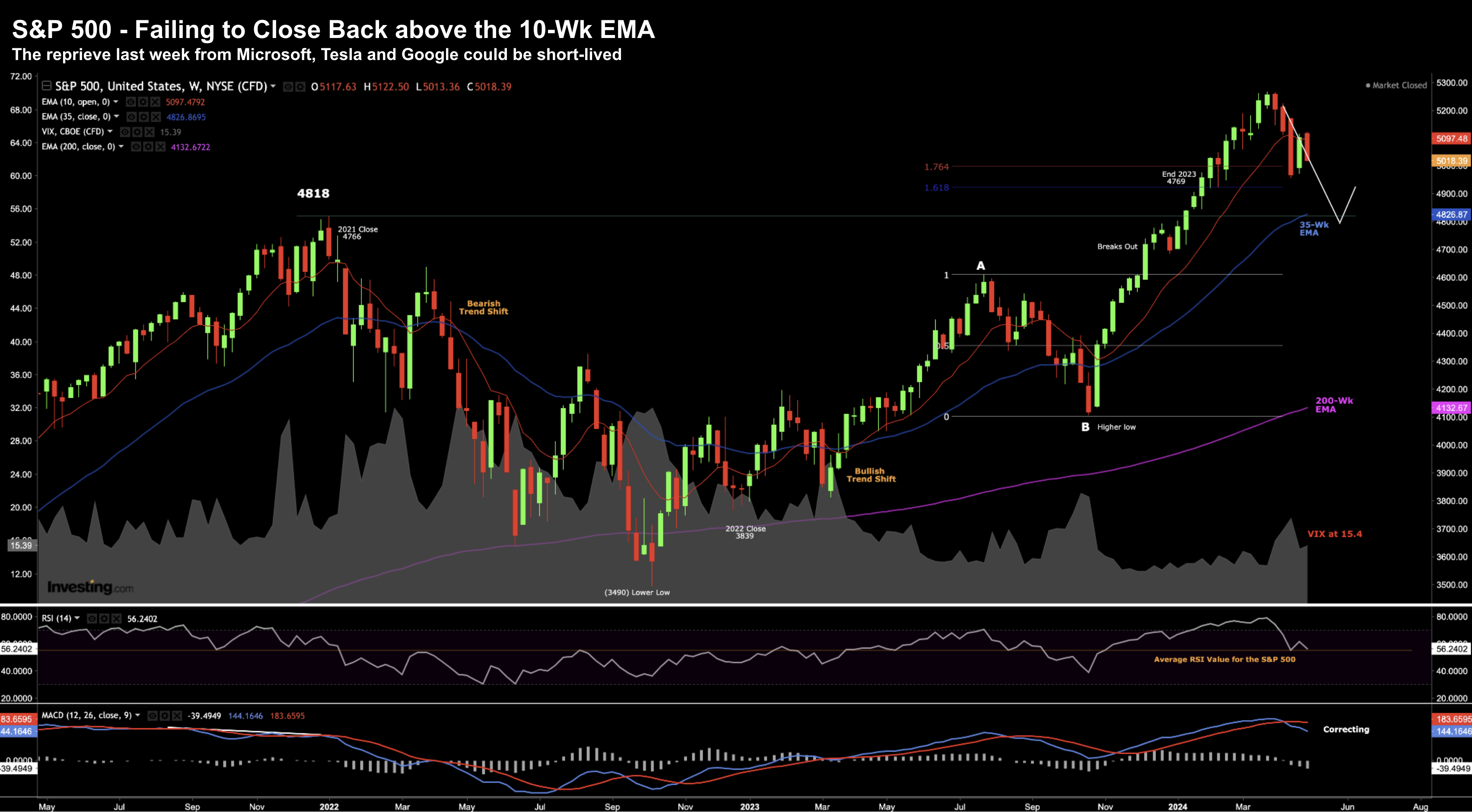
For 23 straight weeks (from late October) - the market has effectively gone straight up. It added ~$12T in market cap with barely a pause - a rally for the ages. Now for ten of those weeks, it was in overbought territory - where the (weekly) Relative Strength Index (RSI) traded above 70. I cautioned readers of a likely (technical) correction. And whilst I stressed the market can remain overbought for several weeks (and it did) - it's also an area to be cautious. This is where sell-offs start. And it seems we could be seeing the start of a 7-10% correction... however it's still early.

When Is the Right Time to Buy Bonds?

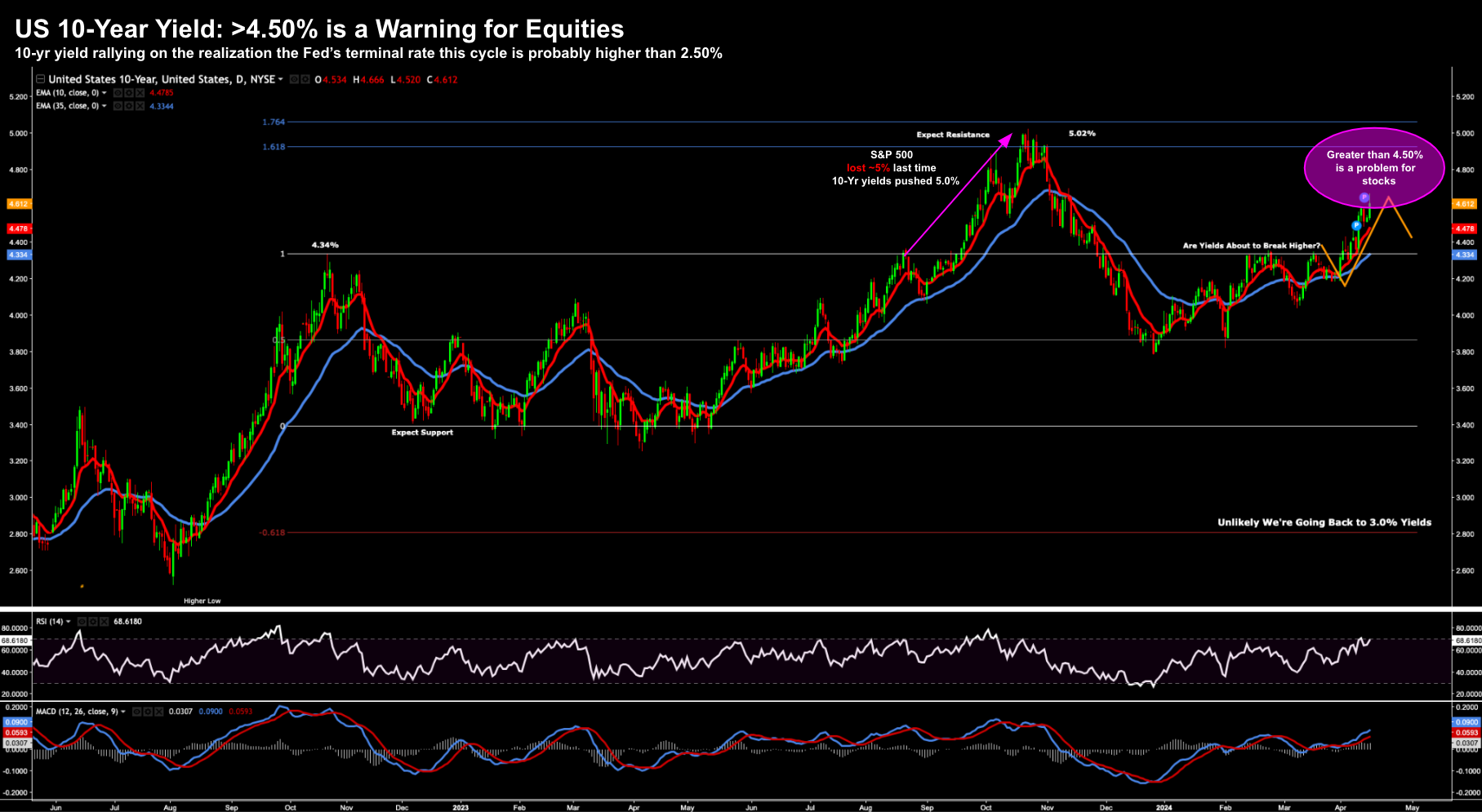
Treasury yields are surging... the U.S., 10-year treasury - a rate which every financial asset is tied to - has ripped back above 4.60%. Credit card rates, home loans, auto loans... you name it... have all increased. The last time UY.S. 10-year yields traded above 4.60% - the S&P 500 was ~20% lower. From mine, the divergence is a head-scratcher... however, what I can say is risk assets have a tougher time advancing when yields push beyond this zone. The question is - is now a good time to increase bond exposure? I think the answer is yes.. and here's why