adriant

adriant

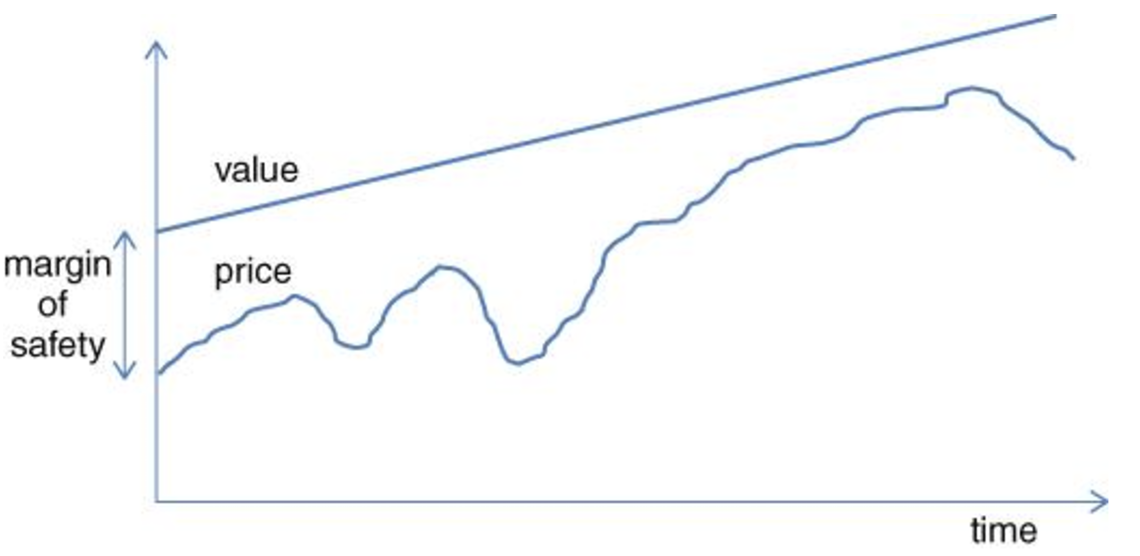
Price vs Value

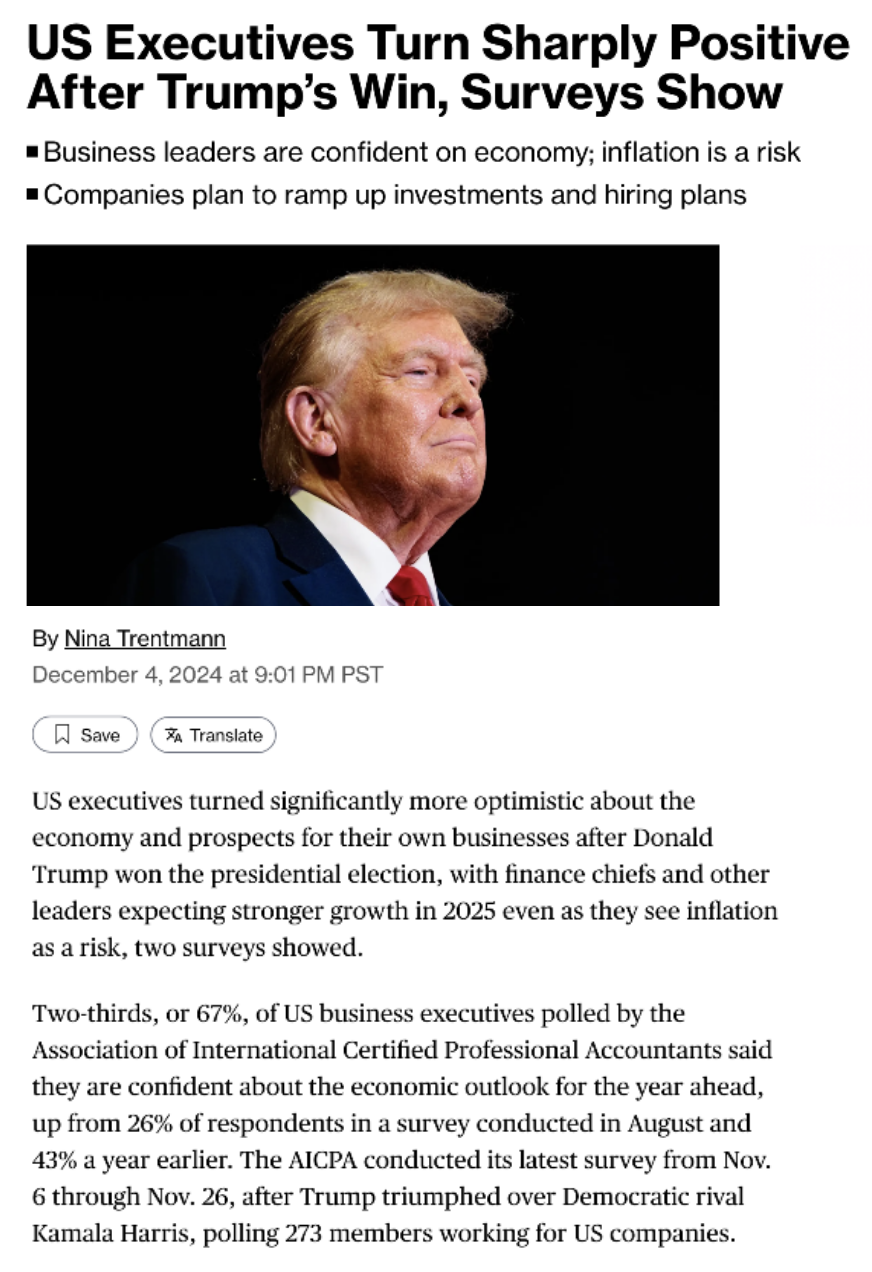
Markets could not be more optimistic about the future. We see it with consumer sentiment, spending and in the stock market. For example, the S&P 500 surged to a new record high 6090 - far exceeding the most bullish of forecasts from 12 months ago. Will analysts be equally bullish about 2025? Post Trump's Nov 5th win - the bulls have found another gear. Trump has painted a compelling vision of a US economic resurgence built on three primary pillars: (i) lower taxes; (ii) sweeping deregulation and government reform; and (iii) an
emphasis on domestic production. Why does this have corporate America very excited?

Munger on Intelligent Investing

With markets at record highs - trading at very high valuations - I felt it was timely to revisit investing lessons from Charlie Munger. Sadly, Charlie passed away late last year - just shy of his 100th birthday. Whilst Charlie was an incredible investor - what I loved most was his ability to draw insights from many disciplines - which included the study of psychology, economics, physics, biology, history, architecture among other things. This enabled Charlie to develop a lattice of “mental models” to cut through difficult problems. Over the years, I've found Charlie's insights into investing, business and life not only rare but generally correct. What's more, they stand the test of time.

Tobin’s Q-Ratio Trades at Historical Highs

By just about any intrinsic measure - the stock market looks expensive. Ben Graham would be warning investors to heed caution. Now one of the more widely cited metrics is its forward price-to-earnings (PE) ratio - which trades at a very high 22x. However, another intrinsic measure is James Tobin's Q-Ratio - which now trades at a record high - exceeding that of the dot.com bust. And whilst not a great timing tool - it maintains a very reliable record of picking long-term secular highs.

Tariffs: More than Just Trade Imbalances

Since Trump's election win - it's clear he's willing to use access to (lucrative) U.S. markets as leverage to achieve broader objectives. And major trading partners are taking notice. For e.g., the ECB's Chief - Christine Lagarde - has suggested European countries should look at how to avoid (new) tariffs by buying more US made goods. And South Korea is looking at buying more US based LNG. What's clear is any potential tariffs are becoming an integral part of a larger strategy to reorient global trade relations around issues such as greater security, immigration and health priorities. That is, they're not exclusively aimed at reducing economic imbalances.

Benjamin Graham’s ‘The Intelligent Investor’

Over the 14 years writing this blog - I've mentored many people on how to become a better investor. It's something I enjoy and a large part of why I've written this blog for so long. As part of that, one of the (many) books I highly recommend is Benjamin Graham's timeless classic "The Intelligent Investor". Unfortunately this is not a great book for those beginning their investing career. It's very dense and requires a lot of time and focus. I had the idea to write a 20-part summary of the book -- where each part corresponds to a chapter. And where practical - I produced up-to-date examples of his principles - simply to illustrate that nothing changes. And whilst someone will always say "it's different this time" - the truth is very rarely is it different.

Here Come the Foolish Forecasts

Once again, it's that time of year. Investment houses are set to release their forecasts for the upcoming year. Why they bother I don't know? And whilst there is still approx one month to go - if the markets finish anywhere near 5,800 - most forecasts made for 2024 will be abysmal. The average end-of-year forecast for 2024 was ~4600. The closest looks like being Ed Yardeni - who forecast 5400 - however at the time appeared wildly bullish. Well done Ed.J.P. Morgan told their clients we would finish 2024 around 4200 - currently more than 40% off the mark.... could it get any worse? So what do you think they will tell us for 2025? My guess "up in the realm of ~8%". Why? Because that's the 100-year average.

Consumer Resilience to be Tested

The post-pandemic resilience of the American consumer continues to show strength. October's retail sales data indicates continued spending, especially as the holiday season approaches. This is important, as consumption comprises 70% of all U.S. GDP. Overall US retail sales rose by 0.4% from the previous month, seasonally adjusted, and increased 2.8% year-over-year unadjusted. Good news. However, the question for today is what (if any) will policy changes impact spending behavior? For example, what could be the impact of tariffs? What if we see less government handouts? How will that impact lower-income households?

The Trump Trade Stalls

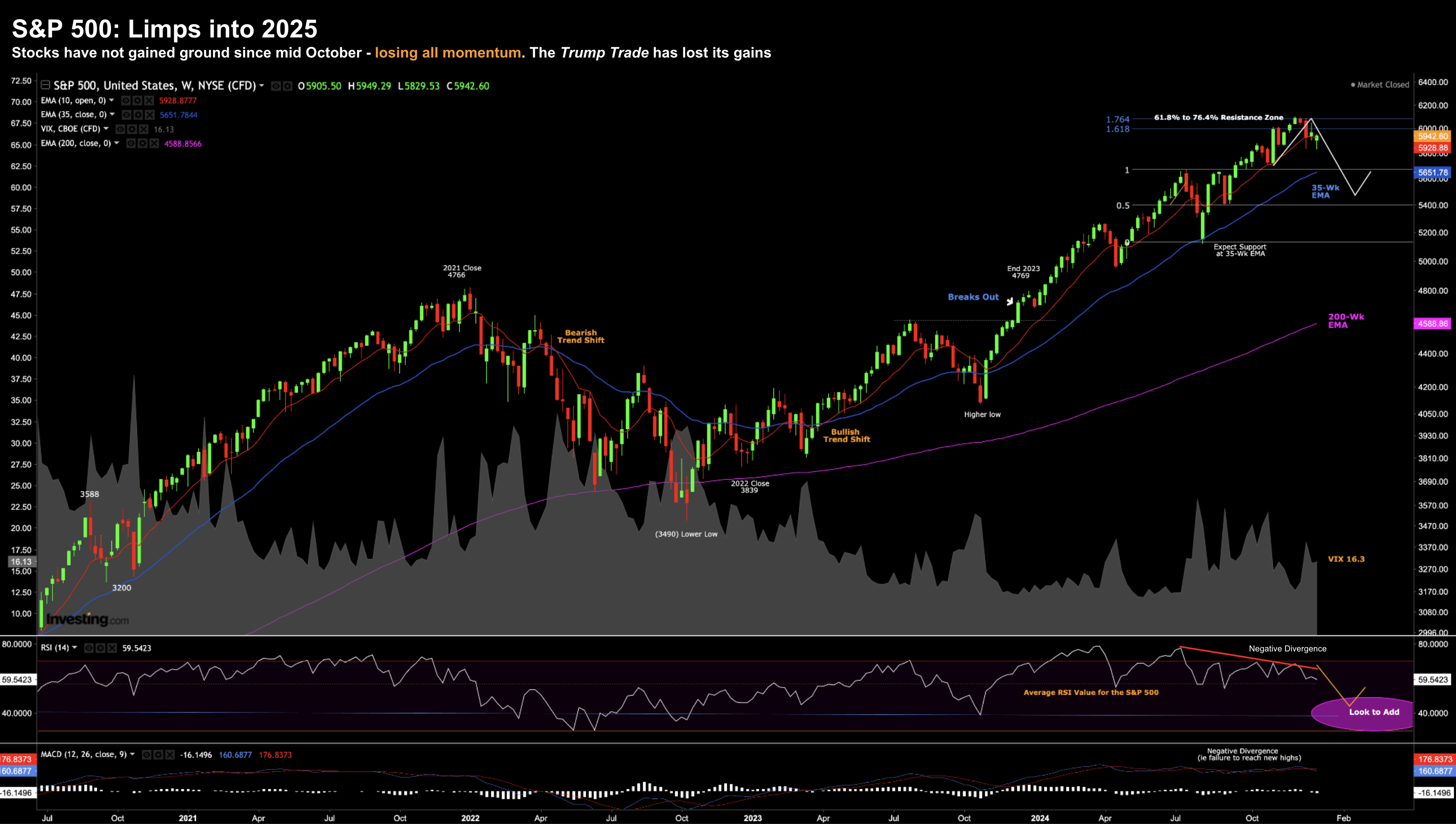
Last week when assessing the surge in markets - I offered examples of how market (sector) dynamics shifted. Adding to that theme - I was not overly surprised to read how institutional investors are putting money to work. For example, Bank of America Corp.’s monthly survey of global fund managers indicates that Trump's decisive win is perceived as a potential turning point for investment strategies. And whilst that could be true - it pays to look at history... what can we gauge from Trump 1.0 (and the impact on markets).

Time to be Greedy or Fearful?

Warren Buffett is famous for saying "be fearful when others are greedy; and be greedy when they are fearful". Today the Oracle of Omaha sits on a record $325B in cash - a record for Buffett - and over 30% of his entire portfolio. Investor enthusiasm today is wildly optimistic about future growth and earnings post the election result. And whilst surging prices are a sign of confidence - markets are also notoriously fickle...

Red Sweep Turbocharges the Market

Trump's decisive win last week has seen significant shifts in market sentiment. Markets are optimistic that Trump's tax cuts and deregulation will turbocharge growth. And they might. But what implications will Trump's policies mean for the US dollar, long-term bond yields and foreign trade? As investors, you need to evaluate both what is seen vs unseen. There will be both opportunities and challenges... however they will be very sector specific.