adriant

adriant

And The New Year Begins… Slowly

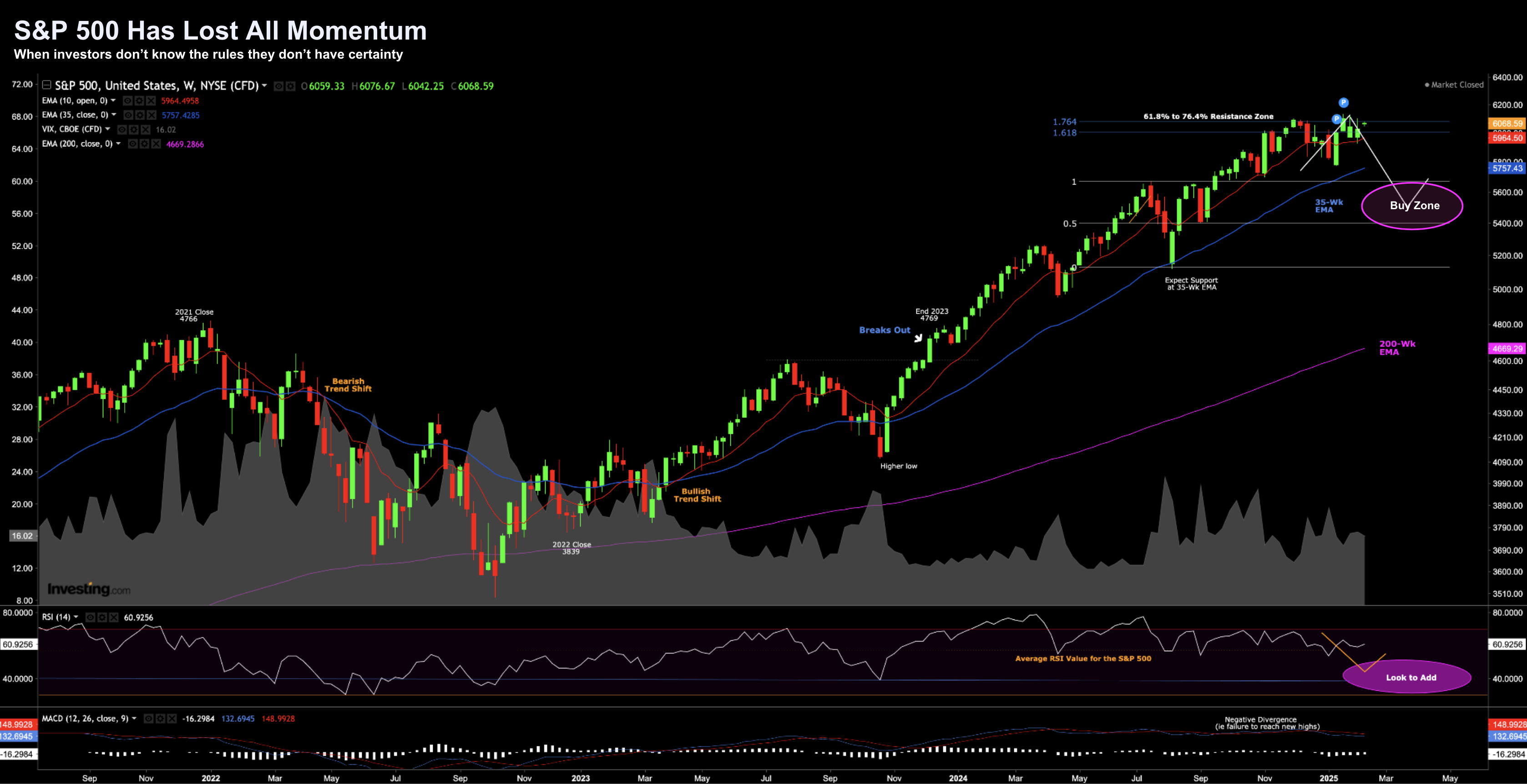
The trading year for 2025 is under way. Markets have worked their way through the so-called Santa Clause Rally. For those less familiar - this refers to a period of trading between the last five trading days of December and the first two trading days of January. This year Santa delivered a fat lump of coal. The market lost ground. So what does that mean for 2025? Absolutely nothing! Don't read anything into it! What's more important is Q4 earnings season... and how company's perform.

2025 – Finding Quality at Reasonable Prices

The S&P 500 recorded a 23.3% gain for 2024. For the first time since 1998 - posted two consecutive years of gains above 20%. Not bad right? Well if we extend our time horizon to include 2022 - the market's CAGR is just 7.2% (below its long-term average of ~8.0% exc dividends) Mmm. Not as good. And over 5 years - the S&P 500 CAGR is is 12.7%; and over 10 years its 12.4%. It's important we measure results over a period of at least 5 years (preferably 10). 2-3 years is a very short amount of time... where all kinds of distortions will happen. But over time - these distortions are always corrected. My point? Things always mean revert... and one should never 'cherry pick' dates to fit a narrative.

NVDA: What Do You Pay for Growth?

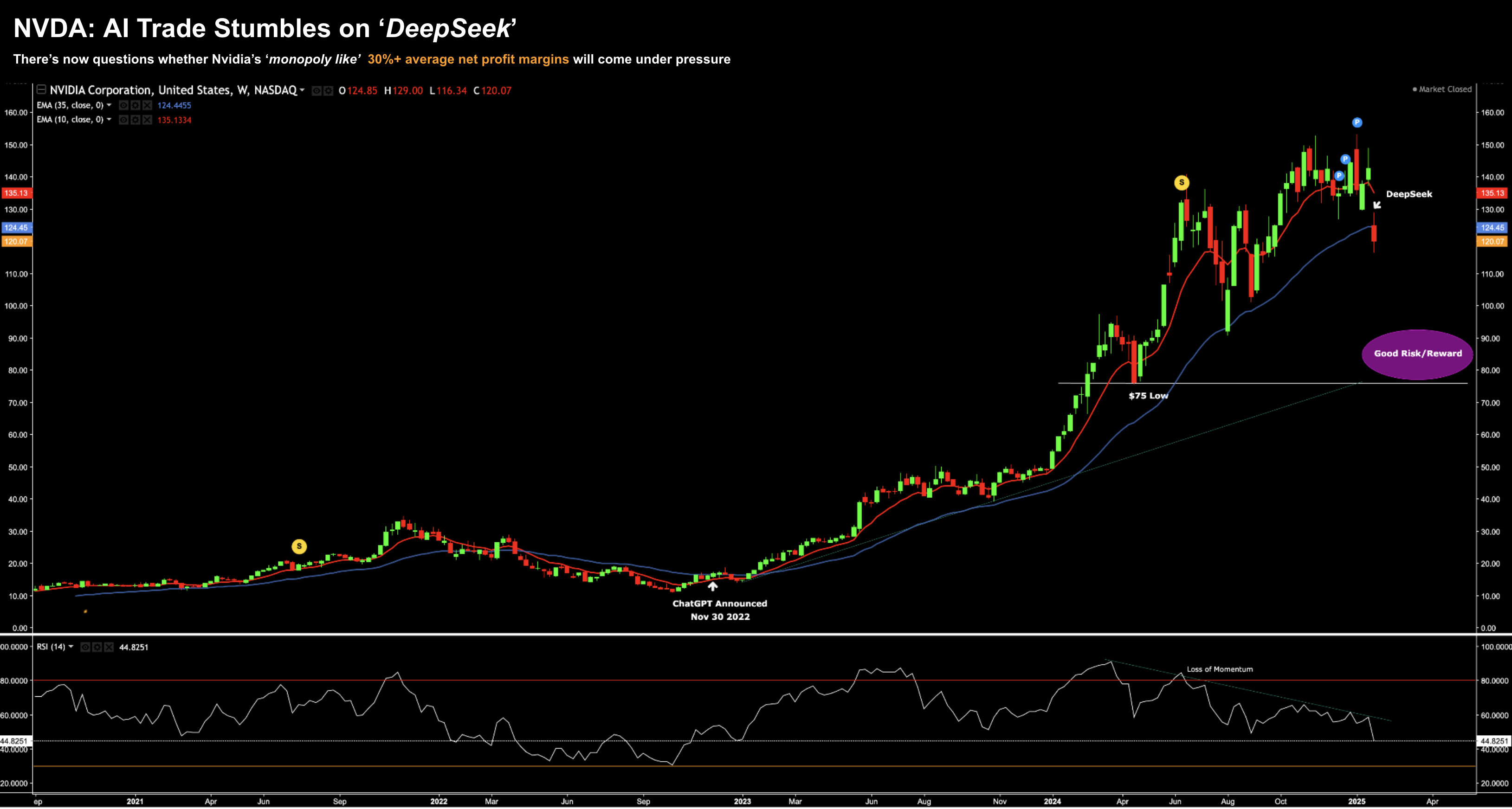
2024 will go down as another great year for stocks in the trader's almanack. However, what won't be recorded is just seven stocks comprised ~54% of the S&P 500 total gains (~24% with two trading days remaining). It's a bit like golf - you only need to record the final score - not how you did it. However, the how matters (not just the 'what'). This post will address the question of what to pay for one the most popular stocks today - Nvidia (NVDA). The asking price is $137 at 32x forward earnings. But does that represent great value given its growth assumptions?

Fed’s Balancing Act for 2025

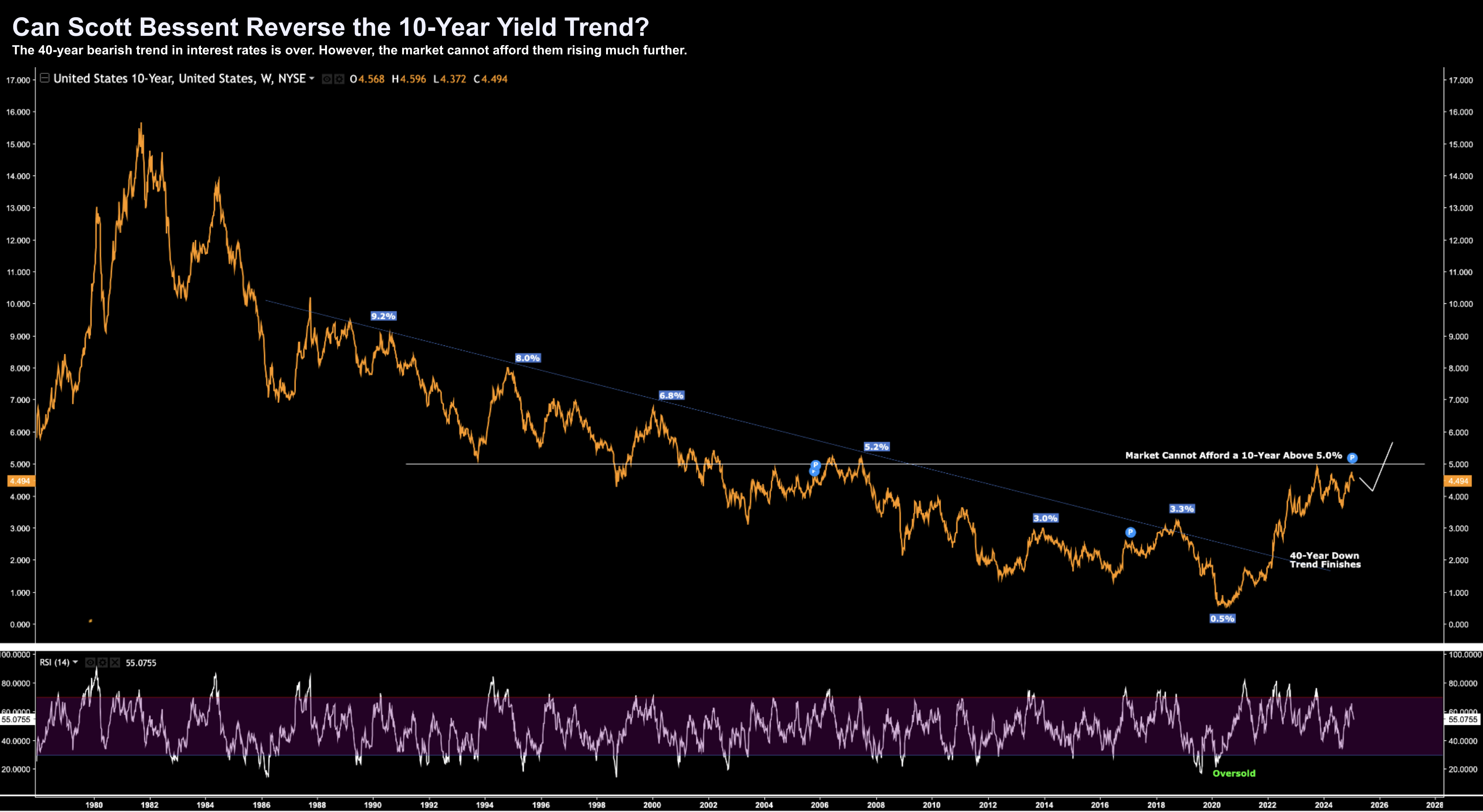
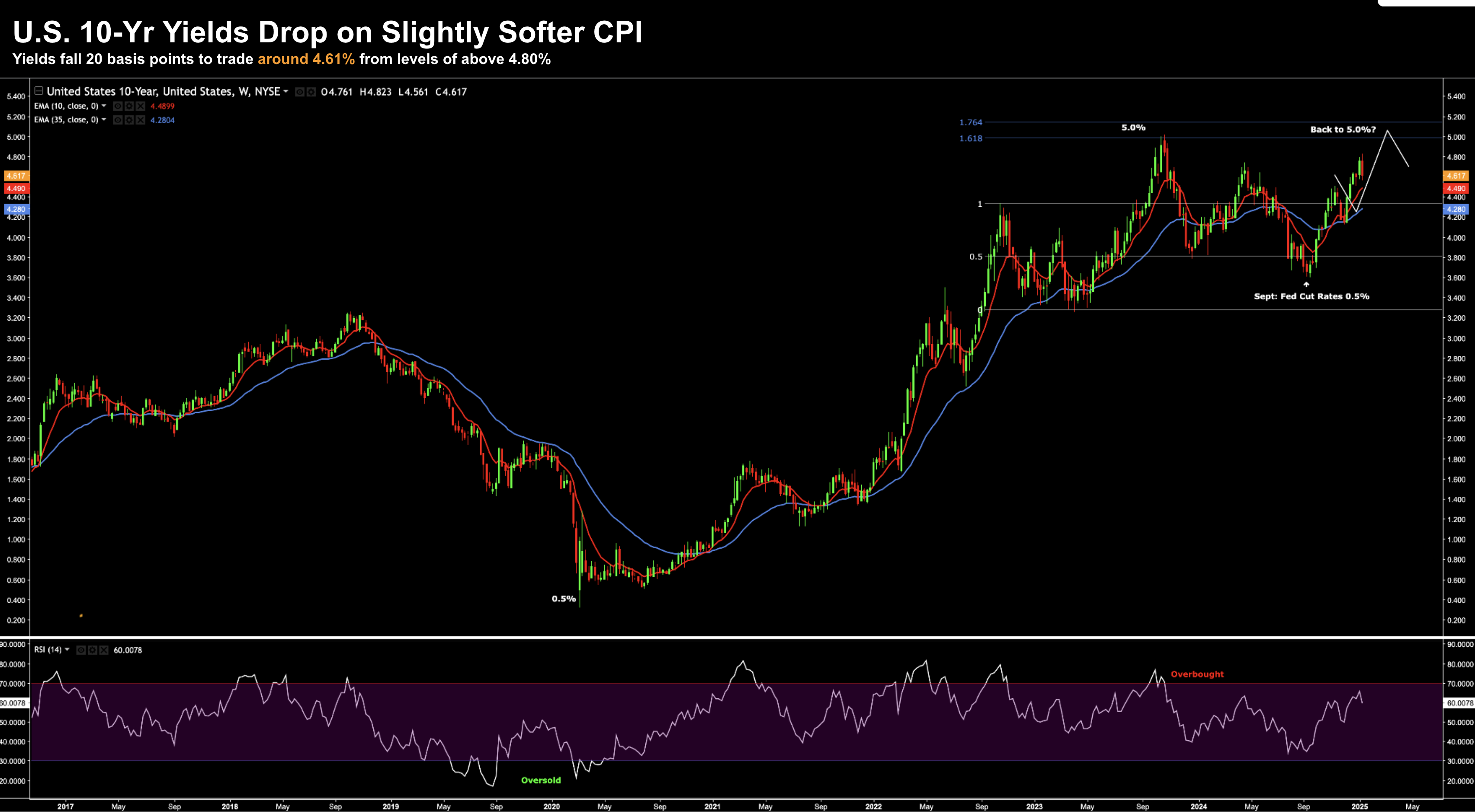
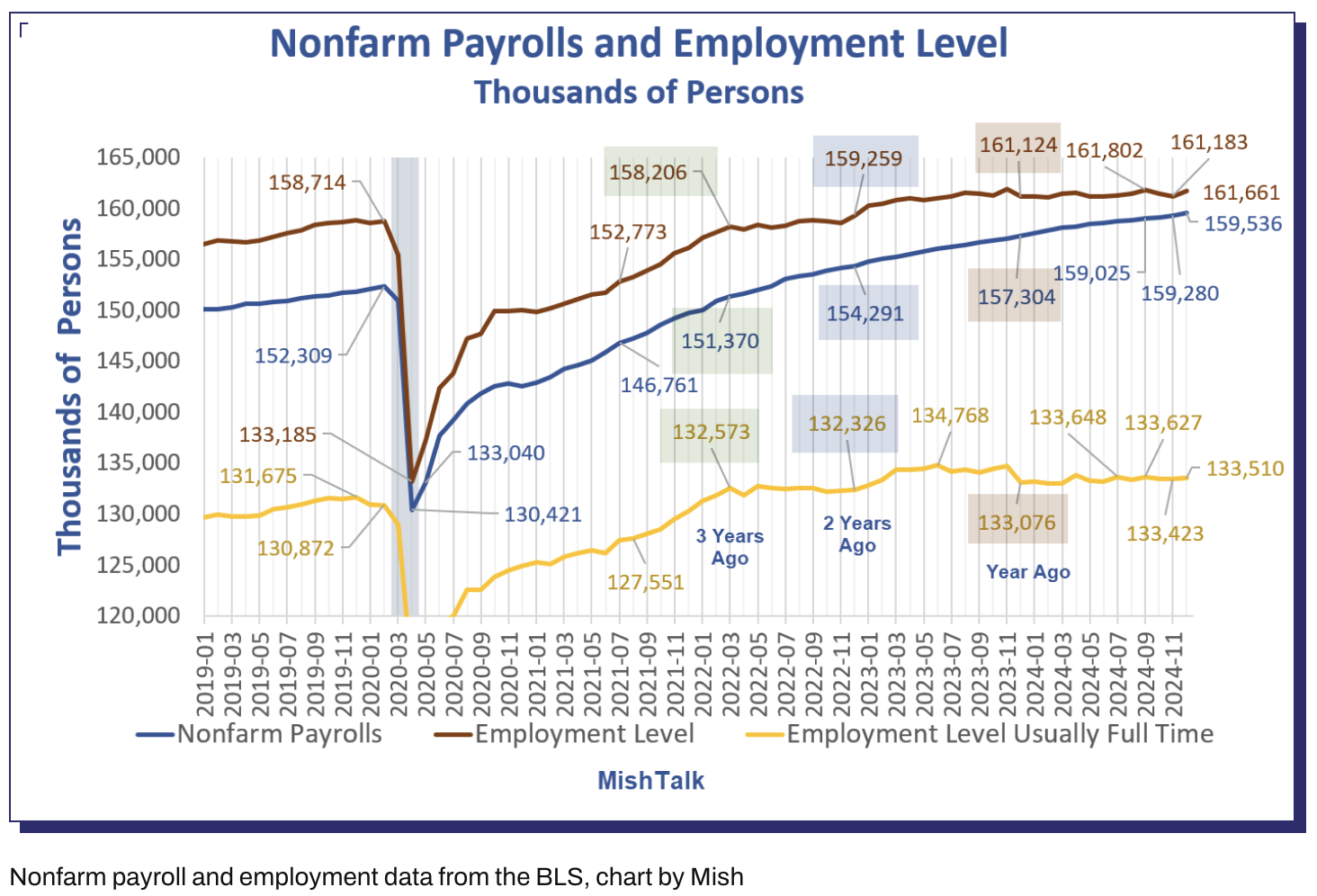
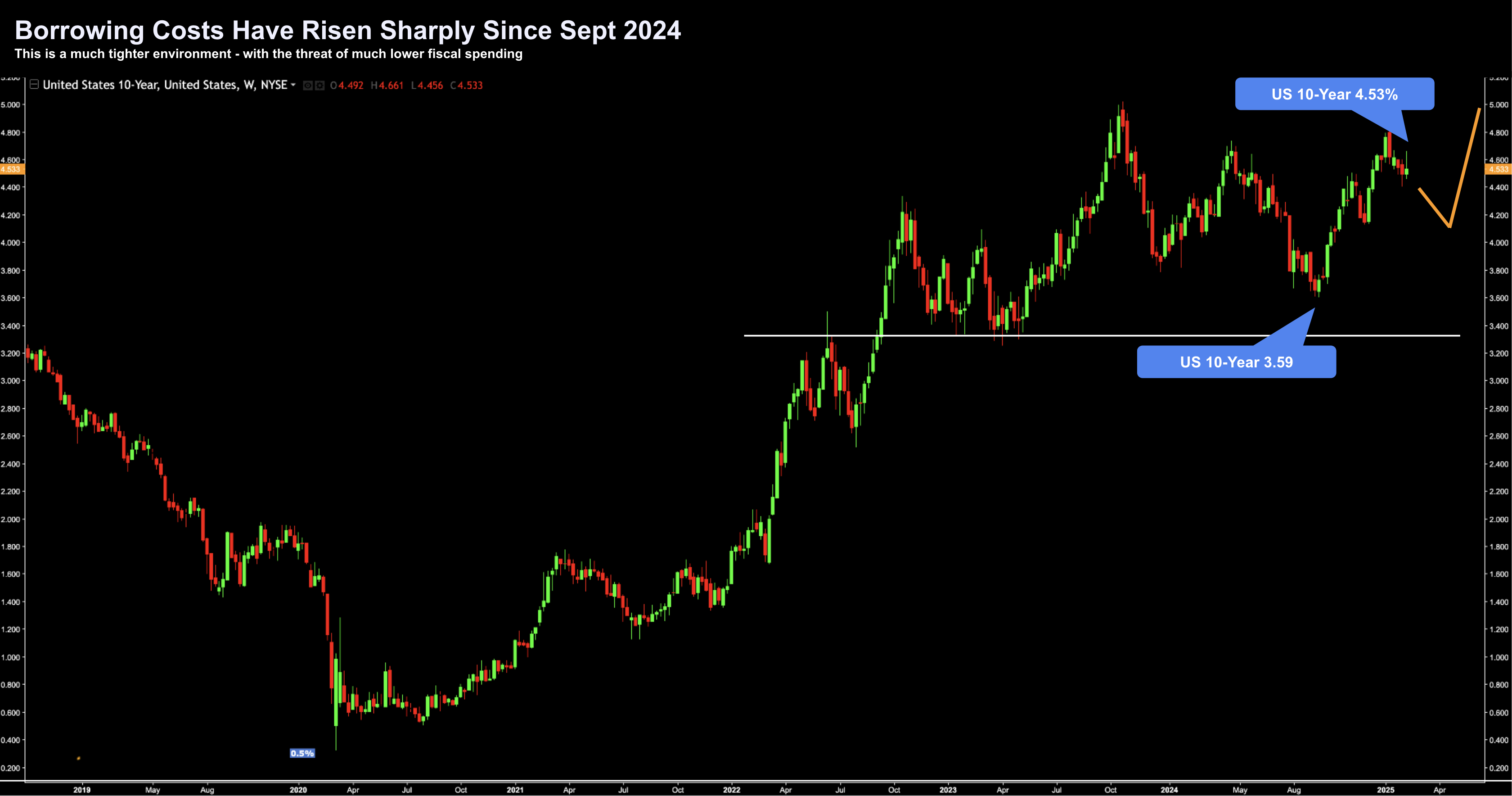
2025 will not be without its challenges for both investors and central baks. For example, if we consider: monetary and fiscal policy risks; likely introduction of tariffs and price increases; geopolitical risks as global central banks navigate U.S. policy; a stronger US dollar with a rising 10-year treasury yield; ongoing debt and deficits concerns; the risk of stubborn inflation (notably services); and a weakening employment picture - this presents a complex web of related variables or risks. How are markets pricing this in? For now they remain complacent - trading at record highs - at near 22x forward earnings.

End of 20-Year Cheap Money Era

Equities were seemingly caught off balance with the Fed's 'surprise hawkish shift'. From mine - there was very little surprising about it - you only needed to look at the data. However, what I was more interested in was how Powell would explain why they were cutting rates. As it turns out he struggled - leading to a small sell off in stocks. The irony was Powell did a better job of explaining why rates should not be lowered (which is obviously at odds with their decision to cut).

Zero Sum Game

Trump's favorite word in the dictionary is "tariff". In his view, it just needs a little public relations (PR) help. I don't know about that. Personally, I'm not a fan of tariffs. Over the long-run, history has shown they do more harm to the economy vs help. Better PR won't change that. However, in the very near-term (24-36 months) - they can be seen to add jobs and create benefits for the protected industry(s). From that lens, people are mistaken to believe they're working (as that's what's visible). But what about the unseen? To help explain, I'll draw on the timeless work of Adam Smith. The protectionist policies of today are not only reminiscent of those in the seventeenth and eighteenth centuries -- but are arguably worse in their complexity and scale.

Inflation x Rates = Uncertainty

The stock market could not be more optimistic. And perhaps not since the dot.com bubble of 1999 - have investors been so sure of the future. Excited by a business friendly government coming to power; lower inflation; consumers continuing to spend - what's not to like? I can think of one thing.... valuations. If buying stocks today - you're paying through the nose. And for me - that increases your risk.

Price vs Value

Markets could not be more optimistic about the future. We see it with consumer sentiment, spending and in the stock market. For example, the S&P 500 surged to a new record high 6090 - far exceeding the most bullish of forecasts from 12 months ago. Will analysts be equally bullish about 2025? Post Trump's Nov 5th win - the bulls have found another gear. Trump has painted a compelling vision of a US economic resurgence built on three primary pillars: (i) lower taxes; (ii) sweeping deregulation and government reform; and (iii) an
emphasis on domestic production. Why does this have corporate America very excited?

Munger on Intelligent Investing

With markets at record highs - trading at very high valuations - I felt it was timely to revisit investing lessons from Charlie Munger. Sadly, Charlie passed away late last year - just shy of his 100th birthday. Whilst Charlie was an incredible investor - what I loved most was his ability to draw insights from many disciplines - which included the study of psychology, economics, physics, biology, history, architecture among other things. This enabled Charlie to develop a lattice of “mental models” to cut through difficult problems. Over the years, I've found Charlie's insights into investing, business and life not only rare but generally correct. What's more, they stand the test of time.

Tobin’s Q-Ratio Trades at Historical Highs

By just about any intrinsic measure - the stock market looks expensive. Ben Graham would be warning investors to heed caution. Now one of the more widely cited metrics is its forward price-to-earnings (PE) ratio - which trades at a very high 22x. However, another intrinsic measure is James Tobin's Q-Ratio - which now trades at a record high - exceeding that of the dot.com bust. And whilst not a great timing tool - it maintains a very reliable record of picking long-term secular highs.