When Bad News is Bad News

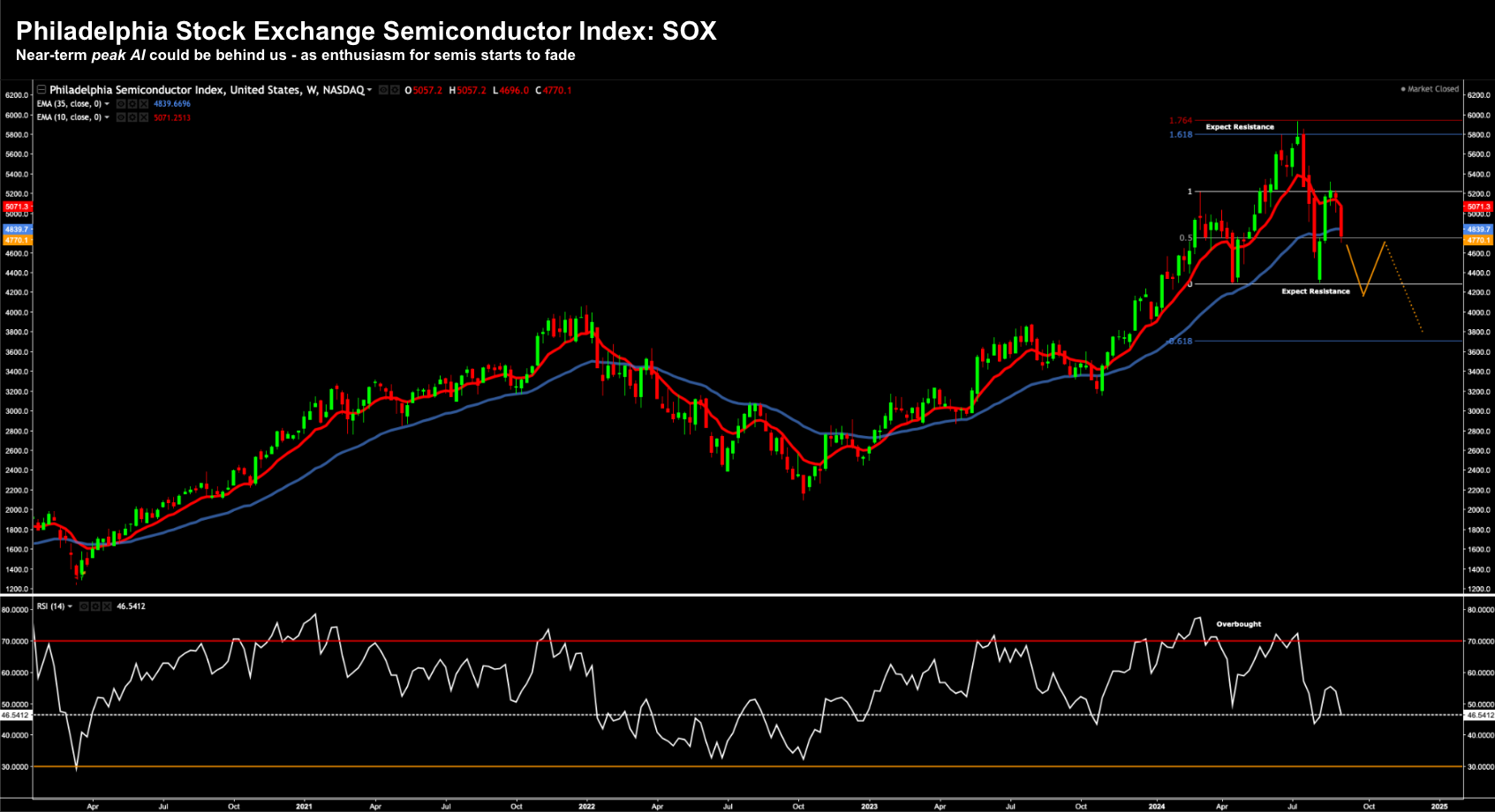
Last weekend I questioned whether markets could break out to the upside; or perform what trader's refer to as a "back and fill". My best guess was the latter. In turns out, things traded 'per the script', where the S&P 500 suffered its worst week since March 2023 - giving back 4.20%. The Nasdaq fared far worse - shedding ~6% - led by large losses in popular AI chip stocks. So why are market's worried? It's concerns about growth. With a market trading close to ~22x forward earnings - expecting YoY EPS growth of 11% -- that's not consistent with 'slowdown' scenario.

It Wouldn’t be September Without a Few Bumps

September has started in a very typical September fashion. Down! It's traditionally the worst month of the year in terms of returns. But that's not a bad thing... As longer-term investors - it's great when things go on sale. That's when we get to sharpen our pencils on higher quality businesses. And for those who missed out four weeks ago (where you needed to act fast) - it's possible you will get another chance this month. As I wrote recently - the rapid 10% surge in equities over 4 weeks did not fill me with a lot of confidence...

Thoughts on the Rest of the Year

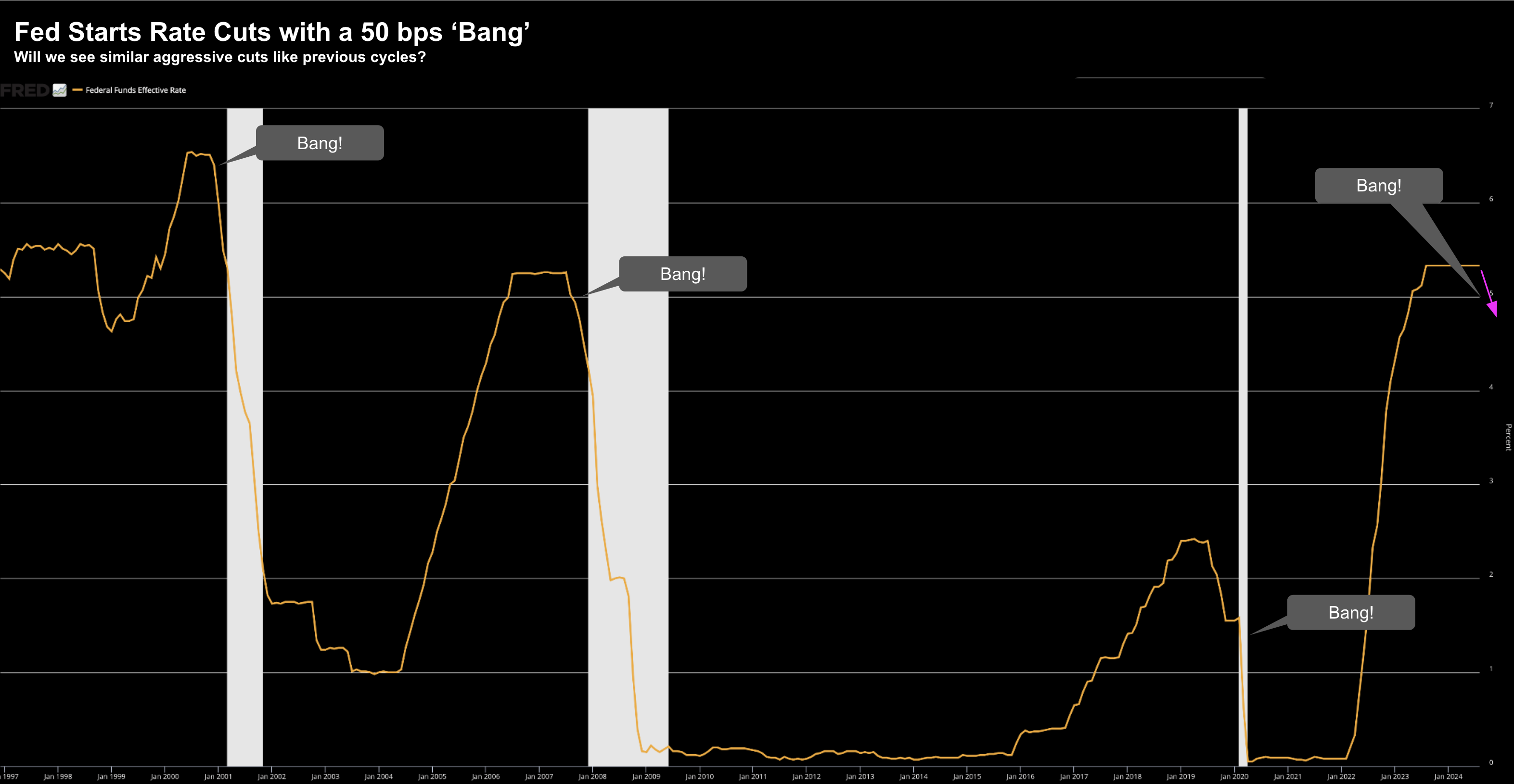
Over the past year or so - one of the key investment themes has been "bad news is good news". Bad news implied the Fed was more likely to cut rates. For example, after the market incorrectly assumed we would see 6 or 7 rate cuts at the start of the year - the Fed have finally come to the table. In other words, the economic risks (to growth) are sufficient enough for the Fed to act. This is important. What happens during this transition is "bad news is no longer good news". History shows us when economic conditions worsen during an easing cycle - stocks perform poorly. Therefore, the market's primary concern now is whether the Fed has waited too long?

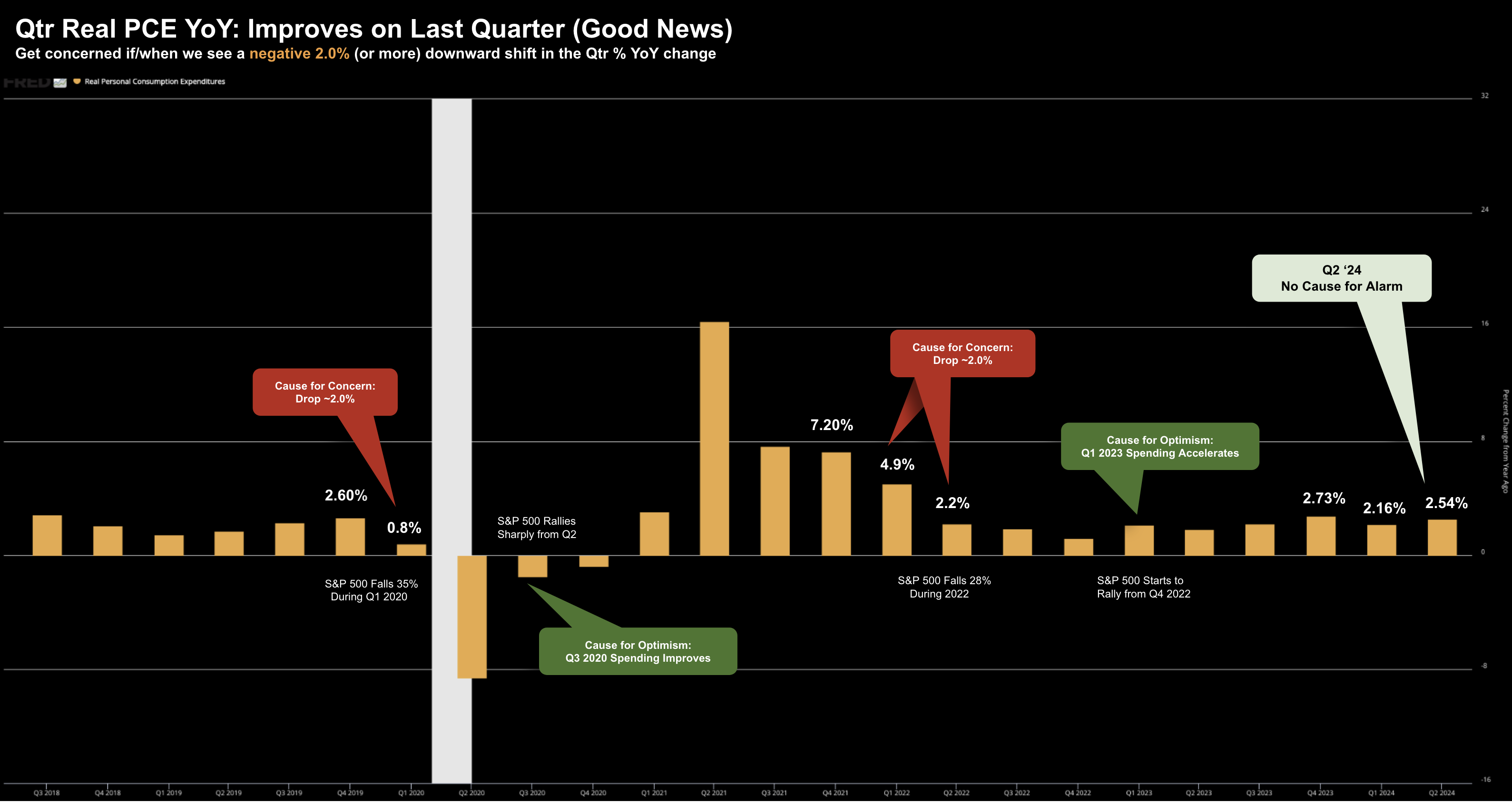
Back to the Scene of the Crime.. And a Warning from PCE

Eight months down. Four to go. After shedding almost ~10% to start the month - the bulls managed to close the market at its highs. Whiplash anyone? The S&P 500 is back to the point where the markets panicked on a growth scare - however it raises a question: (i) can it break through previous resistance (the all-time high of 5669); or (ii) will it perform what traders call a "back and fill"? My guess is the latter - as we head into one of the weaker months of the year.

Nvidia Beats Expectations… But Disappoints on Guidance

Rarely has a single stock been so 'hyped' coming into earnings as Nvidia. The leading AI chip maker is widely seen as the 'AI' barometer... making their earnings more important than most. My expectation was they would handily beat Q2 revenue and earnings - however issue a softer-than-expected guide. It turns out that's what we got. Make no mistake - this was another exceptionally strong quarter. And despite the softer guide - "only" falling 6.4% should be considered a good result. This post talks about whether Nvidia is still worth a bet post their results. The answer is it depends on your timeframe... but long-term (3+ years) the answer is absolutely yes.

Powell Takes a Victory Lap

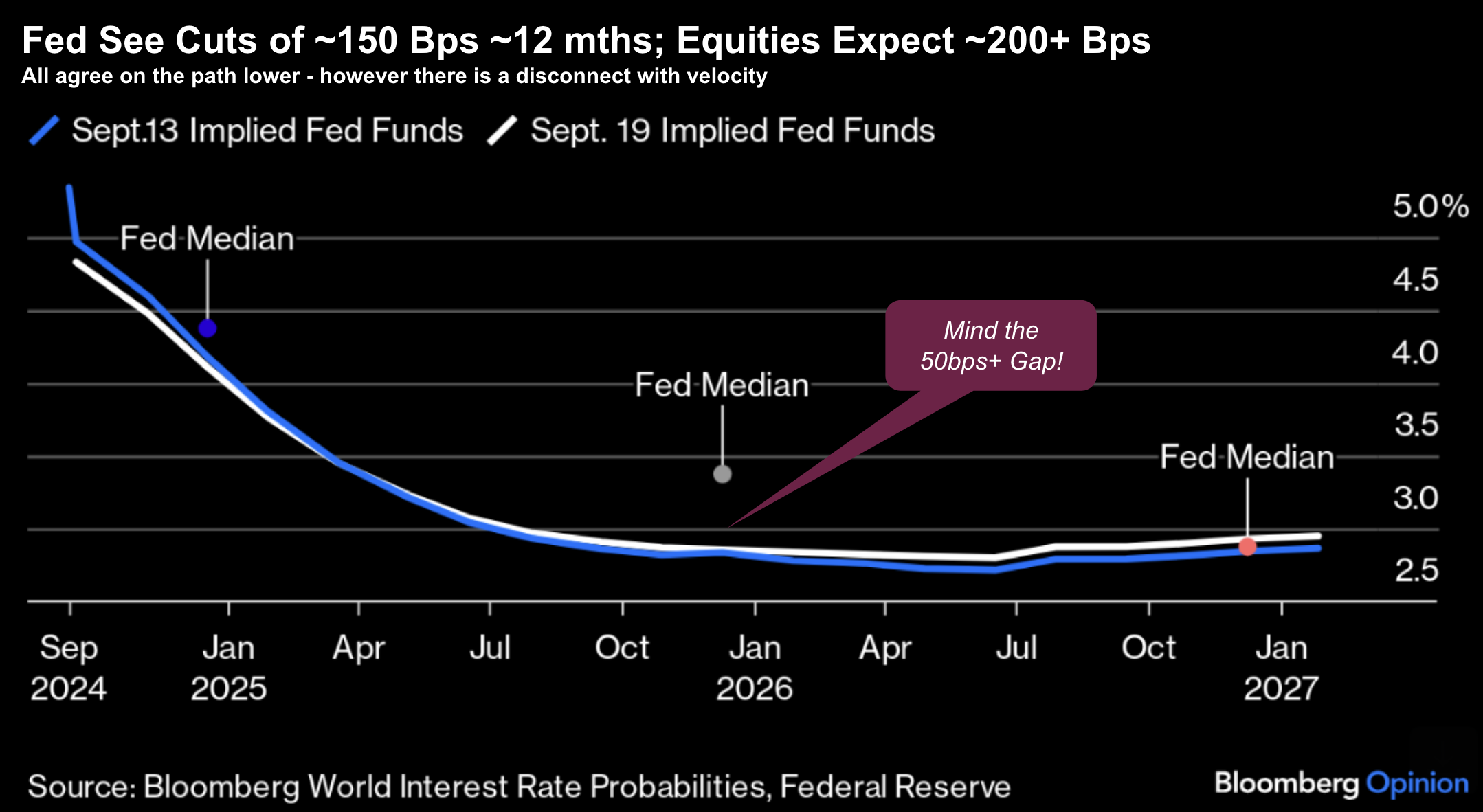
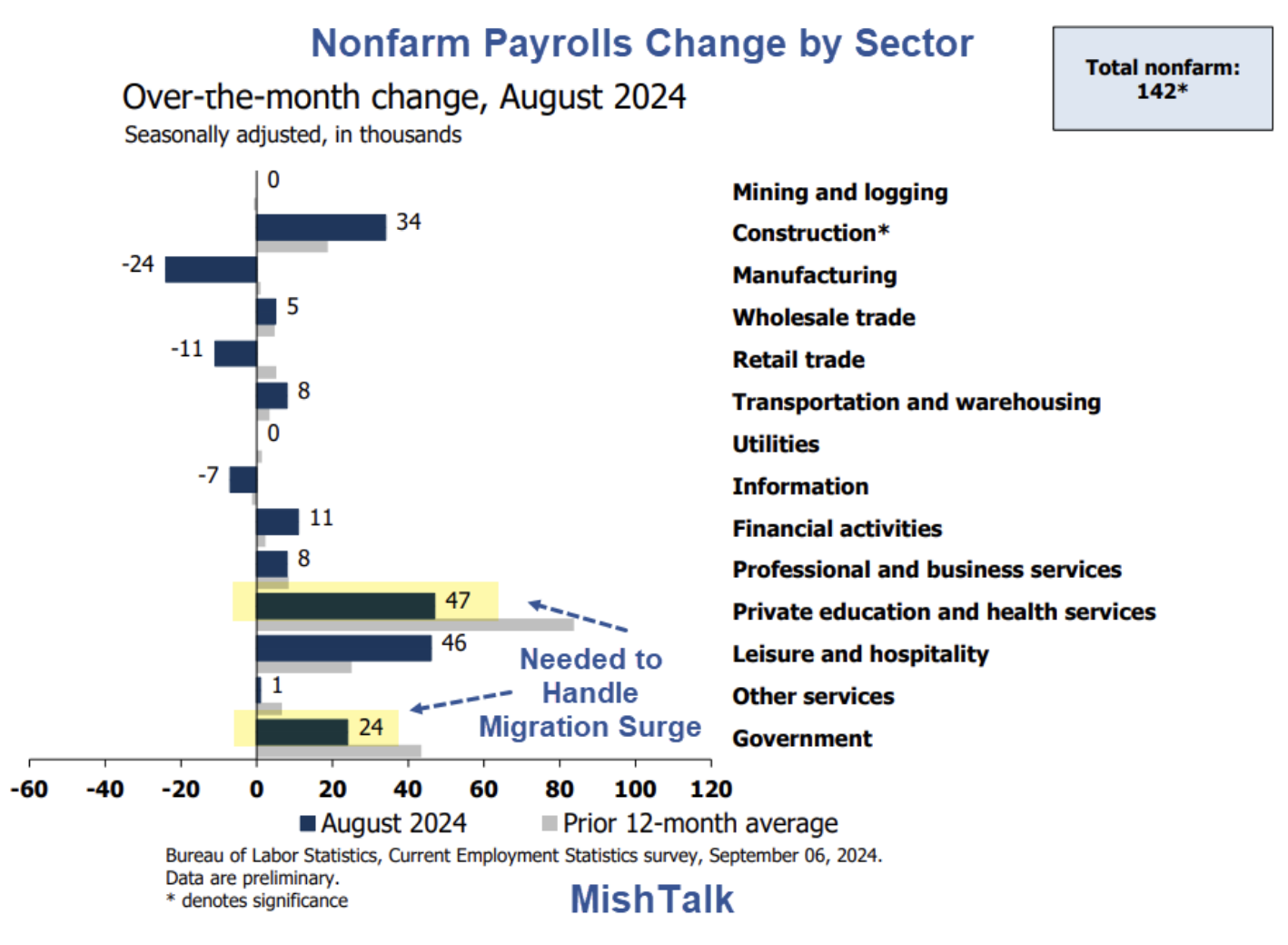
Fed Chair Powell didn't disappoint at Jackson Hole - giving the market what it wanted to hear... rate cuts are coming. All that remains how many and by when? That's not something Powell was ever going to offer (why remove optionality) - but the market is willing to bet we receive at least three cuts by year's end. All eyes now turn to two major economic reports: (i) PCE due Aug 6 and (ii) Aug nonfarm payrolls due Sep 6. For e.g., if Augusts payrolls are similar to June's (where only 114K jobs were added) - we could see the Fed cut rates 50 bps come Sept. What signal will that send to the market?

It’s Not Only Falling Inflation & Growth Risks Driving Rate Cuts

As inflation continues to moderate and the employment picture weakens - markets are trying to gauge just how much the central bank will move. A 25 basis point (bps) cut for September is now a 100% probability according to CME Group’s FedWatch tool. There's a 63.5% chance of a 25 bps cut; and 36.5% of a 50 bps cut. Markets clearly want 50 bps... but they also know that very rarely is there just "only one rate cut". This post explores the relationship between debt growth (across all sectors) and the overall trend for interest rates. It's a relationship which is not often discussed - but would be remiss of investors to ignore.

Market Rallies on ‘Strong’ Retail Sales / Soft Landing

This week we received advanced retail sales for the month of July. From mine, this is one of the more important data points - as it sheds light on what we see with the relative health of the consumer. With spending making up 70% of GDP - any signs of slowing serve as a warning. Advanced retail sales accelerated 1.08% on the month - adjusted for seasonality but not inflation. Economists had been looking for a 0.3% increase MoM. However, June sales were revised to a decline of 0.2% after initially being reported as flat. As regular readers will know, it's virtually impossible to glean anything from a nominal data point when viewed month-over-month. And whilst the media (and stock market) could not get over how 'strong' the data was - I would warn against jumping to conclusions.

Smart Money Sells Big Tech… Invests in NKE & SBUX

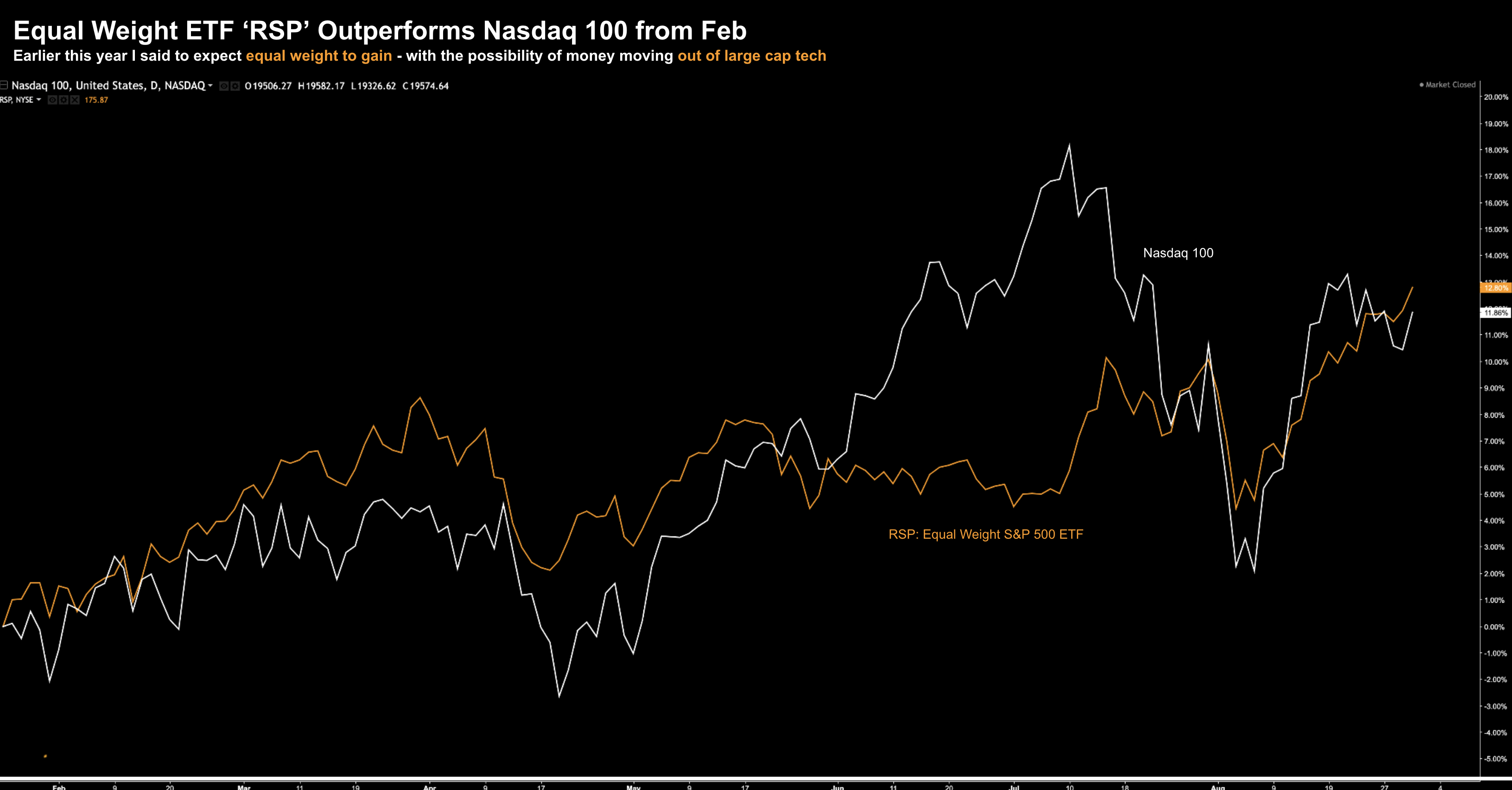
Something I do four times a year is pore through something known as "13Fs". A 13F is a quarterly report that institutional investment managers with over $100 million in assets must file with the US Securities and Exchange Commission. And whilst these filings are submitted around 45 days after the quarter ends (e.g. August 15 deadline for June 30 quarter end) - they offer us insight into how the "smart money" is thinking about certain assets. Some names I follow include (not limited to) Warren Buffett, Bill Ackman, David Tepper, Howard Marks, Stan Druckenmiller and Seth Klarman. Now there was a consistent trend during Q2 - where large cap tech exposure was being reduced.

A Time of Transition

Think of a time when you worked through major transition in your life. For example, maybe it was the end of a relationship; a deep loss; changing your career; starting a family; or relocating for work. Generally during times of meaningful transition there is a period of adjustment and uncertainty. And sometimes, the change will come with volatility. From mine, it's possible the market's wild behavior this week is representative of one in transition. However, it's still early. Volatility in stock markets are typically associated with meaningful turning points... this posts explore more about what's happening below the surface; and why I think the 20-year era of cheap money is drawing to an end.

Fear & Greed

Wall St. is driven by just two emotions: fear and greed. Pending on the degree to which you succumb to these emotions - it will have a profound impact on your bottom line. All too often, most investors will do two things: (i) buy when there is market greed; and (ii) sell when there is fear. It's the opposite of what you should do. However, this is something you need to master if you are to be successful in the game of asset speculation.

Lesson: Don’t Try and Pick ‘Tops or Bottoms’

Everyone makes mistakes. In fact, I love 'collecting' mistakes - whether they are my own or from someone else. It's the only way I learn. This post shares two 'mistakes' from a popular media personality. His name is Jim Cramer who hosts a show called "Mad Money". Earlier this week he said "the bottom is in for CrowdStrike". Big call given recent events. Fast forward a few days and the stock is 16% lower than when Jim called the bottom. So what can we learn from this?