Why Core Inflation Will Remain Sticky

Markets got excited on news of the softer-than-expected CPI headline print today. Headline inflation came in at 3.2% YoY vs expectations of 3.3%. However, what deserves closer scrutiny is not the headline number - it's Core CPI at 4.7% YoY and shelter costs. For e.g., two-thirds of the monthly inflation increase came from shelter - where rents rose 0.4% MoM. This is now the 18th straight month the price of shelter has risen at least 0.4% MoM. But here's the thing - there isn't. much the Fed can do with monetary policy to change this.
Stocks Treading Water for a Good Reason

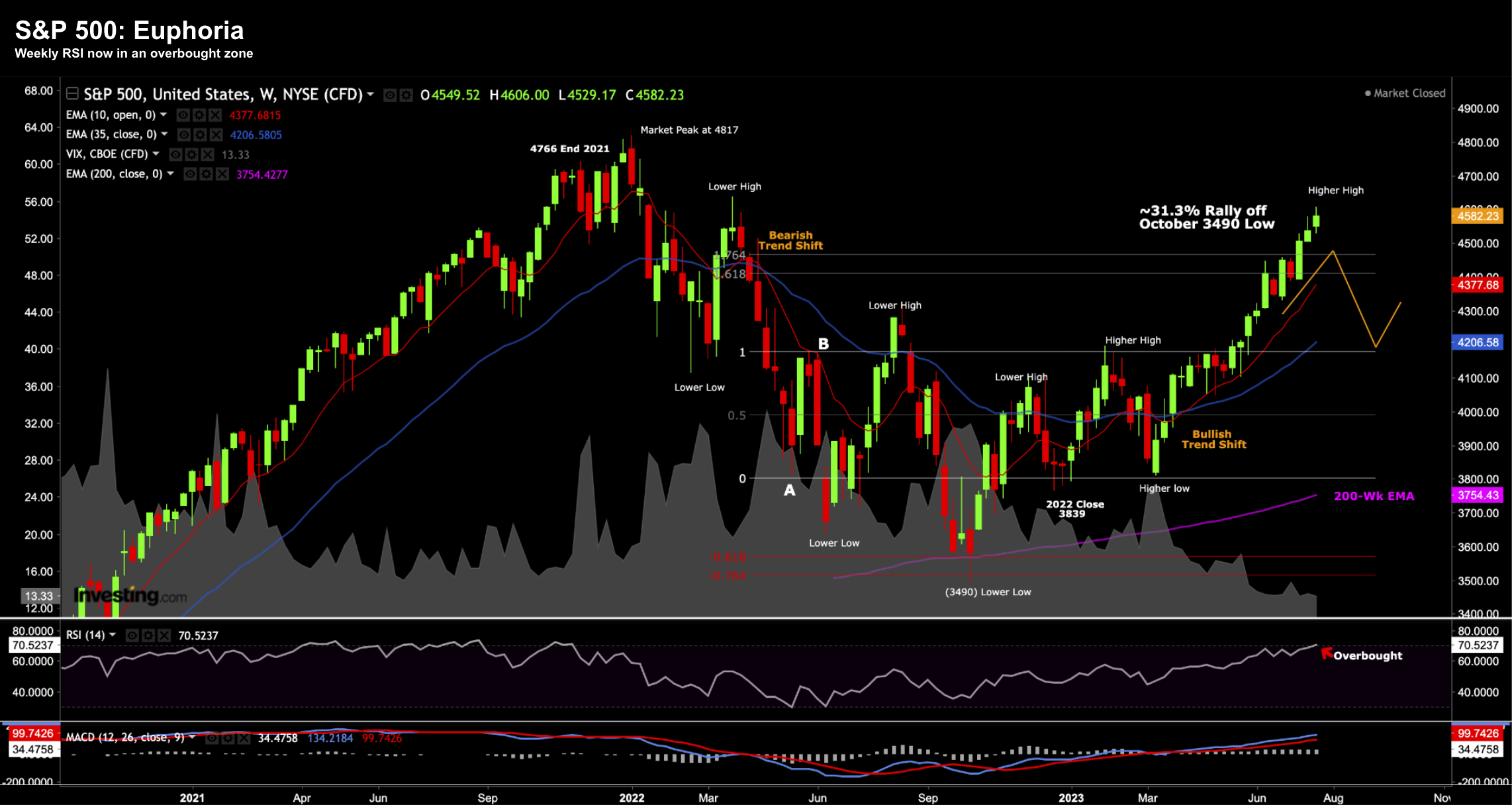
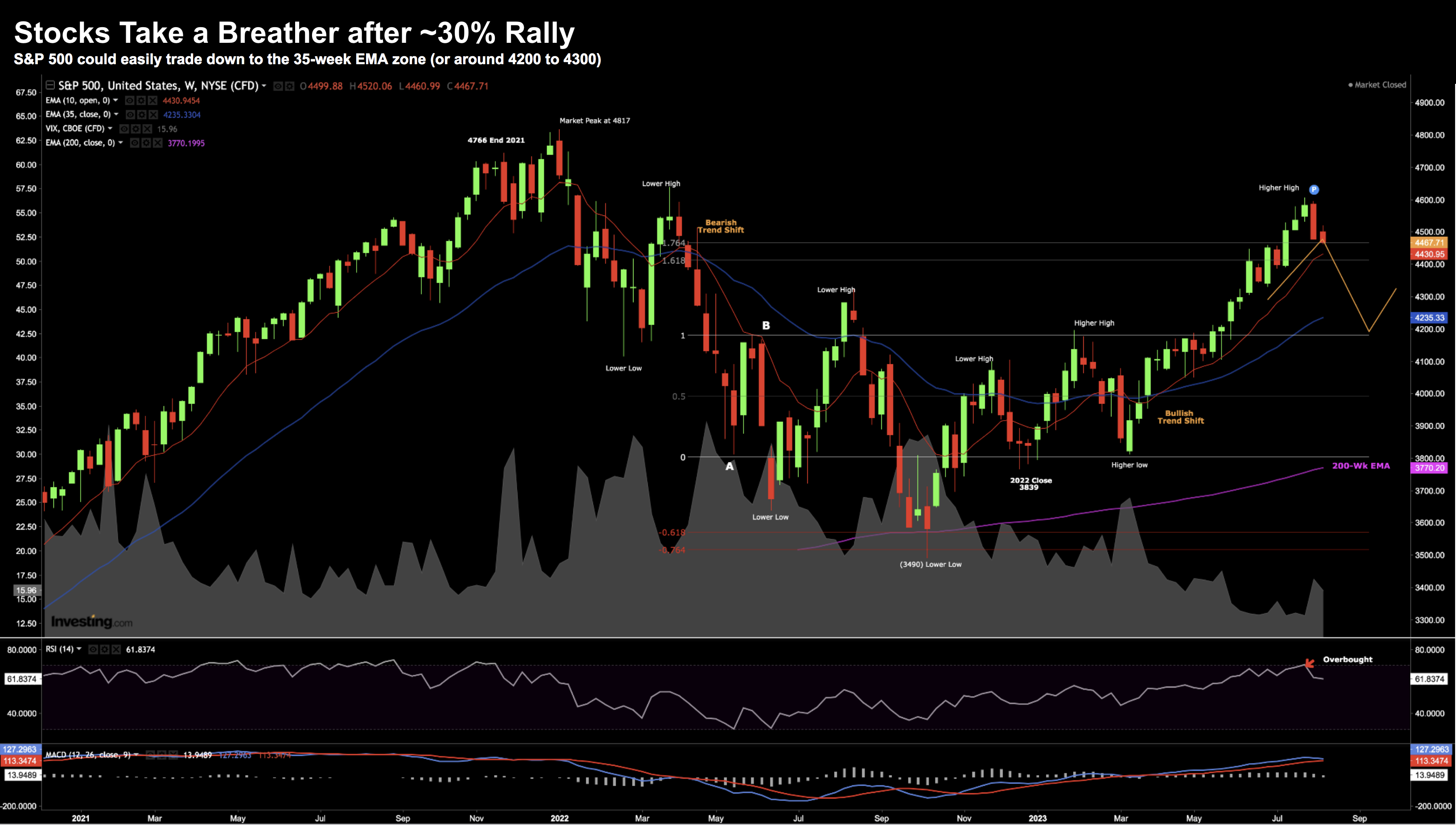
Stocks cannot get out of neutral. If anything, they appear to be going into reverse. Makes sense... they ripped~ 30% higher in 9 short months. But the risks are increasing as prices rise. This post looks at "equity risk premium". In short, investors are not being adequately compensated for the risk being taken in stocks (at current valuations) against the risk free return from Treasuries.

Buffett is Buying Bonds

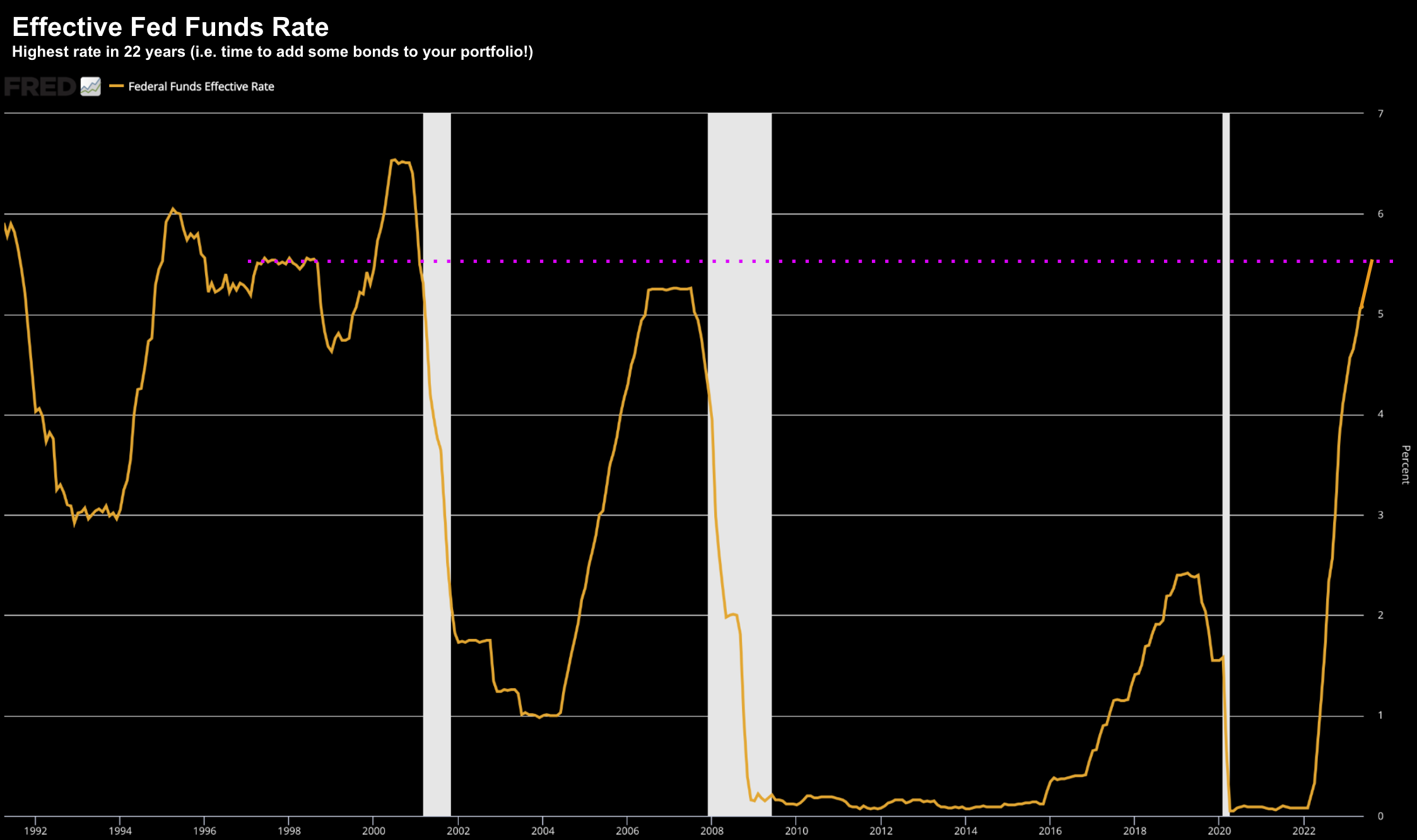
Warren Buffett is pouring tens of billions of Berkshire money into short and longer-term bonds. And I'm not surprised... For e.g., Jul 9th I offered this post "Think About Adding Bonds". Shorter-term bills were offering investors ~5.50% and the longer-date 10-year bond above 4.0%. That's attractive for a number of reasons... this post explains why.

Apple: An Incredible Business – But Don’t Overpay

This week the final two mega-cap tech names reported Q2 earnings. Amazon handily exceeded what were very low expectations. AWS (Cloud) sales rose 12% year over year - much better than feared - given the soft results reported from Microsoft's Azure. This sent the Cloud and eCommerce giant higher by ~11% . On the other hand, investors had a very different reaction to Apple's earnings. The iPhone maker's results were mostly inline. But "inline" is not good enough when it's trading ~30x to 31x forward earnings. So what is the right multiple to pay for Apple? And can it reignite growth looking ahead?

Will a US Debt Downgrade be a ‘Bearish’ Catalyst?

Earlier this week, Fitch Ratings downgraded the U.S.' credit rating. Stocks slipped a little on the news and bond yields ticked higher. The US 10-year treasury yield is now north of 4.10%. Fitch cited “expected fiscal deterioration over the next three years” and an erosion of governance. Hard to argue. Fiscal restraint is not one of the government's strengths. But this isn't entirely new news. For example, the credit agency placed the nation’s rating on watch in May following a near-default after members of Congress butted heads over raising the debt ceiling. However, this put the wheels in motion....

Half Way Through Earnings: 81% Beat on EPS

This week was the busiest week of earnings on the calendar. Half of all S&P 500 companies have now reported for Q2. So far so good! 81% of companies have beaten earnings per share (EPS) expectations - by an average of about 6.4%. By way of comparison - prior to COVID - the average EPS beat was in the realm of ~3%. What's more, about 64% of all companies have also beaten top line expectations. The question is will this continue in the second half?

Fed: Don’t Expect Rate Cuts

If nothing else, I took one thing away from this week's Fed decision: don't expect rate cuts anytime soon. The market had priced in a 25 bps rate increase - with the Fed flagging it well in advance. And the Fed didn't disappoint. But what they were hoping for was more of "dovish hike" It wasn't coming... Powell is keeping things tight-lip. And he has good reason to... he (like the market) simply doesn't know what lies ahead. And whilst things appear to be trending in the right direction - it's far too premature to call a victory over unwanted inflation

Are Recession Callers Back-peddling?

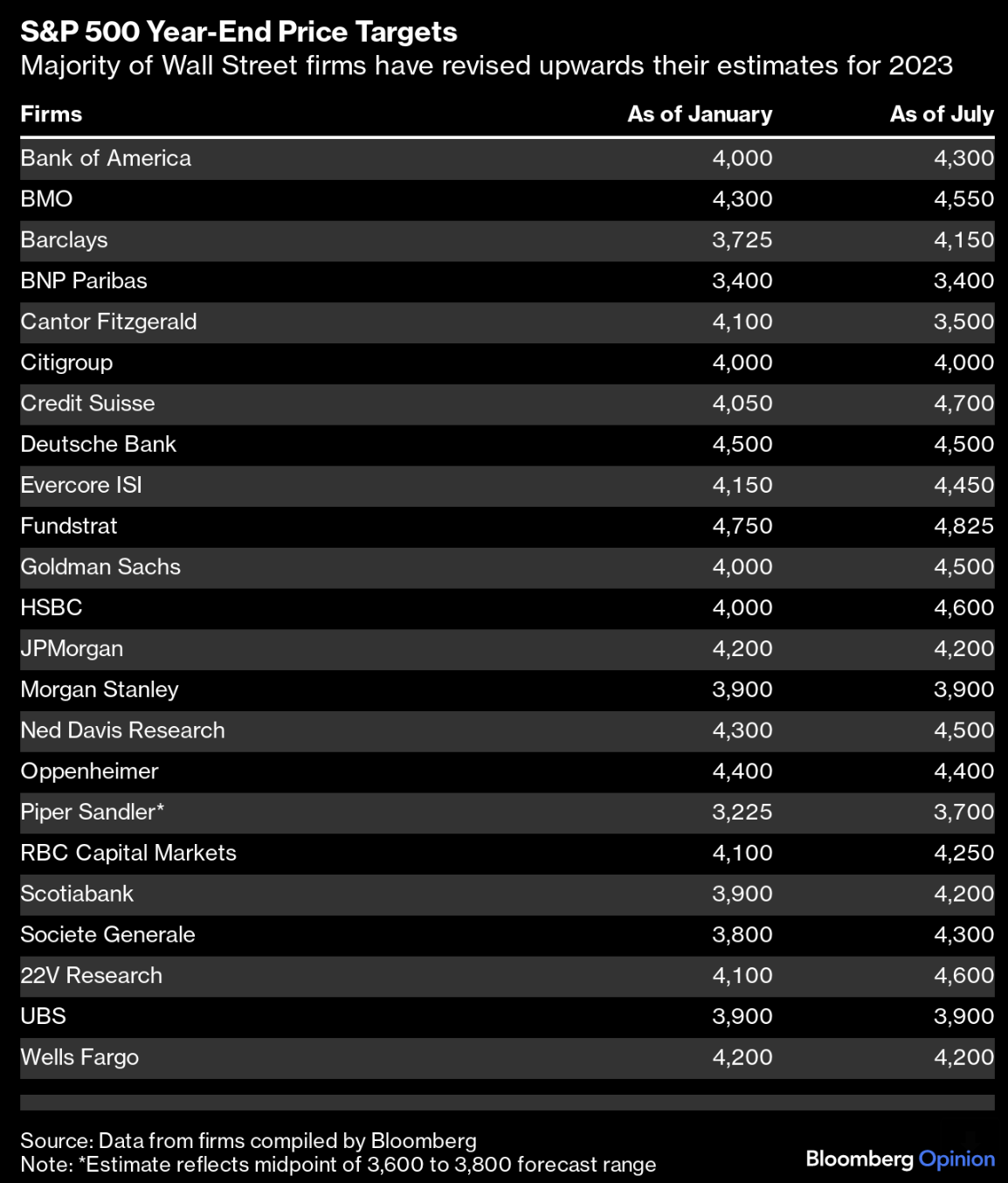
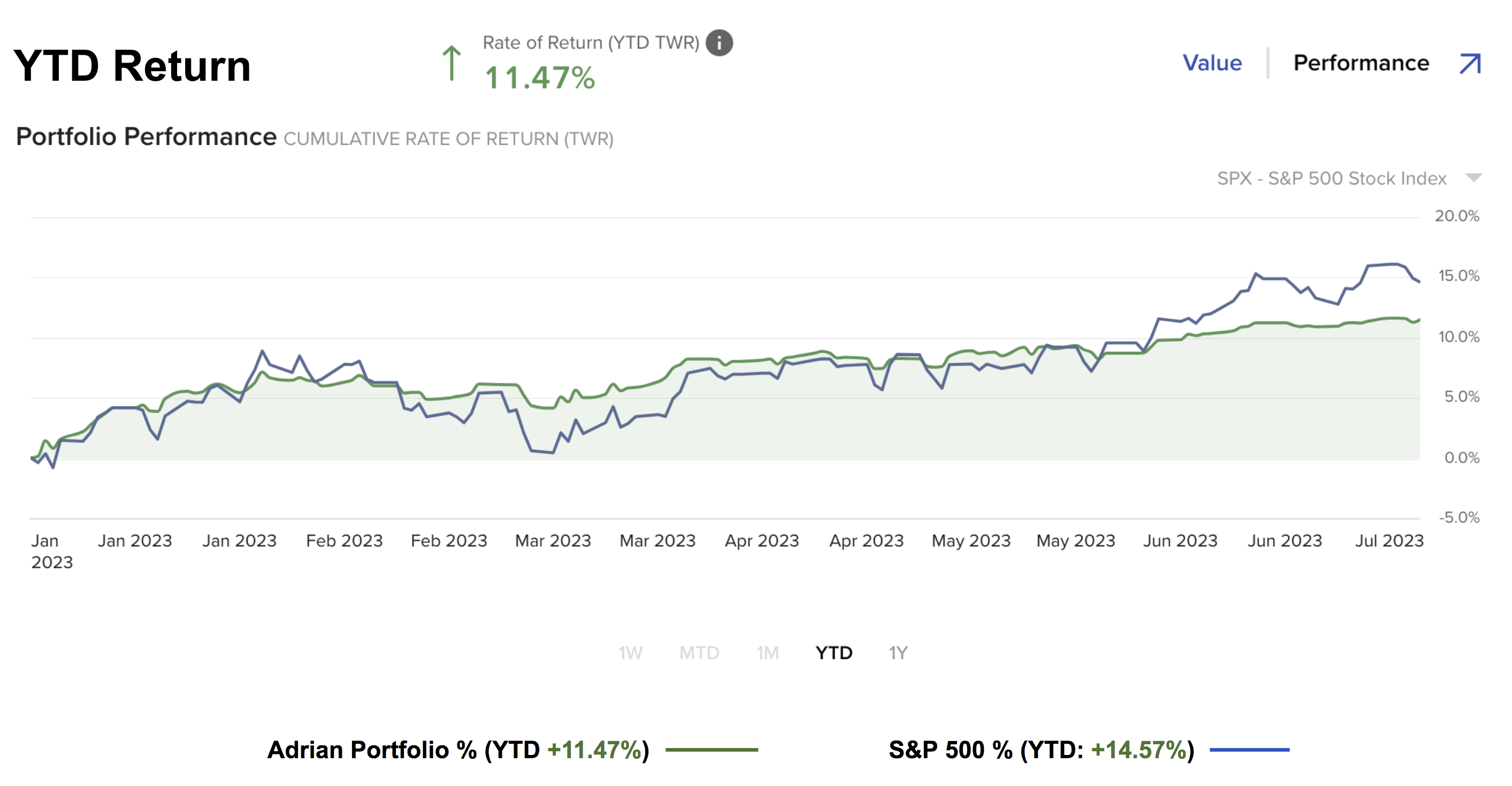
It's the rally everyone loves to hate. Why? Because very few got it right. Most fund managers missed this rally entirely... thinking it was only a matter of time before things collapsed. The thing is - they haven't. I will admit - I also got this wrong. My initial target at the start of the year was 4200. If that broke - I was looking at resistance around 4500. The S&P 500 now trades 4536 - making me look foolish (and it won't be the last time I am sure). We're now just past the mid-point of the year - with the S&P 500 up 18.2% YTD. Remarkable by any measure. What are Wall St saying about the second half?

Can Consumers Continue to ‘Shop ’til they Drop’?

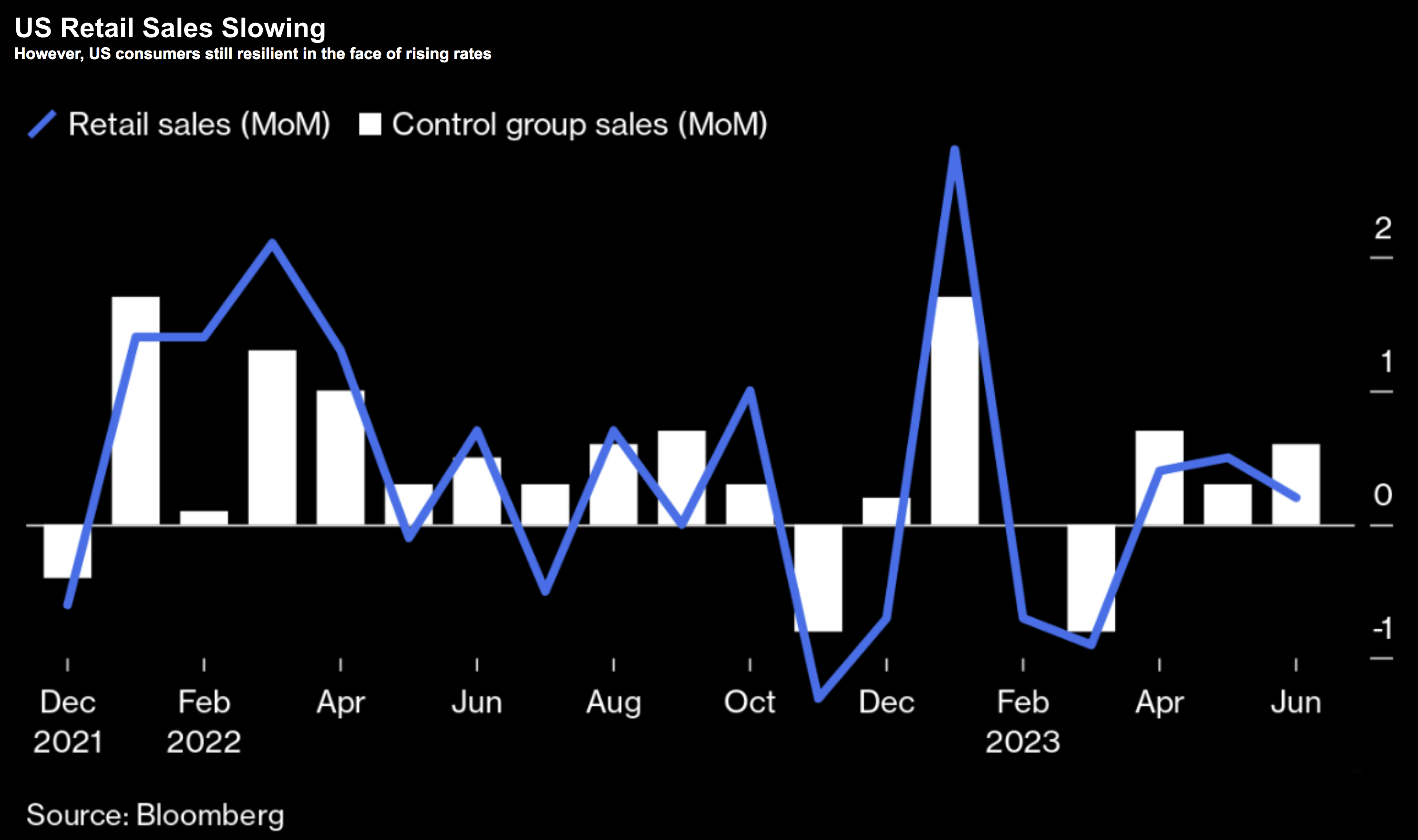
Never underestimate the US consumer's willingness to spend. And from mine, that's been the story of this year. Consumers have used whatever means available to spend, spend, spend. With ~70% of US GDP consumption based - that has also meant the economy managed to keep its head above water. But what does it look like going forward?Do consumers still have ultra-strong balance sheets to keep it up? And are rates eventually going to bite? I ask this because if US consumers are closer to maxing out their credit cards (with more than $1T in debt)... the odds of a recession sharply increase.

What Banking Crisis?

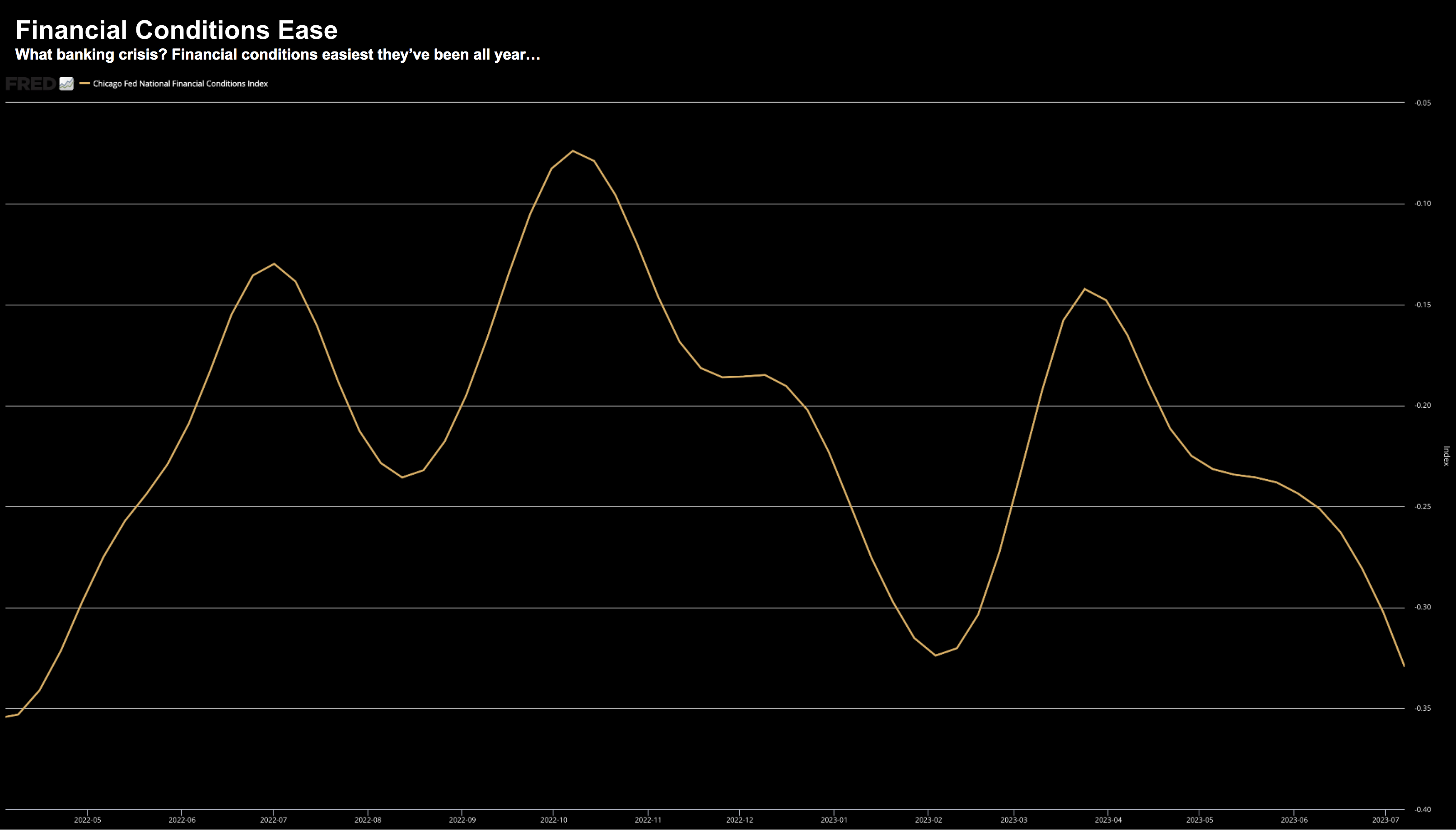
Are things actually looking up? If your measure is the equity market... you would say absolutely. Stocks continue to charge higher on the back of lower inflation and optimism the Fed is closer to the end of its hiking cycle. What's not to like? However, there's something else giving markets a boost. Easy money! Financial conditions are as easy as they've been all year. For example, it was only 4 months ago and we had a mini banking crisis... where funding was a lot tighter. That's now a distant memory.

Fed Can Keep Raising w/Core CPI 4.8% YoY 

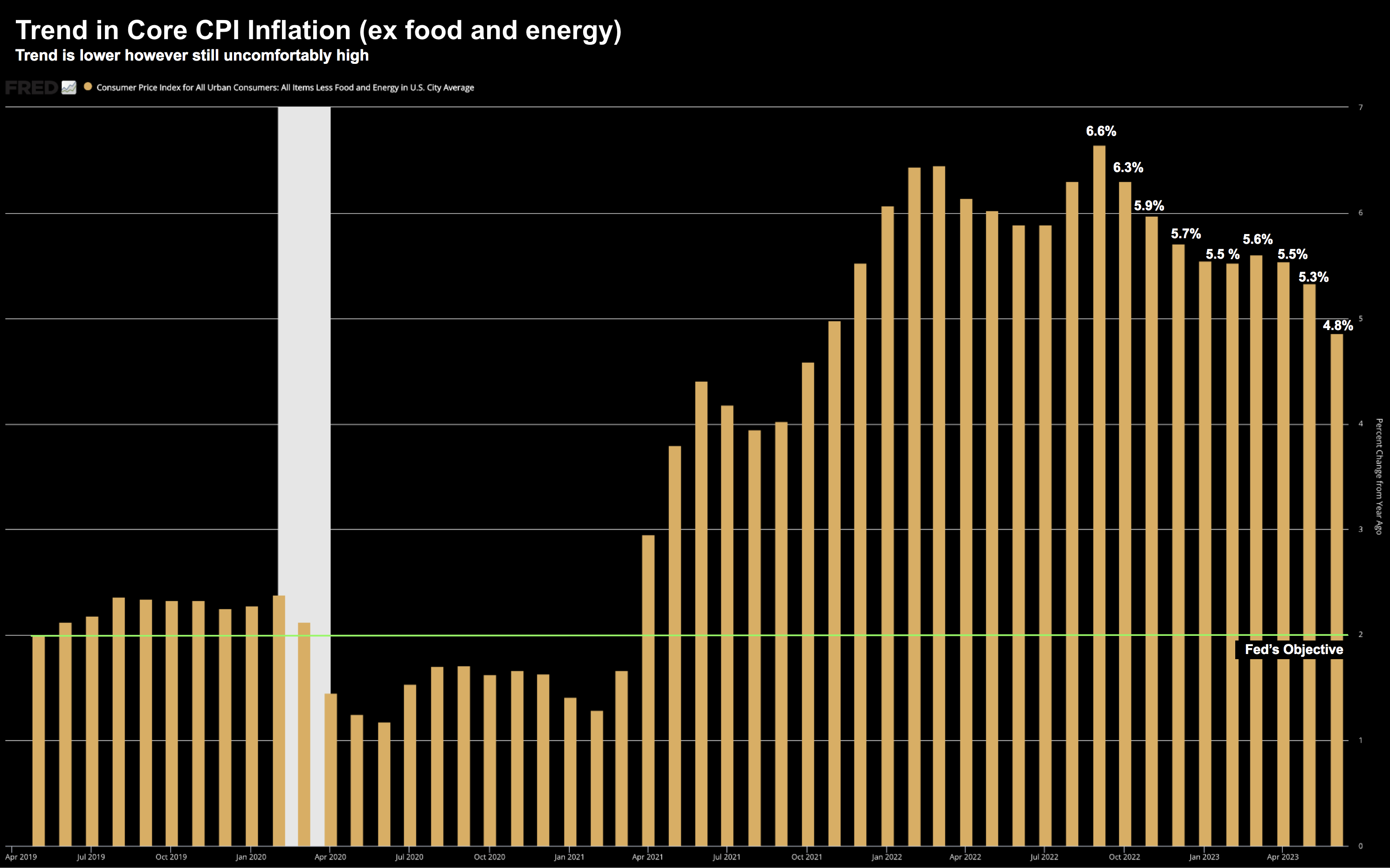
The market celebrated the June monthly CPI data. Headline CPI came in at just 3.0% YoY - and Core CPI fell to 4.8% YoY. Good news. However, with Core CPI still more than 2x the Fed's target - expect them to raise rates again at the end of the month. However, what surprises me is the market believes the war with inflation is basically done. Is it? I think that is presumptuous. The fight with Core inflation will be a long one. If correct, the Fed may not need to keep raising rates aggressively - however are likely hold them there until their objective is met.

Think About Adding Bonds

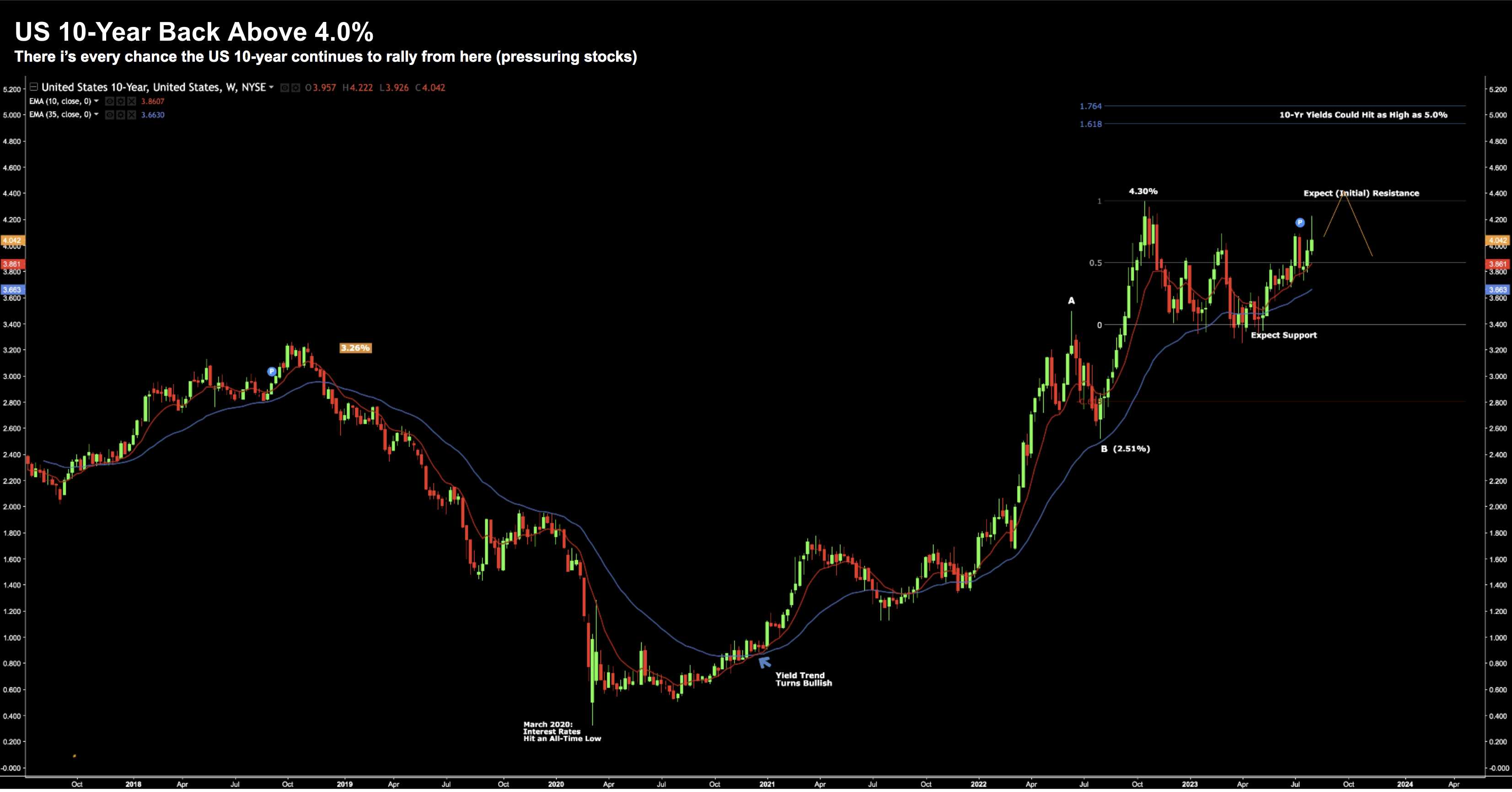
For me, 2023 has been a year of repositioning and managing risk. I lowered my exposure to large-cap tech (down to ~20% portfolio weight) and increased exposure to banks, energy and some industrials (which all trade at reasonable valuations). Today I will look at two bond ETFs - which I think could warrant exposure in your portfolio. In summary, with the US 10-Year yield back above 4.0% - it pays to add some longer-term duration.