adriant

adriant

Nvidia’s (Expected) Beat Was Not Enough… 

Nvidia's earnings beat—reporting 62% YoY revenue growth and projecting $65B in Q4—solidified its position as the AI chip leader. Yet, the question for investors is not if the AI boom is real, it's how much you pay? The massive AI capital expenditure by giants like Google and Meta is transforming them from "asset light" platforms to "asset heavy" infrastructure owners. This shift, coupled with the unanswered question of whether the returns on this spending will justify the massive increase in assets, is fueling investor unease and market momentum loss

AI’s Big (Depreciation) Bet

Most of the Mag 7 tech giants are using an extended 5-to-6-year depreciation schedule for their massive GPU investments. Since GPUs typically have a 3-year useful life, this practice artificially inflates current earnings by reducing the reported expense. If these chips rapidly become obsolete, investors paying high multiples must question the impact on future Free Cash Flow and margins when the true depreciation expense inevitably hits. Investors are optimistic that will show very strong returns (and soon) on their half-trillion-dollar bet.

Market Correction Chorus Grows

Goldman Sachs are warning of a 10-20% correction within the next 12-24 months. And whilst saying this would be a healthy outcome - it aligns with stretched valuations seen only during the dot-com bubble, according to the Shiller CAPE Ratio. The market's risk is concentrated: returns are currently driven by a handful of mega-cap tech stocks. As Michael Burry's short of Palantir highlights, the issue isn't business quality, but the extended prices being paid. From mine, better opportunities exist outside the Mag 7.

Why You Should Avoid Paying Too Much

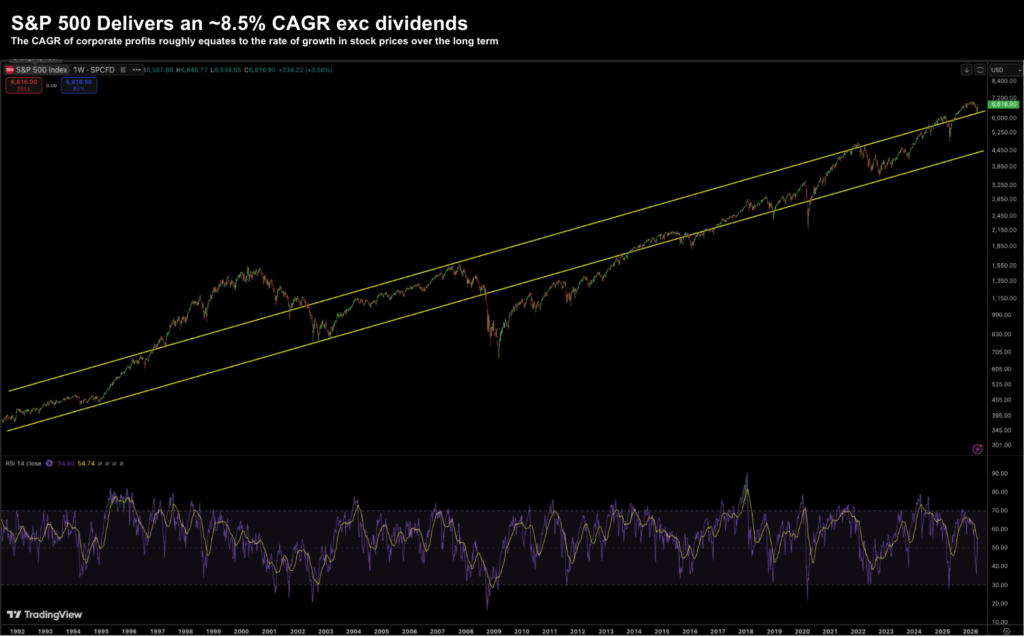
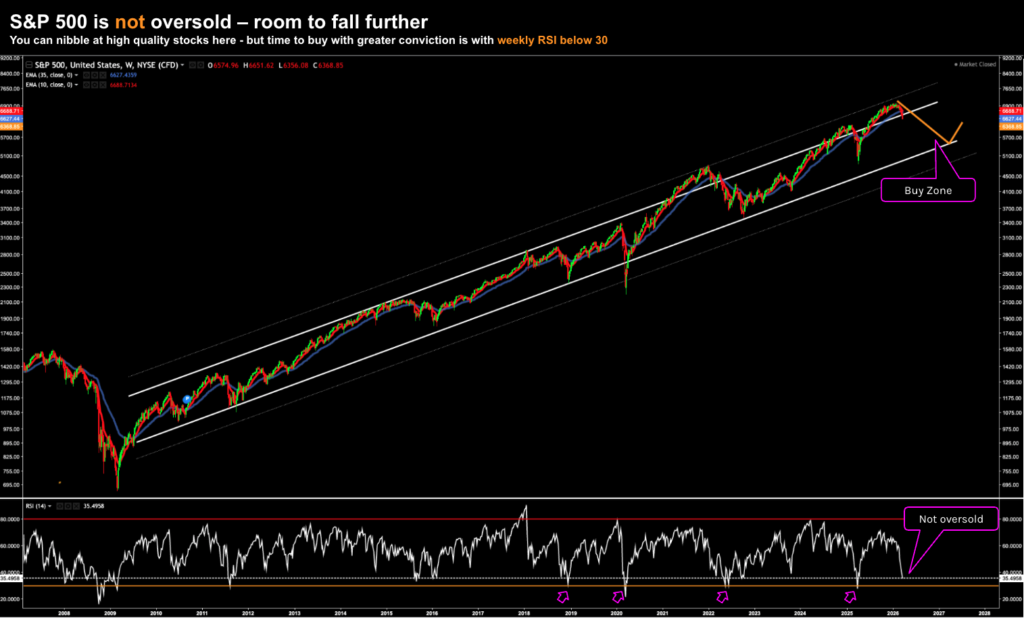
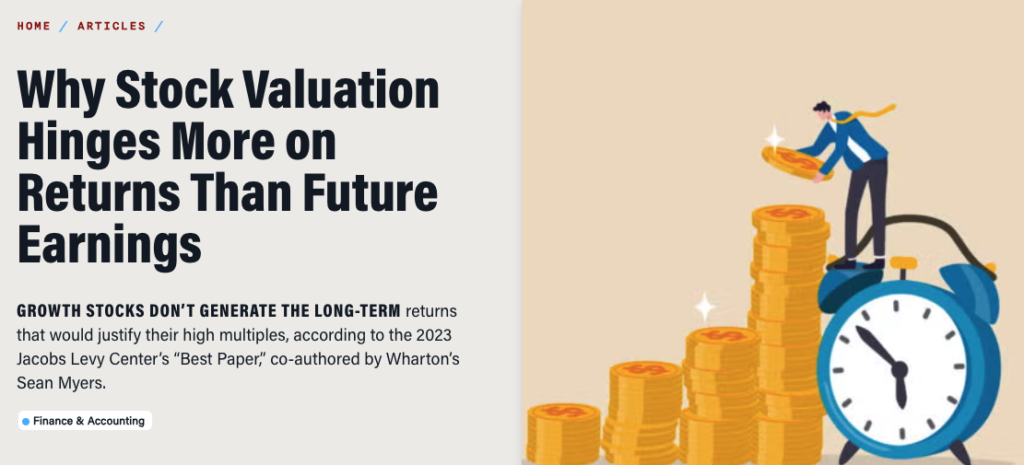
It’s very tempting to chase AI and "Mag 7" gains, but your long-term returns are ultimately determined by the price you pay. With the S&P 500 trading near 25x forward earnings and the Shiller CAPE ratio flashing warnings similar to the 2000 dot-com bubble, the market is lofty territory. History is clear: investing at such elevated valuations drastically lowers subsequent 5 and 25-year returns. While FOMO is powerful, be cautious. As a long-term investor, focus on the risk of what you could lose, not just what you might miss

Gold: Has it Gone Too Far?

While the S&P 500 trades at a rich 24x forward earnings, its gains are heavily concentrated in the 'Mag 7,' whose towering Price-to-Free Cash Flow multiples (eg AMZN’s 174.4x) suggest a market dangerously "priced to perfection." But a deeper unease is driving gold. Up over 50% this year, its rally resembles the 2011 credit downgrade panic, fueled by fears of currency debasement and US fiscal recklessness, despite moderate 3% inflation. With gold’s recent 8.5% plunge hinting at volatility, investors may be wise to trim those spectacular gains, while the Mag 7 face an extremely high earnings bar

Are We in an AI Bubble? 

Investor enthusiasm for AI is reminiscent of the Internet boom circa 1995. Having worked at Google, I've seen AI's profound impact firsthand, from computer vision to self-driving Waymo vehicles that have achieved 10M rides. But as an investor, the focus must shift to economics: business models, monetization, and valuation. Billionaires like David Einhorn are sounding the alarm: spending hundreds of billions on AI infrastructure may lead to massive capital destruction if CapEx vastly exceeds consumption. History shows that while the technology transforms society, an oversupply creates painful market corrections. The question isn't if AI is the future—it's what price you pay for it.

Jay Powell: “Stocks are Overvalued”

The current market presents a stark contradiction: stocks are high, but the Fed is entering an easing cycle. As billionaire David Tepper notes, he's "constructive on stocks" due to cheapening money but "miserable" because valuations are sky-high. Warren Buffett mirrors this caution, holding a record high of over $344 billion in cash. This balance reflects the core tension: stocks can easily run higher on investor optimism, yet the consensus is that forward earnings multiples are dangerously stretched. Like Buffett in 1969 and 1997, savvy long-term investors are prioritizing capital preservation, maintaining some exposure while waiting for the inevitable mean reversion to bring prices back down to a prudent level.

Tepper: “Nothing is Cheap Anymore”

Long-term investing demands a careful balance: stocks typically rally on the promise of cheaper money from expected rate cuts, but this momentum clashes with clear structural economic weakness that necessitates the cuts. History favors stocks during easing cycles. However, the key risk lies in whether economic weakness persists and hammers corporate earnings, eventually undermining high valuations. The recent "hawkish cut" by the Fed surprised markets, indicating concern for a deteriorating jobs picture over inflation. While the market continues to rally on optimism, as legendary investor David Tepper warns, valuations are high. The strategy remains to maintain equity exposure to ride the easing cycle while holding significant cash to capitalize on any likely drawdown.

Recession or Weakening? 

Despite signs of a weakening U.S. labor market, including a recent record-downward revision to job growth figures, investor bullishness remains at record highs. However, it's pure optimism that has pushed stock market valuations to expensive levels, with the S&P 500 trading at over 22 times forward earnings. While market psychology and momentum can drive prices in the short term, fundamentals will eventually prevail. Prudent investors should prioritize buying high-quality companies at attractive valuations, a strategy that currently requires patience.

When Will Bad News be Bad News?

History shows that central bank easing cycles generally benefit stock markets. However, we should ask why central banks are cutting. If the Fede cuts rates to combat a slowing economy, the news may not be as positive as it seems. A weakening economy means lower corporate earnings and reduced consumer spending, which are ultimately negative for stock prices. Several bleak monthly jobs reports is evidence that the economy is struggling. But is just a soft patch or something worse? I suggest exercising caution - rate cuts are not always a positive.